




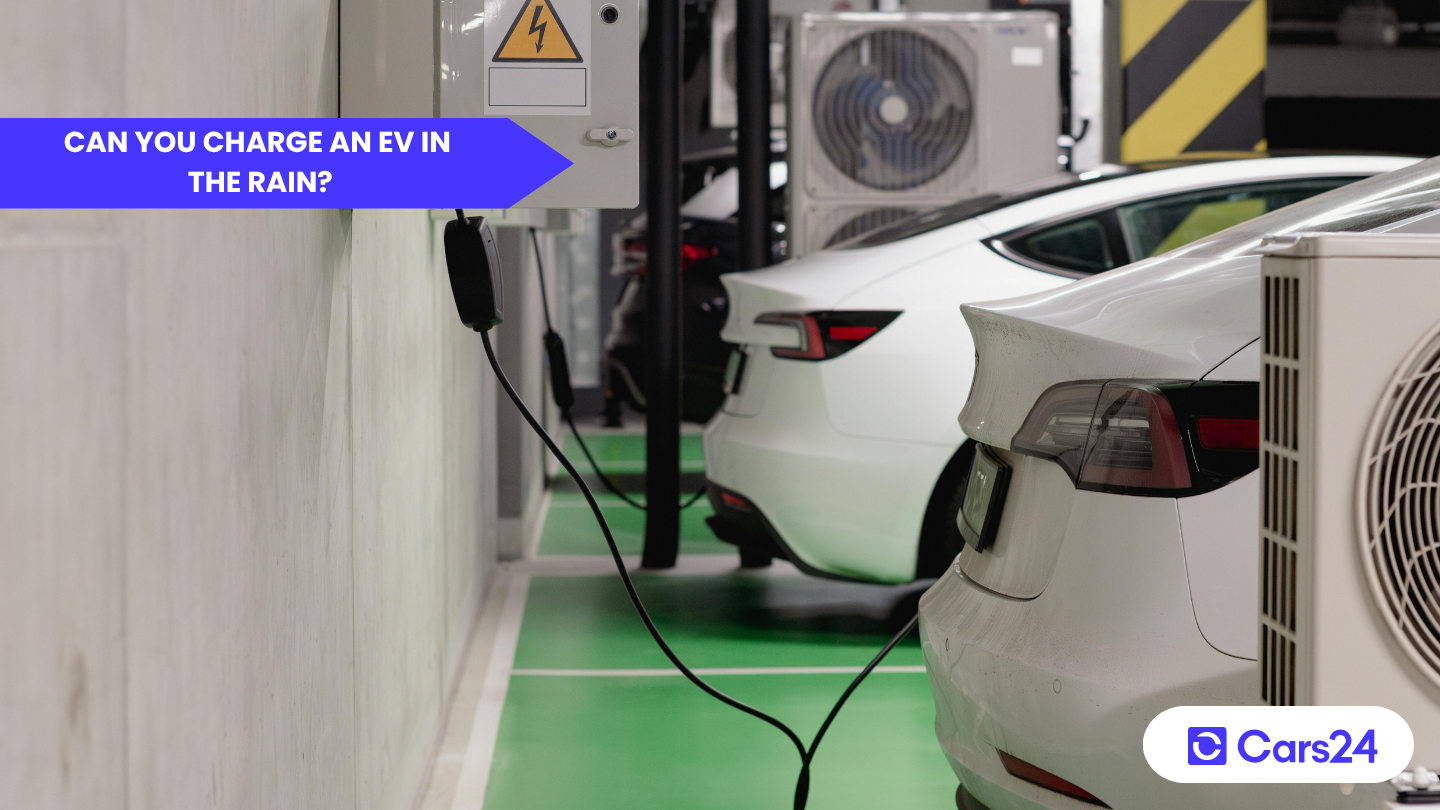
Yes, it is completely safe to charge your EV in the rain.
Electric vehicles and their charging stations are specially designed and engineered to handle wet conditions without any issue. Whether you are using home charging, a portable EV charging station or a public charging station, you can charge in the rain. However, there are a few precautions and a basic understanding of how the safety systems work will give you a clear idea of how this works.
Why do people worry about charging an EV in the rain?
The concern is fair and valid because electricity and water are a dangerous combination in most situations, we try to keep them away, so there is an instinct to hesitate before plugging in during a downpour, which makes sense. But you need to remember EVs aren’t made like appliances in your home. Every component of the EV charging system- the cable, the connector, the charging port and every other part is engineered to prevent electrical exposure in wet conditions. Your worry has already been solved by engineering and modern technology.
How EV charging is designed to be weatherproof
Modern EVs and their charging parts are built to meet the international safety standards. Some of the protection standards are:
- IP ratings on connectors and ports
EV charging cables and vehicle charging ports carry an IP (Ingress Protection) rating. Most EV charging connectors carry a rating of IP44 or higher, which means they’re protected against water splashing from any direction. Many fast chargers and home wall boxes carry IP55 or even IP65 ratings, which means they can handle sustained water jets without any risk of electrical fault.
Further, the charging port on your car is sealed when closed and the connection itself is designed in such a manner that power only flows once a secure, weatherproof seal is made between the cable and the car. You can be carefree; any raindrop hitting a sealed charging port won’t cause any fault.
- Pilot signal handshake
Before any power flows from an EV charging station to your car, both systems perform a communication check called a pilot signal. The charging station and vehicle confirm the connection is secure and correct before electricity is ever delivered. If anything is wrong, such as a loose cable, a fault, or a water connector, the system won’t energise the circuit. No power flows until it’s completely sealed and safe.
- Ground fault protection
All modern EV chargers include ground-fault circuit interrupter (GFCI) protection. This is the same technology used in bathroom power points; it detects any unexpected current leakage and shuts down the circuit within milliseconds. For EV charging, this protection is built directly into the charge point hardware, providing a safety layer that operates faster than any fuse.
What most EV owners get wrong about rain charging
The most common mistake isn’t attempting to charge in the rain, but it’s mishandling the EV charging cable before and after use. Here’s how to take better care:
- Plugging in with a damaged cable
Rain won’t harm a sound cable, but a cracked, frayed, or damaged EV charging cable can. Regularly inspect your cable, especially if it’s stored outside or bundled tightly. Physical damage is a greater risk than the rain.
- Leaving the connector lying in a puddle
While connectors are weather-resistant, submerging them in standing water beyond their rated protection. If the connector end of your cable has been sitting in a puddle, wipe it dry before connecting. A brief rinse from rain is fine but a prolonged submersion is not.
- Using non-certified portable chargers
A certified portable EV charging station will carry appropriate safety ratings. Cheap, uncertified cable sold online may not meet the Australian safety standards. If you go for cheap cables sold online, they may not meet Australian standards. You can always check for a portable charger that carries SAA certification or an equivalent and has an IP rating.
- Assuming older public stations are safe
Most commercial EV charging stations are well maintained, but if you notice a unit with visible damage, water pooling inside the cabinet or an error light, don’t use it. Report it to the network operator and find another station.
How to charge an EV at home in wet weather
The majority of Australians charge an EV at home overnight and this is also considered the safest and most controlled environment for wet-weather charging.
Wall box chargers (Level 2 home charging)
A dedicated home wall box is the preferred setup for regular home charging. These units are hardwired by a licensed electrician, mounted to an external wall or in a garage, and rated for outdoor installation. Look for units with an IP54 rating or higher for outdoor placement. Brands like Zappi, Wallbox, and Evnex all manufacture units suited to Australian outdoor conditions.
Standard outlet (trickle charging)
Charging from a standard 10A GPO (general power outlet) is significantly slower but widely used as a backup method. A standard outdoor GPO must be installed with a weatherproof cover to be used safely in the rain. If your outdoor outlet doesn’t have a weatherproof enclosure, have an electrician fit one before using it for EV charging.
Key practices for home EV charging in rain:
- Always check your EV charging cable for damage before use
- Ensure the charging port on your vehicle is clear of debris before plugging in
- Use the cable management system (hook or holster) on your wall box; don’t leave the connector on wet ground
- If you’re trickle charging outdoors, make sure the GPO cover is rated for outdoor use
Using a portable EV charging station in the rain
A portable EV charging station gives you the flexibility to charge anywhere you have access to a power outlet, at a friend’s place, at a holiday rental, or as a backup when away from home. In rain, the same principles apply: the unit must carry a valid IP rating, the cable must be undamaged, and the outlet it plugs into must be properly covered.
Most quality portable chargers sold in Australia carry an IP54 or IP55 rating and are designed to sit in light rain without issue. What they’re not designed for is being left outside during heavy storms, sitting in pooled water, or being stored wet.
If you’re buying a portable EV charging station, look for:
- IP54 or higher weatherproof rating
- SAA or RCM certification for the Australian market
- A carry case or bag for dry storage between uses
- A minimum of 10A compatibility (15A is better for faster charging from a standard outlet)
Conclusion
Can you charge an EV in the rain? Yes, without hesitation. EV charging systems are engineered with weatherproof connectors, pilot-signal handshakes, and ground-fault protection that make rain charging safe by design. The precautions that matter are cable condition, connector handling, and equipment certification, not the weather itself.
- EV charging cables and connectors carry IP ratings specifically for wet-weather use
- Power only flows once a secure connection is confirmed, rain can’t trigger an accidental current
- Inspect your EV charging cable regularly; physical damage is a greater risk than rain
- Home wall boxes and portable EV charging stations should carry IP54 or higher for outdoor use
- Public EV charging stations are built for all-weather operation as standard
Frequently Asked Questions
Is it safe to plug in an EV during a storm?
Yes. EV charging connectors are sealed and weatherproof, and the charging circuit won’t energise until a secure connection is confirmed. Avoid charging if there’s lightning nearby, not because of rain, but for the same reason you’d avoid standing outside with any tall metal object.
Can my EV charging cable get damaged by rain?
A sound, certified EV charging cable won’t be damaged by rain. Prolonged UV exposure, physical abrasion, and tight storage coiling are the main causes of cable wear. Inspect your cable periodically and replace it if the outer jacket cracks or splits.
What IP rating do I need for outdoor EV charging?
For a wall box mounted outdoors in Australia, look for IP54 as a minimum. IP55 or IP65 is better for exposed coastal or high-rainfall areas.
Do I need a special cable to charge an EV in the rain?
No special cable is needed; any certified EV charging cable with a standard IP rating is safe in the rain. What you should avoid is a damaged, uncertified, or non-IP-rated cable.
Can I charge an EV in a flooded car park?
If the charger or the vehicle’s charging port is submerged in water, do not attempt to charge. Water ingress beyond the rated IP protection is a genuine risk. Shallow wet surfaces (normal rain runoff) are fine; standing water deep enough to submerge the connector or charging port is not.

Comments
New Comment