




Car Tracking Devices: Everything You Need to Know Before Buying One in Australia
From theft recovery to teen driver monitoring, shared car convenience and remote travel safety, car tracking devices are now being used beyond fleet operators or high-end vehicles. They are widely used by families, tradies and businesses across Australia.
If you are considering installing a car tracking device, the first question is not “Which brand is best?” It is “What do I actually need it to do?”
The right GPS tracker depends on your purpose. Some car tracking devices are built for real-time theft recovery. Some are better for family use, driver alerts or shared vehicles. Others are designed for business fleets, trailers, tools or regional travel. This guide explains how car tracking devices work, the main types available in Australia, what features matter, what they cost and how to choose the right option before buying.
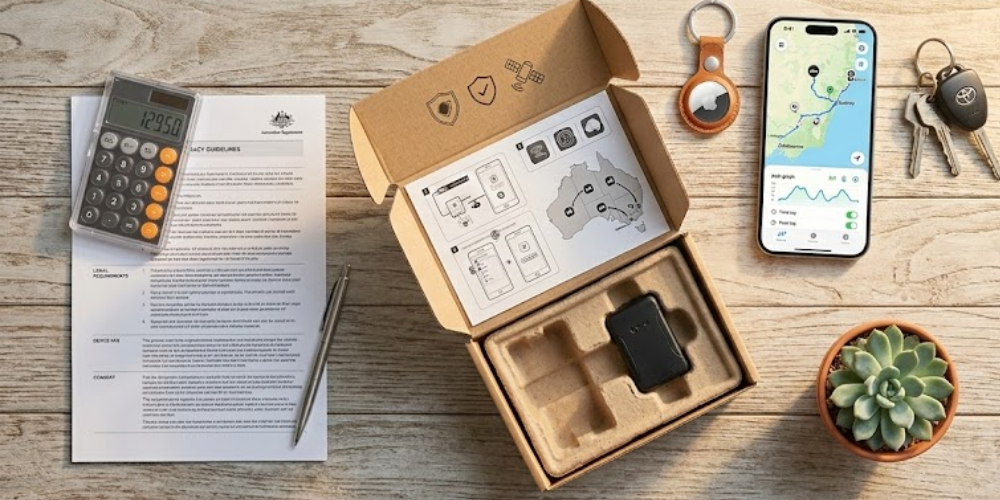
| Also Read: Car Tracking Devices – Pros & Cons Explained |
What Do You Actually Want a Car Tracking Device To Do?
Before comparing car tracking devices, start with your real-life use case. A parent checking on a teenager, a tradie protecting tools and a business owner managing vehicles all need different tracking setups.
Have a look at the scenarios below and identify the one that reflects your needs.
1. “If my car gets stolen, I want the best chance of getting it back.”
If theft recovery is your main concern, you need a car tracking device that can share live location updates quickly and reliably.
In Australia, motor vehicle theft remains a real concern. That is one reason more drivers are looking at GPS car tracking devices as a second layer of security. A tracker will not stop someone from stealing a car, but it can help locate the vehicle faster after it goes missing.
For theft recovery, your car tracking device should prioritise:
Real-time GPS tracking
4G or newer network compatibility
Tamper alerts
Hidden installation
Backup battery support
Reliable mobile app access
This is where a hardwired GPS tracker usually makes the most sense. A hardwired car tracker is connected to the vehicle’s power supply and can be hidden inside the car. Because it is not sitting in an obvious place, it is harder to remove quickly.
AirTags can help in some situations, but they are not the same as dedicated car tracking devices. AirTags rely on nearby compatible Apple devices to update location. A GPS tracker uses satellite positioning and mobile networks to send location data more directly.
If recovery is your number one reason, a professionally installed car tracking device is usually the stronger choice. Some drivers use both: one concealed hardwired GPS tracker and one hidden AirTag as a backup.
2. “I just want to keep an eye on my teenager’s driving.”
This is not about spying. For many families, a car tracking device is about safety, reassurance and knowing when to step in.
A modern GPS tracker can provide:
Speed alerts
Geofencing notifications
Trip playback
Driving behaviour insights
Location sharing
Start and stop alerts
An OBD plug-in car tracking device is popular for this use because it connects directly to the car’s diagnostic port and is easy to install. You usually do not need professional installation, and the tracker can start sending basic driving data quickly.
The important part is balance. Too many alerts can create stress for parents and young drivers. A good car tracker should let you customise alerts so you only receive notifications when something genuinely matters.
For elderly drivers, the benefit is different. It is less about speed monitoring and more about being able to locate the car quickly if the driver is delayed, lost or unable to explain where they are.
3. “We share one car and it’s always missing.”
This is the everyday problem no one really plans for.
You leave for work and realise the car is already gone. You park at a large shopping centre and forget the level. You lend the car to a sibling and just want to know when it is back.
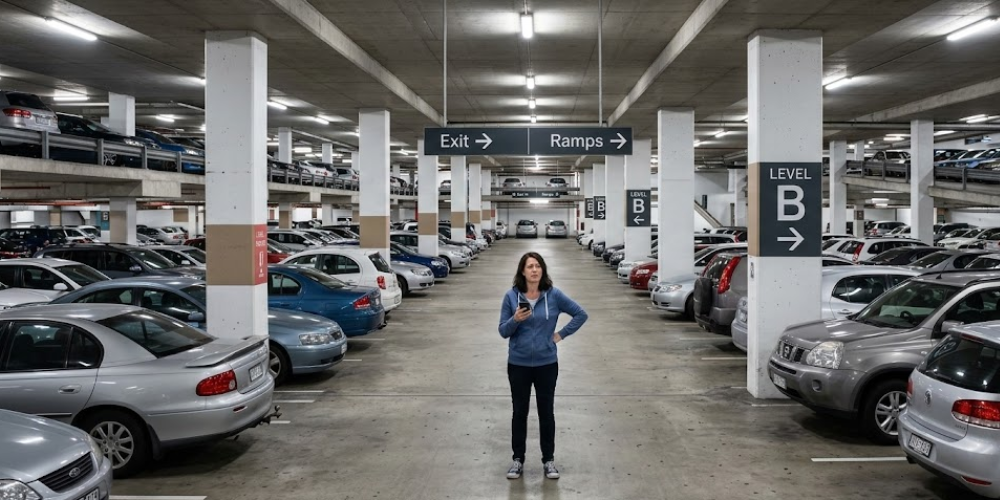
In this case, you probably do not need advanced automobile tracking devices with complex dashboards and fleet-style reporting. A simple car finder GPS device may be enough.
AirTags are popular for basic location convenience because they are affordable and easy to set up. They can help you find a parked car or locate a vehicle that has been left nearby.
However, if you want real-time movement alerts, trip history or notifications when the vehicle starts moving, a dedicated GPS tracker gives you more visibility. Put simply, AirTags are convenience tools. Dedicated car tracking devices are built for continuous tracking.
4. “My ute has more value in tools than the vehicle itself.”
For tradies, security is rarely just about the car. It is about the full setup.
You may need to protect:
The vehicle
The trailer
Power tools
Expensive equipment
Materials stored overnight
That is why many tradies use more than one car tracking device. A hardwired GPS tracker can be installed in the ute, while a battery-powered GPS tracker can be placed inside a trailer, toolbox or movable asset.
Portable car tracking devices are useful because they move with the asset. If the trailer goes missing, the tracker goes with it. Magnetic trackers can also work for temporary use, although placement and battery life matter.
For tradies, the best setup is usually layered. Secure parking, locks, insurance, documentation and a GPS tracker all work together.
5. “I run a small fleet and admin is a nightmare.”
For business owners, automobile tracking devices are not just security tools. They are operational tools.
A GPS tracker can help with:
Trip logs
Route planning
Idle time tracking
Driver accountability
Job arrival records
Fuel-use visibility
Reporting
For fleets, the software platform matters more than the hardware alone. A good dashboard should make information easy to read and export. If the app is confusing, the car tracking device becomes another admin problem instead of solving one.
Consent also matters. If you install car tracking devices in workplace vehicles, employees should be informed clearly and the tracking should follow relevant state and territory surveillance laws.
Fleet tracking works best when it is transparent and positioned as a safety, security and efficiency tool, not a micromanagement tool.
6. “I travel regional or remote.”
If you regularly drive outside metro areas, you need to understand the limits of standard car tracking devices.
A GPS tracker calculates position using satellites, but most car tracking devices still need mobile coverage to send live location updates to your phone. In mobile black spots, updates can be delayed until the device reconnects.
For regular regional driving, choose a car tracking device with strong 4G coverage, a reliable app and clear offline behaviour. For remote travel, some drivers consider satellite trackers, although these are usually more expensive than standard GPS car trackers.
If you drive in remote areas often, do not rely on a tracker alone. A car tracking device should support your safety plan, not replace emergency preparation, route planning or communication equipment.
Now That You Know Your Reason, Let’s Talk Types
Not all car tracking devices work the same way. The right choice depends on whether you need theft recovery, family safety, asset protection, business reporting or remote travel support.
| Type of car tracking device | Power source | Installation | Best for |
| Hardwired GPS tracker | Vehicle battery | Professional | Theft recovery and concealed tracking |
| OBD plug-in car tracker | OBD port | DIY | Teen driver monitoring and trip alerts |
| Battery-powered tracker | Internal battery | DIY or portable | Trailers, tools and movable assets |
| AirTag or Bluetooth tracker | Coin battery | DIY | Basic parked-car location |
| Satellite tracker | Internal or vehicle power | Professional or specialist setup | Remote and regional travel |
Each category falls under the broader umbrella of car tracking devices, but they behave differently. A cheap Bluetooth tracker cannot do the same job as a hardwired GPS tracker. A fleet tracker may be too complex for a family car. A satellite tracker may be unnecessary for city driving.
The best car tracking device is the one that matches your actual risk, not the one with the longest feature list.
What Features Actually Matter in Car Tracking Devices?
Some features are genuinely useful. Others sound impressive but may not matter for your day-to-day use.
4G or newer connectivity
This is one of the most important checks for Australian buyers.
Australia’s 3G networks have been switched off, so older 3G car tracking devices are no longer a safe choice. If a car tracking device relies on 3G, it may not transmit location properly.
Before buying, confirm that the GPS tracker supports 4G or newer networks in Australia.
Real-time location updates
If theft recovery is your priority, refresh rate matters. Faster updates make it easier to follow the car’s movement in real time.
Some car tracking devices update every few seconds. Others update less frequently to save battery. For a hardwired GPS tracker, faster updates are usually more practical. For a battery-powered tracker, you may need to balance update frequency with battery life.
Geofencing
Geofencing lets you set a digital boundary around a location. You can receive an alert if the vehicle enters or leaves that area.
This feature is useful for parents, shared cars, business vehicles, trailers and tradie equipment. For example, you can set a geofence around your home, workplace, school, job site or storage yard.
Tamper alerts
Some car tracking devices notify you if the device is disconnected, removed or loses power. This is especially useful for theft recovery.
A tamper alert does not stop a thief, but it can warn you that something is wrong before the car disappears completely.
Backup battery
A backup battery allows the GPS tracker to keep working for a limited period if the vehicle battery is disconnected.
This is useful for hardwired car tracking devices because thieves may try to cut power. The longer the backup battery lasts, the more time you may have to locate the vehicle.
App quality
The app is what you will use every day. If the app is slow, confusing or unreliable, your car tracking device becomes frustrating.
Before buying, check whether the app shows live location clearly, sends alerts on time, stores trip history and lets you adjust notification settings.
What Do Car Tracking Devices Cost in Australia?
The cost of car tracking devices usually includes three parts: hardware, installation and subscription.
it is hardwired or professionally concealed. Subscription covers SIM data, app access, tracking software and cloud storage.
AirTags and Bluetooth trackers are usually cheaper and do not require the same type of subscription, but they also offer limited capability compared to dedicated GPS car tracking devices.
Before buying, ask these questions:
What does the subscription include?
What stops working if I cancel the subscription?
Is there a contract period?
Does the device support 4G or newer networks?
How often does the tracker update location?
Is installation included?
Does it include tamper alerts or backup battery?
Can I move it to another vehicle later?
For family use, a simple OBD GPS tracker may be enough. For theft recovery, a professionally installed hardwired car tracking device is usually worth considering. For business use, compare the monthly software cost carefully because subscription fees can add up across multiple vehicles.
What Installation Mistakes Should You Avoid?
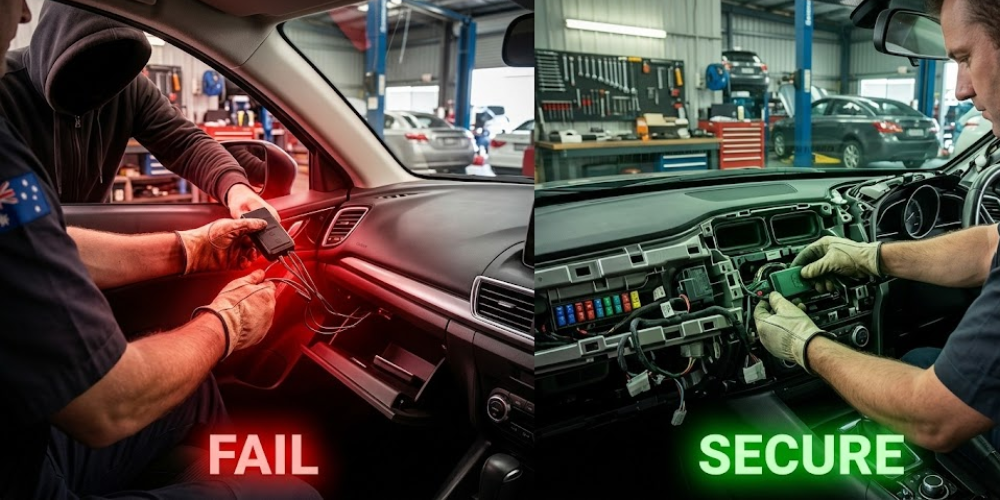
Even good car tracking devices can fail if they are installed poorly or used in the wrong way.
For theft recovery, avoid obvious locations. A GPS tracker placed in the glovebox, centre console or under a loose mat is easy to find. A hardwired device should be concealed properly and tested after installation.
Avoid placing the GPS tracker where the signal is blocked by heavy metal. Poor placement can delay updates or reduce accuracy.
For OBD car trackers, remember that they are easy to unplug. This is fine for family use or driver monitoring, but it is not ideal as the only theft recovery solution.
Reality Check for Australian Buyers
For battery-powered car tracking devices, check the update frequency. Frequent updates drain the battery faster, while slow updates may not give enough live visibility.
For AirTags, treat them as supplementary. They can help with basic location, but they are not a full replacement for dedicated car tracking devices.
What Should Australian Buyers Keep in Mind?
Australian buyers should think about coverage, consent, vehicle history and realistic expectations before choosing a car tracking device.
Mobile black spots still exist. A GPS tracker can calculate location using satellites, but most devices need cellular coverage to send updates to your app. If you drive through areas with weak mobile reception, live tracking can be delayed.
Consent is important. If someone else regularly drives the car, tell them about the car tracking device. If the vehicle is used for work, follow relevant workplace surveillance and privacy requirements.
Also, do not ignore the basics. A car tracker is a tool. It does not replace secure parking, insurance, keys kept safely, steering locks, immobilisers or common sense.
If you are buying a used car and considering car tracking devices for security, start with the vehicle itself. Before fitting any GPS tracker, check whether the car has a verified history. A car history check can help identify whether a vehicle has outstanding finance, stolen status, written-off records or registration concerns.
At Cars24, buyers can also explore Cars24 certified used cars with inspection-backed details, so the first layer of confidence starts before any aftermarket car tracking device is added.
Security is layered. Buying from a transparent platform is the first layer. A reliable car tracking device is the second.
Are Car Tracking Devices Worth It?
Car tracking devices are worth it when your reason is clear.
If you care about theft recovery, a dedicated GPS tracker gives you real-time visibility. If you care about driver coaching, a car tracker can show speed alerts, trip history and driving behaviour. If you share a vehicle, a car finder GPS device can reduce everyday confusion. If you run a business, automobile tracking devices can make reporting, routing and vehicle use easier to manage.
A car tracking device is not a magic fix. It cannot guarantee recovery, prevent every theft or replace good vehicle security. But when chosen properly, it can give you more control, faster information and better peace of mind.
If you are buying your next car and want more confidence from the start, you can also read about what to check before buying a used car before adding a GPS tracker later.
FAQs
Are AirTags enough as car tracking devices?
AirTags can help locate a parked vehicle, but they are not full GPS car tracking devices. They rely on nearby compatible Apple devices to update location and do not provide the same live tracking, tamper alerts, geofencing or theft recovery features as a dedicated GPS tracker.
Do car tracking devices work when the car is off?
Most car tracking devices can work when the car is off, as long as they have power. A hardwired GPS tracker draws power from the vehicle battery, while some devices include backup batteries. Battery-powered trackers can also keep working independently, depending on their charge and update settings.
Can a car tracker drain the battery?
A properly installed car tracker usually draws very little power. However, battery impact can happen if the vehicle is left unused for a long time, the device updates too frequently or the car battery is already weak. If battery drain worries you, choose a tracker with low-power mode.
What is the best car tracking device in Australia?
The best car tracking device in Australia depends on your purpose. For theft recovery, a hardwired 4G GPS tracker with tamper alerts is usually stronger. For family use, an OBD plug-in tracker may be enough. For trailers or tools, a battery-powered GPS tracker is more practical.
Do car tracking devices need a subscription?
Many GPS-based car tracking devices need a subscription because they use SIM data, app access and cloud tracking software. AirTags and Bluetooth trackers usually do not have the same subscription model, but they also offer limited tracking features compared to dedicated GPS car tracking devices.
Is it legal to use a car tracking device in Australia?
Using a car tracking device on your own vehicle is generally acceptable, but consent matters when someone else drives the car. Workplace tracking must follow relevant state and territory surveillance laws. If the vehicle is used by employees, tracking should be disclosed clearly and handled transparently.
Can GPS car tracking devices work in remote Australia?
GPS car tracking devices can calculate location using satellites, but most standard trackers need mobile coverage to send live updates to your phone. In remote areas or mobile black spots, updates can be delayed. For regular remote travel, satellite-capable trackers may be a better option.
What features should I look for in a car tracking device?
Look for 4G or newer connectivity, real-time location updates, geofencing, tamper alerts, backup battery, reliable app access and strong Australian coverage. If you are buying for theft recovery, hidden installation is also important. If you are buying for family use, customisable alerts matter more.
Can I install a car tracking device myself?
Some car tracking devices are DIY-friendly. OBD plug-in trackers and AirTags are easy to install without tools. Hardwired GPS trackers are better installed professionally because placement, wiring and signal quality matter. Poor installation can reduce tracking accuracy and make the device easier to find or remove.
Should I check a used car’s history before installing a tracker?
Yes. If you are buying a used car, check the vehicle history before spending money on a car tracking device. A tracker can help after purchase, but it will not fix existing issues like finance owing, stolen status, written-off history or mismatched vehicle details.

Comments
New Comment