




It is easy to assume odometer tampering disappeared when cars went digital. Then in late 2024, Consumer Protection WA released details of a case where two vehicles had their kilometres wound back by replacing the dashboard and instrument cluster. An Isuzu D-Max dropped from 350,686 km to 138,000 km and a Jeep Cherokee fell from 251,642 km to 46,739 km. This is not a relic from the 90s, unfortunately, it is part of today’s used car market.
Across Australia, consumer protection agencies are still prosecuting cases involving rolling back the odometer. NSW has reported increases in odometer tampering investigations and WA has fined repairers for winding back readings before resale. Sadly, the shift to digital dashboards has not made the issue disappear.
We are not asking you to run a sting operation on your potential purchase but if you are buying a used car, it makes sense to assume this can happen. It works in your favour if you know how to protect yourself and how do you check if odometer has been tampered.
Rolling back the odometer is not only about inflating the price. It can throw servicing out of sync. If the odometer reading is wrong then the schedule for belts, fluids brakes and major inspections can be wrong as well.When the odometer is false the right checks may not happen at the right time and that can leave the next owner exposed.
The point is not to turn you into a sceptic. It is to give you a clear way to check if odometer has been tampered with while keeping the process realistic and manageable. Read on so you can make the call with proper context and avoid guesswork.
1. Start With the Psychology and not the Dashboard
Rolling back the odometer is not just a mechanical trick, you need to look at the behavioural aspects as well. It works because buyers anchor on low kilometres and it is not news to sellers. The moment you see a small number on the car odometer, your brain is bound to relax. That emotional reaction is exactly what the scam relies on.
The second you want the number to be true, you stop interrogating it. So if you want a smarter way to check if odometer has been tampered, notice your own bias. If the low kilometres excite you, that’s your cue to slow down.
2. Pay Attention to How the Car Is Being Sold
Before buying a used car, buyers need to assess whether the low odometer reading is doing all the heavy lifting in the advertisement?
If you see lines like “genuine low kms”, “extremely low kilometres for age” or “hard to find with this mileage”. Now pull up a few similar cars with higher kilometres and compare the prices. If this one is sitting above market purely because of the low car odo reading, that number is being used to justify the premium.
When a price leans heavily on a low odometer reading, it becomes the centre of the deal. And when a single figure is driving the premium, that’s the part you examine most closely. You’re not just looking at the odometer but also understanding how the car is being positioned to justify the price.
3. Does the Lifestyle Story Match the Kilometres?
It is fair to expect low kilometres to come with a believable backstory.
“Only driven on weekends.”
“Owned by an elderly couple.”
“Always garaged.”
All of these selling points can be true and plenty of cars genuinely see limited use. But this is where you connect the dots. Ask:
- Does the service history reflect light use?
- Does the ownership timeline line up with that claim?
- Does the condition feel consistent with limited driving?
When you check if odometer has been tampered, you need to ask whether the kilometres make sense alongside the life the car supposedly had. If the explanation sounds vague or overly polished, ask a few more questions, the truth tends to come out naturally.
4. Be Extra Cautious With Certain Imported Vehicles
This isn’t about being paranoid. It’s about context.
Globally, mileage fraud has historically been more common in some imported segments. In Australia, certain grey imports have faced scrutiny over inconsistent documentation or overseas records that are harder to verify.
That doesn’t mean imported cars are automatically risky. Many are perfectly legitimate.
It is possible that the paper trail may be thinner and in that scenario, the car odo becomes easier to manipulate without detection. If you’re buying an import, verification matters even more.
5. Extremely Low Kilometres Are Not Automatically a Win
As buyers, we are wired to think lower kilometres automatically translate to a better car. But cars that barely move can develop their own problems. Long periods of sitting can lead to rubber components ageing, seals drying out, fluids breaking down and batteries failing. A car is built to be driven.
So, when you check if odometer has been tampered, don’t chase the smallest figure on the dash. A properly maintained 120,000 km vehicle can be mechanically stronger than a neglected 30,000 km one. Look for a car where the kilometres, maintenance and condition all make sense together.
6. Watch for Data That Looks Too Neat
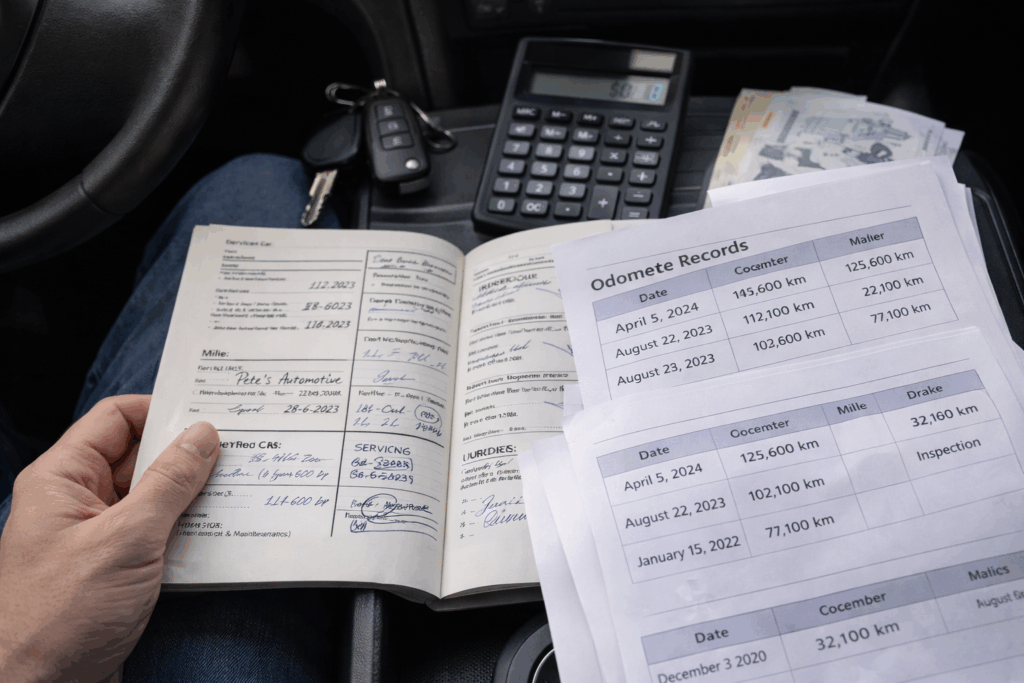
Imagine a car showing three inspections very close together where the odometer reading barely changes or the numbers jump in very neat, rounded steps.That’s a red flag – if someone has been rolling back the odometer, they may try to create a fresh set of records so everything looks consistent again. On the surface, it appears normal.
But genuine usage rarely looks perfectly straight or symmetrical. Kilometres usually rise in uneven steps because life is uneven. When the pattern looks almost too clean, that’s when you slow down and ask a few more questions.
7. Understand the Legal Reality Before You Buy
If you discover after buying the car that someone was rolling back the odometer, fixing it is not easy. Yes, there are laws. Yes, you can complain. But proving it takes time, paperwork and patience. It does not usually end with a quick refund.
A lot of buyers think, “If it’s fraud, I’ll just get my money back.”
It’s rarely that simple.
That’s why your best protection is before you pay.
The smartest time to check if odometer has been tampered is before the money changes hands, not after.
Final Takeaway
Odometer tampering survives for one reason – it plays on trust. The mistake most buyers make isn’t failing to inspect the car, it’s the reliance on a low kilometre figure feeling right. The moment you stop treating the odometer as proof and start treating it as a claim, everything changes. You look at everything from a new lens and listen to the ownership story differently.
Because once the money is transferred, proving that the odometer has been tampered with takes time, effort and often legal back and forth. It’s far easier to verify before you commit.
Prevention is far easier than recovery because once money changes hands, proving someone was rolling back the odometer is slow, technical and frustrating.
If the kilometres, the paperwork, the condition and the pricing all tell the same story, you’re on solid ground. If they don’t, you walk away.

Comments
New Comment