




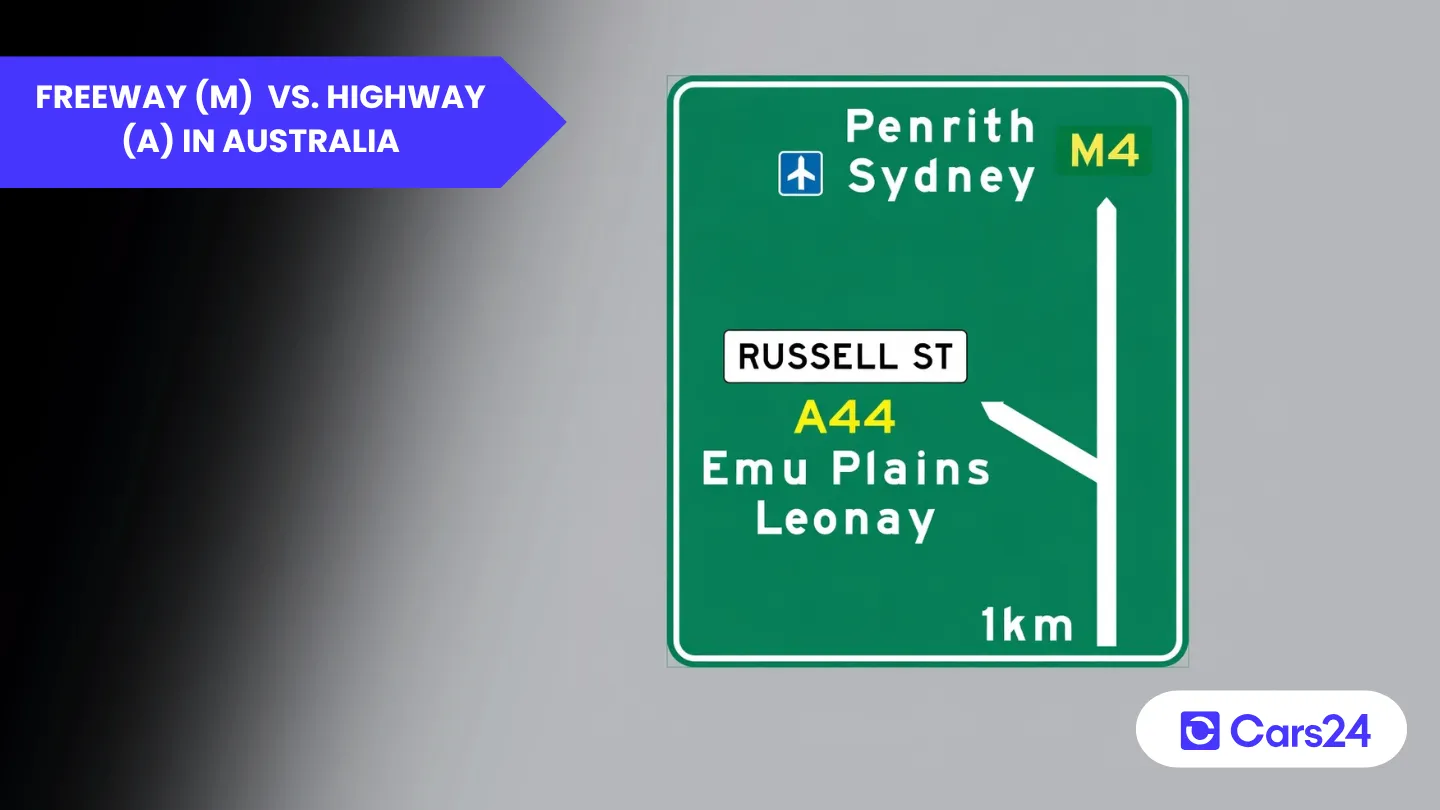
High-speed roads in Australia can feel confusing at first. Terms like freeway, motorway, and highway are often used interchangeably, but they do not mean the same thing.
If you are new Down Under, the signage and route markers like “M,” “A,” and “B” may drive you crazy. That’s why we have written this advice piece.
Learn the freeway versus highway differences, state-wise terms, the alphanumeric system, and more, to navigate the major Aussie roads with confidence.
What is a freeway?
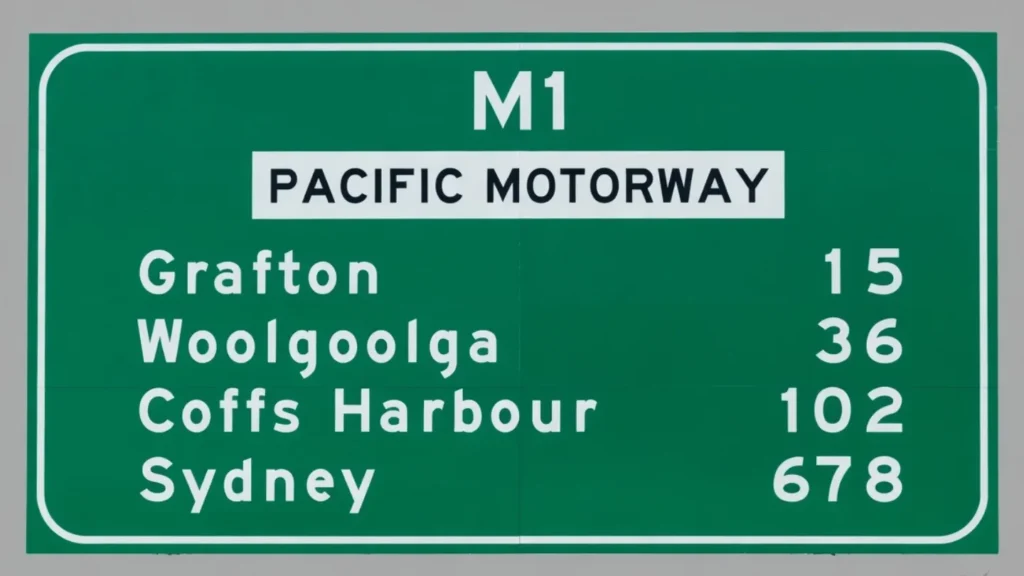
A freeway is typically a controlled-access highway where traffic flows without stopping. NSW and Queensland often use the term “Motorway” for their freeways, while Victoria and WA prefer “Freeway,” but the rules are generally consistent across all states. For example, Monash Freeway in Victoria is a major Melbourne artery connecting the CBD to the south-eastern suburbs.
What is a highway?
There is no single national legal definition for “highway” in Australia, but it is generally understood as a primary road link between towns, cities, or major locations. For instance, Highway 1 (or the Big Lap) connects the entire continent, going through every mainland state capital.
Difference between a freeway and a highway
Freeway versus highway is about the degree of access control. A freeway/motorway/expressway is a specific type of high-speed highway designed for uninterrupted flow, whereas a general highway is a major road that may still interact with local traffic and infrastructure. The difference between a freeway and a highway becomes clearer when you compare their design, rules, and purpose side by side:
| Feature | Freeway/Motorway/Expressway | Highway |
|---|---|---|
| Primary goal | Efficient, high-speed, long-distance travel | Connecting towns/cities with local access |
| Access control | Full control; entry/exit only via dedicated ramps | Partial/none; can have direct driveways and side streets |
| Intersections | None; no traffic lights, roundabouts, or cross-traffic | Common; often includes traffic lights, roundabouts, and crossings |
| Speed limits | Consistently high (100–110 km/h) | Variable (60–110 km/h); drops for towns or schools |
| Traffic flow | Uninterrupted; uses overpasses/underpasses for all crossing roads | Interrupted; traffic may stop for signals or turning vehicles |
| Emergency stops | Strictly illegal unless it is a genuine emergency or breakdown | May have designated pull-over areas or specific sections |
| Prohibited users | Pedestrians, cyclists, L & P-platers (state-wise), animals, and slow vehicles (e.g., tractors) | Usually allows everyone, though specific sections may have restrictions |
| School zones | Never seen | Common near regional towns |
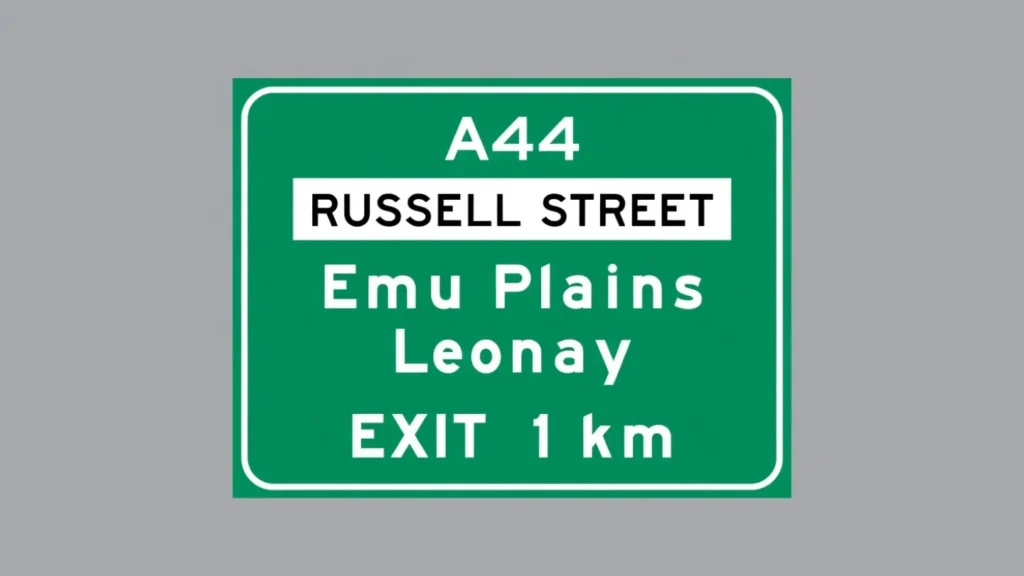
| Signage | “Start Motorway/Freeway” signs; usually M prefix | Generally, A, B, or C prefixes; no “Start” signs |
| Road design | Always dual-carriageway with a physical median/barrier | Can be single-lane, undivided, or even unsealed in remote areas |
Also read: Who is allowed to use a T3 lane without restriction?
Common high-speed road type abbreviations in Australia
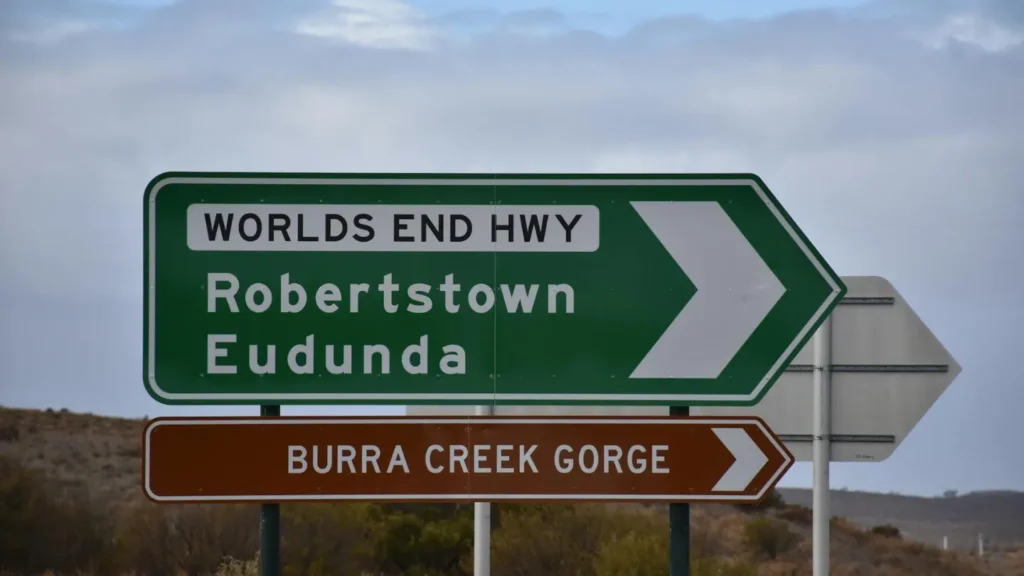
You see standard abbreviations for high-speed roads primarily on road signs, maps, and in postal addresses in Australia.
- Highway abbreviation or short form is “Hwy”
- Freeway abbreviation or short form is “Fwy”
- Motorway is “Mwy”
- Expressway is “Exp or Expwy”
- Tollway is “Tlwy”
- Bypass is “Bypa”
How high-speed road terms change in Australian states
The terms “Highway,” “Freeway,” and “Motorway” represent regional naming traditions rather than distinct national legal categories in Australia. However, the alphanumeric system (like M for the highest standard road) offers consistent classification across most of the country.
| State/Territory | Preferred term for high-speed roads | Notes on usage |
|---|---|---|
| New South Wales (NSW) | Motorway | Almost all high-speed, controlled-access roads are called Motorways (e.g., M1, M4) |
| Victoria (VIC) | Freeway | Prefers “Freeway” for high-speed routes (e.g., Hume Freeway), though alphanumeric signs use the M prefix |
| Queensland (QLD) | Motorway | Like NSW, it uses “Motorway” for its primary high-speed network (e.g., Pacific Motorway, Gateway Motorway) |
| Western Australia (WA) | Freeway | Exclusively uses “Freeway” for its main Perth arteries (Mitchell, Kwinana, Graham Farmer) |
| South Australia (SA) | Expressway/Freeway | Uses “Expressway” for some high-speed routes (e.g., Southern Expressway) and “Freeway” for others (e.g., South Eastern Freeway) |
| Northern Territory (NT) | Highway | All major routes are termed “Highways”. |
When you go across borders, most states use a letter-based grading system on road signs to standardise navigation. The next section is about this alphanumeric system.
Decoding the alphanumeric codes for high-speed roads
The alphanumeric road numbering system (M, A, B, and C) is a standardised way of classifying roads based on their construction quality, traffic capacity, and strategic importance. They were made to harmonise road rules and navigation across states, and they replaced the older “shield-based” system of National and State routes. Here is their hierarchy explained.
| Prefix | Road class | Description |
|---|---|---|
| M | Motorway/Freeway | The highest standard. Typically, dual carriageways have no traffic lights or intersections. Designed for high-speed, uninterrupted travel (usually 100–110 km/h). |
| A | Primary highway | High-quality major roads of national or state significance. While they may have some dual-carriageway sections, they often include single-lane stretches. |
| B | Secondary highway | Less significant but still important routes linking regional centres to larger towns. They may have lower speed limits and fewer overtaking opportunities. |
| C | Link road | Local connector roads linking smaller settlements to the main highway network. These may be narrower, lack shoulders, or follow older, bypassed sections of former major highways. |
| D | Detour | Used primarily in NSW and Victoria for a designated detour route around a major motorway |
| R | Ring route | Exclusive to South Australia, specifically the ring route around Adelaide. |
| ALT A | Alternative route | Used in Queensland to denote an alternative route to a primary ‘A’ highway |
Each state is at a different stage of implementing these national prefixes. For instance, WA is the only state yet to officially adopt this alphanumeric system and is still using the old shield-based route markers.
Also read: Mobile Speed Cameras Explained: What, Why & How
Penalties for driving offences on the high-speed roads
Penalties for breaking road rules on high-speed roads generally include fines, demerit points, and potential licence suspension. Speeding is the most common offence. Fines and demerit points scale according to how much you exceed the limit, state-wise.
You must stay in the left lane unless overtaking, on multi-lane roads with a speed limit of 80 km/h or higher (90 km/h in WA and QLD). For example, the NSW police charge a $423 fine and 2 demerit points for this offence.
Using a handheld mobile phone while driving is strictly illegal across all states. For instance, QLD charges one of the highest fines at $1,251 and 4 demerit points.
Stopping in a through-lane or on the shoulder for a non-emergency is illegal. Emergency stopping is only permitted in the breakdown lane.
Can you cycle on a freeway? The rural exception
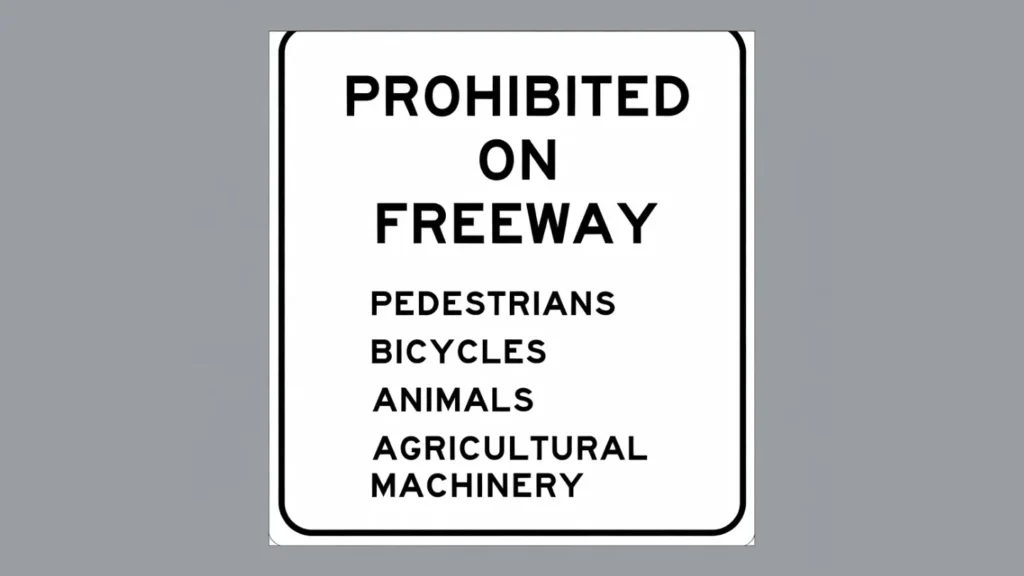
Cycling is generally prohibited on urban freeways but may be permitted on the shoulders of certain rural freeways where no other practical route exists. You are often allowed to ride on the sealed shoulders of long-distance routes like sections of the Hume Freeway or Calder Freeway.
Always look for the “No Bicycles Beyond This Point” sign at entry ramps, which indicates cycling is illegal from that point forward. Breaking the cycling rules here can lead to significant fines and dangerous situations. For instance, in NSW, riding “negligently” or in a prohibited area can incur fines of around $457.
Final thoughts
Not all fast roads are built the same in Australia, even if they look similar at speed. A freeway (or motorway/expressway) is engineered for smooth, uninterrupted driving. A highway is more of a shared space that connects major places, but it allows entry/exit to towns, intersections, turning vehicles, and even school zones.
Understanding the difference helps you adjust your driving style, stay consistent and disciplined on freeways, and be more alert and adaptable on highways. Know the road you are on, adapt accordingly, and drive safely on every stretch.
FAQs about freeways and highways
1. What do they call freeways in Australia?
Freeways or Motorways. The term “Motorway” is more common in NSW and QLD, while “Freeway” is preferred in VIC and WA.
2. What is faster, a highway or a freeway?
Freeways are generally faster because they have no traffic lights or intersections, allowing for a consistent high speed (usually 100–110 km/h).
3. Is a motorway a freeway?
Yes. In Australia, they are functionally the same thing. The name usually just changes based on which state you are driving in.
4. Describe motorway vs. freeway vs. highway.
Motorway/Freeway: High-speed, divided roads with no intersections or traffic lights.
Highway: Major roads that connect towns but may have traffic lights, roundabouts, and local intersections.

Comments
New Comment