





Buying a car is one of the most common major purchases Australians make, and for many people, it involves financing. While a car loan is the most familiar option, homeowners sometimes consider tapping into their property through home equity financing instead.
At first glance, using home equity to buy a car can seem appealing because home loans typically offer lower interest rates than vehicle loans. But financing a car through your mortgage also carries different risks and long-term costs.
So when comparing home equity loan vs car loan, which option actually makes more financial sense? Understanding how car loans work, the implications of using equity to buy a car, and how each financing option affects your long-term finances can help you make a more informed decision.

Read more: Unveiling the perks of used car loans
How car loans work in Australia?
A car loan, also known as a vehicle loan, is a type of financing designed specifically to help people purchase a car. Instead of paying the full purchase price upfront, the lender provides the funds, and the borrower repays the amount in regular instalments over a fixed period.
Typical features of car loans include:
- Loan terms usually range from one to seven years
- Fixed monthly repayments
- Interest rates are determined by credit profile, loan size, and vehicle type
- The vehicle itself acts as security for the loan
Because the loan is tied directly to the vehicle, lenders often provide competitive rates compared with other forms of borrowing. Buyers can estimate repayments using a car loan calculator, which helps compare different loan amounts, terms, and interest rates before applying.
Read more: Secure your dream ride with the best used car loans!
Secured vs Unsecured Car Loans
| Feature | Secured Car Loan | Unsecured Car Loan |
| Collateral | Vehicle used as security | No collateral |
| Interest rates | Generally lower | Usually higher |
| Borrowing limits | Higher | Lower |
| Risk if default | Car may be repossessed | Legal recovery process |
A secured car loan is the most common option because lenders offer lower rates when the vehicle is used as security. Some buyers also use personal loans to purchase vehicles, but these typically have higher interest rates.
What is a home equity loan?
A home equity loan allows homeowners to borrow money using the equity built up in their property. Equity refers to the difference between the current value of the home and the remaining mortgage balance.
For example, if a property is worth $750,000 and the remaining mortgage balance is $400,000, the homeowner has $350,000 in equity. Many lenders allow borrowing up to around 80% of the property’s value without requiring Lenders Mortgage Insurance (LMI).
There are several ways Australians can access home equity financing:
- Home equity loan (lump sum) – a fixed amount borrowed against the property and repaid over time
- Line of credit or redraw facility – flexible access to funds linked to the mortgage
- Mortgage refinancing with cash-out – increasing the mortgage amount and withdrawing the difference
Because the loan is secured against property, interest rates are typically lower than most other types of borrowing.
Can you use equity to buy a car?
Yes, you can use a home equity loan to buy a car if you have sufficient equity in your home and your lender approves the additional borrowing.
This usually involves refinancing or increasing your mortgage to release funds, which can then be used for the vehicle purchase. In practice, using equity to buy a car means that the cost of the vehicle becomes part of your home loan.
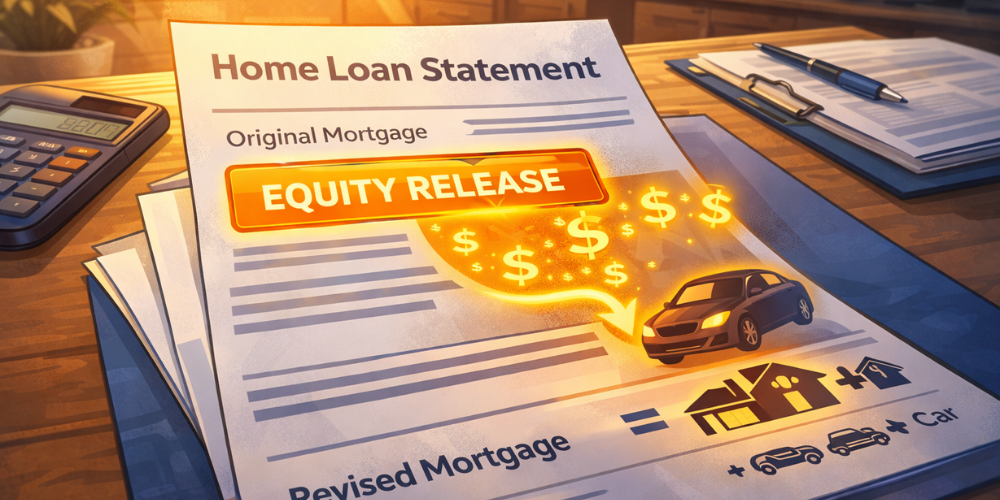
While this can reduce the interest rate compared with many car loans, it also extends the repayment period significantly. Instead of paying off the vehicle within a few years, the debt could be spread across decades if it is rolled into a long-term mortgage.
Read more: Is there a minimum credit score for a car loan in Australia?
Home equity loan vs car loan: The key differences
When comparing a home equity loan vs a car loan, several important differences stand out.
| Feature | Home Equity Loan | Car Loan |
| Security | Property | Vehicle |
| Interest rate | Usually lower | Typically higher |
| Loan term | Often 15–30 years | Usually 1–7 years |
| Approval process | Slower (property valuation required) | Faster |
| Risk | Home may be at risk if repayments fail | Vehicle may be repossessed |
At first glance, the lower interest rate offered by home equity borrowing can look attractive. However, the longer loan term often changes the overall financial outcome.
Lower Interest Rates Don’t Always Mean Lower Costs
One of the biggest misconceptions in the home equity loan vs car loan debate is assuming the lowest interest rate automatically means the cheapest loan.
Consider this example:
| Home equity loan | Car loan | |
| Amount | $50,000 | $50,000 |
| Rate | 6% | 9% |
| Term | 25 years | 5 years |
| Total Interest | ~$46,000 | ~$12,000 |
Even though the home equity loan offers a lower rate, the longer repayment period dramatically increases the total interest paid. A car loan may have higher monthly repayments, but it is usually cleared much sooner.
This is why looking beyond the headline rate and considering the full loan term is essential.
When does using equity to buy a car make sense?
Although it carries risks, using equity to buy a car can be suitable in some situations.
It may make sense if:
- You have substantial equity and a competitive mortgage interest rate
- You are already refinancing your home loan
- You want lower monthly repayments
- The vehicle is used for business or income-producing purposes
In these cases, home equity financing can offer flexibility and access to larger borrowing limits.
Risks of using home equity loan to buy a car
Before choosing this option, it is important to understand the risks involved.
Your home becomes the collateral
With a home equity loan, the property secures the borrowing. If repayments cannot be maintained, the lender may ultimately take action against the property.
Cars depreciate quickly
Vehicles lose value rapidly, often dropping 15–20% in the first year alone. Financing a depreciating asset through a long-term mortgage can leave borrowers paying interest long after the vehicle’s value has fallen.
Interest rate changes
Many home equity borrowing options are linked to variable mortgage rates, which means repayments may rise if interest rates increase.
Vehicle loan vs personal loan: Another option
Some buyers also compare vehicle loan vs personal loan options.
A secured vehicle loan typically offers lower interest rates because the lender holds the car as collateral. Personal loans, by contrast, are usually unsecured and carry higher rates but provide greater flexibility in how funds are used.
For buyers focused primarily on minimising borrowing costs, vehicle loans usually provide a better deal.
Using a car loan calculator to compare options
Before choosing any financing option, it is helpful to estimate repayments using a car loan calculator. These tools allow borrowers to compare loan terms and understand the full cost of borrowing.
Important factors to review include:
- Total interest paid over the life of the loan
- The comparison rate, which includes fees and charges
- Early repayment options or penalties
- Balloon payment structures
Looking at the comparison rate rather than just the advertised rate provides a clearer picture of the loan’s real cost.
Which option is right for you?
Choosing between a home equity loan and a car loan ultimately depends on your financial situation and priorities.
A car loan is often the better option if you want a shorter repayment period, predictable costs, and minimal risk to your property.
Home equity financing may appeal to borrowers who already have significant property equity and are comfortable incorporating the vehicle purchase into their mortgage.
Final advice
When weighing up a home equity loan vs a car loan, there is no one-size-fits-all answer! However, for most Australians buying a vehicle for personal use, a secured car loan remains the simpler and safer choice.
While home equity borrowing may offer lower interest rates, it also ties the purchase of a depreciating asset to long-term mortgage debt and places your property at risk if repayments cannot be maintained.
Before committing to any financing option, compare lenders carefully, calculate repayments using a car loan calculator, and ensure the loan fits comfortably within your broader financial plan.

Comments
New Comment