




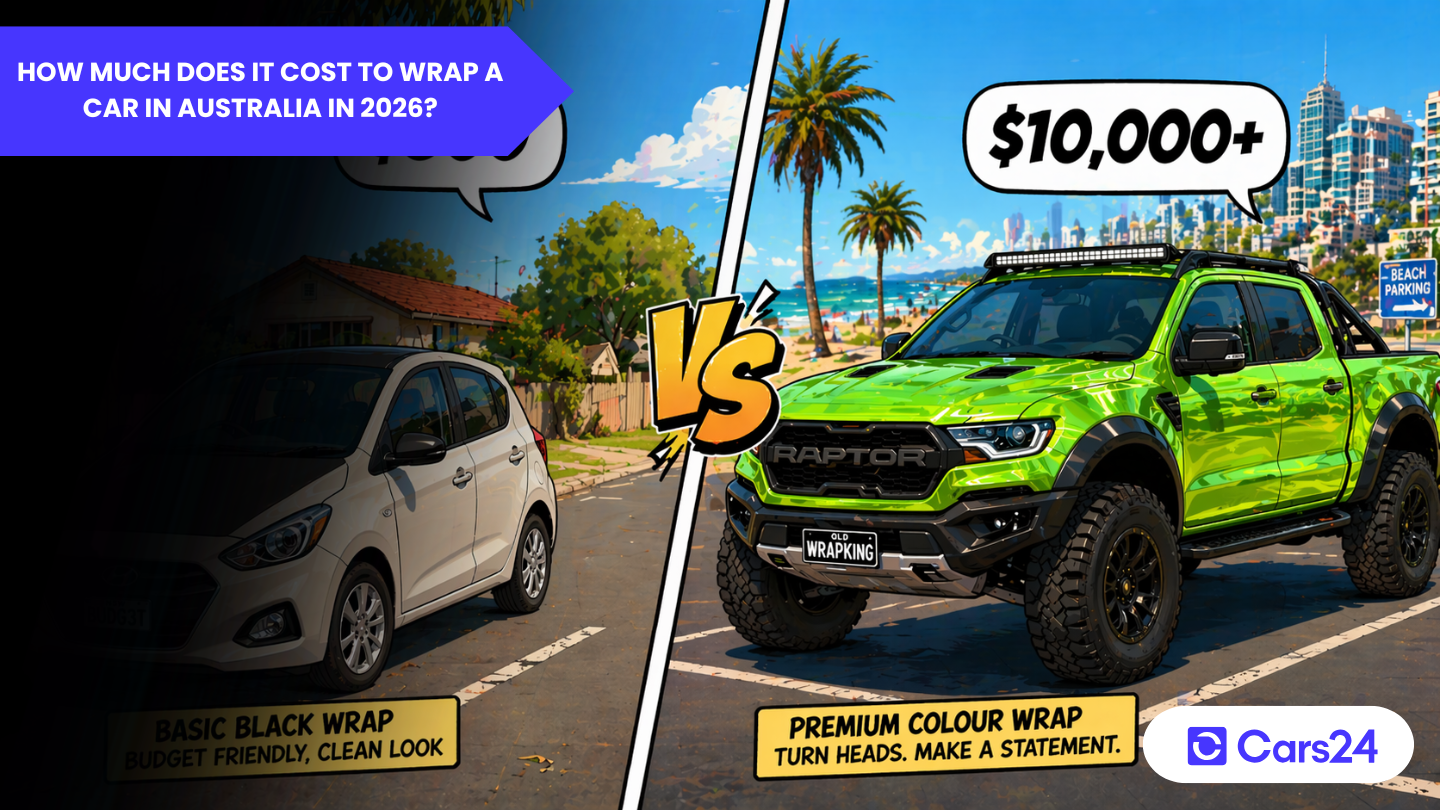
Car wrapping has gone from a niche trend to a fairly common alternative to respraying, offering a quicker and often more cost-effective way to change how a vehicle looks. From simple roof accents to full colour-change transformations, vinyl wraps are now a familiar sight on Aussie roads.
That said, pricing isn’t always straightforward. Costs can vary widely depending on the size of the vehicle, the type of vinyl used, and the experience of the installer. A basic partial wrap might only set you back a few hundred dollars, while a high-end full wrap can easily climb well into five figures.
This guide breaks down what car wrapping actually costs in Australia in 2026, including where your money goes and how to avoid getting stitched up by a poor-quality job.
Read more: How to Inspect a Used Car Before Buying?
What is car wrapping, and why do people do it?
Car wrapping is the process of applying a thin layer of adhesive vinyl film over a vehicle’s painted surfaces. Done properly, it completely changes how the car looks, and it can be removed without damaging the original paint underneath.
People wrap their cars for different reasons. Some want a fresh colour without committing to a respray. Others use wrapping to protect the factory paint and preserve resale value. Businesses wrap fleet vehicles for branding. And enthusiasts use premium vinyl to achieve finishes of matte, satin, chrome, brushed metal, that simply aren’t possible with conventional paint.
Whatever the motivation, the first question is usually the same: how much is it going to cost? The honest answer is that prices in Australia vary widely depending on what you want, what you drive, and who does the work. This guide breaks it all down clearly.
Read more: How to wash your car seats?
Average car wrap costs in Australia in 2026
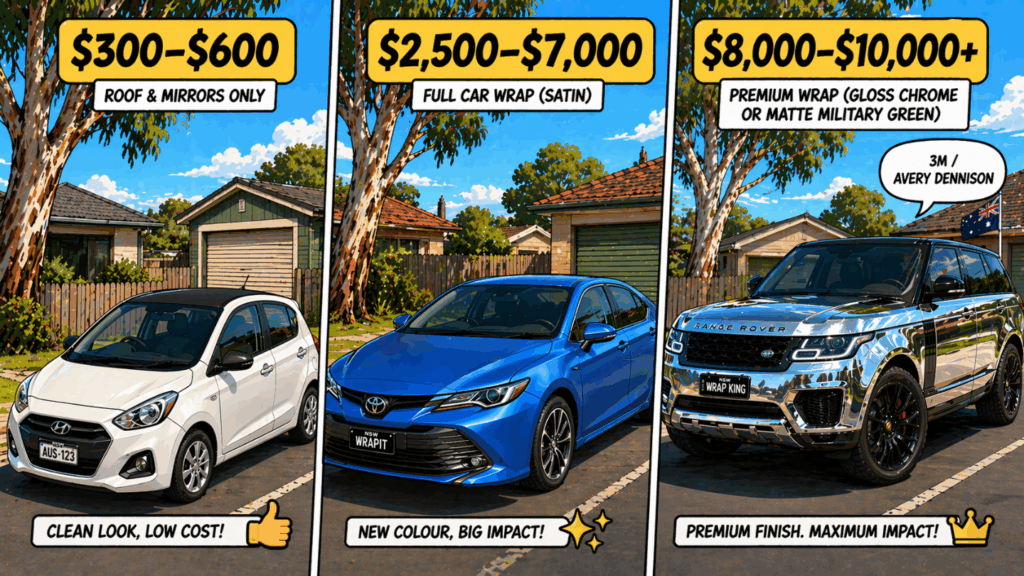
For most passenger cars, a full vinyl wrap in Australia currently costs between $2,500 and $7,000. That’s a wide range, and the gap is explained by the size of the vehicle, the quality of the vinyl chosen, and the complexity of the installation.
Partial wraps, covering just the bonnet, roof, or mirrors, start from as little as $300 to $600 for a single panel. At the premium end, a full wrap using a cast vinyl from 3M or Avery Dennison on an SUV or prestige car can push past $8,000 to $10,000 when you factor in custom design work and specialist labour.
Below is a straightforward breakdown of the main wrap categories and what you can realistically expect to pay at a reputable Australian installer in 2026.
| Wrap type | What’s covered | Typical price range (AUD) | Notes |
| Partial Wrap | Roof, bonnet, mirrors, or boot one or two panels | $300 – $1,200 | Popular accent option; great for contrasting roof colours |
| Full Wrap Small Car | Entire exterior (e.g. hatchback, city car) | $2,500 – $4,000 | Mazda 3, Toyota Corolla, Hyundai i30 sizing |
| Full Wrap Mid-Size / Sedan / SUV | Entire exterior (e.g. SUV, wagon, large sedan) | $3,500 – $6,000 | RAV4, Hilux, Camry, Kia Sportage sizing |
| Full Wrap Large / Prestige | Luxury cars, performance vehicles, large utes/vans | $5,500 – $8,500+ | Porsche, BMW, LandCruiser, large commercial vans |
| Premium / Specialty Wrap | Chrome, colour-shift, brushed metal, carbon fibre look | $6,000 – $12,000+ | Material cost 2–3× standard vinyl; highly skilled install required |
| Custom Printed / Branded Wrap | Full custom graphic design + print + install | $4,500 – $15,000+ | Includes design fees; common for fleet and event vehicles |
These figures assume quality installation by a certified shop. Cheaper quotes exist, but so do the horror stories of bubbling, peeling, and damage to paint when the job is done poorly.
What affects the price of a car wrap in Australia?
No two wrap quotes are identical, and understanding why helps you assess whether a quote is fair or suspiciously cheap. Six factors do most of the work.
- Vehicle Size
More surface area = more vinyl and more labour hours. A small hatchback uses roughly 15–18 metres of film; a large SUV or van can require 25 metres or more.
- Vinyl Brand & Grade
Entry-level calendered vinyl is cheaper but thinner and less conformable. Premium cast films from 3M (1080 series) or Avery Dennison Supreme Wrapping Film cost more but last longer and stretch around complex curves without lifting.
- Finish Type
Gloss and matte wraps are the most affordable. Satin, metallic, and colour-shift finishes are mid-range. Chrome and specialty textured films (brushed, carbon, leather) are the priciest and require expert handling.
- Labour & Experience
Labour typically accounts for 40–60% of the total cost. An experienced, certified installer charges more but a $500 saving can cost you thousands in damage or redo work.
- Vehicle Complexity
Deep curves, door handles, large bumpers, and trim recesses all add time. Sports cars and prestige vehicles often take 30–50% longer to wrap than standard family cars.
- Custom Design & Print
If you want printed graphics, branding, or a one-off design, you’ll pay design fees (typically $150–$500+) on top of production and installation. Complexity and number of colours drive the cost up.
Location matters too. Installers in Sydney and Melbourne tend to charge more than regional Queensland or South Australian shops though the difference in labour rates is usually smaller than the difference in installer quality. Always check reviews and ask to see previous work.
How long does a car wrap last in Australia?
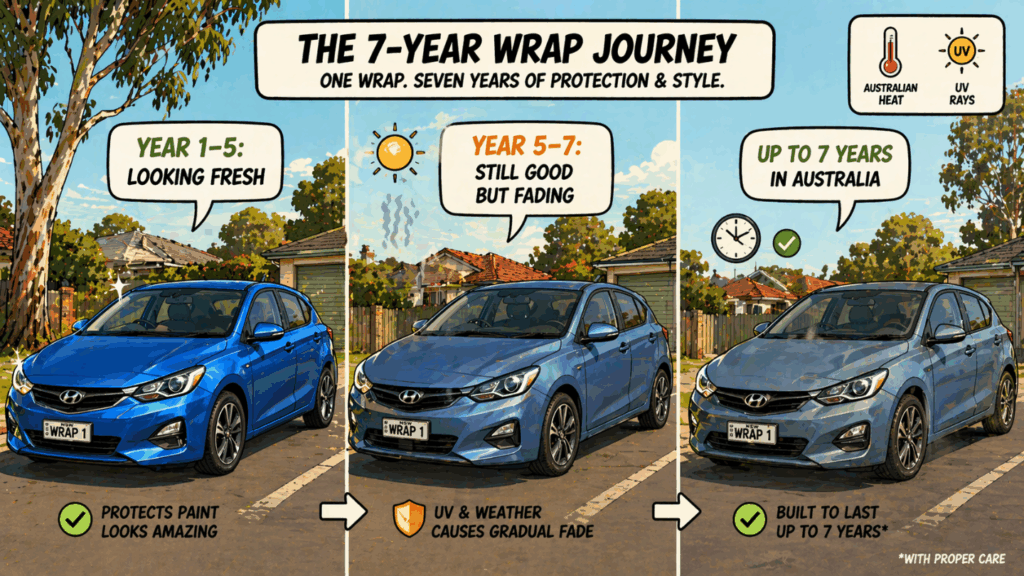
Most quality vinyl wraps installed by a reputable shop will last between 5 and 7 years under normal Australian driving conditions. Premium films from 3M and Avery Dennison carry manufacturer warranties of 3 to 5 years when professionally installed but real-world lifespan often exceeds this.
Australia’s climate is harder to wrap than many other countries. Intense UV exposure, extreme heat in Queensland and Western Australia, and the bush fire season’s smoke and ash can all accelerate degradation. Parking undercover and washing correctly makes a meaningful difference.
- Basic / Budget Vinyl- 1–3 years
- Mid-Range Cast- 3–5 years
- 3M / Avery Premium- 5–7+ years
- Quality Respray- 10–15+ years
How to make a wrap last longer?
Hand-washing with a pH-neutral car shampoo is ideal. Avoid high-pressure washes aimed directly at seams and edges. A dedicated vinyl sealant or spray wax every few months helps protect against UV fading. Keep the car out of direct sun when parked if possible particularly important in Darwin, Brisbane, and Perth where UV intensity is highest.
Pros and cons of car wrapping
Wrapping is a great option for many drivers, but it isn’t right for every situation. Here’s an honest look at both sides.
Pros
- Protects original paint from stone chips, UV, and minor scratches
- Fully reversible peel it off and the factory finish is underneath
- Wide variety of finishes unavailable in standard paint (matte, chrome, satin, colour-shift)
- Faster turnaround than a respray typically 1 to 3 days
- Individual panels can be replaced if one section is damaged
- Can preserve or improve resale value when removed before sale
- Great for business branding and fleet vehicles
Cons
- Not as durable as a quality factory or professional respray
- Poor installation is hard to spot initially but costly to fix research your installer
- Wrapping over existing paint damage (chips, rust, dents) doesn’t hide it for long
- Requires specific care some cleaning products and automatic car washes can lift edges
- High-heat environments (under bonnets, engine bays) need heat-resistant film
- Budget-grade vinyl fades and peels quickly, especially in Australian UV conditions
- Removal of old or poorly applied wraps can sometimes damage paint if done carelessly
The biggest risk isn’t the wrap itself, it’s choosing the wrong installer. Australia has a strong community of certified wrap professionals, but the market also has its share of operators offering bargain prices with little training. Look for shops that are 3M Preferred or Avery Dennison-certified, ask to see completed jobs in person, and read recent Google reviews before committing.
Wrapping it up
Car wrapping can be a cost-effective way to transform your car’s look without locking you into a permanent respray, but prices in Australia vary more than most expect. From a few hundred dollars for small accents to well over $10,000 for premium finishes, what you pay really comes down to the car, the materials, and who’s doing the job.
Spend where it matters, don’t rush the decision, and choose an installer with a solid track record, because a good wrap should turn heads for the right reasons, not start peeling in a few months.
Get it right, and you’ll end up with a finish that looks sharp, lasts well, and feels worth every dollar… now that’s a wrap.

Comments
New Comment