




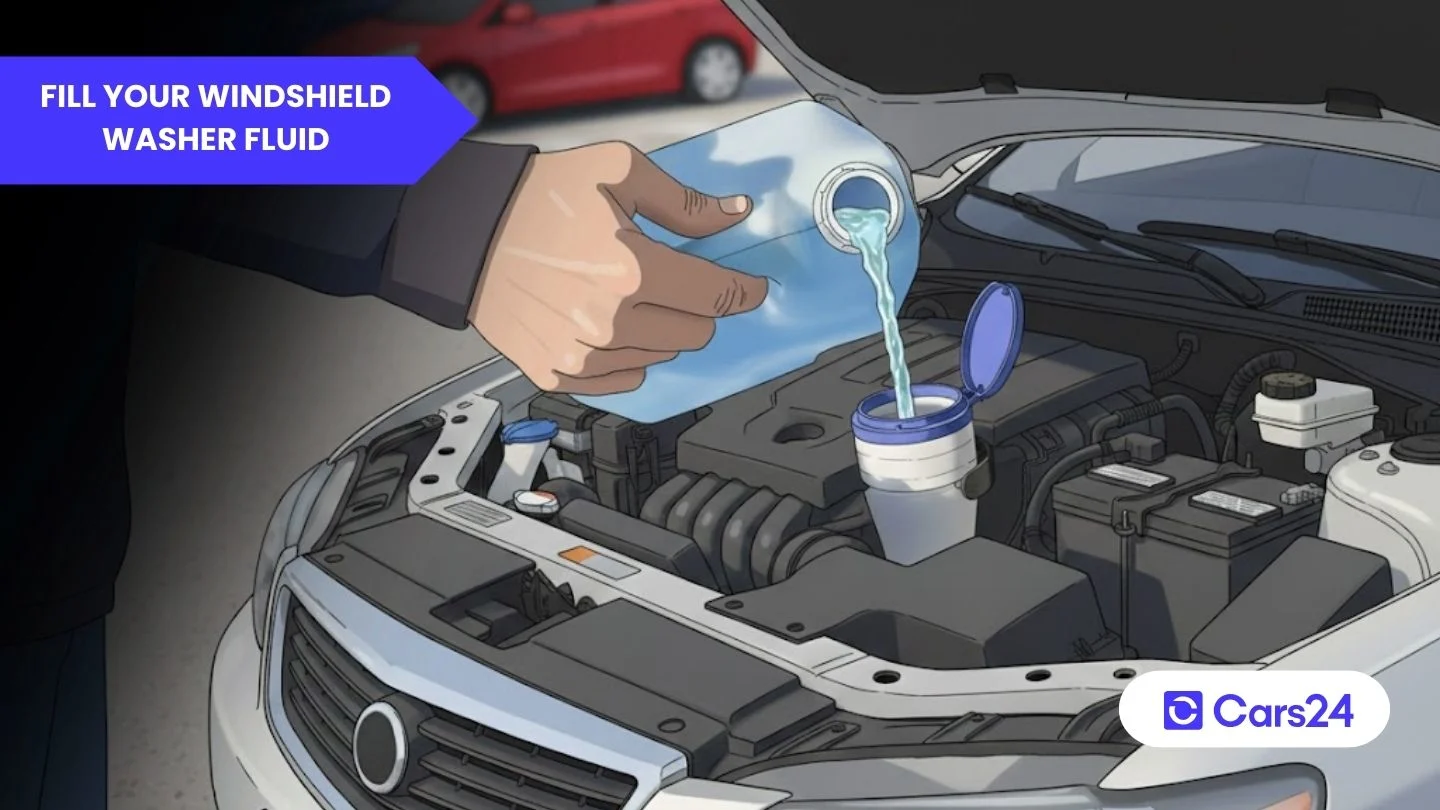
If you’ve ever needed to clear your windshield while driving, but when you pull that stalk behind the steering wheel, nothing happens, you know why this is crucial knowledge for any car owner. That’s usually how you discover that your windshield washer fluid is running low, or worse, it’s bone-dry! It can happen when you’ve covered a lot of miles between services, or if you’ve just bought a used car.
It happens to the best of us. The upside? Topping up your windscreen washer fluid is one of the fastest, easiest car-care tasks you can do. And you’ll genuinely feel more in control of your car afterwards.
So let’s get your view of the road crystal clear again!
Why does windshield washer fluid matter?
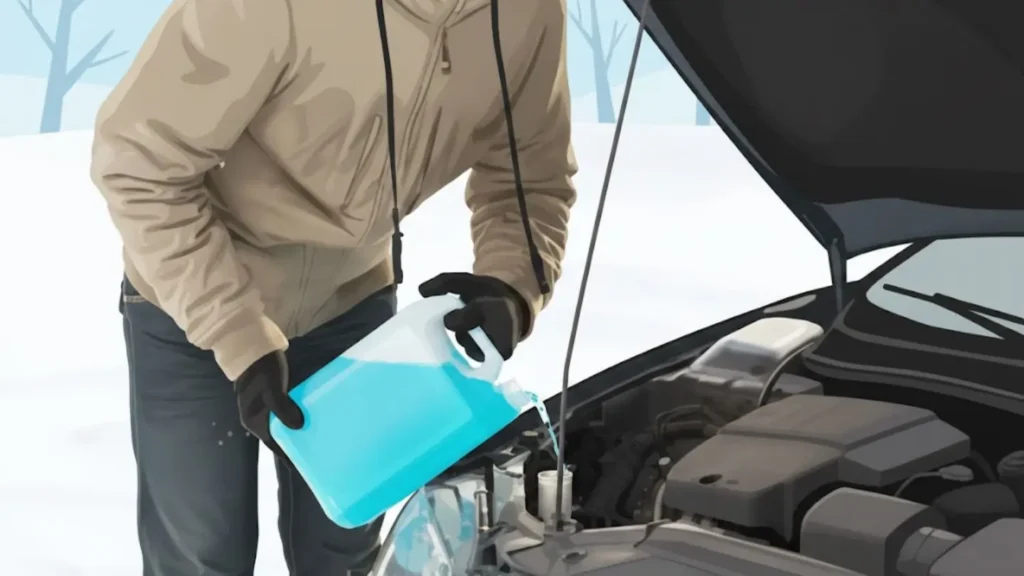
While the wipers are good for dealing with rain by themselves, other kinds of elements can obstruct your vision by dirtying up the windshield. That’s why you have the ability to fire jets of washer fluid in combination with the wipers to clean it up. The washer fluid also usually has some form of cleaning agent for dealing with stubborn stains, just like washing your bathroom floor. It plays a significant role in safety, especially on dusty Australian roads. Washer fluid can:
- Clear bugs, dirt and road grime instantly
- Maintain visibility during rain and glare
- Reduce the risk of wiper scratches on dry glass
If you’re driving and trying to protect your car, keeping the washer fluid topped up helps preserve windshield clarity and wiper health in the long term. Filling your windscreen washer fluid might seem minor compared to other big car maintenance like fixing tyres, brakes or engine oil.
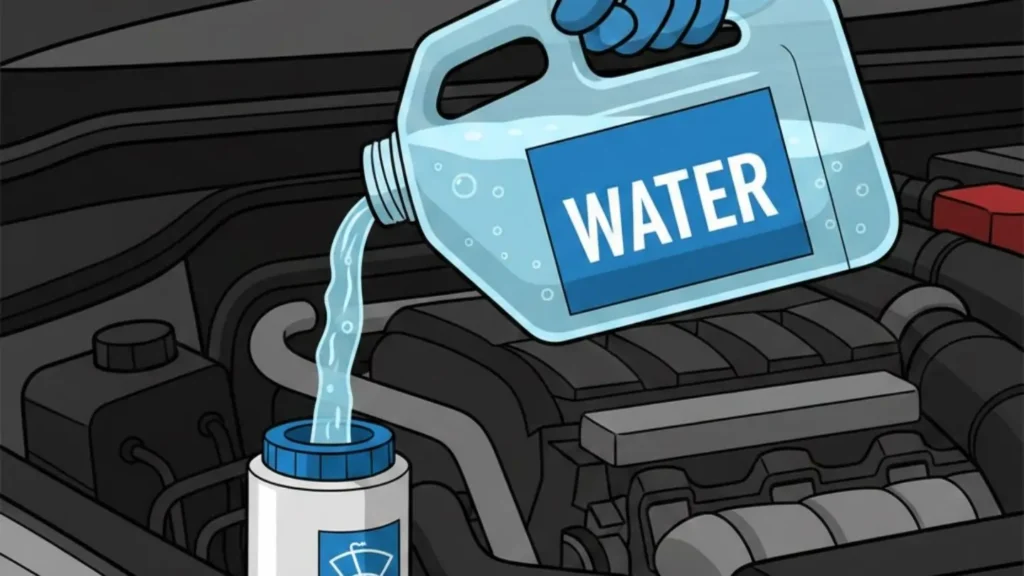
Wait, why can’t I just use water?
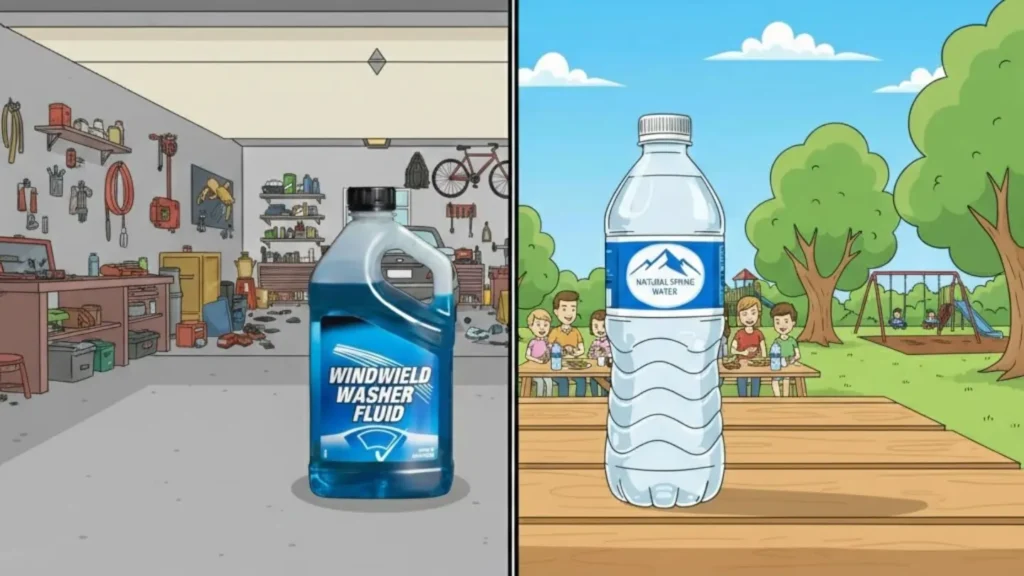
“It’s just water, right?” Wrong. Here’s why cutting corners when filling your windshield washer fluid is a rookie mistake in car care.
- Water is lazy: It doesn’t cut through bug guts and road grime. It just… smears them. Proper washer fluid? That stuff dissolves and dislodges almost anything from your windscreen.
- Water freezes: Imagine a chilly morning, and your entire washer system is a frozen block under the bonnet. Not fun. Washer fluid, however, has antifreeze built-in.
- Water gets gross: Stagnant water in a dark, warm tank is a science experiment waiting to happen. Algae and funky smells can definitely clog up your pipes.
Step-by-step on how to top up your windshield washer fluid

What you’ll need
- Windscreen washer concentrate
- Clean water
- Funnel (optional)
- Clean rag
Safety note: Always follow product instructions and avoid using household detergents, as they can damage wipers and paint.
Step 1: Park and pop the bonnet

Park the car on a flat surface, switch off the engine and lift the bonnet. Secure it with the support strut and locate the windscreen washer fluid reservoir, typically marked with a windscreen/water spray symbol. If unsure, your owner’s manual will confirm its location in the engine bay.
Step 2. Clean and check the windshield washer fluid reservoir
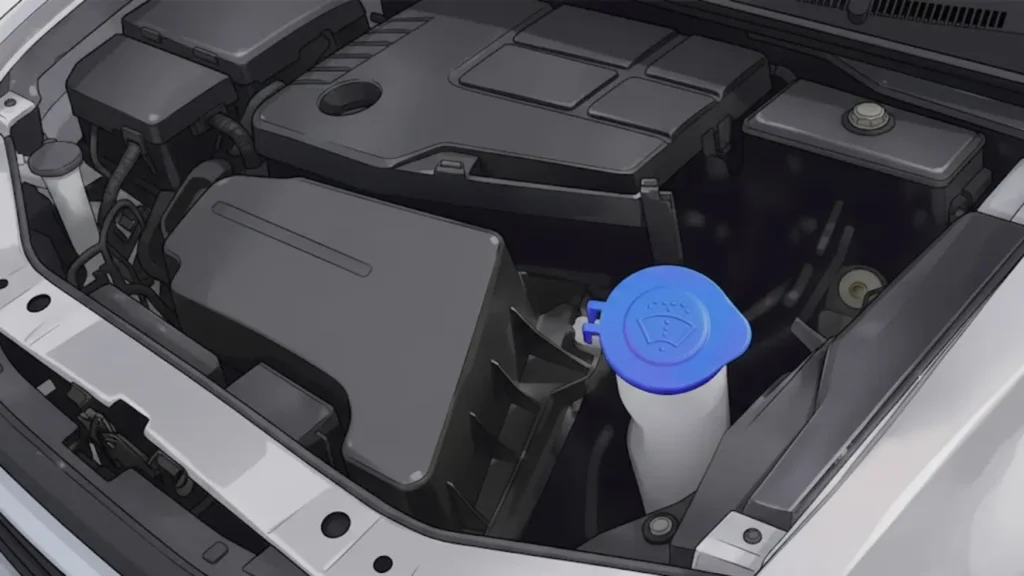
Wipe the cap of the reservoir with a rag before opening to keep dirt from falling inside. Once opened, check the current fluid level. If it’s running low or empty, it’s time for a refill. If the level looks okay, then there might be an issue with the fluid delivery system or the jets, in which case you should consider getting it fixed professionally.
Step 3. Add the washer fluid

Pour in the windscreen washer concentrate first, then top up with the correct amount of water according to the bottle instructions.
Use a funnel if the reservoir opening is small or tucked away. You can also make the blend right next to the open bonnet and pour it into the reservoir right after.
Tip: Anti-fog or winter blends help prevent early-morning misting and are ideal for colder regions.
Step 4. Close and test

Secure the cap, close the bonnet, and jump into the driver seat. Give the wiper stalk a tug to spray the windscreen, and the jets should spray strongly and the wipers should sweep smoothly.
Avoid these common mistakes
- Using household cleaning products – Don’t just grab any detergent from under the sink to make your washer fluid. These can damage paint, rubber seals and internal pump components.
- Topping up with water only in winter – As mentioned earlier, water can freeze in cold conditions and potentially crack the washer reservoir or lines.
- Operating the wipers when there’s no fluid – Causes friction that can scratch the windscreen and wear out the wiper blades prematurely.
Bottom line
Topping up your windshield washer fluid is a small job that makes a big difference to everyday safety. Whether you’ve just bought one of the best second-hand cars in Australia, or haven’t checked the fluid since the last service, simple car-care habits like this help you keep your car fresh and your travel stress-free.

Comments
New Comment