




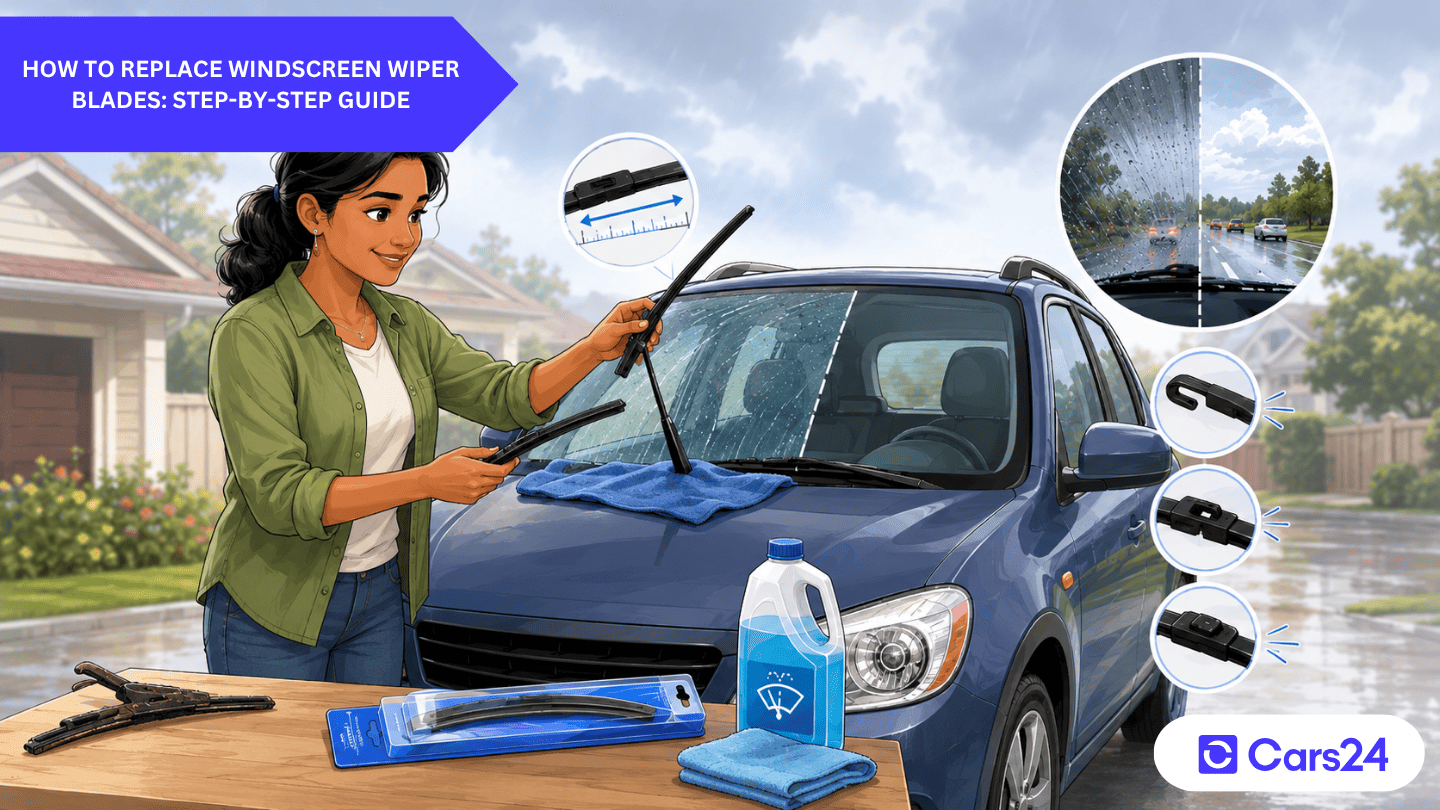
Replacing windscreen wiper blades is one of the easiest car maintenance jobs you can do yourself. If your wipers are streaking, squeaking, skipping or leaving half the windscreen blurry, you can usually fix the problem in under 10 minutes with the right replacement blades.
It is a small job, but it makes a big difference. Clear wipers help you see properly during rain, road spray, dusty conditions and night driving. In Australia, where harsh sun, summer heat, road grime and sudden rain can wear rubber faster, checking your wiper blades is one of those simple habits that can save you from a stressful drive later.
Read along to determine the right wiper blade size, the cost of wiper blades in Australia, and step-by-step instructions on how to replace them.
The basic idea behind wiper replacement
To replace windscreen wiper blades, lift the wiper arm, protect the glass with a cloth, release the old blade from its connector, click the new blade into place, gently lower the arm and test the wipers with washer fluid. Most cars use a hook, tab, button or clip-style connector, so the exact release method can vary.
The most important part is buying the correct blade size and connector type before you start. A blade that looks right but does not fit properly can leave parts of the windscreen uncleared or sit loosely on the arm.
Why windscreen wiper blades matter more than most drivers think
Windscreen wiper blades are easy to ignore because they are not as expensive or dramatic as tyres, brakes or a battery. But they directly affect visibility, and visibility is one of the first things that matters when driving conditions turn messy.
When your wipers are in good condition, they clear water smoothly in one pass. When they are worn, they leave streaks, patches and smears that make the road harder to read. This can be especially annoying at night, when streetlights and headlights reflect through a dirty or smeared windscreen.
Old wipers can also make everyday driving feel more stressful than it needs to be. A bit of rain on the school run, spray from a truck on the motorway, dust after parking outside, or tree sap after a hot day can all become harder to manage when the blades are not doing their job.
How long do wiper blades last?
Most windscreen wiper blades last around six to twelve months, but in reality, the answer depends on where the car is parked, how often it is driven and what conditions it faces.
Australian weather can be tough on wiper rubber. Heat can make it hard and brittle, dust, road film, salt air, tree sap and bird droppings can also wear the edge of the rubber down over time. If the car is parked outside most days, the wipers may age faster even if you do not use them often. A good rule is to replace windscreen wiper blades every six to twelve months, or sooner if they streak, squeak, shudder or leave parts of the glass unclear. You should replace your windscreen wiper blades if you notice:
- streaks or smears left on the glass
- squeaking, squealing or scraping sounds
- shuddering or skipping across the windscreen
- missed patches that do not clear properly
- cracked, split, hardened or perished rubber
- loose, bent or damaged blade frames
- scratches appearing on the windscreen
If the wipers are so worn that the frame or hard plastic parts are touching the glass, replace them immediately. At that point, the issue is no longer just poor visibility. Damaged blades can mark or scratch the windscreen.
How do you find the right wiper blade size?
The easiest way to find the right wiper blade size is to check your owner’s manual or use an online fitment guide from an auto parts retailer. You can usually search by your car’s make, model, year and variant.
This step matters because wiper blades are not universal. Many cars use different blade lengths on the driver and passenger sides. Hatchbacks, SUVs and wagons may also have a separate rear wiper blade. Connector types can vary too, which means a blade that is the right length may still not fit your wiper arm.
Before buying replacement wipers, check the driver-side blade, passenger-side blade and rear blade separately. A lot of cars use different sizes on each side, so do not assume both front blades are the same.
You can also measure your current blades, but only use this as a backup. If the previous owner fitted the wrong size, measuring the old blade simply repeats the same mistake. Before buying replacement wipers, check:
- driver-side blade length
- passenger-side blade length
- rear wiper blade length, if your car has one
- connector type
- whether your car uses standard, beam, hybrid or refill-style blades
Getting the right size makes the job much easier. A blade that is too short may leave part of the windscreen uncleared. A blade that is too long may hit the edge of the glass, the other wiper blade, or the windscreen trim.
What type of wiper blades does your car need?
Traditional frame blades
Traditional frame blades have a visible metal or plastic frame that holds the rubber blade in place. They are common, usually affordable and easy to replace. They are a good option for everyday drivers who want a simple, budget-friendly replacement and mostly drive in normal city or suburban conditions.
Beam blades
Beam blades have a flatter, frameless design. They are shaped to apply pressure more evenly across the windscreen, which can help them wipe more smoothly. They can be a good choice if you want a cleaner wipe in wet weather, especially if the windscreen is curved or your current blades leave uneven patches.
Hybrid blades
Hybrid blades combine elements of traditional and beam-style designs. They often have a covered, aerodynamic body and can feel like a more premium replacement. They are useful for drivers who regularly deal with heavy rain, highway spray or mixed driving conditions and want a stronger all-round option.
Rubber refills
Some wiper systems allow you to replace only the rubber insert instead of the whole blade assembly. This can be cheaper, but it is usually more fiddly than replacing the complete blade. Rubber refills can suit drivers who are comfortable with a slightly more hands-on job and want to save money by replacing only the worn rubber.
How much do wiper blades cost in Australia?
Wiper blade cost in Australia usually depends on blade size, brand and design. Standard replacement blades are generally cheaper, while beam and hybrid blades tend to cost more because of their shape, pressure distribution and finish. Many standard front wiper blade pairs in Australia sit around the $20 to $60 range. Premium blades can cost more, especially for larger windscreens, European cars, SUVs or vehicles with specific connector systems.
Rear wiper blades are usually sold separately. Some auto parts stores also offer fitting services, which can be helpful if you are not sure about the connector type or do not want to risk fitting the blade incorrectly. If you are confident with basic car maintenance, replacing wiper blades yourself is usually the cheaper option.
How to replace windscreen wiper blades step by step
Before you start, park the car safely on a flat surface. Turn the car off, make sure the wipers are not running, and keep the new blades nearby. It is also a good idea to change one blade at a time so you can compare the old and new fitment if needed.
Step 1: Check if your car needs wiper service position
Some modern cars tuck the wipers partly under the bonnet when parked. If you try to lift the arms normally, they may hit the bonnet edge. If that happens, check your owner’s manual for the wiper service position. This usually moves the wipers higher up the windscreen so the arms can be lifted safely. Do not force the wiper arms if the bonnet blocks them.
Step 2: Protect the windscreen
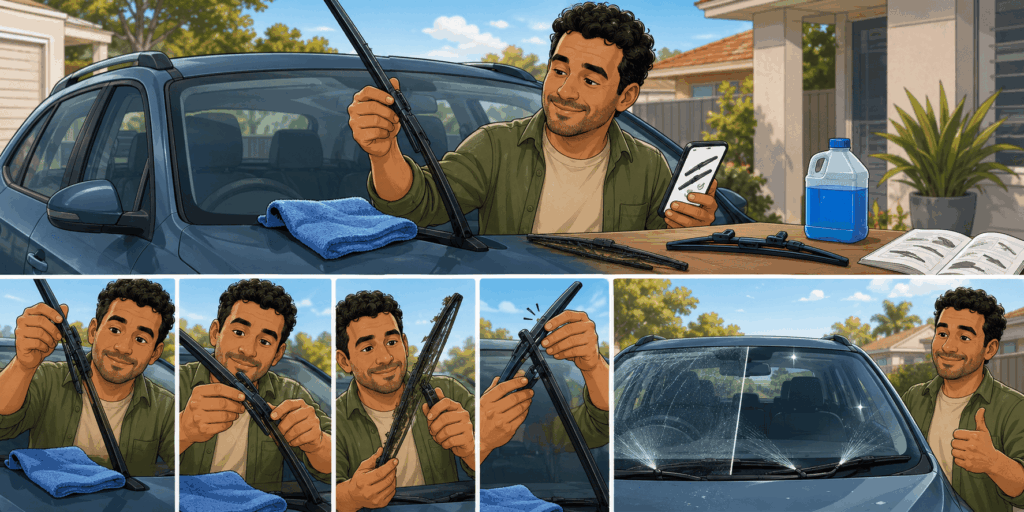
Place a towel or thick cloth on the windscreen beneath the wiper arm. This is a simple but important step. Once the blade is removed, the bare wiper arm can snap back onto the glass if it slips from your hand. The cloth gives the windscreen some protection and helps avoid turning a cheap DIY job into a glass repair.
Step 3: Lift one wiper arm carefully
Lift the wiper arm away from the windscreen until it stays upright. Hold it steady and avoid bending the arm. Start with one side only, especially if the two front blades are different sizes.
Step 4: Release the old wiper blade
Look at how the old blade connects to the arm. Most wipers use a hook, clip, button, tab or bayonet-style connector. Some slide out easily, while others need you to press a small release tab first. Do not yank the blade. If it does not move, check the locking point again. There may be a small cover or button holding it in place.
Step 5: Fit the new wiper blade
Line up the new blade with the wiper arm connector. Slide or click it into position until it locks securely. You should usually hear or feel a click. Once it is fitted, give the blade a gentle tug to check it is properly locked in. It should not feel loose or slide back out.
Step 6: Lower the wiper arm gently
Lower the wiper arm back onto the windscreen slowly. Do not let it drop. Repeat the same process on the other front blade.
If your car has a rear wiper, check whether it needs replacing too. Rear wipers are often forgotten because they are used less often, but they still matter for reversing, parking and rainy-day visibility.
Step 7: Test the wipers with washer fluid
Once the new blades are fitted, spray washer fluid and run the wipers. Avoid testing them on a dry or dusty windscreen because grit can wear the new rubber and drag dirt across the glass.
The blades should move smoothly and clear the fluid evenly. If one blade skips, lifts, shudders or leaves a large unwiped area, turn the wipers off and check the fitting again.
Common mistakes to avoid when changing wiper blades
The most common mistake is buying the wrong size. If the blade is too short, it will not clear enough glass. If it is too long, it may hit the other blade, the windscreen edge or the surrounding trim.
Another mistake is mixing up the driver and passenger blades. Many cars use two different lengths across the front windscreen.
The third mistake is letting the bare wiper arm snap back onto the glass while the blade is removed. Always keep hold of the arm and use a towel underneath it.
You should also avoid testing new wiper blades on a dry windscreen. Use washer fluid first so the rubber glides properly.
Finally, do not ignore the washer system. If the washer bottle is empty, the jets are blocked, or the spray is aimed badly, even new blades may not clear the windscreen properly.
What if your new wiper blades still streak or squeak?
If new wiper blades still streak, the windscreen may be dirty, oily or coated with road grime. Clean the glass properly with an automotive glass cleaner and wipe the rubber edge of the blades with a damp cloth.
If the blades still squeak or skip, check that they are fitted correctly. A loose or poorly locked connector can change the angle of the blade and stop it from sitting flat against the glass.
You should also look at the wiper arm. If the arm is bent or has weak tension, the blade may not press evenly across the windscreen. This is more common on older cars, but it can happen.
If you notice scratches, chips or rough patches on the windscreen, the problem may not be the blade. In that case, it is worth getting the glass checked professionally.
Should you replace both front wiper blades together?
Yes, it is usually better to replace both front wiper blades at the same time. If one blade is worn, the other is often close behind. Replacing both together gives you more even visibility across the windscreen.
The rear wiper can be checked separately because it is usually used less often. But if you drive a hatchback, SUV or wagon, do not forget it completely. A worn rear wiper can make parking, reversing and checking traffic behind you harder in wet weather.
Why wiper blades are worth checking when buying a used car
Wiper blades are not the biggest thing to check on a used car, but they are a useful clue. If the blades are split, noisy or barely clearing the glass, it may simply mean the previous owner forgot a small maintenance item. But it should also remind you to check the rest of the car carefully.
Look at the tyres, lights, windscreen, warning lights, service history and general condition. Small signs of neglect can sometimes point to bigger maintenance gaps.
At Cars24, used cars are inspected before they are listed, which helps reduce the guesswork for buyers. Still, understanding small checks like wiper condition makes you a more confident owner and helps you spot simple maintenance issues early.
FAQs about replacing windscreen wiper blades
How often should you replace windscreen wiper blades?
Most drivers should replace windscreen wiper blades every six to twelve months, or sooner if they streak, squeak, skip, shudder or leave parts of the windscreen unclear.
Can I replace windscreen wiper blades myself?
Yes, most windscreen wiper blades can be replaced at home in a few minutes. You need the correct blade size, the right connector type and a little care when removing the old blade.
How do I know what wiper blade size I need?
Check your owner’s manual or use an online fitment guide by entering your car’s make, model, year and variant. Many cars use different blade sizes on the driver and passenger sides.
How much do wiper blades cost in Australia?
Wiper blade cost in Australia varies by size, brand and design. Standard front blade pairs often sit around the $20 to $60 range, while premium beam or hybrid blades can cost more.
Why are my wipers still streaking after replacement?
New wipers can still streak if the windscreen is dirty, oily or covered in road grime. Clean the glass, wipe the rubber edge and check that the blade is locked into the connector correctly.
Should I replace both wiper blades at once?
Yes, replacing both front wiper blades together is usually best. It keeps visibility even across the windscreen and avoids one old blade leaving streaks while the other clears properly.
Are windscreen wipers checked during roadworthy inspections?
Windscreen wipers and washers are commonly checked because they affect driver visibility. Exact requirements vary by state or territory, but working wipers are part of basic vehicle safety.

Comments
New Comment