




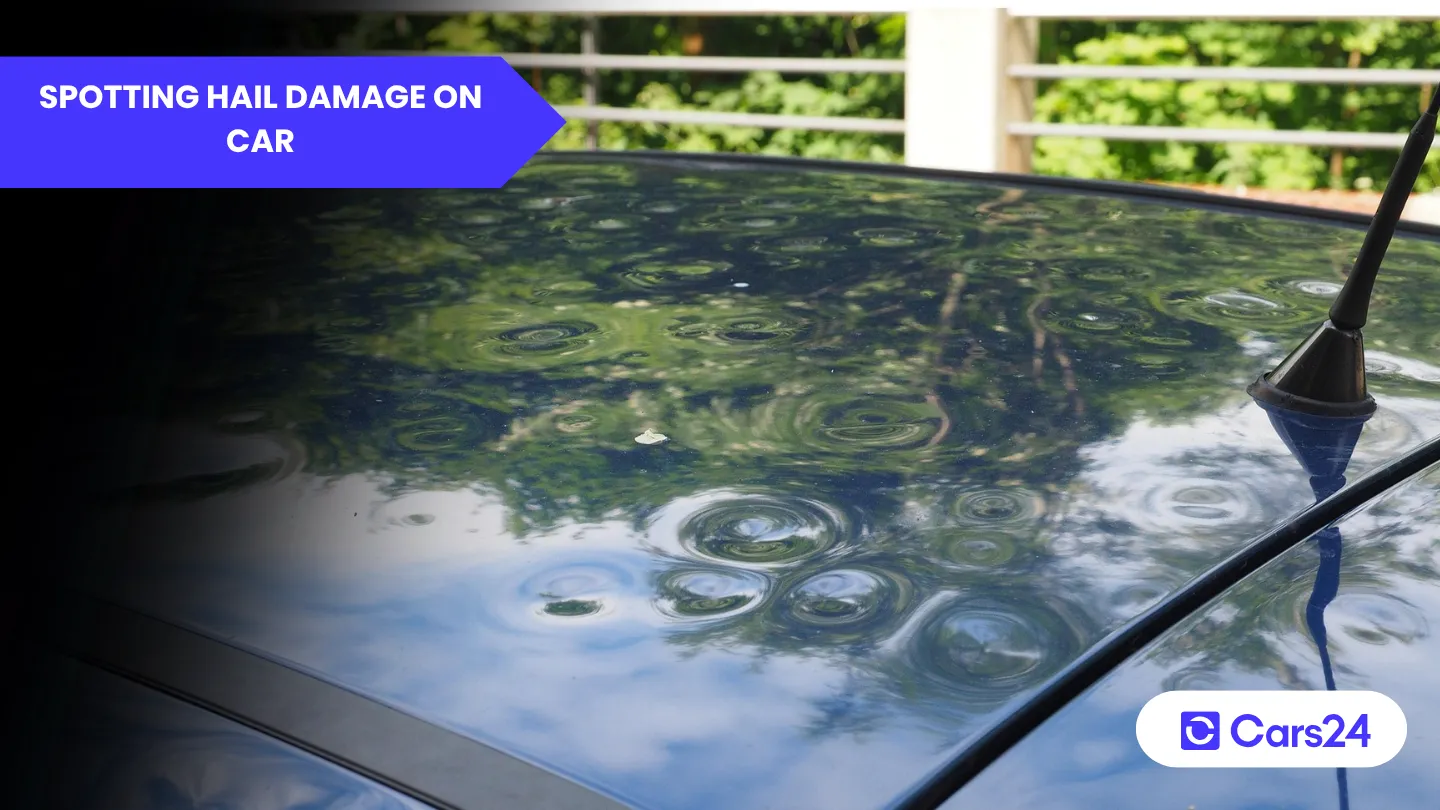
A severe hailstorm can leave a car looking fine from a distance while hiding dozens of tiny dents across its panels, and it matters because undisclosed hail damage can reduce its value, affect insurance, and create expensive problems for you later on.
This guide shows you what hail damage looks and feels like, what your hail damage inspection should include, and legal checks you can do before you negotiate the price or walk away from the deal.
What does hail damage look like on cars?
Hail can occur across Australia, but it is highly likely to fall along the eastern and southern edges of the continent and a few unique inland hotspots. Damaging hail primarily falls in spring and early summer (September to January). The falling hail usually creates a specific top-down damage footprint.
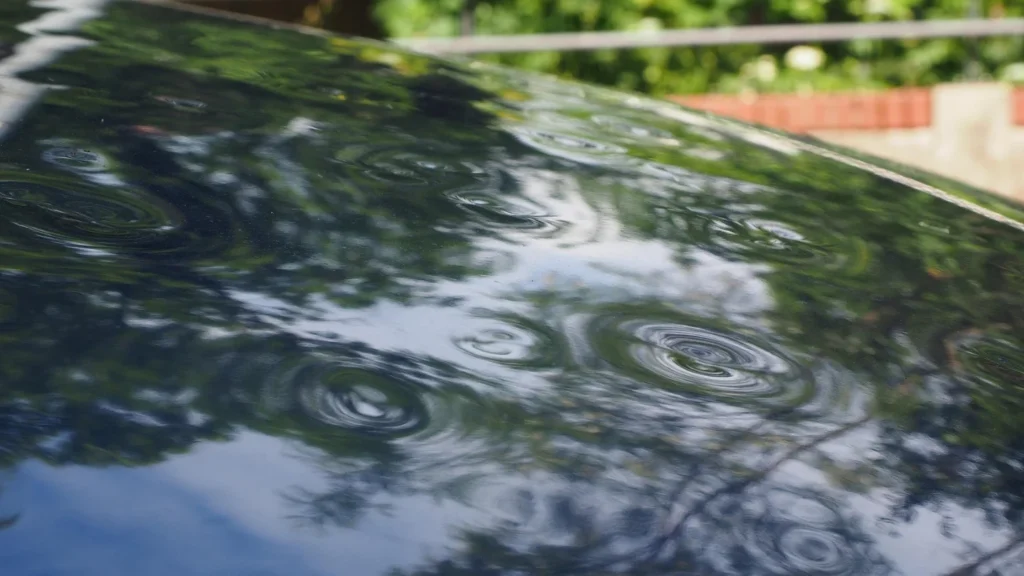
The flat car exterior surfaces like the hood, boot and roof look like the dimpled surface of a golf ball, and these suddenly vanish or drastically reduce as you look down the doors.
How to check for hail damage on a car?
Falling hail leaves a unique pattern of damage on the car’s exterior, and it looks like the Moon’s surface with a lot of craters; it is most clearly revealed when looked at an angle to the horizontal car panels. And when the hail damage is minor, it requires some prior knowledge about the design of damage and careful visual inspection, so go on to read about the steps to inspect this damage.
Step 1: Prepare the car for visual inspection
You need to spot the subtlest hail damage if you are looking to buy a used car, and the best way to see it is by breaking up the reflections on the body panels. A clean car exterior and angled lighting are your best tools to reveal the hidden dents or scratches.
A dirty or dusty car acts like camouflage for micro-dents, so you should get it decently cleaned and dried.
And when it’s time to look for the hail damage, place the car outside in the golden hour during sunrise or sunset, or when it’s overcast or cloudy; and for indoors, place the car parallel to a wall with a long tube or LED strip light.
Step 2: Use a 45-degree angle and reflection lines method
You already know this – always look across the metal, not directly at it. Stand at the front corner of the car near the headlight and squat down so your eyes are level with the bonnet, and then look along the length of the panel.
Look at a straight reflection in the paint, such as a roofline, and if the panel is straight, the reflected line will be perfectly straight, but if there is hail damage, the line will bend, ripple, or break.
Step 3: Complete the exterior inspection checklist
Focus on the bonnet, roof, boot lid, and the tops of the door shoulders, as side panels rarely take direct hail hits unless it was a highly windy storm.
Horizontal panels
Use the 45-degree angle and reflection line method to spot dents, paint cracks, scratches, and chips, and pits.
- Observe the hood surface and wiper cowl area below the windscreen for dents and paint damage
- Look at the roof for shallow broad dents and the panels above the side windows for sharp deep dimples
- Check the tailgate’s top surface or shoulder for sharp dimples, spoiler for cracks or dents and license plate recess or ledge for depressions
Vertical panels and pillars
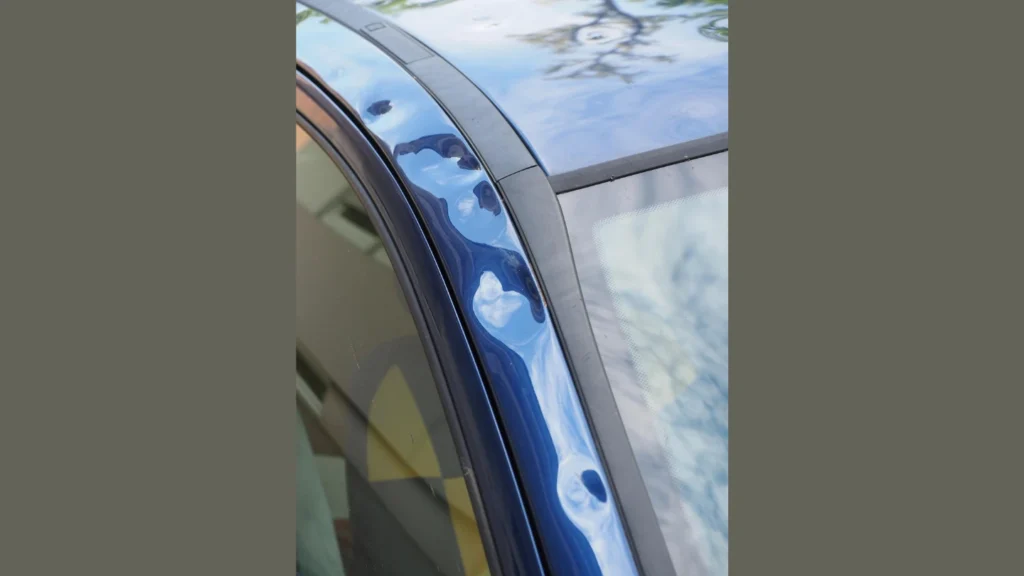
Wind-driven hail can hit vehicles at sharp angles and cause extensive side damage.
- Carefully check the upper pillars: A for deeper dents, B, and C/D for tiny dents
- Upper door swage lines for sharp dents, mid-door panels and lower door skirts for shallow depressions
- Wheel arches and rear quarter panels between the rear doors for shallow dents, fuel filler flap for sharp dents and rear headlights for cracks
- Tailgate face under the rear glass window for broad dents
- Ute tub sides and tailgates for minor depressions
Glass, mirrors and light lenses
Use your phone torch at a low angle to look for pits and cracks, and also inspect the glass from inside out to watch for hairline cracks against a bright day sky.
- Windscreen for fractures, pitting, and edge cracks
- Try to detect deep scratch gouges and deep surface nicks in the side windows
- Side mirrors for fine hairline fractures
- Clear plastic indicator strips in the side mirrors for cracks
- Main headlight assemblies for star-fractures or fogging caused by micro-cracks
- Fog and driving lights for cracks
- Indicators and daytime running lights (DRLs) for hairline splits
- Red and clear plastic rear light clusters for cracks in the outer shell
Step 4: Check for water ingress and electrical faults
A severe Australian hailstorm can allow heavy rain to flood the interior through shattered glass or damaged bodywork, so you should check for signs of flood damage and electrical faults.
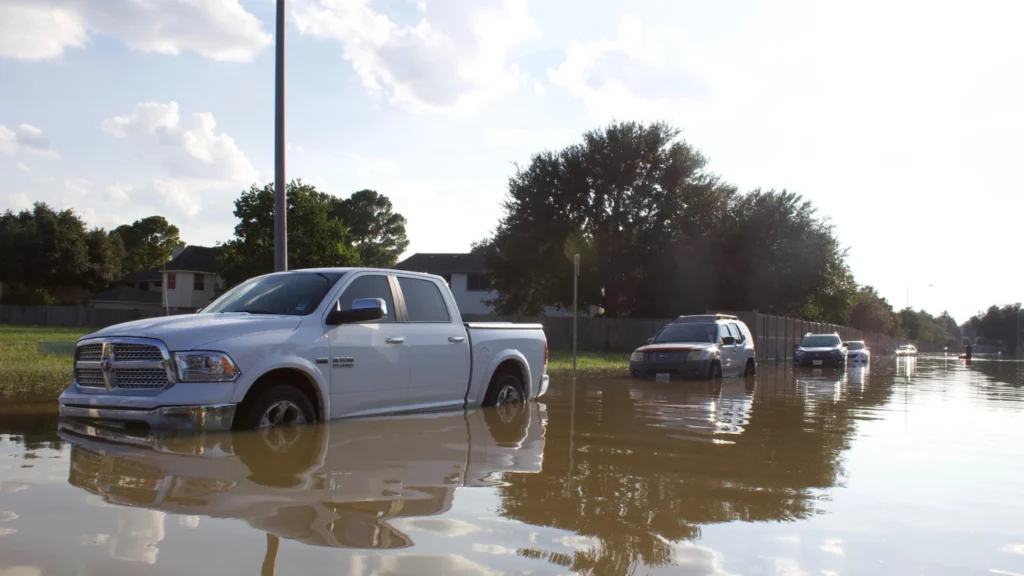
The first giveaway is that familiar musty, earthy, or damp laundry odour and slightly foggy windows after the car has been sitting in the sun. You can then check the spare wheel well in the boot and side storage pockets or look for moisture in the carpets and under them.
Hail damage can also affect cameras or sensors fitted just behind the windscreen and used by driver-assistance systems, which trigger dashboard warning lights.
Also test every electric window movement and the centre console infotainment – touchscreen, radio, and air conditioning controls. You can learn about a more thorough checklist of flood damage signs in a car in a separate blog.
What are the legal indicators of a hail-damaged car?
Hail-damaged cars are legally tracked in specific government databases, and insurance companies are required to report these cars to the government. You can spot these legal and regulatory giveaways for hail damage on a car:
First of all, get a $2 PPSR report using the car’s 17-character VIN, look at the national Written-Off Vehicle Register (WOVR) section, and if it says ‘Repairable Write-Off’ and lists ‘Hail’ under the damage codes, the vehicle has official, legally recognised hail history. If the vehicle is recorded as a statutory write-off, it cannot be legally registered again.
This is often overlooked, but you can also look for mechanic repair notes in the car’s service logbook entries indicating flood damage; this requires a well-documented service history. This will help you to verify if there are any inconsistencies in the car’s history.
Another thing you should try is buying a comprehensive car history report, which you were probably going to buy anyway to check the car’s whole service and accident history. In the case of hail damage, look for Auction history, as insurance companies sell write-off hail cars through auctions.
What to do next?
Cracked paint with hail-caused dimples all over the car, flood-caused electrical damage and mould issues, and repairable write-offs are a big no-no for the used car purchase. If the car is legally registered, has minimal cosmetic-only damage and has been properly repaired, it may still be worth considering depending on its history, condition and asking price.
You can try to negotiate and get the price further down if that used car has a minor hail history and has been repaired using professional Paintless Dent Repair (PDR), and the car looks aesthetically okay.
Similarly, you can heavily negotiate for a car where the hail-damaged sections can be easily bolted off and replaced by you later, like a smashed bonnet, broken headlights, and a smashed windscreen. Avoid the car if major damage spreads to the roof and side pillars, which are crucial for the car’s structural strength.
FAQs about how to check for hail damage on a car
1. How to tell if hail damaged a car?
Look for a random pattern of smooth, round, bowl-shaped dimples like on a golf ball, heavily concentrated on the flat, horizontal surfaces of the car like the bonnet, roof, and boot lid at an angle.
2. Will hail dents pop out on their own?
No, a car’s sheet metal on the exterior has shape memory, and the dents are permanently locked in place.
3. What size hail damages cars?
Vehicle damage typically begins when hailstones reach the size of a 20-cent piece or marble, which is approximately 2 to 3 centimetres in diameter.
4. Will a car be written off due to hail damage?
A hail-damaged car may be declared a “Repairable Write-Off” when the cost or circumstances of repairing it meet the applicable write-off criteria.
5. Is it possible to get hail dents out of a car?
Yes, many hail dents can be repaired effectively using a technique called Paintless Dent Repair (PDR), provided that the hail impact did not crack, chip, or stretch the car’s original paint layer.
6. Does car insurance cover hail damage?
Comprehensive car insurance covers hail damage from a policy, which is subject to the terms and conditions of the insurance contract, including applicable policy wordings and any exclusions.

Comments
New Comment