




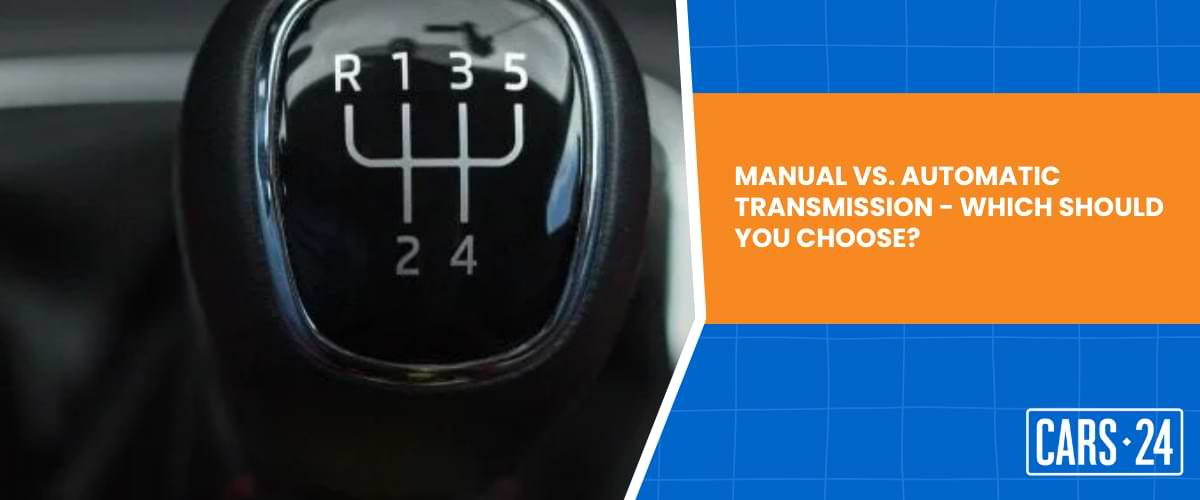
As of May 2026, Automatic Cars now dominate the Australian new-car market, while Manual options are mostly limited to selected performance cars, utes, vans, 4x4s and enthusiast models. But that does not mean the manual vs automatic transmission debate is over. It simply means the better choice depends on how you drive, where you drive, your licence conditions, your budget and what you expect from the car long term.
For most Australian drivers, an automatic transmission is the easier everyday choice. It makes traffic, hill starts, parking and daily commuting simpler. A manual transmission, on the other hand, can still make sense if you enjoy changing gears yourself, want more involvement behind the wheel or are looking at certain used cars where manual driving still has strong appeal.
So, automatic transmission versus manual is not just a preference question. It affects how easy the car feels to drive, how confident you feel in traffic, how much maintenance may cost and how wide your buyer pool may be when it is time to sell.
What is the difference between manual and automatic transmission?
The main difference between a manual and automatic transmission is how the car changes gears.
In a manual transmission, the driver changes gears using a clutch pedal and a gear stick. You decide when to move from first to second, when to downshift and how much control you want over the engine’s revs.
In an automatic transmission, the car changes gears for you. You usually select Drive, Reverse, Neutral or Park, and the transmission manages gear changes based on speed, engine load, throttle input and road conditions.
The real-world difference is simple. A manual car requires more driver input. An automatic car removes most of that work, which is why it is usually easier for learners, commuters and anyone driving through stop-start traffic.
Manual vs automatic transmission: quick comparison
| Factor | Manual transmission | Automatic transmission |
| Ease of driving | Takes more practice | Easier for most drivers |
| Traffic comfort | Can feel tiring in stop-start traffic | Better for daily traffic |
| Driving feel | More engaging and controlled | Smoother and more relaxed |
| Learning curve | Harder to learn | Easier to learn |
| Maintenance | Often simpler, but clutch wear matters | More complex, fluid servicing matters |
| Purchase cost | Can be cheaper on some models | Often more common and sometimes standard |
| Fuel efficiency | Depends on driving style | Modern automatics can be as efficient or better |
| Resale appeal | Smaller buyer pool in many everyday segments | Broader appeal in Australia |
| Best for | Enthusiasts, confident drivers, selected utes and older used cars | City drivers, beginners, families and commuters |
MORE: Used Car vs New Car
s an automatic car easier to drive?
Yes, an automatic car is usually easier to drive because it removes the need to use a clutch or shift gears manually.
This is the biggest automatic pro for most Australian drivers. In heavy traffic, an automatic lets you focus on braking, accelerating, steering and watching the road instead of constantly pressing the clutch and moving through gears.
That matters in daily life. If you are driving through Sydney, Melbourne, Brisbane, Perth, Adelaide or any busy suburban route during school drop-off or peak-hour traffic, an automatic transmission can reduce fatigue. It is also easier on hills because you do not have to manage clutch balance during hill starts.
Automatic cars are also simpler for many learner drivers. There is less coordination involved, which can make it easier to build confidence behind the wheel.
That said, your licence conditions matter. In several Australian states and territories, passing your driving test in an automatic car can place an automatic-only condition on your licence for a period of time or until you complete the required process to remove it. NSW lists “A” as an automatic-only licence condition, while Queensland also places restrictions on drivers with an automatic condition. Always check your state or territory transport authority before driving a manual car on an automatic licence
MORE: Tips for Buying Used Car
Is a manual transmission still better for driving control?
A manual transmission can still feel better if you enjoy being more involved in the drive.
With a manual car, you decide exactly when to change gears. That gives you more control over acceleration, engine braking and how the car responds on winding roads, steep climbs or open highways. This is why many driving enthusiasts still prefer manual cars, especially in performance hatchbacks, sports cars and some older models.
Manual cars can also feel more direct. You are not just steering and accelerating. You are actively working with the car.
But this control comes with effort. If you are tired, stuck in traffic, doing short city trips or sharing the car with someone who does not drive manual, that extra involvement can become annoying rather than enjoyable.
So, manual is not automatically better. It is better for drivers who actually want that extra involvement.
Which is cheaper to maintain: manual or automatic transmission?
Manual transmissions are often simpler and can be cheaper to repair, but the full answer depends on the car, its age, service history and how it has been driven.
A manual transmission usually has fewer complex hydraulic and electronic components than many automatic systems. That can make some repairs simpler. However, the clutch is the big maintenance item. A worn clutch can cause slipping, poor acceleration, difficulty changing gears or a burning smell while driving.
An automatic transmission is more complex. It can include components such as a torque converter, valve body, sensors, transmission fluid systems and electronic controls. This means automatic transmission repairs can cost more when something major goes wrong.
However, modern automatics are built to last when serviced properly. The problem usually starts when transmission fluid changes are ignored, warning signs are missed or the car has been driven harshly.
Before buying any used car, manual or automatic, check:
- Whether gear changes feel smooth
- Whether there are delays, jerks, grinding sounds or slipping
- Whether the service history mentions transmission or clutch work
- Whether there are warning lights on the dashboard
- Whether the car has been inspected properly before sale
Is manual or automatic better for fuel efficiency?
Older advice often said manual cars were always more fuel-efficient. That is no longer a safe blanket rule.
A well-driven manual car can still be efficient because the driver controls gear selection. If you shift early, avoid high revs and drive smoothly, a manual transmission can help reduce fuel use.
But modern automatic transmissions have improved significantly. Many now use more gears, smarter shift logic, overdrive ratios, start-stop systems, dual-clutch technology or continuously variable transmission systems. These improvements can help automatic cars match or even beat manual versions in some models.
The right answer is simple: check the fuel consumption figure for the exact make, model, engine, year and transmission you are considering.
Do not assume the manual version is cheaper to run. Do not assume the automatic version uses more fuel. In 2026, the difference depends on the car.
What are the main types of automatic cars?
When people say “automatic”, they are often grouping several types of automatic cars together. These systems feel similar from the driver’s seat, but they work differently under the bonnet.
| Type of automatic transmission | What it means | Common buyer takeaway | |
| Torque converter automatic | A traditional automatic system using fluid coupling | Smooth, durable and common in many cars | |
| CVT | Continuously Variable Transmission, often used in small cars and hybrids | Smooth and efficient, but can feel different under acceleration | |
| DCT | Dual-Clutch Transmission | Fast gear changes, often used in performance or European cars | |
| AMT | Automated Manual Transmission | Uses manual-style mechanics with automated shifting | Can be cheaper, but shift feel may vary |
| Single-speed EV drive | Common in electric vehicles | No traditional gear shifting in normal driving |
This matters because not every automatic drives the same way. A CVT in a small city car will feel different from a dual-clutch automatic in a performance hatch or a torque converter automatic in an SUV.
If you are buying used, always test how the transmission feels in real driving. Smoothness, hesitation, noise and service history matter more than the label alone.
Is a manual car cheaper to buy?
Sometimes, yes. Manual versions of some cars can be cheaper than their automatic equivalents, especially in the used market.
But the gap is not always dramatic anymore. In many new-car ranges, automatic transmission is now standard. In some segments, manual options are limited or not offered at all. Manual cars are still available in Australia, especially across selected performance cars, utes, 4x4s, vans and some affordable models, but they are not as common as they once were.
In the used market, manual cars can sometimes look cheaper because fewer buyers want them. That can be good if you are a confident manual driver looking for value. It can be less ideal when you want to sell the car later, because your buyer pool may be smaller.
Does transmission type affect resale value?
Yes, transmission type can affect resale value, especially because most Australian buyers now prefer automatics for daily use.
Automatic cars usually appeal to a broader buyer pool in Australia. Learners, families, city commuters and drivers who share cars at home are more likely to choose automatic because it is easier and more convenient.
Manual cars can still attract strong demand in specific segments. A manual performance car, 4×4, ute or enthusiast model may appeal to buyers who specifically want that driving experience. But for ordinary city hatchbacks, sedans and SUVs, a manual transmission can narrow your resale audience.
If resale value matters to you, look at buyer demand for that exact model. A manual Mazda MX-5 and a manual family SUV will not attract the same kind of buyer.
Manual vs automatic transmission: pros and cons
| Transmission | Pros | Cons |
| Manual transmission | More driving control, often simpler mechanically, can be cheaper to buy, more engaging for enthusiasts | Harder to learn, tiring in traffic, clutch wear can be costly, smaller resale audience in many everyday segments |
| Automatic transmission | Easier to drive, better in traffic, beginner-friendly, smoother for daily use, broader resale appeal | Can cost more to repair, may be more expensive upfront, some systems need specialised servicing, less engaging for some drivers |
Should you choose manual or automatic transmission in Australia?
Choose an automatic transmission if you want the easiest and most practical daily drive. It is the stronger choice for city traffic, learner drivers, family cars, shared household cars, hill starts and long commutes.
Choose a manual transmission if you enjoy driving, want more control, are confident using a clutch or are buying a car where manual demand still exists, such as certain performance cars, older used cars, utes or enthusiast models.
Here is the straight answer:
| Your driving need | Better fit |
| Daily city commute | Automatic |
| Heavy traffic | Automatic |
| Beginner driver | Automatic |
| Maximum convenience | Automatic |
| Driving engagement | Manual |
| Lower mechanical complexity | Manual |
| Shared family car | Automatic |
| Performance feel | Manual, depending on the car |
| Stronger general resale appeal | Automatic |
| Buying on a tight used-car budget | Depends on the model |
For most Australian drivers, automatic is the easier recommendation. For the right driver, a manual can still be more rewarding.
What should you check before buying a used manual or automatic car?
Before buying a used car, the transmission should be one of the first things you assess.
For a used manual car, check:
- The clutch does not slip under acceleration
- Gear shifts feel smooth and do not grind
- The clutch pedal does not feel unusually heavy or vague
- The car does not roll back excessively during hill starts
- There is no burning smell after normal driving
For a used automatic car, check:
- The car moves smoothly from Park to Drive and Reverse
- Gear changes are not jerky or delayed
- There is no shuddering under acceleration
- There are no transmission warning lights
- The service history includes relevant fluid checks or servicing
If you are comparing used cars online, do not rely only on photos. Transmission condition is something you understand through inspection, service history and the way the car drives.
How can Cars24 help you choose between manual and automatic?
Cars24 makes it easier to compare used manual and automatic cars online without guessing your way through listings.
You can browse used cars by body type, budget, kilometres, fuel type, features and transmission. On eligible Cars24 vehicles, you can also review inspection-backed details, car condition information, PPSR checks and pricing before you take the next step. Cars24 Australia states that cars listed on its website pass a 300-point inspection, and its return policyexplains the 30-Day Return Guarantee for eligible purchases.
This is useful because the best transmission choice depends on the exact car, not just the category. A small automatic hatch may be perfect for city use. A manual ute may suit someone who wants control and durability. A used automatic SUV may make more sense for a family that needs comfort in traffic.
The goal is not to pick manual or automatic because someone online said one is better. The goal is to choose the car that fits how you actually drive.
FAQs
Is manual vs automatic transmission better for beginners?
Automatic transmission is usually better for beginners because there is no clutch pedal or manual gear shifting to manage. This allows new drivers to focus on steering, road position, braking, speed control and traffic awareness. Manual cars can be learned later if your licence conditions allow it.
Is automatic transmission versus manual better for traffic?
Automatic transmission is better for heavy traffic because it reduces constant clutch use and gear changes. In stop-start driving, an automatic car is usually smoother and less tiring, especially for daily commuting in Australian cities.
Is a manual transmission cheaper to maintain?
A manual transmission is often simpler and can be cheaper to repair, but clutch wear can still become expensive. Maintenance cost depends on the car, driving habits, service history and whether the previous owner treated the gearbox properly.
Are automatic cars more fuel-efficient than manual cars?
Some automatic cars are more fuel-efficient than manual cars, while some manuals still use less fuel. Modern automatics have improved a lot, so buyers should compare the official fuel consumption figure for the exact model, year, engine and transmission.
How do I drive a manual car?
To drive a manual car, you use the clutch pedal with your left foot and the gear stick to select gears. You press the clutch, choose the right gear, slowly release the clutch while applying accelerator and shift up or down as the car’s speed changes. Learners should practise with a qualified supervisor or instructor.
What is the biggest automatic pro?
The biggest automatic pro is convenience. Automatic cars are easier in traffic, simpler for beginners, smoother in daily use and more comfortable for drivers who do not want to manage clutch control and gear changes.
What are the main types of automatic cars?
The main types of automatic cars include torque converter automatics, CVTs, dual-clutch transmissions, automated manual transmissions and single-speed electric vehicle drive systems. They all reduce manual gear shifting, but they can feel different to drive.
Can I drive a manual car with an automatic licence in Australia?
It depends on your state or territory and your licence stage. In many places, an automatic-only condition restricts you from driving manual vehicles unless supervised or until the condition is removed. Always check your state or territory transport authority before driving a manual car. NSW and Queensland both publish specific automatic-condition rules for drivers.
Do manual cars have better resale value?
Not usually for everyday cars. Automatic cars often have broader resale appeal because more buyers can and want to drive them. Manual cars can still perform well in niche segments, including performance cars, enthusiast models, some utes and older vehicles.
Should I buy a manual or automatic used car?
Buy an automatic used car if you want convenience, traffic comfort and broader resale appeal. Buy a manual used car if you enjoy driving, are confident with clutch control and the specific model has strong manual demand. Always check the car’s service history and transmission condition before buying.

Comments
New Comment