




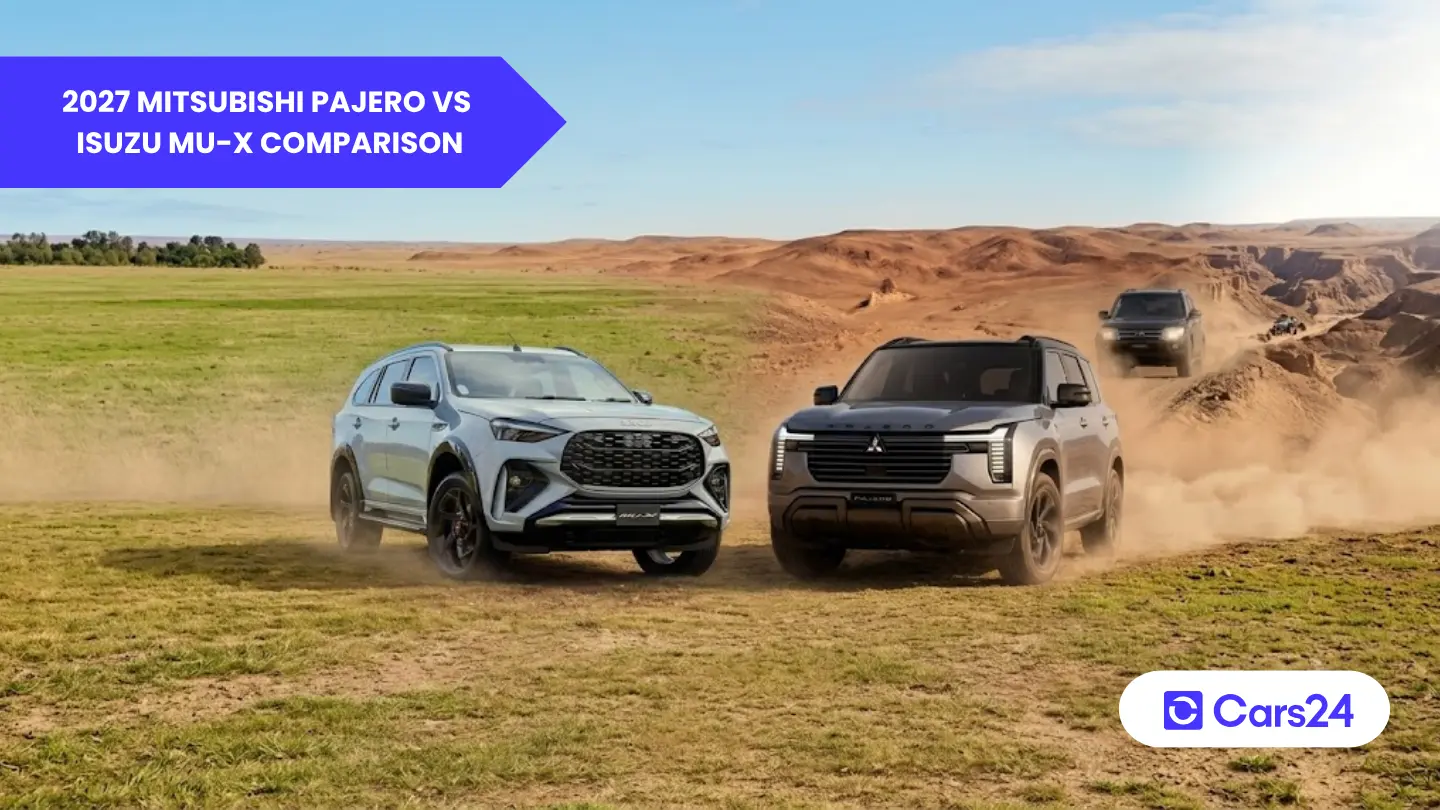
The Pajero is back and honestly, that’s one of the bigger comebacks in the Aussie 4WD world in years. It disappeared back in 2021, and now Mitsubishi’s bringing it back with a completely different formula. Gone is the old monocoque body. The new Mitsubishi Pajero rides on a proper ladder-frame chassis borrowed from the Triton ute, gets coil springs out back, and runs Mitsubishi’s latest Super Select 4WD-II system. In other words, it’s built to go head-to-head with one of the toughest players in the segment: the Isuzu MU-X.
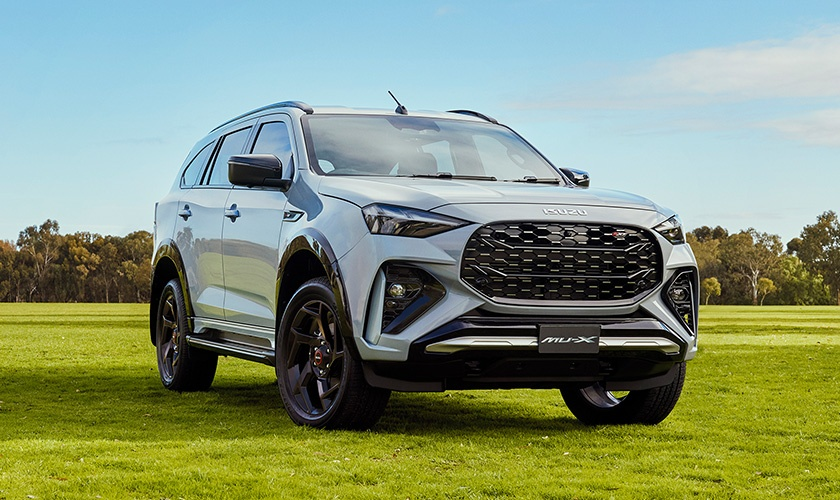
The MU-X has spent the last few years quietly winning over Aussie families and tourers. It’s not the flashiest thing on the road, but its diesel engines are dependable, it seats seven, and it’s proven itself off the beaten track more times than most SUVs its age. So the question is simple: if you’re after a family tourer, a caravan hauler, or just something to take bush on weekends, which one should actually be on your radar, the new kid, or the known quantity? Let’s break it down.
2027 Mitsubishi Pajero vs Isuzu MU-X specs compared
| Mitsubishi Pajero | Isuzu MU-X | |
| Body | Ladder-frame SUV | Ladder-frame SUV |
| Engine | 2.4L 4-cyl turbo-diesel | 3.0L or 2.2L 4-cyl turbo-diesel |
| Power | 150kW | 140kW (3.0L) / 120kW (2.2L) |
| Torque | 480Nm* | 450Nm (3.0L) / 400Nm (2.2L) |
| Transmission | 8-speed auto | 6-speed (3.0L) / 8-speed (2.2L) |
| 4WD system | Super Select 4WD-II + S-AWC | Terrain Command 4WD |
| Drive modes | 7 terrain modes | Rough Terrain Mode |
| Length | 4920mm | 4860mm |
| Width | 1925mm | 1870mm |
| Height | 1910mm | 1825mm |
| Wheelbase | 2870mm | 2855mm |
| Ground clearance | 230mm | 235mm |
| Braked towing | Not yet announced | 3500kg |
| Seating | 5 or 7, market-dependent | 7 |
| Pricing (driveaway) | $68,490- $84,990 | $49,900- $85,363 |
Price and value
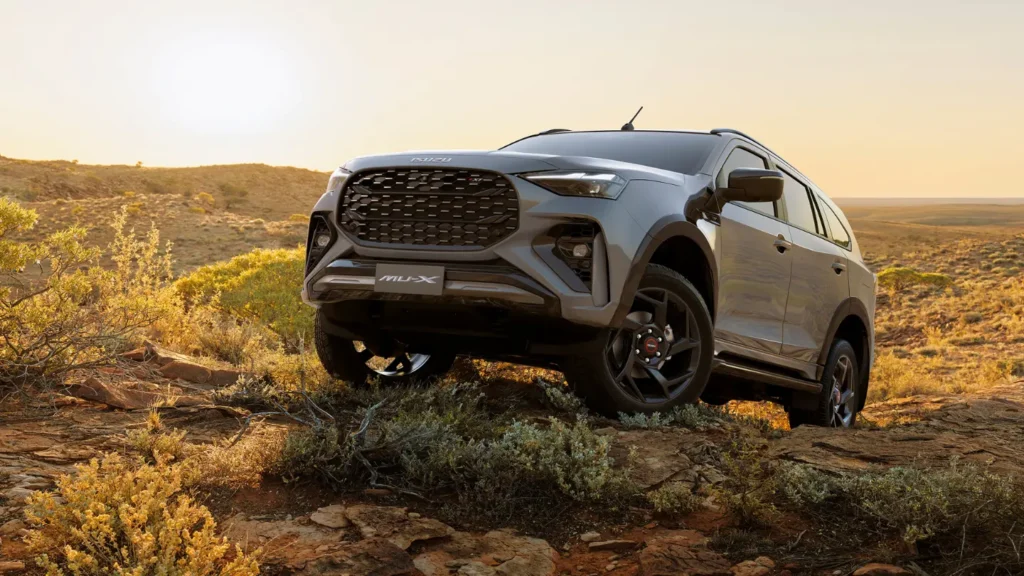
This could ultimately be one of the biggest deciding factors in this comparison. The Isuzu MU-X is already established in Australia, with the 2.2-litre range starting at $49,900 before on-road costs, while the 3.0-litre remains available higher in the range.
The Mitsubishi Pajero, meanwhile, starts at $68,490 before on-road costs and climbs to $84,990 for the flagship GSR. That’s a sizable premium over the MU-X, although the Pajero also brings a different proposition with its ladder-frame chassis, diesel power and Super Select 4WD system. On price alone, the MU-X is the clear winner. The Pajero has more to prove at its higher price point, and whether its extra capability and hardware justify the premium is something we’ll reserve judgement on until we’ve driven it.
Cars24 Australia’s verdict: MU-X.
Engine and performance
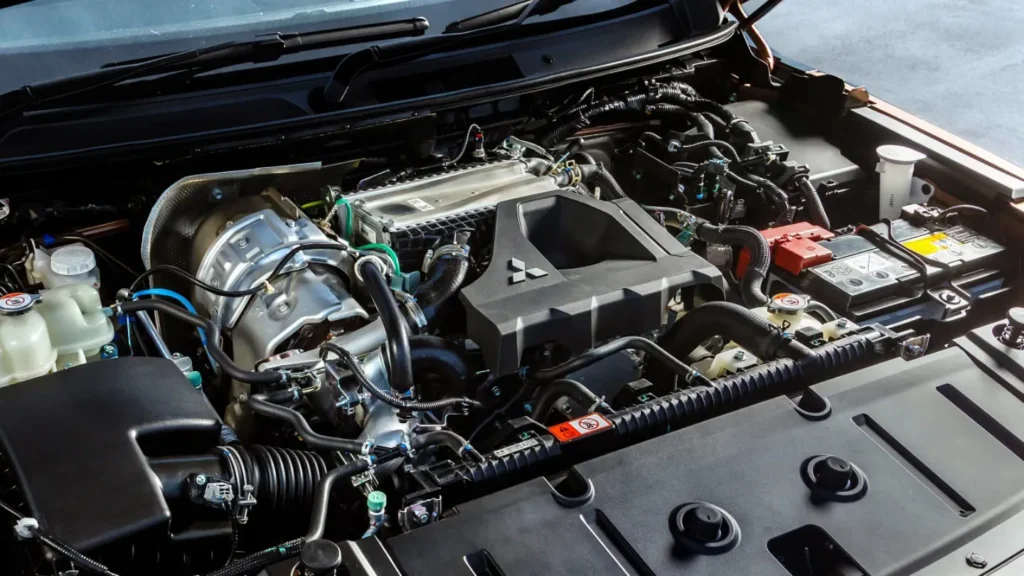
The Mitsubishi Pajero wins on paper. Its 2.4-litre turbo-diesel produces 150kW and up to 480Nm, putting it ahead of both the Isuzu MU-X 3.0-litre (140kW/450Nm) and 2.2-litre (120kW/400Nm). It also gets an eight-speed automatic, while the 3.0-litre MU-X continues with a six-speed. Pajero has the stronger headline numbers and newer transmission, although real-world performance and towing ability will need to wait for an Australian test.
Cars24 Australia’s verdict: Pajero.
Dimensions and practicality
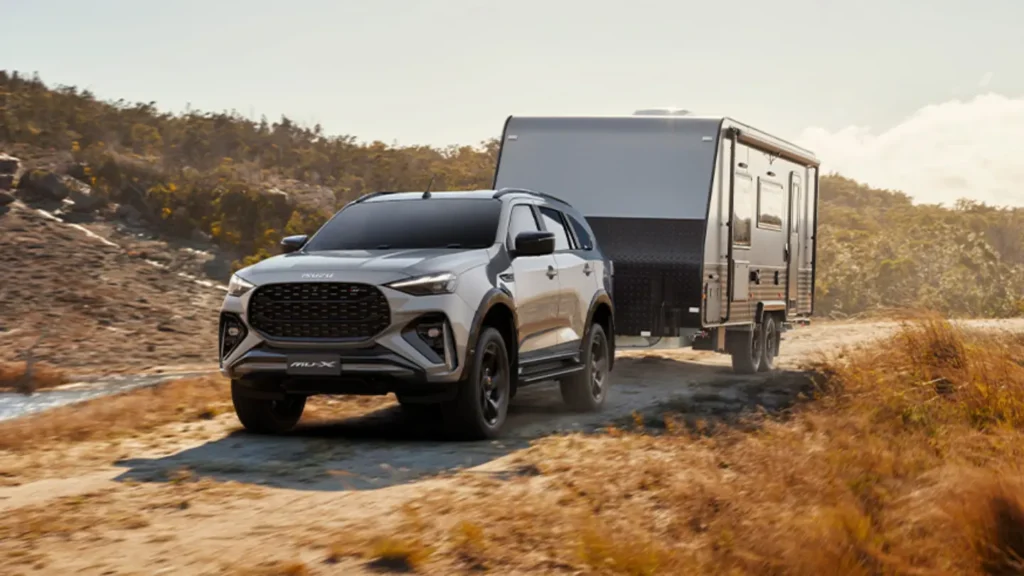
The Mitsubishi Pajero is 60mm longer and 55mm wider than the MU-X, while its 2870mm wheelbase is only 15mm longer. The MU-X is slightly taller in terms of ground clearance, with 235mm versus the Pajero’s yet-to-be-confirmed Australian figure. Both are designed around seven-seat family use, although Mitsubishi is expected to offer a five-seat version in Australia. The MU-X already has established Australian cargo and seating figures, while the Pajero’s local specification is still to be confirmed.
Cars24 Australia’s verdict: MU-X for proven practicality, Pajero for size.
4WD system
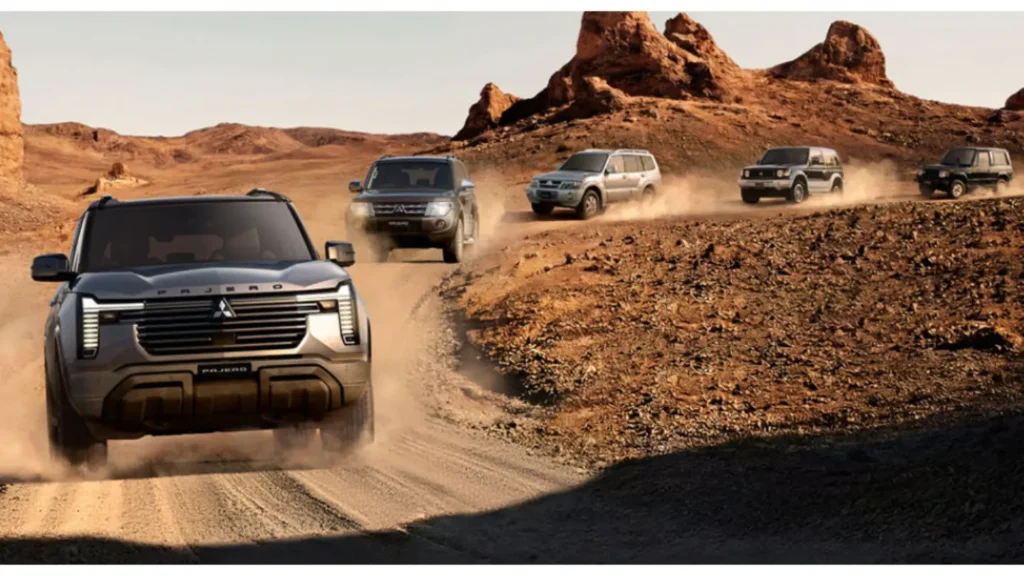
This is arguably the most interesting part of the comparison. The Mitsubishi Pajero gets Super Select 4WD-II, with 2H, 4H, 4HLc and 4LLc modes, plus seven terrain settings covering Eco, Normal, Gravel, Snow, Mud, Sand and Rock. The Isuzu MU-X uses Isuzu’s Terrain Command system with 2H, 4H and 4L, supported by Rough Terrain Mode. Mitsubishi has packed more versatility into its 4WD system, particularly with Super Select allowing greater flexibility between two-wheel drive and four-wheel drive modes.
Cars24 Australia’s verdict: Pajero.
Off-road capability
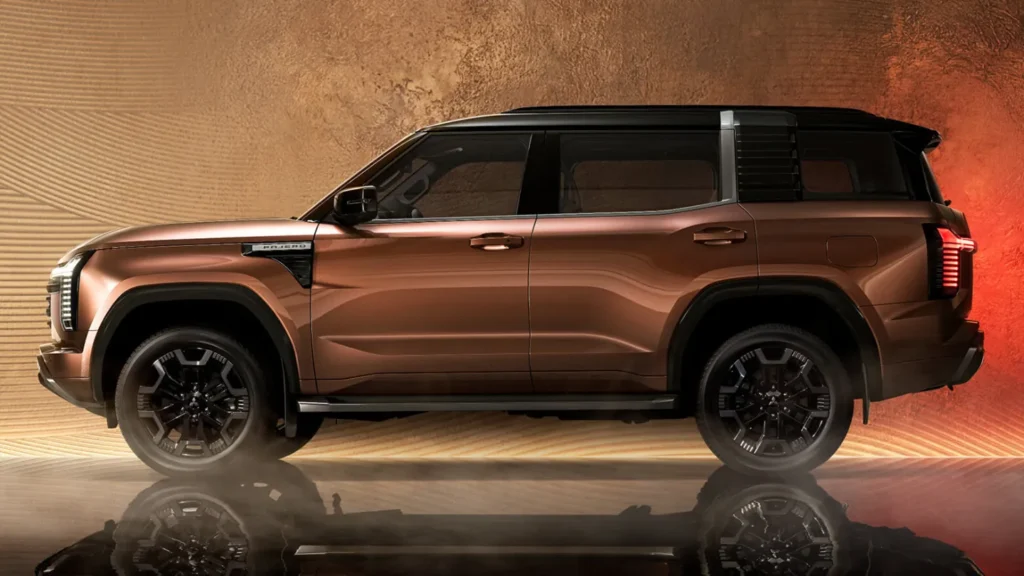
Both SUVs are built on ladder frames and use coil-sprung rear suspension, making them genuine off-roaders rather than simply rugged-looking family SUVs. The MU-X already has 235mm of ground clearance, a 23.9-degree approach angle, 26.4-degree departure angle and 800mm wading depth. The Pajero has been engineered specifically for off-road use, but Mitsubishi has yet to confirm all Australian-market figures. The Pajero looks extremely promising on paper, but the MU-X has the advantage of established Australian specifications and proven real-world capability.
Cars24 Australia’s verdict: Too close to call for now.
Towing
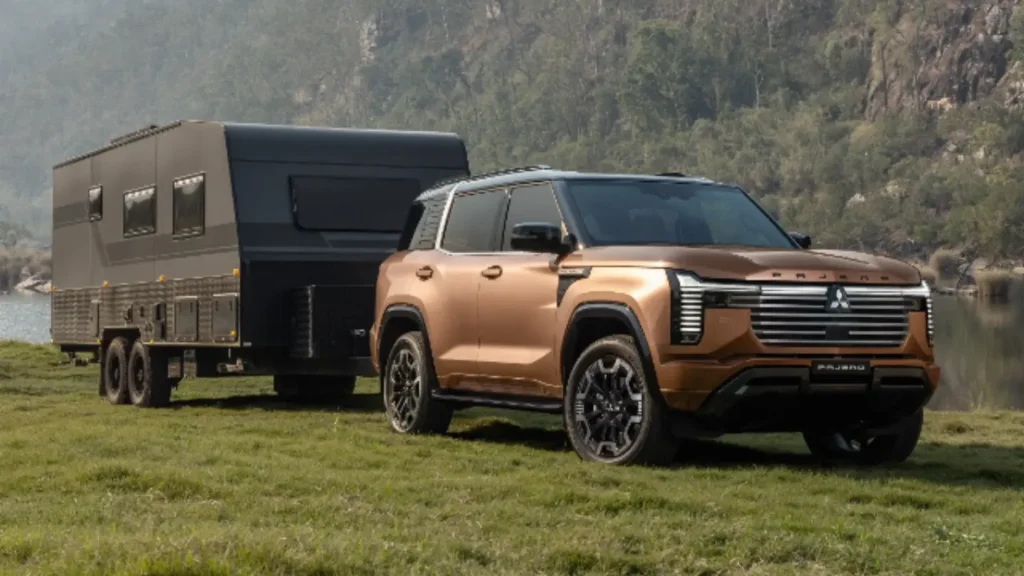
The Isuzu MU-X has a 3500kg braked towing capacity, making it a well-established option for Australian buyers hauling caravans, boats and large trailers.
The Mitsubishi Pajero’s towing capacity hasn’t been announced for Australia yet. Its 480Nm diesel and ladder-frame architecture suggest it should be a capable tow vehicle, but that’s not enough to declare a winner. Until Mitsubishi confirms a 3500kg rating and publishes the Pajero’s payload and GCM figures, Isuzu has the clear advantage here.
Cars24 Australia’s verdict: MU-X.
Interior and technology
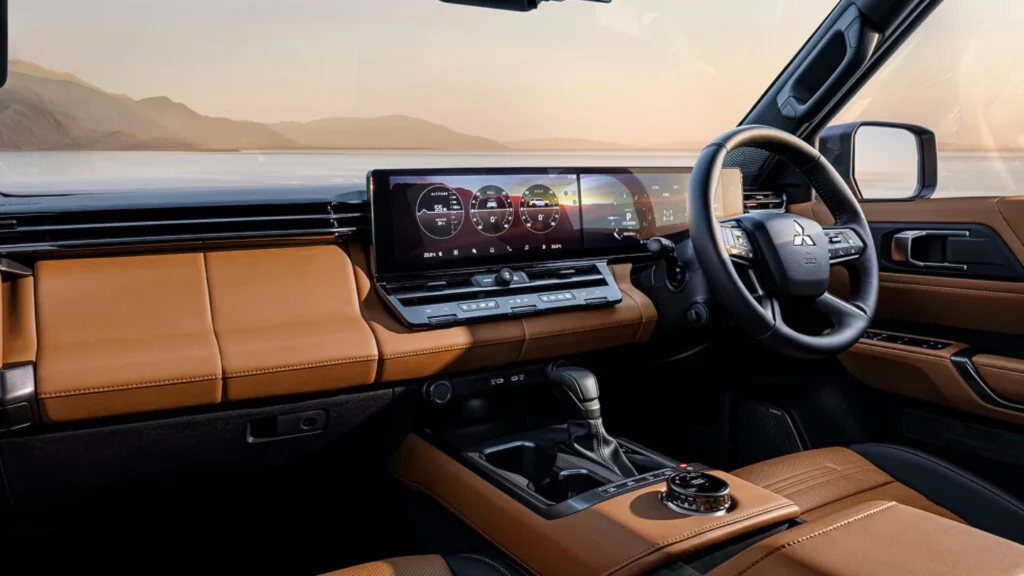
The Mitsubishi Pajero is the newer vehicle and it shows. Higher grades get 14.3-inch infotainment and driver displays, while other variants use 12.3-inch screens. There’s also wireless charging, USB-C connectivity, physical climate controls and an available Yamaha sound system.
The Isuzu MU-X is more conservative, with an 8.0-inch or 9.0-inch touchscreen depending on variant, although higher grades add features such as heated seats, power adjustment and a surround-view camera. The MU-X remains functional and well equipped in higher grades, but the Pajero’s newer architecture and larger displays give it the technology advantage.
Cars24 Australia’s verdict: Pajero.
Safety
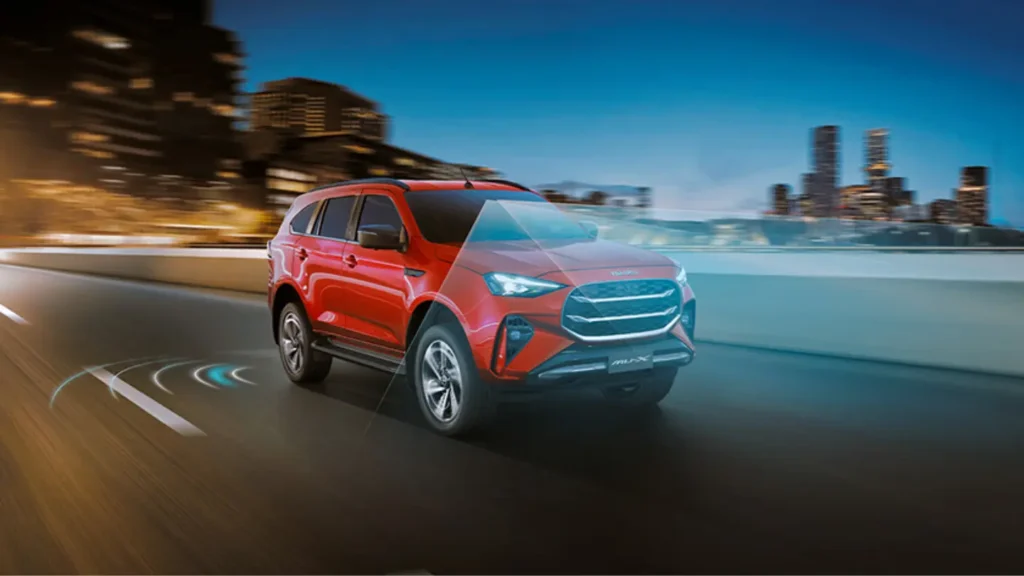
The Isuzu MU-X has an established five-star ANCAP safety rating and comes standard with eight airbags, autonomous emergency braking, adaptive cruise control, blind-spot monitoring, lane-keep assist, rear cross-traffic alert and other driver-assistance systems. The Pajero will also receive a comprehensive suite of active safety technology, but its Australian specification and ANCAP result are still to be confirmed. Mitsubishi may eventually match or exceed it, but Isuzu has the advantage because its Australian safety credentials are already established.
Cars24 Australia’s verdict: MU-X for now.
Cabin and family practicality
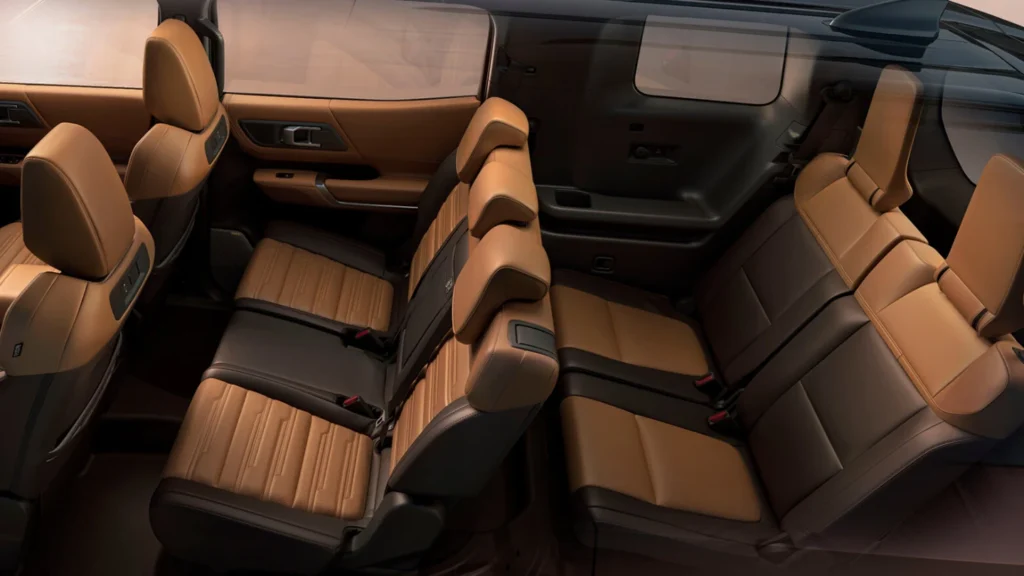
The Mitsubishi Pajero’s second row can slide by 150mm, giving Mitsubishi more flexibility when balancing passenger space and luggage room. Mitsubishi has also placed more emphasis on making the third row suitable for adults.
The Isuzu MU-X has a genuinely usable third row, with 311 litres of cargo space behind the third row, 1119 litres with it folded and 1238 litres with the second row folded. It also has a full-size spare. The Pajero appears to have the more flexible passenger arrangement, but the MU-X has proven cargo figures and practical family-focused packaging.
Cars24 Australia’s verdict: Draw.
So, which one should you actually want?
The Isuzu MU-X is still the smarter buy if value and proven capability are your priorities. It starts significantly lower than the new Pajero, gives buyers a choice of engines and has already built a reputation in Australia for towing, touring and off-road use. The Mitsubishi Pajero, however, is no longer just an exciting unknown. With Australian pricing starting at $68,490 plus on-road costs, it brings a serious off-road package to the table, including a ladder-frame chassis, 2.4-litre turbo-diesel with 150kW/480Nm, eight-speed automatic, Super Select 4WD-II, low range, rear differential lock and 3500kg braked towing.
The problem is that the Pajero is considerably more expensive than the MU-X. That makes the Mitsubishi harder to call the value champion, even if its specification and technology are impressive. But there is another way to look at it. The Pajero starts below the Toyota Prado and packs plenty of hardware aimed directly at buyers who want a serious long-distance touring and off-road SUV.
So, if you’re after maximum bang for your buck, the MU-X makes more sense. If you want something newer, more sophisticated and with genuine Pajero off-road credentials, the new Pajero is the more interesting choice.
For now, we’d still take the MU-X for value, but the Pajero is shaping up to be the SUV we’d want to test first.

Comments
New Comment