




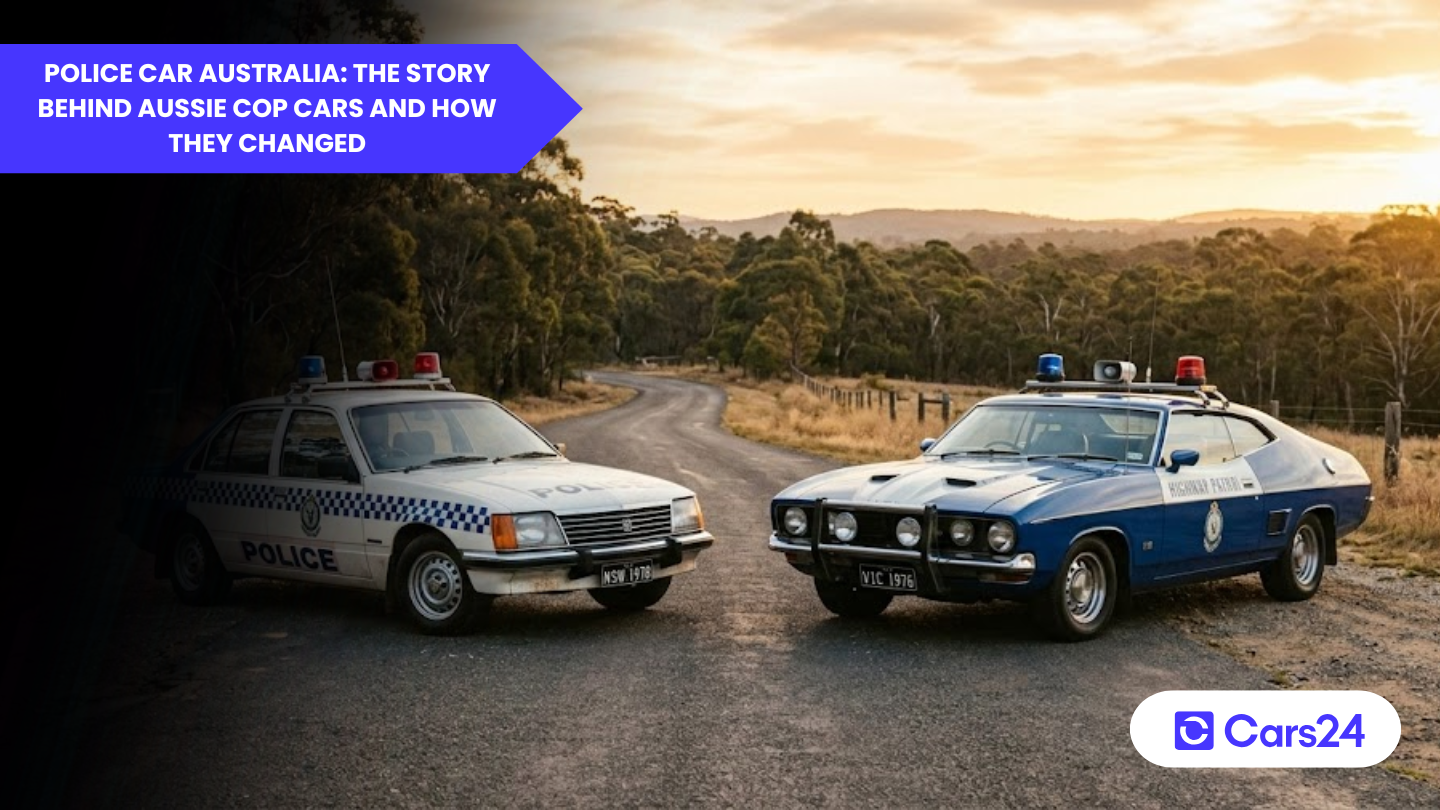
If you grew up in Australia, the shape of a police car was once easy to draw from memory. It featured a long bonnet, rear-wheel drive and a low stance. Either a Ford badge or a Holden badge on the grille. These Australian police cars were built locally and became part of the national automotive identity.
Back then, Australian police cars were not just fleet vehicles. They were part of the country’s car identity. The same factories that built family sedans were also building police cars, which Australia relied on for highway patrol and urban response. The police auto and the weekend family car often shared the same DNA. But the modern police car looks very different and that change tells a bigger story about Australia itself.
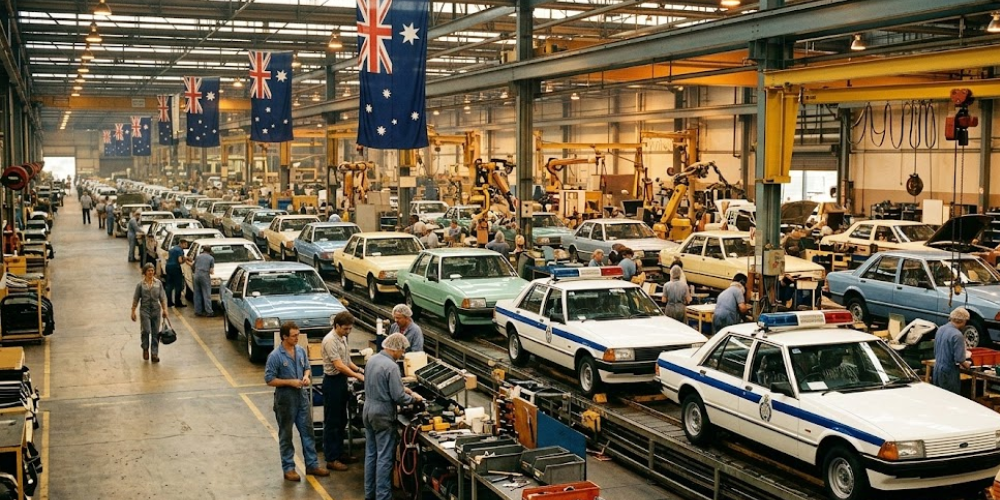
When Australian Car Culture Built The Police Car
Australia has always had a unique relationship with cars. Long highways, regional towns, harsh heat and a strong touring culture meant local manufacturers built vehicles that were tough and powerful.
By the 1960s and 70s, Ford Falcon and Holden models had become staples on Australian roads. It made sense that cars for police would come from the same production lines. They were strong, rear-wheel drive and capable of sustained highway speeds across huge distances.
The police car Australia used during those decades reflected the country’s geography. Highway patrol units needed engines that could handle long pursuits on open roads. Rural stations needed reliability and urban units needed space for equipment.
Specific variants such as the Ford Falcon XR6 Turbo and Holden Commodore SS were widely configured for highway patrol and traffic enforcement roles, becoming some of the most recognisable performance police cars in Australia. These police cars were not niche imports; they were homegrown machines built for Australian conditions. That connection gave Aussie cop cars a distinct personality compared to fleets in Europe or Asia.
The Golden Era Of The Police Car in Australia
Through the 80s, 90s and early 2000s, the police car Australia saw most often was almost always a large sedan – Falcon and Commodore variants configured for police duty. High-performance models, including the Ford Falcon XR6 Turbo and Holden Commodore SS, strengthened the reputation of the Australian police car as a powerful rear-wheel-drive sedan built for sustained highway duty.
It was not just about power because these police autos were practical; they had large boots, durable suspension, space for radios and equipment. They were built locally, which simplified fleet procurement. If you ask most Australians to picture a classic police car, that is the era they imagine. But then the industry transitioned into a new era.
When Local Manufacturing Ended, The Police Car Changed
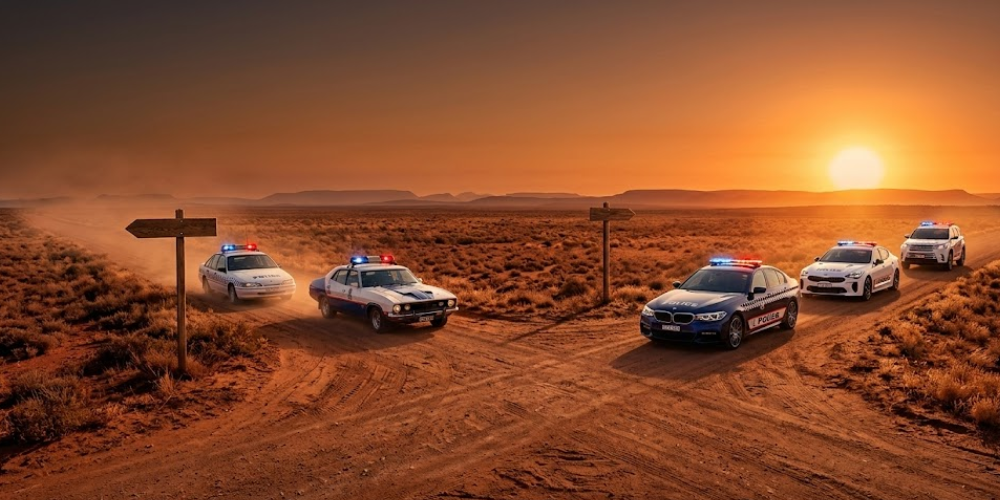
Ford ended Falcon production in 2016 and Holden ended Commodore production in 2017. That moment did more than close factories; it forced every state and territory to rethink what a police car in Australia would use next.
Without locally built large sedans, fleets diversified and instead of a near-national standard, Australian police cars became a mix of brands and body styles. European wagons entered the picture and performance sedans from overseas manufacturers were evaluated. SUVs started replacing traditional four-door patrol vehicles. This was not just a cosmetic change and it marked the end of a uniquely Australian era of cop cars Australia had relied on for decades.
Why The Modern Police Car Looks Like An SUV
Today, many general duties police cars look like family SUVs.
The Toyota RAV4 Hybrid has become increasingly common in general duties roles, while the Kia Sorento offers additional interior space for equipment-heavy deployments. In specialised traffic enforcement roles, performance-oriented SUVs such as the BMW X5 have been introduced in select jurisdictions. In regional and remote areas, the Ford Ranger remains a practical choice due to its durability and load capacity.
This move is due to very practical reasons. Officers get in and out of vehicles constantly during a shift. A higher seating position reduces strain. SUVs offer more interior space for equipment. They handle urban obstacles and regional terrain better than traditional sedans in many cases.
Queensland recently rolled out 400 Toyota RAV4 Hybrid vehicles to replace older Camry sedans in general duties roles. That decision symbolises the new direction of the police car Australia now deploys. Hybrid power is becoming mainstream in frontline use.
The modern police auto is designed less around raw performance and more around versatility.
Do Police Cars Still Need To Be Fast?
Yes. But the definition of fast has changed.
Highway patrol still requires strong acceleration and stable handling at speed. Modern cop cars Australia uses in traffic enforcement often include turbocharged sedans or capable performance SUVs.
However, pursuit policies across Australia prioritise public safety. The days of frequent long-distance high-speed chases are largely gone. Technology, including speed detection and communication systems, plays a bigger role than pure engine size. A police car today must balance performance with safety and operational practicality.
The Hidden Work Of A Police Car
Most people think of flashing lights and sirens. In reality, a police car is closer to a mobile workspace.
Modern Australian police cars are fitted with specialised radio systems, data terminals and upgraded electrical systems. Many general-duty vehicles carry equipment for long shifts, including secure storage and reinforced rear compartments.
The average police auto spends hours idling while officers complete paperwork or coordinate operations. Cooling systems and electrical capacity matter just as much as acceleration figures.
This is not showroom specification. Cars for police are engineered for a different type of workload.
Hybrid And Electric: The Next Chapter
The future police car Australia chooses will likely be a hybrid before it is fully electric. Hybrid SUVs are already being introduced in larger numbers. They offer fuel efficiency without range anxiety, which is important in regional areas.
Electric vehicles have been trialled in limited roles, often in urban or community engagement units. But a nationwide shift to fully electric cop cars Australia-wide is still in the early stages.
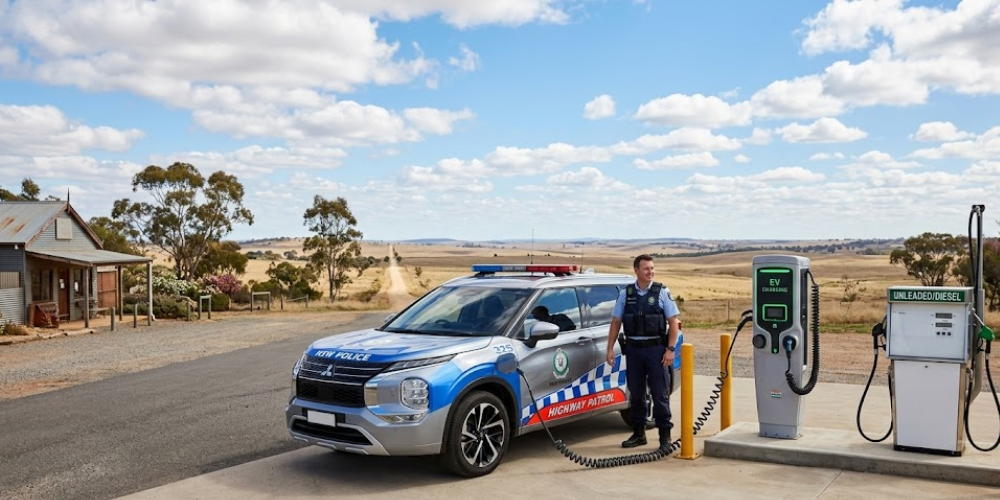
Australia’s distances and varied terrain make the transition more complex than in smaller countries. Still, the direction is clear. The modern police car is becoming cleaner, quieter and more technologically integrated.
What Makes Australian Police Cars Different?
The Australian police car had been shaped by unique national factors. Long highways connecting cities. Remote outback towns. Extreme summer temperatures. Flood-prone regions. Coastal humidity.
A police car in Australia, operating in Far North Queensland, faces very different conditions compared to one operating in inner Melbourne. That is why fleet diversity has increased. SUVs dominate general duties in many areas. Four-wheel drives are essential in remote regions. Performance sedans remain useful in traffic enforcement roles. Unlike some European fleets that rely heavily on compact hatchbacks, Aussie cop cars must cover greater distances and handle varied surfaces.
The Cultural Side Of The Police Car
There is also a cultural shift. The old Falcon or Commodore police car carried a certain presence. It was instantly recognisable and deeply tied to Australian manufacturing pride.
The modern police auto feels more global. BMW. Toyota. Kia. Volkswagen. The badge is less predictable. Some Australians miss the drama of a V8 sedan patrol car and others appreciate the practicality of today’s fleet. What has not changed is the role of the police car, which remains one of the most visible symbols of authority on Australian roads.
What Happens After Service?
After several years or once kilometre limits are reached, many police cars are decommissioned and sold at auction. Ex-police vehicles attract attention because they are maintained under structured fleet schedules. However, buyers should be aware that a police car may have high idle hours and heavy-duty electrical usage. Still, the lifecycle of a police car in Australia does not end when the lights come off. Many go on to second lives in private ownership.
The Police Car Reflects Australia
The story of the police car is really the story of Australia’s car industry, geography and road culture. We went from locally built rear-wheel-drive sedans dominating cop cars Australia- wide to a mixed fleet of SUVs, hybrids and imported performance models.
The change was not sudden; it was shaped by manufacturing closures, safety priorities, environmental policy and evolving policing strategies.
If you look at a modern police car today, you are not just seeing a vehicle. You are seeing the result of decades of industrial change, policy decisions and empirical realities. The shape may have changed, the engines may be quieter and the badges may come from overseas manufacturers.
But the purpose of Australian police cars remains the same as it was more than a century ago when the first motorised patrol vehicle hit the road. To keep Australian communities safe, across highways, suburbs and remote towns alike. And that is why the humble police car still tells one of the most interesting automotive stories in the country.

Comments
New Comment