




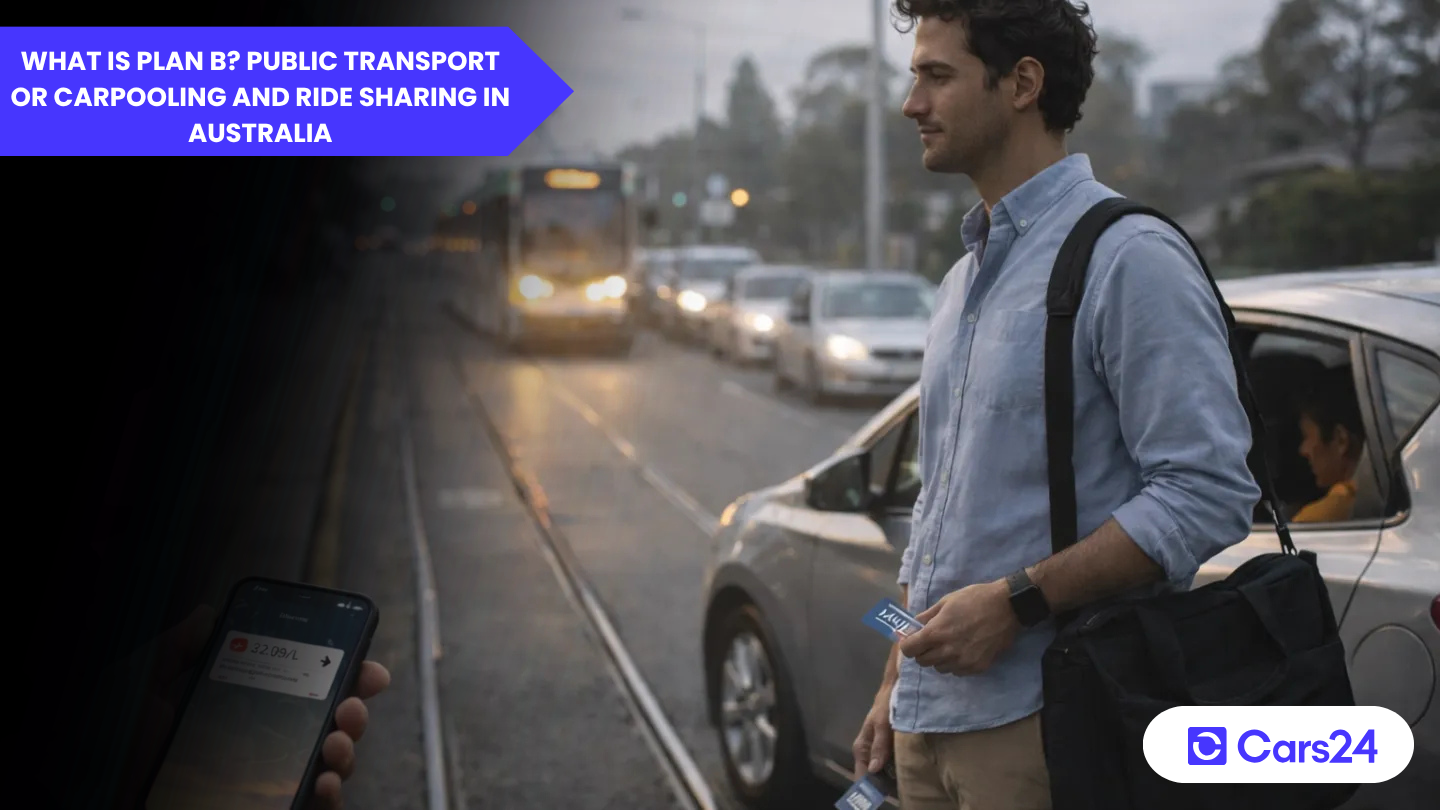
You can sense a change in how a country moves when the smallest everyday habits begin to feel slightly different. Someone in the office mentions they’ve switched to ride sharing for the week or a friend asks if anyone wants to try car sharing for the commute. Someone casually says they’ve started using public transport again instead of driving because it’s heavier on the pocket than it used to be.
This shift across Australia is not random and it is not just about convenience, it is being driven by a very real and immediate trigger, which is the ongoing fuel crisis shaped by global disruptions, particularly through critical routes like the Strait of Hormuz that carry a significant share of the world’s oil. For a country like Australia that imports close to 90 percent of its fuel, these global disruptions do not stay distant for long; they reflect quickly in rising petrol prices, tightening supply and a growing awareness that everyday driving is no longer something to be taken for granted.
This is exactly where Plan B comes in, not as a dramatic fallback but as a practical transpose in how people move when fuel becomes expensive, uncertain and unevenly available.
It starts with shifting to car sharing and ride sharing, not restrictions
Before anything restrictive is introduced, the first response has been surprisingly simple and grounded in behaviour rather than policy, with the government urging people to share the ride, explore ride share options, use public transport where possible and avoid unnecessary travel, while also asking Australians not to stockpile fuel and to be mindful of broader supply pressures.
According to reporting around Australia’s emergency fuel planning, these light-handed measures, including car sharing, ride sharing and increased use of public transport systems, are estimated to reduce overall fuel consumption by around 3 to 5 percent, which may sound modest at an individual level but becomes significant when scaled across millions of daily trips.
Why car sharing works faster than any policy ever could
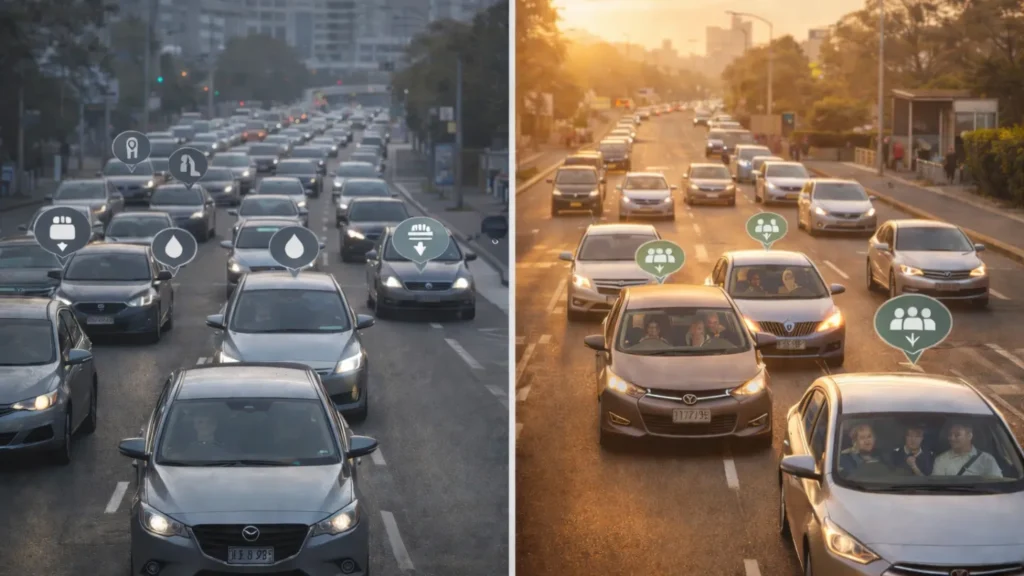
The logic behind car sharing and ride sharing is straightforward but effective, because when two people who would otherwise drive separately begin commuting together, fuel use is immediately reduced and when three or four people coordinate their travel, the impact becomes even more noticeable, not just in fuel savings but also in reduced congestion and shared costs.
This is why car sharing often works faster than policy intervention, since it does not require new infrastructure or systems;it simply builds on existing behaviour with small adjustments that people can make almost instantly and in a moment like a fuel crisis, immediacy matters more than perfection.
Free public transport and how different states are responding right now
Across Australia, the response to the fuel crisis is playing out differently across states, with governments trying to reduce pressure on fuel demand while also managing cost and infrastructure realities.
Victoria has temporarily introduced free public transport, bringing more people back onto public transport Melbourne networks, where trains, trams and buses are being used more actively as an alternative to driving. Tasmania has also rolled out free public transport for a longer period, while the ACT has reduced fare caps to make daily travel more affordable.
Queensland continues with its subsidised fare system, which keeps Brisbane public transport relatively accessible at a time when fuel prices remain high, even as states like NSW and South Australia have chosen not to introduce free public transport, focusing instead on maintaining long-term financial balance while encouraging more mindful fuel use.
What this creates is a mixed national response, where different states are exploring how far public transport can ease fuel demand, while still working within the limits of cost, infrastructure, and how people actually travel day to day.
The reality is that public transport does not work the same everywhere
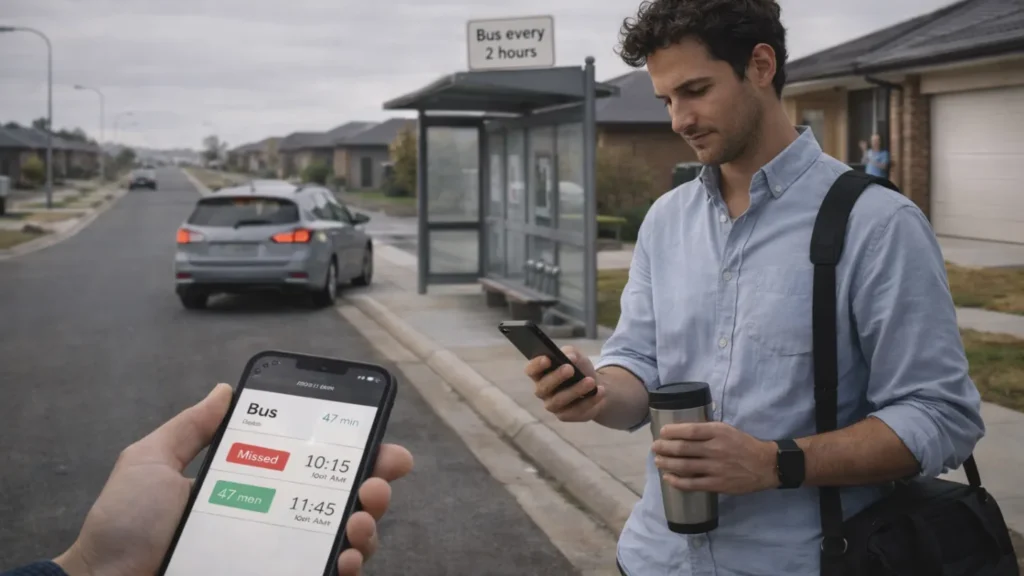
While public transport Melbourne systems make it relatively easy for many city commuters to switch away from driving, the same cannot be said for everyone, particularly for people living in outer suburbs or regional areas where services are limited, infrequent or simply not aligned with daily routines.
In these cases, car sharing and ride sharing become far more relevant because they offer flexibility that structured public transport systems cannot always provide, especially in a country where distances are larger and reliance on personal vehicles has been built into everyday life.
This is where the conversation becomes more honest, because encouraging people to move away from solo driving only works when alternatives feel practical and accessible rather than idealistic.
People are already changing how they move across Australia
Even without strict measures in place, changes in how people are travelling are already becoming visible.
Across cities, people are adjusting their routines by choosing ride sharing more often, exploring car sharing, returning to public transport, or simply cutting down on unnecessary trips and early indicators from recent weeks point to increased usage across public transport Melbourne networks, alongside a steady rise in cycling and other alternatives as fuel costs remain high.
This isn’t happening in isolation either, because globally, similar responses have played out in more structured and widely observed ways, with countries like Germany introducing heavily subsidised nationwide public transport tickets during the energy crisis to reduce reliance on fuel, while countries such as France and Italy, during earlier oil shocks, introduced measures like reduced speed limits and car-free days to curb fuel consumption, showing that when fuel pressure builds, the first response is often to rethink everyday travel rather than move straight to strict restrictions.
So is this temporary, or are car sharing and public transport becoming the new normal?
Australia is still and will remain, a car-reliant country in many ways, but moments like this tend to leave behind lasting changes in how people think about mobility, because once someone experiences the convenience of ride sharing, the cost savings of car sharing, or the practicality of public transport Victoria systems during peak hours, those options become easier to return to.
Workplaces are also beginning to adapt by encouraging flexible schedules, remote work and shared commuting, which further supports a shift away from unnecessary solo driving without removing the freedom that cars provide.
Maybe Plan B was never meant to be just a backup
Plan B sounds simple on the surface, share the ride, take public transport when it works, drive when you actually need to, but it ends up doing something more interesting than that. It makes you pause and realise how easily one way of moving became the default, without ever really being questioned.
It’s not that people didn’t have alternatives; it’s that there was never a strong enough reason to use them. And the moment fuel becomes expensive or uncertain, those same options, ride sharing, car sharing, public transport, stop feeling inconvenient and start fitting more naturally into everyday life.
Once that switch happens, it doesn’t feel like a big adjustment or a forced change; it just feels like a slightly smarter, more considered way of getting around.
Comments
New Comment