




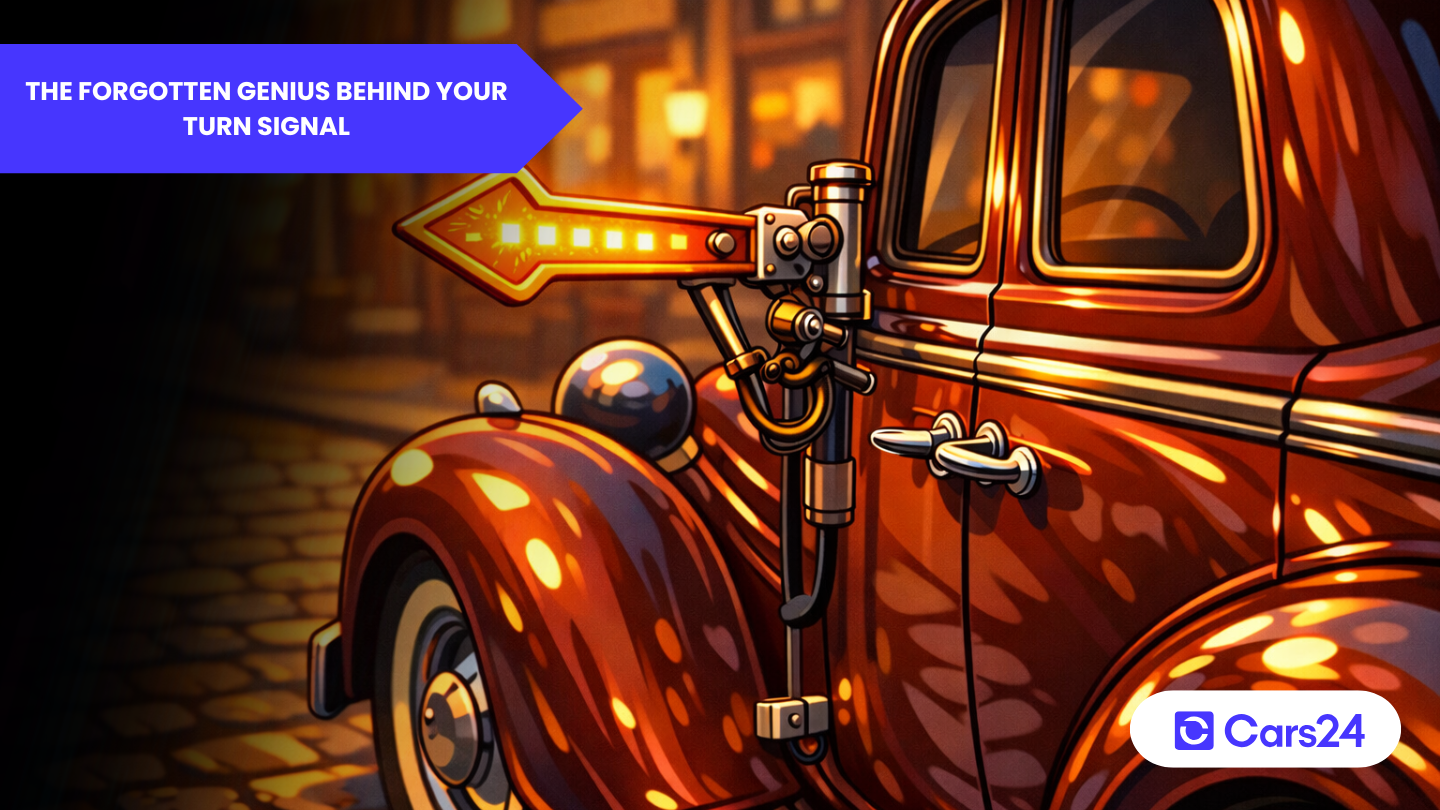
Every time you flick that little stalk on your steering column, you’re participating in a tradition that dates back over a century, one invented not by a grease-stained engineer in a lab, but by a Hollywood movie star who was tired of dangerous roads.
Her name was Florence Lawrence. And if you’ve never heard of her, you’re not alone. But you’ve probably used her invention today.
Who was Florence Lawrence?
Born in 1886 in Hamilton, Ontario, Florence Lawrence became one of the first true movie stars of the silent film era. At a time when actors were anonymous, literally uncredited on screen, she broke through to become a household name, dubbed “The Biograph Girl” and later “The First Movie Star.”
But Florence wasn’t just a performer. She was a tinkerer, a problem-solver, and an early adopter of the automobile at a time when cars were chaotic, dangerous novelties shared on roads with horses, pedestrians, and other drivers with absolutely no way of knowing what anyone else planned to do next.
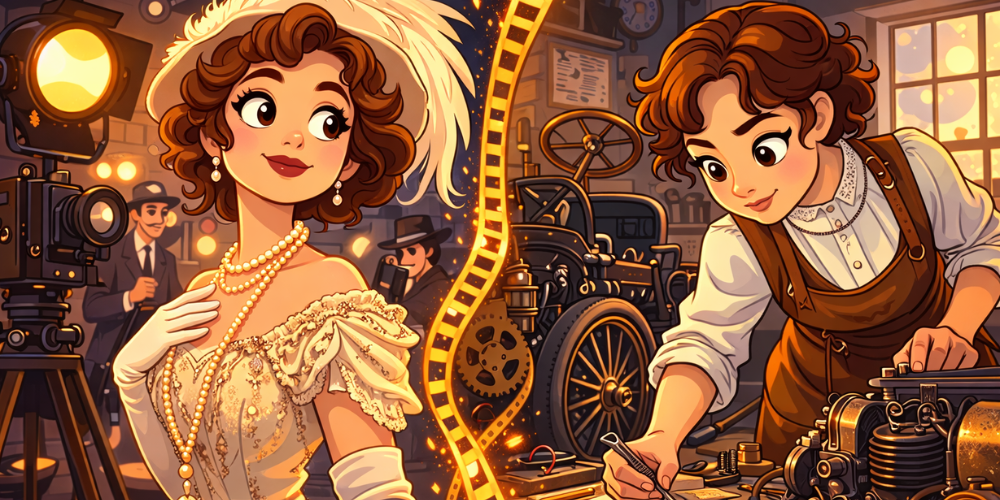
She was Hollywood’s biggest star, and she was quietly inventing the future of road safety in her spare time.
That last problem stuck with her. On the early 20th-century roads of Los Angeles, communication between drivers was essentially nonexistent. You slowed down and hoped for the best. You waved your hand out the window and prayed someone noticed. Accidents were common, and unpredictability was baked into every drive.
Florence decided to do something about it.
The invention that changed driving
Around 1914, Florence Lawrence designed and built what she called an “auto signalling arm”, a mechanical flag mounted to the rear bumper of a car that could be raised or lowered by the driver pressing a button inside the vehicle. Raise it: you’re turning. Lower it: you’re stopping.
It was simple. It was elegant. And it was revolutionary.
She also devised an early brake signal, a flag that would automatically rise when the driver applied the brakes, warning the car behind that a slowdown was coming.
Florence never patented either invention. She gave them freely to the world, perhaps not realising how significant they would become, or perhaps simply not caring about the commercial angle. Either way, the automotive industry quietly absorbed her ideas, refined them over decades, and eventually electrified them into the blinking amber lights we now call turn signals.
She never patented a thing. She just wanted people to stop crashing into each other.
From mechanical flags to electric blinkers
The road from Florence’s mechanical arm to the modern electric turn signal took about three decades. Various manufacturers experimented with illuminated directional signals throughout the 1920s and 30s, and by 1939, Buick introduced the first factory-installed electric turn signal on a production car. Other automakers followed, and by the 1950s, turn signals were standard equipment across the industry.
Today, they’re legally required on every road vehicle in the United States and in most countries around the world. Fail to use them in the wrong jurisdiction, and you’ll earn yourself a fine. Fail to use them at the wrong moment, and you might earn something far worse.
So why do most people ignore them?
Here’s the uncomfortable truth that Florence Lawrence could never have anticipated: the device she invented to make roads safer is now one of the most widely ignored pieces of safety equipment on the planet.

Studies from the Society of Automotive Engineers have estimated that turn signal neglect contributes to millions of lane-change and turn-related crashes every year in the United States alone. Drivers skip the blinker when they’re in a hurry, when they assume no one’s around, when they forget, or most bafflingly when they simply can’t be bothered.
It takes less than one second to activate a turn signal. One flick of your wrist. Florence literally built a mechanical contraption to accomplish this same task with a button in 1914. We now have a self-cancelling electric stalk that does it automatically after the turn is complete.
There is no excuse.
It takes less than one second. Florence built a contraption to do it by hand. You have a self-cancelling electric stalk.
Your turn signal cheat sheet
In honour of Florence Lawrence, here’s a quick refresher on when, where, and how to use the device she gave us:
When to signal:
- Before every lane change on a highway, even if it looks clear. Other drivers need time to react.
- Before every turn, ideally 100 feet (about 30 metres) before the intersection.
- When pulling out of a parking space or merging into traffic from a stopped position.
- When entering a roundabout (signal right when exiting), even if it feels counterintuitive at first.
Common mistakes to avoid:
- Signalling at the same moment you turn — the point is to give advance warning, not a real-time announcement.
- Leaving your signal on after a lane change. Check your dashboard; some cars don’t auto-cancel on gentle merges.
- Assuming a clear road means signalling is optional. Motorcycles and cyclists can appear quickly.
- Cancelling the signal before the turn is complete, especially on wide turns at intersections.
A note on hazard lights:
Hazard lights (both signals blinking simultaneously) are for genuine emergencies, a breakdown, an accident scene, or an unusual hazard ahead. Using them in light rain, heavy traffic, or as a way to park illegally with impunity is not their purpose and can actually confuse other drivers.
Honour Florence! Use your blinker.
Florence Lawrence’s later years were difficult. She suffered serious injuries in a film set accident, struggled financially as the studio era marginalised silent film stars, and died in 1938, largely forgotten by the industry she had helped define.
The auto industry never credited her. Hollywood had moved on. But somewhere on a road near you, right now, a driver is flicking a turn signal stalk, unknowingly carrying forward the idea she had over a hundred years ago, born out of frustration with the chaos of early automotive life.
It’s a small gesture. A flick of the wrist. Less than a second.
Florence Lawrence built a mechanical arm to make it happen. The least we can do is use the electric version she inspired.
Use your turn signal. Every time.

Comments
New Comment