




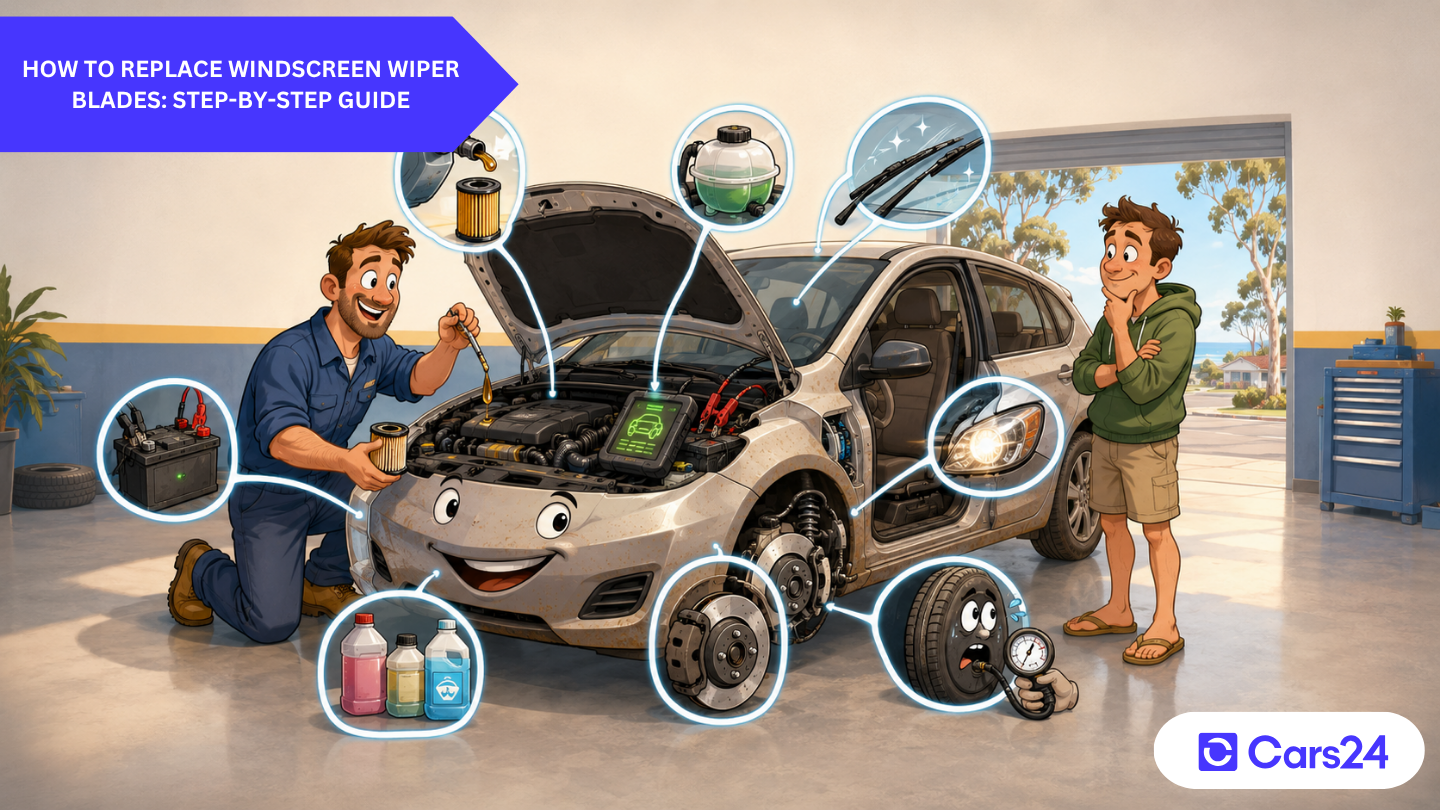
Most of us know we should service our car but the confusing part is working out what actually happens once the keys are handed over. You book a general car service, drop the car off before work, pick it up later that afternoon and receive an invoice that lists items such as oil filter replacement, brake inspection, coolant top-up, diagnostic scan, and tyre rotation. Useful? Yes. Crystal clear? Not always.
So, what does a car service include in Australia? A standard car service usually includes an engine oil and filter change, fluid checks, brake inspection, tyre check, battery test, lights check, steering and suspension inspection, basic diagnostics and a service report. The exact checklist depends on your car, its age, kilometres travelled and whether you book a minor, major or logbook service.
What is a car service?
A car service is routine maintenance designed to keep your vehicle safe, reliable and efficient. It is not the same as repairing a car after something has already failed. Think of servicing as preventative care. Your mechanic checks the parts that help your car start properly, stop safely, cool itself, steer cleanly and handle everyday Australian driving conditions and those conditions can vary a lot.
A car doing short school runs in inner Melbourne, daily peak-hour traffic in Sydney, long highway drives outside Brisbane, dusty regional roads, or coastal parking near salt air will not wear in exactly the same way.
That is why servicing is not just about ticking a date on the windscreen sticker. It is about spotting small signs of wear before they become expensive, inconvenient or unsafe. A general car service usually checks:
- Engine oil and oil filter
- Coolant, brake fluid, washer fluid and other key fluids
- Brake pads, discs and brake performance
- Tyres, tread depth and tyre pressure
- Battery health and charging system
- Lights, indicators, wipers and washers
- Steering and suspension parts
- Belts, hoses and visible leaks
- Electronic fault codes
- Road performance through a short test drive
What does a service on a car include?
A basic service on a car usually includes the essentials: oil, filter, fluids, brakes, tyres, battery, lights and a general safety check. Some workshops also include a diagnostic scan, especially on newer vehicles with more electronic systems.
Engine oil and oil filter change
This is usually the main job in a minor service. Engine oil lubricates moving parts, reduces friction and helps control heat inside the engine. Over time, oil gets dirty and less effective. During a service, the mechanic drains the old oil, replaces the oil filter and refills the engine with the right oil grade for your car.
Skipping oil changes can be strangely easy because the car may still feel normal for a while. It starts. It drives. It does the supermarket run. But old oil can slowly build sludge, increase internal wear and shorten engine life. By the time you hear or feel the problem, the cheap maintenance window may already have passed.
Fluid checks and top-ups
Cars rely on several fluids, and most of them stay out of sight until something goes wrong. A service usually checks:
- Brake fluid
- Engine coolant
- Windscreen washer fluid
- Power steering fluid, where applicable
- Transmission fluid, depending on the car and service type
Low coolant can lead to overheating. Old brake fluid can affect braking performance. Empty washer fluid may sound harmless until you are driving into afternoon glare with a dusty windscreen.
It is a small check, but it can save you from a very annoying day.
Brake inspection
Brakes are one of the biggest reasons servicing matters. A mechanic will usually check the brake pads, discs, brake fluid and visible brake lines.
They may look for worn pads, uneven disc wear, leaks, squealing, vibration or reduced stopping performance. If the brakes need repair, a good workshop should explain what is urgent, what can wait and what the cost will be before doing extra work.
This is where paperwork matters. Consumer Affairs Victoria recommends asking for a written estimate before repairs begin, including the work required, parts supplied, estimated completion time, payment method and estimated labour and parts costs. Not the most exciting part of car ownership, but very useful when you are trying to avoid surprise charges.
Tyre pressure, tread and condition
Tyres are your only contact with the road, so they deserve more attention than they usually get. During a service, the mechanic checks tyre pressure, tread depth, uneven wear, punctures, sidewall cracks and general condition. Some workshops also rotate the tyres to help them wear more evenly.
Uneven tyre wear can also reveal a bigger issue. For example, a front tyre wearing heavily on one edge may point beyond the tyre itself. The alignment could be out. The suspension may need attention.
The car may have spent a lot of time on rougher roads or hit too many potholes. That is the value of a proper service. It is not just a checklist. It is someone reading the signs.
Battery, lights and wipers
A weak battery can turn a normal morning into a very annoying one. During a service, the mechanic may test battery voltage, charging capacity and terminal condition. They will usually check headlights, brake lights, indicators, reverse lights, number plate lights, wipers and washers too.
These checks sound basic, but they matter for visibility, safety and roadworthiness. A blown brake light or tired wiper blade can be the kind of small issue that becomes a real problem in bad weather or night driving.
Steering and suspension
If your car feels floaty, pulls to one side, clunks over speed bumps or wears tyres unevenly, the issue may sit in the steering or suspension.
A service usually includes a visual check of parts like shock absorbers, struts, ball joints, control arms and steering linkages. These components affect ride comfort, cornering, braking stability and control on rougher roads. Matters even more if you regularly drive on uneven suburban roads, regional highways, gravel roads or badly patched surfaces.
Filters, belts and hoses
Depending on the service level, the mechanic may inspect or replace the engine air filter, cabin filter, fuel filter, belts and hoses. A clogged air filter can affect performance and fuel use. A dirty cabin filter affects the air inside the car. Cracked belts or ageing hoses can lead to breakdowns if ignored for too long.
Diagnostic scan and road test
Modern cars store fault codes through onboard computers. A diagnostic scan can flag sensor, engine, emissions or electrical issues before they become obvious.
A short road test also helps the mechanic check braking, steering, acceleration, suspension noise and vibrations in real driving conditions.
A scan might catch what your ears cannot. A road test might catch what a scan cannot. You need both sides of the picture.
Minor, major and logbook service: what is the difference?
Not every service is the same. Most Australian workshops separate servicing into minor, major and logbook services.
| Minor service | Oil and filter change, fluid checks, brake check, tyre check, battery, lights and basic safety inspection | Around every 6-12 months or 10,000-15,000 km |
| Major service | Everything in a minor service, plus deeper checks and replacement of selected parts such as spark plugs, filters, fluids, belts or hoses | Often around 30,000-45,000 km, depending on the car |
| Logbook service | Manufacturer-scheduled service based on your exact make, model, age and kilometre interval | As stated in the owner’s manual or logbook |
A minor service keeps the basics in check. A major service goes deeper and usually costs more because more parts and labour are involved. A logbook service follows the manufacturer’s schedule and is especially important for newer cars under warranty.
For warranty-related servicing context, the ACCC’s car and vehicle guidance is useful for understanding Australian consumer rights around new and used cars. The ACCC also provides information for the automotive industry, including the Motor Vehicle Information Scheme, which is designed to give repairers access to service and repair information.
How often for car service in Australia?
The usual rule is to service your car every 10,000-15,000 km or every 6-12 months, whichever comes first. But the best answer is always in your owner’s manual or logbook. You may need more frequent servicing if you regularly:
- Drive short stop-start trips
- Commute through heavy city traffic
- Tow a trailer, boat or caravan
- Drive in dusty or regional areas
- Park near the coast, where salt air can speed up corrosion
- Use the car for rideshare, delivery or work
- Drive an older or high-kilometre vehicle
So if you are wondering how often for car service, do not rely only on kilometres. Time matters too. Oil, fluids, rubber parts and batteries age even when the car is not driven much. That little service sticker on the windscreen is not just decoration.
How long does a service take?
A car service usually takes between 1 and 4 hours. A minor service may take 1-2 hours. A major service can take 2-4 hours or longer. A logbook service depends on the manufacturer’s checklist for that exact interval.
It can take longer if the mechanic finds worn brake pads, damaged belts, leaks, battery issues or suspension problems. That does not automatically mean you are being upsold. It does mean you should ask three clear questions:
- What is urgent?
- What is recommended?
- What can safely wait?
Those three questions can make a workshop conversation much easier to understand.
How much does a car service cost in Australia?
Car service costs vary by state, workshop, car type and service level. As a rough guide, Canstar’s car service cost guide notes that a minor car service may cost around $220–$245, while a typical logbook service may sit around $370–$385.
Location also plays a role. Canstar’s guide lists average full car service costs at about $365 in New South Wales, $345 in Victoria, $340 in Queensland and Western Australia, and $310 in South Australia, based on oneflare data as of April 2026.
| Caveat: Treat these as guideposts, not fixed prices. |
A small Toyota hatchback and a European SUV will not cost the same to service. A basic oil-and-filter visit and a 90,000 km major service are also very different jobs. If your car needs spark plugs, brake fluid, transmission fluid, belts, filters or timing belt work, the bill can move quickly. Before booking, ask for:
- A written quote
- A parts and labour breakdown
- Whether genuine, OEM or aftermarket parts are used
- Whether extra work needs approval first
- Whether the logbook will be stamped or digitally updated
This is especially useful in big metro areas like Sydney, Melbourne, Brisbane, Perth and Adelaide, where labour rates and workshop availability can vary suburb to suburb.
Is a car service the same as a roadworthy certificate?
No. A car service and a roadworthy certificate are related, but they are not the same thing. A car service maintains the car. A roadworthy certificate checks whether the vehicle meets minimum safety standards for road use, sale, transfer or re-registration. This difference matters because roadworthy rules vary across Australia.
In Victoria, Transport Victoria explains that a roadworthy certificate is generally needed when selling a car, re-registering it or clearing some defect notices. It also makes an important point: a roadworthy certificate shows a car is safe enough for normal road use at the time of inspection, but it is not a guarantee of overall mechanical reliability.
In New South Wales, Service NSW says most light vehicles more than five years old need a safety inspection report, often called a pink slip, before they can be registered.
In Queensland, the Queensland Government says a safety certificate is no longer required before offering a registered vehicle for sale, but it is still generally required before disposing of a registered vehicle, except when selling to a dealer.
In Western Australia, WA Consumer Protection says private sellers are not legally required to complete a roadworthiness check before selling, though service history, a PPSR check and an independent mechanical inspection can help buyers assess risk.
So if you search for car service Melbourne because you are selling or transferring a car in Victoria, check whether you need a routine service, a roadworthy certificate, or both.
Cars24 also offers a Roadworthy Certificate service in Melbourne at its Laverton North hub, which is useful if you specifically need an RWC rather than a general car service.
Why service history matters when buying a used car
A used car’s service history is one of the clearest signs of how it has been treated.
A good service record can show:
- Regular oil and filter changes
- Logbook services completed on time
- Major service milestones already handled
- Brake, tyre or battery replacements
- Recurring issues
- Whether kilometres look consistent with the car’s age
This is why a higher-kilometre car with strong service records can sometimes be a better buy than a lower-kilometre car with missing history.
Do not just ask, “Has it been serviced?” Ask when, where, what was done and whether there are invoices or logbook entries.
And while you are checking history, do not stop at the service book. A PPSR search can show whether a vehicle is recorded as free from debt, and may also show whether it has been recorded as stolen or written off.
How Cars24 helps reduce used-car guesswork
Cars24 does not replace your regular mechanic and you should still service your car according to its logbook after purchase. Where Cars24 helps is before you buy. A lot of used-car anxiety comes from not knowing what has been checked, whether the car’s condition matches the listing, or whether the paperwork is clear.
Every car on the Cars24 website has passed a 300-point inspection. This goes beyond a basic roadworthy check and includes mechanical, external and internal inspection before the car is listed. That is the useful distinction. A service tells you how a car is being maintained. A Cars24 inspection helps show what condition a used car is in before you decide to buy it.
Cars24’s own platform also gives buyers more than a listing photo and a price. The Cars24 Edge includes a 30-Day Return Guarantee, 300-point inspection, car condition report, RWC and PPSR inclusion, and rego transfer support. Cars24 also notes that it is trusted by over 30,000 customers and has 6,000+ 5-star reviews.
For buyers, that means fewer unknowns before the car reaches the driveway.
Cars24 also provides a 30-Day Return Guarantee* on eligible cars, and warranty information is available through the Cars24 warranty page.
That does not mean you should stop caring about servicing.
It means you start with more information.
Quick checklist: what to ask before a car service
Before booking, ask:
- Is this a minor, major or logbook service?
- What exactly is included in the quoted price?
- Are parts and labour itemised?
- Will you call before extra repairs?
- Will the logbook be updated?
- What work may be due at the next service?
After the service, ask:
- What was completed?
- Were any parts replaced?
- Are any repairs urgent?
- What can wait?
- When is the next service due?
- Can I keep the invoice for resale records?
FAQs: what does a car service include?
What does a car service include in Australia?
A car service usually includes oil and filter replacement, fluid checks, brake inspection, tyre check, battery test, lights check, steering and suspension inspection, diagnostic checks and a service report.
What does a service on a car include if it is only a minor service?
A minor service usually includes engine oil, oil filter, basic fluid top-ups, brake check, tyre inspection, battery test, lights check and a general safety inspection.
How often for car service if I barely drive?
Most cars still need servicing at least every 12 months, even with low kilometres. Fluids, rubber parts, batteries and filters age over time, not just through driving.
How long does a service take?
A minor service usually takes 1–2 hours. A major or logbook service can take 2–4 hours or longer if extra repairs or replacement parts are needed.
Is a roadworthy certificate the same as a car service?
No. A roadworthy certificate checks minimum safety standards. A car service maintains the vehicle’s mechanical health, performance and reliability over time.
Should I check service history before buying a used car?
Yes. Service history helps show whether the car has been maintained properly. It can reveal regular maintenance, missed intervals, major repairs and whether the odometer reading makes sense.
Does Cars24 do car servicing in Australia?
Cars24 should not be treated as a replacement for your regular mechanic or logbook service schedule. Its role is more focused on used-car buying confidence through inspection, condition reporting, roadworthy checks, PPSR checks, warranty support and return protection on eligible vehicles.
Final word
A car service is not just something you do because the sticker on the windscreen says it is due.
It is one of the simplest ways to protect your car, your safety and your future resale value. Once you know what a car service includes, you can ask better questions, understand your invoice and avoid getting lost in workshop jargon.
And if you are buying used, service history should sit alongside inspection reports, PPSR status, roadworthy requirements, warranty cover and overall condition.
That is where a more transparent buying process can make a real difference. You still need to maintain the car properly after you buy it, but starting with a car that has already been inspected and documented gives you a clearer place to begin.
You can browse Cars24-certified used cars in Australia and compare inspected options online.

Comments
New Comment