




You’re on your phone late at night, half serious about buying a car and half just browsing. You open a few listings – one says 1.5L petrol, another says 2.0L and then you spot 1998cc, only to pause for a second.
Say you’re weighing up a Toyota Corolla against a Mazda 3. On paper, they both make sense but then a Hyundai i30 pops up and feels practical for the weekday commute. At the same time, a Toyota Kluger starts looking tempting for long family road trips and extra boot space. In this process, the prices seem reasonable and the kilometres driven are easy enough to judge. But then your eyes land on that engine number: 1.8L, 2.0L or 2487cc. It keeps sitting there in the specs like it expects you to understand it and that’s when the question kicks in. What does CC mean and does it actually change how the car will feel when you drive it every day?
Once you understand what does CC mean everything else in a car listing starts to become clear and you stop assuming the bigger number is automatically better. You start understanding what does CC of an engine mean in practical terms. And you begin to see how engine capacity affects fuel costs, performance and everyday driving across Australia in ways that actually relate to your life.
1. What Does CC Mean?
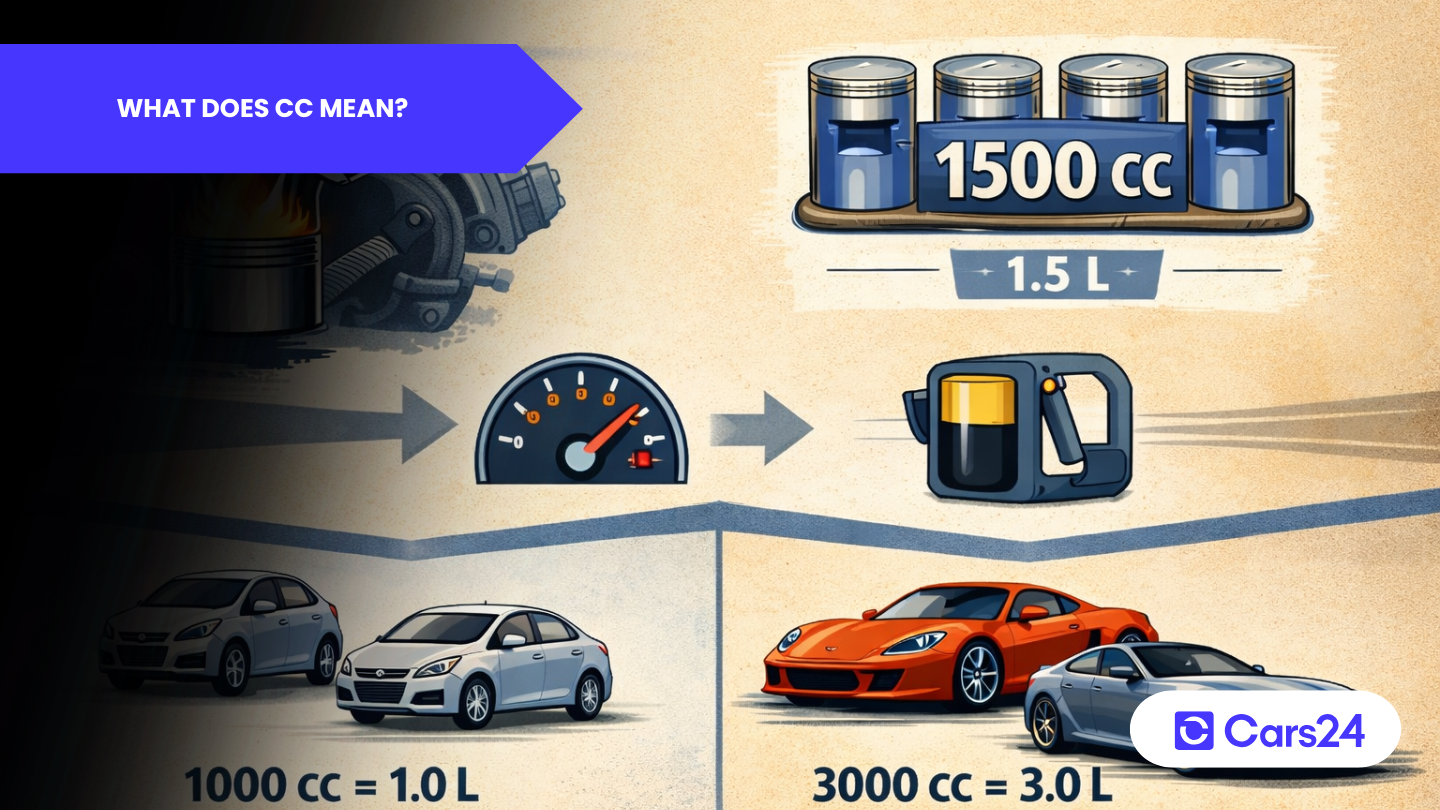
Let’s start at the beginning, CC stands for cubic centimetres and it measures the engine capacity. It is the total space inside the engine’s cylinders where air and fuel go before they burn and make power.
If you want the cleanest C/C meaning, think of the engine like a set of syringes. Each cylinder is like a syringe that fills with air and fuel. When the piston moves, it squeezes that mixture until it ignites and produces power, adding up the space inside all those cylinders and that total is what CC is.
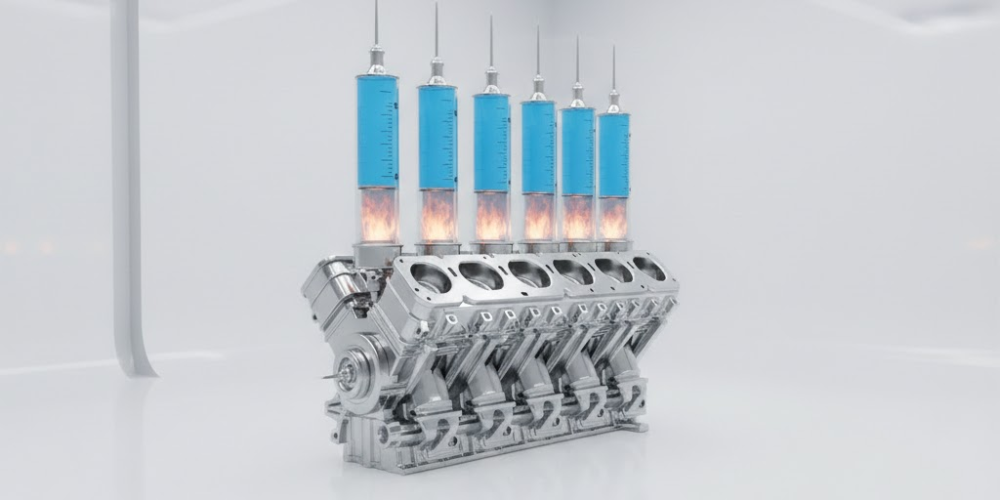
So, the cubic capacity of engine means how much air and fuel the engine can move in one cycle across all cylinders combined. That is also why you will see the term displacement. When someone asks what is displacement engine they are asking the same thing as what CC is, because displacement is another way of saying engine size on the inside.
- 1000cc = 1 litre
- 1500cc = 1.5L
- 2000cc = 2.0L
- 1998cc = basically 2.0L when rounded
Remember that CC and litres are saying the same thing in different ways. Once you know that, you can read engine sizes without getting stuck in technical detail. Bigger CC usually means a bigger engine and a bigger engine can produce more power; however, this does not automatically mean the car will feel faster or be better for you. It all depends on how and where you drive – so let’s unpack it.
2. Why Engine Size Affects Fuel Costs
Once you know the C/C meaning, the next question is usually about fuel. Does higher CC always cost more to run? Often, yes, because a larger engine can burn more fuel. More engine capacity usually means the engine can take in more air and fuel, leading to higher consumption.
Let’s consider two common Aussie favourites.
Toyota Yaris 1.5L
- Lighter overall
- Built with fuel efficiency in mind
- Ideal for city driving and shorter trips
Toyota Corolla 2.0L
- Feels stronger, especially when accelerating
- More relaxed on the highways
- Typically uses slightly more fuel overall
Neither car is better or worse, for it really comes down to the cubic capacity of the engine and what you need from it. A larger engine has more room to take in air and fuel, which can translate into stronger performance, although it can also mean using a bit more fuel along the way.
It is integral to remember – fuel costs are not only about what CC is. They also depend on vehicle weight, gearing, tyres, driving style and whether the engine is turbocharged or hybrid. But developing an understanding of C/C meaning helps you predict running costs because engine size is only a part of the fuel consumption.
| Engine Size | Common In (AU Market) | Best For | Typical Feel | Typical Fuel Use (Petrol) |
| 1.2L–1.5L (1200–1500cc) | Small hatchbacks & light city cars | City driving, short trips, first cars | Light, nimble, efficient | ~5–7L/100km |
| 1.8L–2.0L (1800–2000cc) | Small–medium sedans & SUVs | Mixed city & highway use | Balanced, versatile | ~6–8.5L/100km |
| 2.4L–2.5L (2400–2500cc) | Medium SUVs & family cars | Highway driving, carrying passengers/luggage | Stronger, more relaxed at speed | ~7.5–9.5L/100km |
| 2.8L–3.0L Diesel (4WD/Utes) | Dual-cab utes & 4WDs | Towing, heavy loads, regional use | High torque, controlled under load | ~7–10L/100km (diesel) |
3. When Smaller CC Is the Right Move
You do not need a big engine for every lifestyle; in fact, a smaller engine capacity can be the sweet spot for heaps of Aussie drivers.
City driving
If your driving revolves around school runs, shopping trips and commuting through traffic, then a smaller CC can feel easier and cheaper on a day to day basis. Cars like the Mazda, the Toyota Corolla Hybrid and the Hyundai i30 are built to be friendly in stop-start conditions. If you asked what does CC mean for city driving, the practical answer is that smaller CC usually suits shorter trips and tighter streets.

Smaller engines can be lighter and they are often paired with gearing designed for urban speeds. That is why they feel nimble. It is also why many first car buyers look at 1.2L to 1.8L options once they understand what does CC mean and how it is connected to running costs.
Budget focus
If your goal is to keep the purchase price and the weekly fuel spend under control, then a smaller engine capacity usually helps. Many popular used cars in Australia sit in a practical range like 1.5L to 2.0L because it balances performance and efficiency. Think Toyota Corolla Hybrid, Hyundai i30, Kia Cerato, Mazda 3 and Honda Civic turbo.
This is also where people ask what does CC of an engine mean because they are comparing two trims and CC is one way to estimate how much engine you are paying for and how much fuel you might use.
4. When a Bigger Engine Makes More Sense
There are times when more engine capacity makes real sense and it is not just about speed.
Towing
If you tow a caravan, a boat or even a heavy trailer, a bigger cubic capacity of engine is often the smarter choice. That is one reason utes like the Ford Ranger and Toyota Hilux are so favoured across Australia. Their larger diesel engines are built to produce strong torque, which is simply the pulling power that helps move heavy weights from a standstill and keeps you steady on hills. This means the engine has the ability to handle more air and fuel, helping create more pulling power when you need it. That extra strength can reduce strain on the engine and make towing feel smoother, more controlled and safer.
Highway driving
If you regularly drive between cities or frequent road trips with a full load of people and luggage, you may notice a small engine working harder at 110 km/h. A larger engine often feels more relaxed. For instance, Mazda CX 5 2.5L or older Toyota Kluger models used a 3.5L V6 petrol engine, while newer versions are 2.5L hybrids. On long highway runs, both can feel more relaxed than smaller engines, especially in a heavier SUV.
Understanding what does CC mean helps you match engine size to vehicle weight and usage. A small engine in a big, heavy car can feel stressed, whereas a slightly larger engine can sometimes be more comfortable.
5. Why Turbo Engines Changed Everything
This is where modern cars became fascinating, changing the way we address engine capacity. Earlier, a bigger engine meant more power and that was the end of it. But turbocharging changed that thinking by pushing extra air into the engine, which allows more fuel to be burned and that creates more power. So now a smaller engine can deliver the kind of performance you once needed a bigger engine for. That is why a 1.5L turbo Honda Civic or a 1.6L turbo Hyundai Tucson can feel lively and confident even though the CC number looks modest on paper.
So what does CC mean today? Engine size still matters, but it is no longer the only thing that determines how strong or efficient a car feels. You also need to know whether the engine is turbocharged and how it has been tuned. A smaller turbo engine can feel energetic and responsive, while a larger non-turbo engine can feel smooth and steady. Neither is automatically better because, honestly, it really comes down to how and where you drive.
6. CC vs HP Simplified
If CC and horsepower have ever felt interchangeable to you, they’re not. Let’s untangle them. CC is like the size of the kitchen and Horsepower is how quickly the chef can cook. A bigger kitchen gives you more space to work with, but it does not automatically mean the food comes out faster. A skilled chef can cook incredibly quickly, even in a smaller kitchen. Similarly, Turbocharging helps a smaller engine deliver strong performance through smarter engineering rather than just bigger size.
So when someone asks what does CC of an engine mean they are asking about engine capacity. When someone asks about horsepower, they are asking about how much power the engine produces. Both are useful, yet not the same.
Also, avoid the internet trap of using one fixed CC to HP conversion. It is not reliable for cars because power depends on tuning, turbocharging, fuel type and efficiency. The best way is to compare the actual power numbers listed for the car and use CC as context. That is the safest way to use C/C meaning and avoid misinformation.
7. Final Advice for Used Car Buyers
By now, what does CC of an engine mean should feel far less mysterious. Think of it as a lens that lets you look at 1.5L or 1998cc and instantly understand what it indicates for fuel use, performance and overall feel. It’s a lens that stops you from being impressed by bigger numbers for the wrong reasons.
Buying Used? Here’s How to Read Engine Size
When buying a used car, start with how you actually drive. If most of your trips are short and fuel costs matter, a smaller engine capacity usually makes sense. If you tow, carry heavy loads or spend long hours on highways, a larger cubic capacity of engine can feel more capable and relaxed. Then weigh in the car’s size and purpose, check for the engine capacity, if it matches the vehicle and the job you expect it to do.
Also, remember that modern turbo engines have changed the old rules. Bigger CC does not guarantee an automatic win for your purchase. Use engine size as one factor, alongside fuel consumption, power output and how the car delivers that power. It helps you understand fuel use and performance potential. But the right engine is not the biggest one; it must fit your driving.
FAQs: What Does CC Mean in Cars?
What does CC mean in a car engine?
CC stands for cubic centimetres. It refers to the engine’s total displacement, which is the volume inside the cylinders where air and fuel are compressed to create power. If you see 2000cc on a listing, that simply means the engine is 2.0 litres, since 1000cc equals 1.0 litre.
Is higher CC better?
Not always. A higher CC means a larger engine that can produce more power, but that does not automatically make it the better choice.
Does higher CC mean more fuel consumption?
Often it does, because a larger engine can burn more fuel. However, fuel use also depends on the car’s weight, gearing, whether it is turbocharged or hybrid, and how you drive.
Is CC the same as horsepower?
No. CC measures engine size, while horsepower measures how much power the engine produces.

Comments
New Comment