




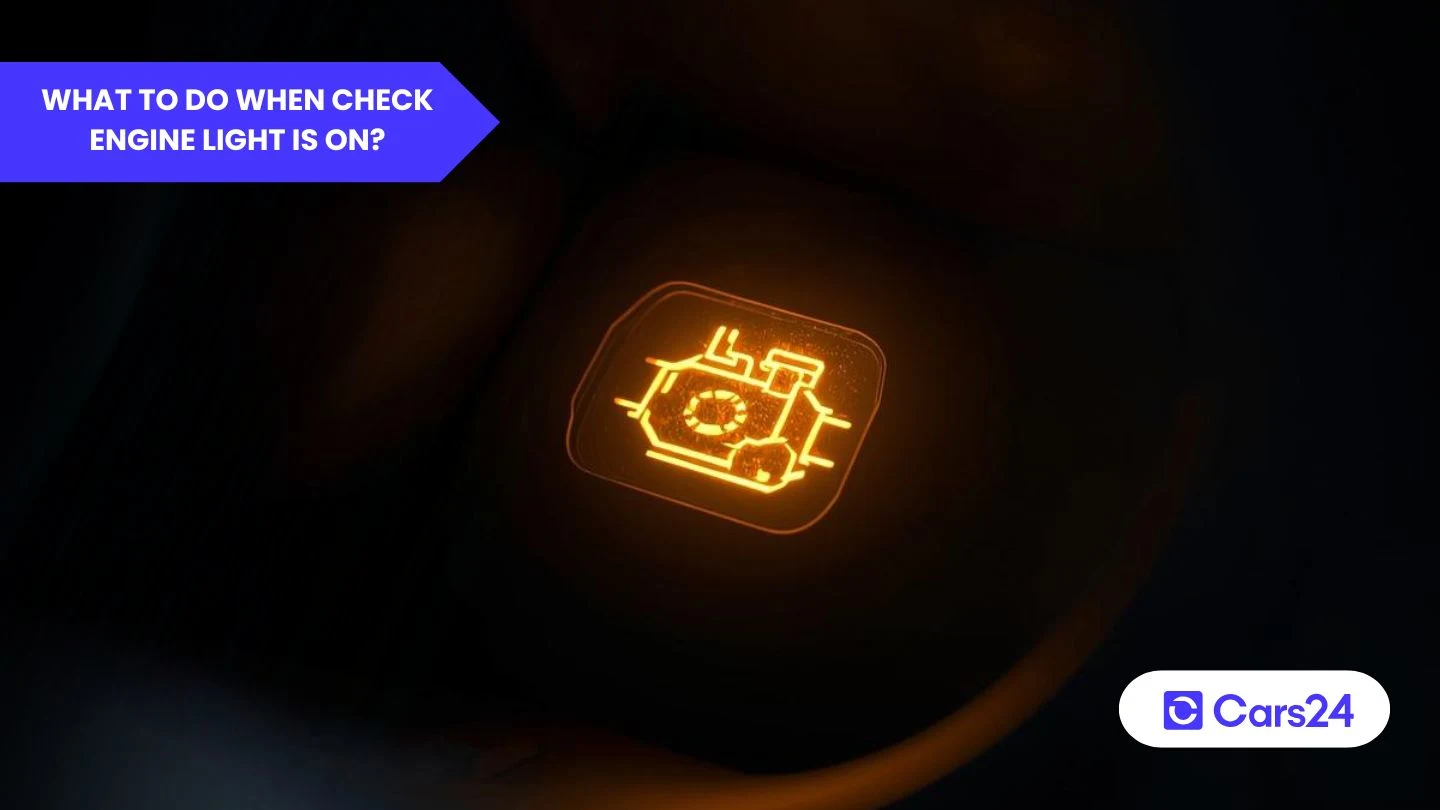
Seeing that small amber glow on your dashboard can cause an instant wave of confusion and tension. Some of you may call it a check engine lamp or an engine check warning light; either way, it’s your vehicle saying, “I need attention.” While it doesn’t mean your car is about to break down but ignoring it can lead to costly repairs and even a failed roadworthy certificate.
In this advice, we will discuss what the check engine light means, why it happens and the immediate steps you should take to protect your car and bank.

Understanding the Check Engine Light
Most of the cars have an On-Board Diagnostics (OBD) system. The computer monitors everything from the engine speed to the mixture of fuel and air. The check engine light is triggered when the system detects a problem that could increase emissions or damage the engine.
As per your car’s make and model, you can see an engine light on the dash, an engine icon or a text prompt “check engine”. The check engine light is a vital communication tool between your engine and you.
Don’t Panic But Don’t Ignore it
The first thing to do when the check engine light is on is to stay calm. Modern cars have “limp home” modes and safety features designed to prevent catastrophic failure. However, you should never ignore the engine light for weeks.
Is the Light Solid or Flashing?
- Solid Light: A steady check engine light means a non-emergency problem, like a faulty sensor or a loose gas cap. You should get an engine check warning looked at as early as possible, but you don’t need to pull over immediately.
- Flashing Light: A blinking check engine light indicates a serious “misfire” that is allowing unburned fuel into the exhaust system. This can also destroy your catalytic converter, a very expensive part. If you see a flashing engine check warning, pull over safely and call a tow truck.
Check Your Gas/Fuel Cap
Believe it or not, one of the most common reasons for a check engine light to turn on is a loose, cracked or faulty gas cap. The gas cap is part of a sealed evaporative emission system. The check engine light will turn on if it isn’t tight and vapours escape.
If your engine light on dash just appeared, it is better to pull over and tighten your gas cap. It may take a few trips for the check engine light to reset itself after the cap is tightened.
Reduce Speed and Load
If the check engine light comes on while you are driving and you notice a change in performance like stuttering or loss of power, reduce your speed. Avoid towing or carrying heavy loads if the check engine indicator light is active. Reducing the train on the engine can prevent a minor engine check warning from turning into a major mechanical failure.
Listen and Feel for Symptoms
When the check engine light appears, your car is often giving you other clues. Pay close attention to:
- Strange Noise: Do you hear knocking or tapping?
- Vibrations: Is the car shaking at idle?
- Smells: Do you smell raw gasoline or sulphur (like rotten eggs)?
- Smoke: Is there unusual smoke coming from the exhaust?
Identifying these symptoms will help your mechanic diagnose the check engine light much faster.
Use an OBD-II Scanner
Every car manufactured after 1996 has a universal port for an OBD-II scanner. If the check engine light stays on, you can find out by reading the trouble codes. You can purchase a budget scanner online or go to major auto parts stores, where they will often scan your check engine lamp for free. The scanner will give you a code like P0420, depending on the issue. While code doesn’t always tell you exactly which part is broken, it tells you which system triggered the engine check warning.
Common Causes for an Engine Check Warning
Understanding why the check engine light is on can help you prepare for the repair. Here are the most frequent reasons:
Oxygen Sensor (O2 Sensor) Failure
The O2 sensor monitors how much unburned oxygen is in the exhaust. A faulty sensor will trigger the check engine light and can decrease your fuel economy by up by 40%.
Catalytic Converter Issues
If you ignore a spark plug or O2 sensor issue, it can lead to catalytic converter failure. This is a common reason for a persistent check engine light in older SUVs and utes.
Spark Plugs and Ignition Coils
Failing spark plugs cause the engine to misfire, which is a leading cause of the engine light on dash. Replacing these is a standard part of the logbook service that keeps the check engine indicator light off.
Mass Airflow Sensor (MAF)
In dusty Australian environments, the MAF sensor can become contaminated. If it sends incorrect data to the ECU, the check engine light will turn on to protect the air-to-fuel ratio.
Schedule a Professional Inspection
While DIY scanners are helpful, a professional mechanic has diagnostic tools that can read very specific data. If your check engine indicator light is on, a mechanic can pinpoint the root cause.
In many Australian states, such as NSW or Victoria, a check engine lamp can be a reason for an automatic fail during a Roadworthy Certificate (RWC) or Pink Slip inspection.
How to Prevent the Engine Light from Returning
When it comes to the check engine light, prevention is always cheaper than a cure.
- Stick to Your Logbook: Don’t skip services. Fresh oil and filters prevent the engine light on dash from appearing.
- Use Quality Fuel: Low-quality “91” petrol can sometimes cause knocking in high-performance engines, triggering an engine check warning.
- Check Your Battery: In Australia, the heat kills batteries quickly. A dying battery can cause voltage drops that trip the check engine indicator light erroneously.
| Component | Common Issue | Impact on Check Engine Light |
| Fuel Cap | Cracked Seal | Triggers Evap Leak Code |
| Spark Plugs | Carbon Build-up | Causes Misfire and Flashing Light |
| O2 Sensor | Wear and Tear | Increase Fuel Consumption |
| Air Filter | Clogged with Dust | Triggers MAF Sensor Faults |
Engine Light Make or Break the Deal?
The engine light isn’t the deciding factor to consider while making or breaking any used car deal. You need much more information than the engine light to make a well-informed decision, whether to buy a second car or not. You can buy a car history check report to see what the possible reasons are for this engine light turning on and even negotiate better to get the best price. Buy an authentic and trustworthy car history report from Cars24 and you’ll get :
- Financial Encumbrance Check
- Stolen Vehicle Check
- Recall Check
- Written off Check
- Registration Check
- PPSR Report
- Vehicle Valuation
- Market Demand

Final Thoughts
The check engine light is a safety feature, not a sign of a certain doom. By reacting to the check engine lamp early, you can often fix small issues before they turn into multi-thousand-dollar repairs.
Whether it is a steady engine light or a sudden engine light on dash during your daily commute, remember to check your fuel cap, reduce your load and get a diagnostic code as soon as possible.
Keep an eye on that check engine indicator light and stay safe on the road!

Comments
New Comment