




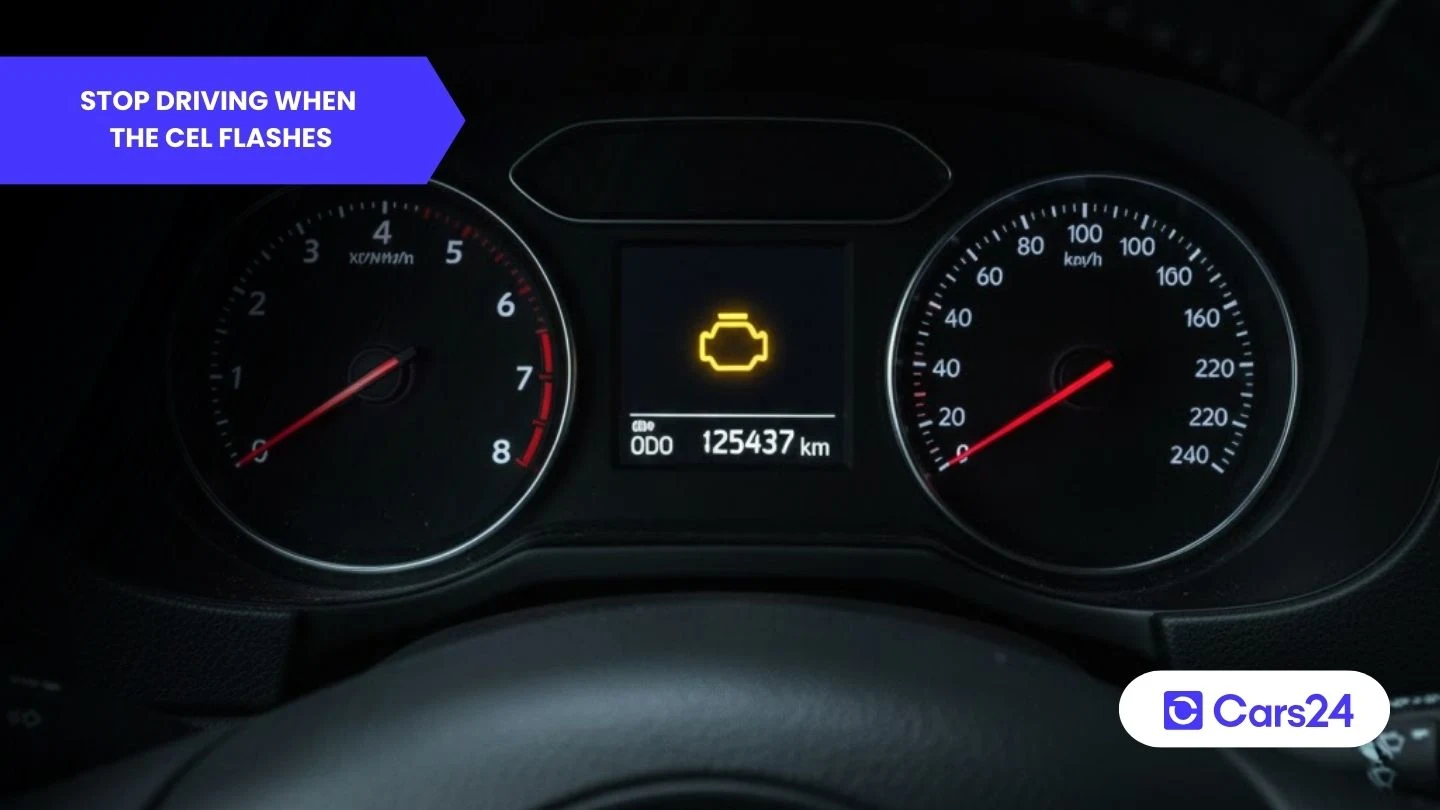
Few dashboard symbols inspire as much dread as the flickering glow of the Check Engine Light (CEL). This engine check warning is your vehicle’s way of telling you, in no uncertain terms, that something is amiss within the workings of your car’s mechanicals. Whether it appears as a subtle check engine indicator light or a bright engine light on dashboard, the message is the same- Pay Attention!
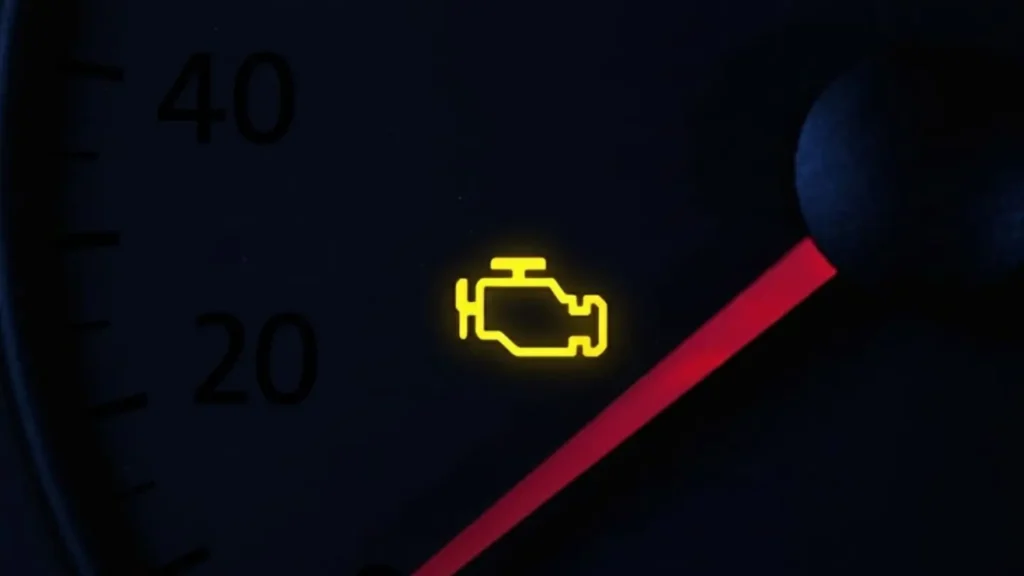
When that check engine light pops up, the key is to stay calm and assess the severity of the fault. However, ignoring it is not an option either; it’s an invitation to turn a minor repair into a major financial headache.
Flashing vs Constant light
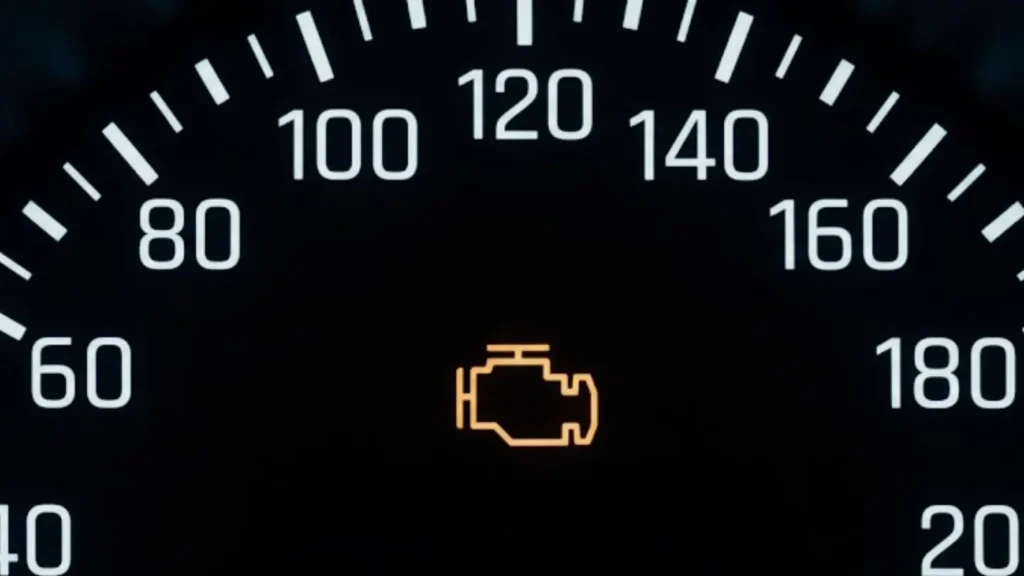
The moment that the check engine light glows, your primary job is to be an observant driver. The engine check warning itself will give you the first and most critical clue about how the engine light on dashboard behaves.
Flashing Light (Often Red or Orange)
A flashing check engine indicator light is your car’s version of a five-alarm fire. It indicates a severe engine misfire that can, within minutes, cause your expensive catalytic converter to overheat and be destroyed. When this check engine lamp is blinking, your action is non-negotiable: back off the accelerator, pull over safely as soon as possible, and shut off the engine. Do not drive the vehicle to a mechanic shop; have it towed to minimise the risk of catastrophic mechanical failure.
Solid Light (Steady Yellow/Orange)
A solid engine light is far more common. This check engine light version signals a problem that needs attention, but typically doesn’t indicate an immediate car shutdown. Stay calm and pay close attention to the car’s behaviour. Do you notice a loss of power, rough vibrations on smooth roads, strange new noises, or a significant drop in fuel economy? If so, drive directly to a mechanic with minimal delay.
If the car feels perfectly normal, it’s generally safe to drive, but you should schedule a diagnostic appointment promptly. Ignoring a solid light can allow a minor issue to escalate into a major one.
What to do when the Check Engine Light comes on?
Here’s your no-nonsense game plan for handling that dreaded check engine light, whether it’s a subtle engine check warning or a bright engine light on dashboard.
Step 1: Look at the light
- Solid or flashing? Solid = Drive calmly, do not panic. Flashing = pull over, pronto.
Step 2: Pay attention to your car
- Any weird noises, smells, smoke, or shakes? Power loss or rough idling? These symptoms, paired with the engine light, are your car’s SOS signals telling you something isn’t right.
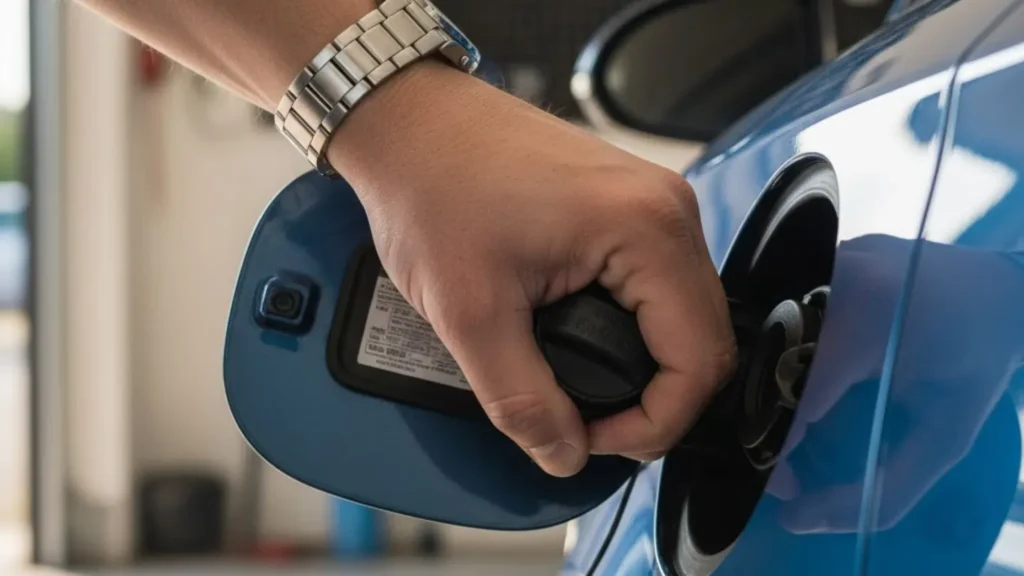
Step 3: Check the fuel cap
- Yes, really. A loose fuel cap is one of the most common causes of the check engine light. Tighten it properly. Often, that’s all it takes to reset the check engine indicator light.
Step 4: Drive carefully if necessary
- If the engine check warning is solid and the car feels normal, keep driving, but avoid hard acceleration, high speeds, or towing heavy loads until it’s diagnosed.
Common causes behind the check engine light
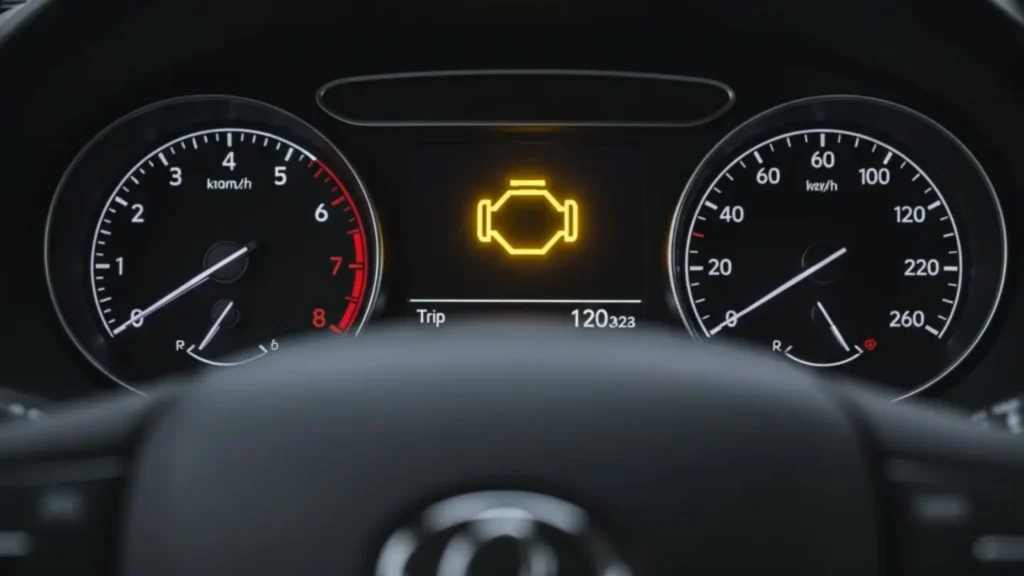
What exactly is your car trying to tell you when that check engine light comes on or the engine light on dashboard suddenly shows up in the left corner of the instrument cluster? While a mechanic’s diagnostic tool (an OBD-II scanner) is the only way to get the exact diagnostic code for the problem, here are the most common reasons drivers see the check engine indicator light up:
Loose/Damaged Fuel Cap:
A loose cap causes pressure loss in the fuel system is one of the simplest triggers of the check engine indicator light. An easy DIY fix is to tighten the cap until it clicks. If the engine light stays on, the cap may need to be replaced, or another issue may be at play.
Faulty O2 Sensor:
The oxygen sensor measures the amount of unburned oxygen in the exhaust. A bad sensor can cause the engine to miscalculate the fuel-to-air ratio, affecting fuel combustion and resulting in decreased fuel economy and increased emissions, which can trigger the check engine light.
Malfunctioning Catalytic Converter:
Converts harmful pollutants into less harmful gases. Failure often results from ignoring other problems (like a bad O2 sensor). A bad catalytic converter will almost always trigger the engine check warning light, and the fix can be expensive.
Note:- Cars with modified exhaust systems often trigger the check engine lamp because the OEM system senses abnormal readings.
Bad Spark Plugs/Ignition Coils:
These create the spark to ignite the fuel. Failure leads to engine misfires, causing rough idling, poor acceleration, and potential engine damage if left unchecked. All of these are common reasons the check engine light comes on.
Faulty Mass Airflow (MAF) Sensor:
Measures the air entering the engine. A bad reading can throw off the fuel mixture, leading to stalling, reduced power, and poor fuel economy. Naturally, this will cause the engine light on dashboard to glow.
Diagnosing the problem
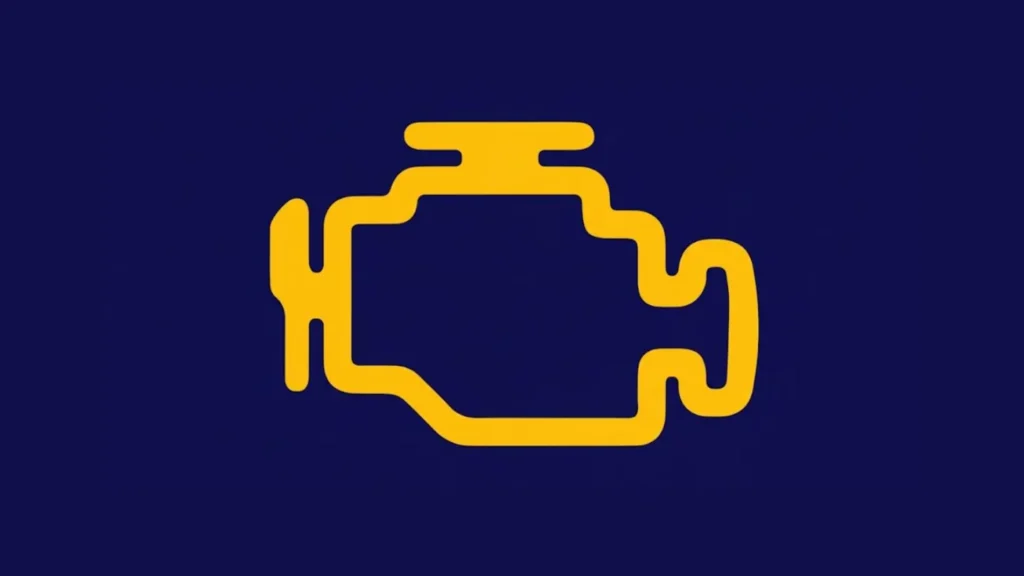
When the check engine lamp lights, your car stores Diagnostic Trouble Codes (DTCs) via its OBD-II system. These codes point to where the problem might be, but they’re not the full story. Professional diagnostics are essential. Otherwise, you could end up replacing parts you don’t need, and your wallet will hate you for it. Proper diagnostics are imperative whenever the check engine indicator light or the engine check warning comes on.
A critical distinction- Check Engine Light vs. Oil light
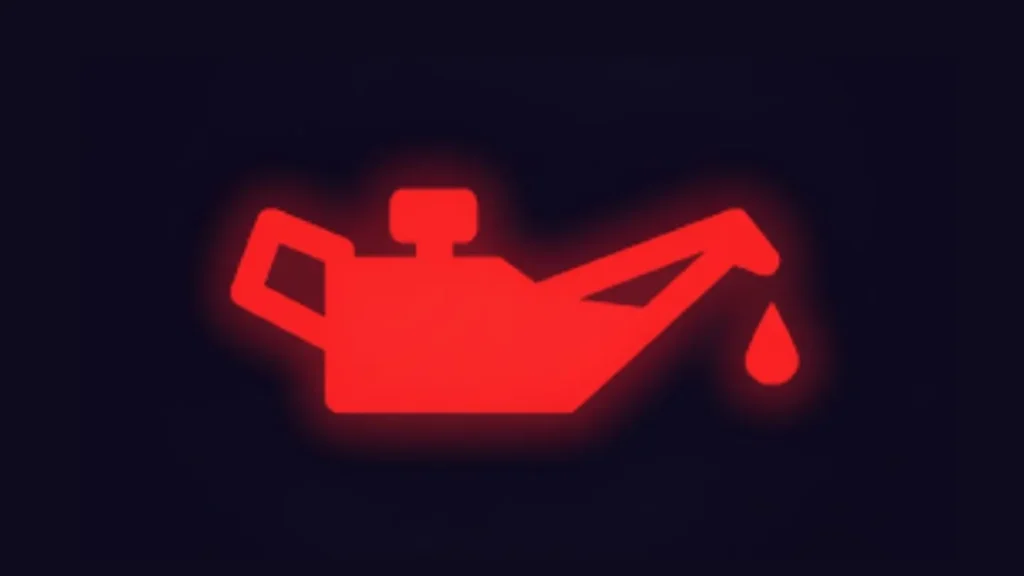
This is where we need to be unequivocal. While a solid Check Engine Light often allows for some leeway, the Oil Pressure Warning Light is a different matter entirely.
If this red light, often shaped like an old-fashioned oil can, comes on, it means your engine is not receiving adequate lubrication. This can be due to a low oil level, bad fuel or a failing oil pump. Do not ignore this. Without oil pressure, metal-on-metal contact inside your engine will lead to catastrophic failure in a matter of miles.
- If the oil light illuminates: Pull over safely, shut off the engine immediately, and check your oil level. If it’s low, you can top it up to get you to a mechanic for a proper inspection. If the level is acceptable, or if you’re unsure, do not drive the car. Have it towed. The cost of a tow is insignificant compared to the price of a new engine.
Your next move
The Check Engine Light is your car communicating its needs. Take it seriously. If your car is exhibiting urgent symptoms (flashing lights, loss of power, loud noises), arrange for a tow immediately. If the light is solid and the car is driving fine, plan a trip to your mechanic as soon as possible. Don’t let a minor, cheap repair become an expensive engine replacement.

Comments
New Comment