




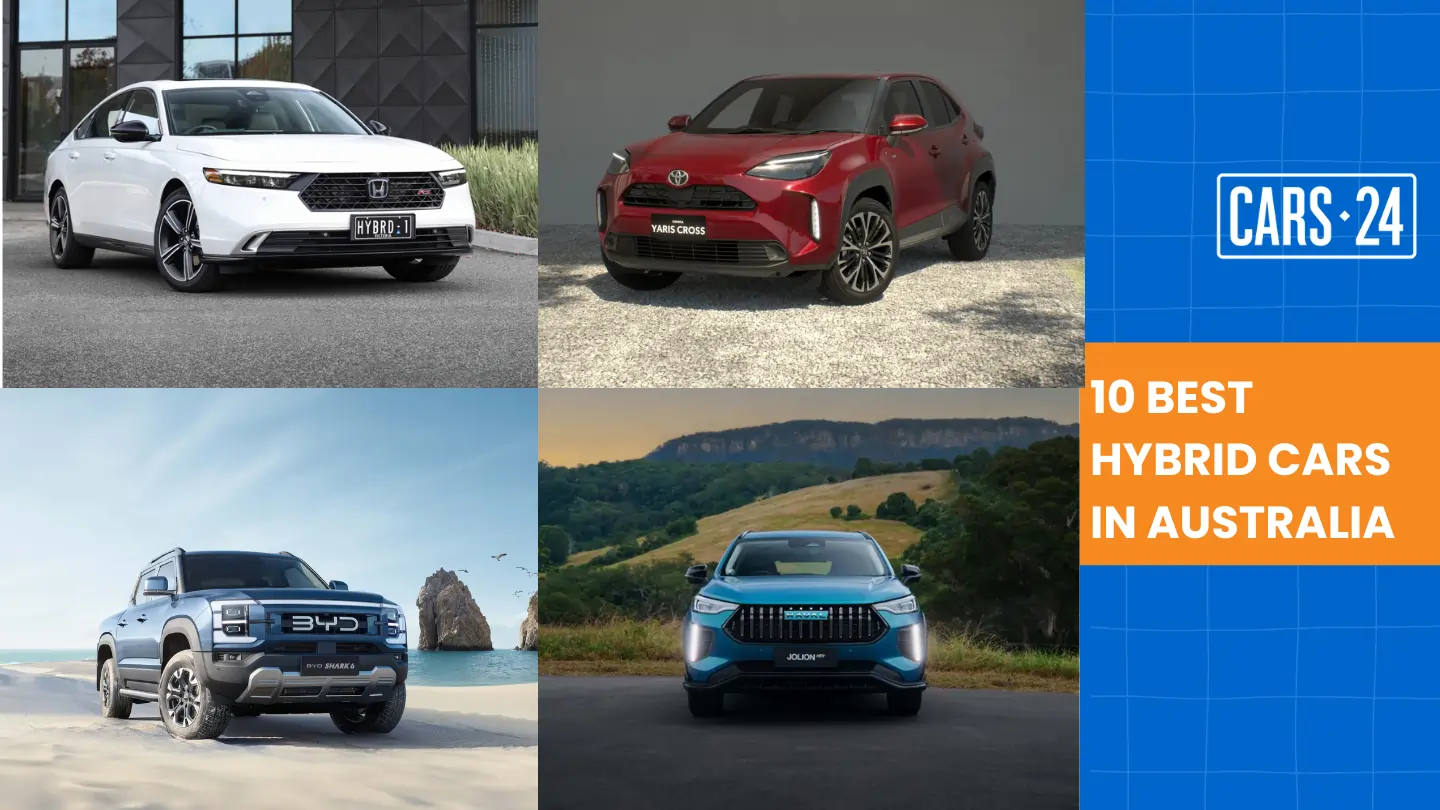
Hybrid cars have taken off in Australia even if fully-electric vehicles haven’t, and it’s no surprise why. They promise the best of both worlds: petrol power when you need it, electric efficiency when you don’t. That means fewer stops at the service station, lower running costs, and cleaner driving without the range anxiety that comes with battery electric cars (BEVs).
From small city runabouts to family-sized SUVs and even tough utes starting to appear in hybrid form, there’s now a hybrid for pretty much every lifestyle. Whether you’re after something reliable for commuting, roomy enough for school runs, or comfortable enough for weekend road trips, today’s top hybrid models offer smart tech, smooth performance and long-term dependability that Aussies love.
In this list of Australia’s best hybrid cars, we’re looking at the standouts in efficiency, practicality, comfort, and value. These models take the hassle out of driving and give back more at every kilometre.
Toyota RAV4 Hybrid

 +1 Photos


The Toyota RAV4 remains one of Australia’s most popular hybrid SUVs thanks to its excellent fuel efficiency, practicality and strong resale value. Its hybrid system is smooth and proven, delivering great economy in stop-start traffic and relaxed cruising on highways. The back seats and boot are roomy enough for families, and Toyota’s safety tech comes standard across most versions. It’s also available with all-wheel drive if you want a little more confidence on gravel or wet roads. The updated RAV4 with the next-gen closed loop hybrid offering even better efficiency, along with the first-ever RAV plug-in hybrid option, is also coming to the Australian showrooms next year.
The biggest downside? Supply issues and long wait times due to its immense popularity can test buyers’ patience. Some may also find the interior feels a little basic compared to rivals, but the newer SUV has updates that do address that concern. Even so, the Toyota RAV4 Hybrid remains a smart, dependable choice for daily life and longer trips.
| Specifications | Toyota RAV4 Hybrid |
| Engine | 2.5L Petrol-Hybrid |
| Power (Combined) | 160-163kW |
| Torque | 203Nm |
| Transmission | Continuously-variable automatic |
| Drivetrain | FWD/AWD |
| Fuel Economy (Claimed) | 4.7-5.7L /100km |
Toyota Yaris Cross Hybrid
 +1 Photos

If you want something small, efficient and city-friendly, the Toyota Yaris Cross is one of the best small hybrid cars in Australia. It sits higher than a regular hatch, making it easier to get in and out of, and offers a surprisingly spacious interior for a small SUV. Its hybrid system keeps fuel costs incredibly low, which is ideal for commuters and first-time buyers. Parking is a breeze thanks to its compact shape and light steering.
However, the ride can feel firm over rough roads, and the boot isn’t as large as some similarly priced models. Like most Toyota hybrids, demand is strong, meaning potential wait times. But for buyers wanting low running costs, excellent reliability and a simple ownership experience, the Yaris Cross continues to deliver.
| Specifications | Toyota Yaris Cross Hybrid |
| Engine | 1.5L Petrol-Hybrid |
| Power (Combined) | 85kW |
| Torque | 141Nm |
| Transmission | Continuously-variable automatic |
| Drivetrain | FWD/AWD |
| Fuel Economy (Claimed) | 3.8-4.0L/ 100km |
Honda Accord e:HEV
 +1 Photos

The Honda Accord Hybrid is ideal for those who prefer a stylish sedan with a more premium feel. It’s smooth, comfortable and quiet, especially on longer drives. Honda’s latest hybrid tech offers strong efficiency without sacrificing performance, and the spacious cabin makes it a great option for families or business travellers. Interior quality is impressive too, with comfortable seats and clear technology controls.
On the downside, the Accord can be more expensive to buy than mainstream rivals, and hybrid servicing costs may be slightly higher. It’s also not as popular in Australia as SUVs, which may impact resale value. But if you want a refined, easy-driving hybrid sedan that prioritises comfort, the Accord is well worth considering.
| Specifications | Honda Accord |
| Engine | 2.0L Petrol-Hybrid |
| Power (Combined) | 152kW |
| Torque (Combined) | 335Nm |
| Transmission | Continuously-variable automatic |
| Drivetrain | FWD |
| Fuel Economy | 4.3L/100km |
Toyota Camry Hybrid
 +1 Photos

The Toyota Camry Hybrid is a long-time favourite for Aussie buyers who want economy without moving to an SUV. It’s incredibly fuel-efficient, has a cushy ride, and offers plenty of space in both rows, making it a perfect highway cruiser or family car. Running costs are low thanks to Toyota’s hybrid reputation for durability and cheap servicing.
However, some buyers find the design a little plain both inside and out compared to newer rivals, and certain variants can be tricky to get due to demand. It doesn’t offer the elevated driving position many SUV shoppers want. Still, for comfort, affordability and long-term ownership confidence, the Camry remains one of the best hybrid cars on sale.
| Specifications | Toyota Camry Hybrid |
| Engine | 2.5L Petrol-hybrid |
| Power (Combined) | 170kW |
| Torque | 221Nm |
| Transmission | Continuously-variable automatic |
| Drivetrain | FWD |
| Fuel Economy (Claimed) | 4.0L/100km |
Hyundai Kona Hybrid
 +1 Photos

The Hyundai Kona Hybrid brings sharp looks, modern tech and great efficiency to the small-SUV world. It’s a great size for city driving yet still offers decent boot space and a comfortable back seat. Hyundai’s safety and infotainment systems are user-friendly, and buyers get a generous warranty for peace of mind.
However, some drivers may find the 1.6L hybrid setup a bit modest in performance, especially when fully loaded or driving uphill. Servicing costs can be slightly higher than Toyota’s capped plans. Road noise can also creep in on rougher surfaces. But if you like a stylish hybrid with plenty of tech and a fun, easy-to-park personality, the Kona Hybrid stands out.
| Specifications | Hyundai Kona Hybrid |
| Engine | 1.6L Petrol-Hybrid |
| Power (Combined) | 104kW |
| Torque (Combined) | 265Nm |
| Transmission | 6-speed dual-clutch automatic |
| Drivetrain | FWD |
| Fuel Economy (Claimed) | 3.9L/100km |
GWM Haval Jolion Hybrid
 +1 Photos

The Haval Jolion Hybrid has quickly become a popular value pick thanks to its affordable pricing and long list of features. It has a modern interior with big screens, comfortable seating and impressive fuel savings around town. For shoppers wanting maximum equipment for their money, it’s very appealing.
The trade-off comes with brand reputation and long-term durability still being somewhat unproven in Australia. Some owners report clunky gearbox behaviour at low speeds and inconsistent dealer service depending on location. The resale values also lag behind than other established brands. But for buyers willing to take a chance on a newer brand, the Jolion Hybrid offers plenty of tech and comfort for the price.
| Specifications | GWM Haval Jolion |
| Engine | 1.5L Petrol-Hybrid |
| Power (Combined) | 140kW |
| Torque | 375Nm |
| Transmission | 2-speed automatic |
| Drivetrain | FWD |
| Fuel Economy (Claimed) | 5.1L/100km |
Honda HR-V e:HEV
 +1 Photos

The Honda HR-V Hybrid blends stylish design with clever practicality, including Honda’s famous Magic Seats that allow for smart storage options. The cabin feels premium and minimalistic, and the hybrid tech keeps fuel use impressively low. It’s great for singles, couples or small families who want something a bit different from the usual choices.
Where it struggles is pricing, the HR-V Hybrid sits at the top end of its segment, making it less budget-friendly. The boot isn’t as large as rivals, and performance can feel modest on the open road. Still, if comfort, interior quality and fuel savings matter most, the HR-V is a refined and well-designed hybrid to live with.
| Specifications | Honda HR-V e:HEV |
| Engine | 1.5L Petrol-Hybrid |
| Power (Combined) | 96kW |
| Torque | 235Nm |
| Transmission | Continuously-variable automatic |
| Drivetrain | FWD |
| Fuel Economy (Claimed) | 4.3-5.4L/100km |
Hyundai Tucson Hybrid
 +1 Photos

The Hyundai Tucson Hybrid gives families a greener option in the medium-SUV segment with strong performance from its turbo-hybrid setup. It has one of the most stylish interiors in its class, with plenty of space for passengers and luggage. Long trips feel comfortable thanks to supportive seating and good ride quality.
Downsides include higher pricing compared to some competitors, and fuel economy isn’t always remarkable if you spend more time on highways than in the city. Some tech features are only available in upper grades, which pushes the cost further. Nonetheless, the Tucson Hybrid offers a great balance of efficiency, power and practicality for growing families.
| Specifications | Hyundai Tucson |
| Engine | 1.6L Turbo petrol-Hybrid |
| Power (Combined) | 172kW |
| Torque | 367Nm |
| Transmission | 6-speed torque converter automatic |
| Drivetrain | FWD/AWD |
| Fuel Economy (Claimed) | 5.3L/100km |
BYD Shark 6 (PHEV Ute)
 +1 Photos

The BYD Shark 6 plug-in hybrid ute is one of the newcomers bringing electrification to the ute world. It delivers strong power, the ability to drive short distances in EV mode and a big, practical tray. For tradies or adventurers wanting a quieter, more efficient alternative to diesel utes, it’s a promising option.
Being new to Australia, long-term reliability and support are still unknowns. Charging infrastructure may be needed to make the most of its hybrid system, and towing performance isn’t yet proven like Ford or Toyota utes. But for buyers who want to try something innovative and reduce fuel use without giving up practicality, the Shark 6 could be an exciting step into hybrid utes.
| Specifications | BYD Shark 6 |
| Engine | 1.5L Turbo petrol-hybrid |
| Battery Capacity | 29.5kWh |
| Power (Combined) | 321kW |
| Front Electric Motor Output | 170kW/310Nm |
| Rear Electric Motor Output | 150kW/340Nm |
| Torque (Combined) | 650Nm |
| Transmission | Single-speed automatic |
| Drivetrain | AWD |
| Fuel Economy (Claimed) | 2.0L/100km |
| Electric Range (Claimed) | 100km |
Mitsubishi Outlander Plug-in Hybrid
 +1 Photos

The Mitsubishi Outlander PHEV is one of the most popular plug-in hybrids on the market, offering real electric driving for daily commuting and petrol power for longer trips. Families love its roomy cabin, seven-seat flexibility and quiet driving experience in EV mode. Charging at home keeps fuel costs extremely low for short journeys.
However, the third row of seats is cramped and best suited for kids. The Outlander PHEV also costs more upfront than the petrol model, and you’ll need regular access to charging to get the best value from it. The battery range is fine for the city, but limited for longer travel. Still, for families moving toward electric living, it’s a practical and proven choice.
| Specifications | Mitsubishi Outlander |
| Engine | 2.4L Petrol-hybrid |
| Battery Capacity | 22.7kWh |
| Power (Combined) | 185kW |
| Torque (Combined) | 450Nm |
| Front Electric Motor Output | 85kW |
| Rear Electric Motor Output | 100kW |
| Transmission | Single-speed automatic |
| Drivetrain | AWD |
| Fuel Economy (Claimed) | 2.0L/100km |
| Electric Range (Claimed) | 86km |
Why should your next car be a hybrid?
Going hybrid isn’t just about saving fuel anymore; it’s about enjoying the drive. These vehicles are quieter, cleaner and packed with the latest safety and infotainment tech, making them ideal for busy city streets and wide country highways alike.
Hybrid systems have also proven themselves to be tough and reliable in Aussie conditions, which means owning one is as stress-free as filling it up. And with more models arriving each year, from popular favourites to newer options pushing technology forward, there’s no shortage of choice for drivers wanting to shrink costs, not convenience.
So if you’re thinking about a car that’s future-friendly, wallet-friendly and ready for everyday adventures, one of Australia’s top hybrid picks could be the perfect match for you, now and well into the journey ahead.

Comments
New Comment