





Hybrid SUVs have become the sweet spot for Australian buyers in 2026. With rising fuel costs, stricter emissions expectations, and growing awareness around efficiency, hybrids offer a compelling middle ground between traditional petrol power and full electrification.
Unlike EVs, hybrids remove range anxiety while still delivering significant fuel savings, especially in urban driving. At the same time, many modern hybrid systems now prioritise performance and refinement just as much as efficiency.
But not all hybrid SUVs are created equal. Some focus on bulletproof reliability, others on cutting-edge tech, and a few aim to redefine performance altogether. The models below represent the best hybrid SUVs currently available in Australia, each offering a standout feature that sets it apart from the pack.
Toyota RAV4
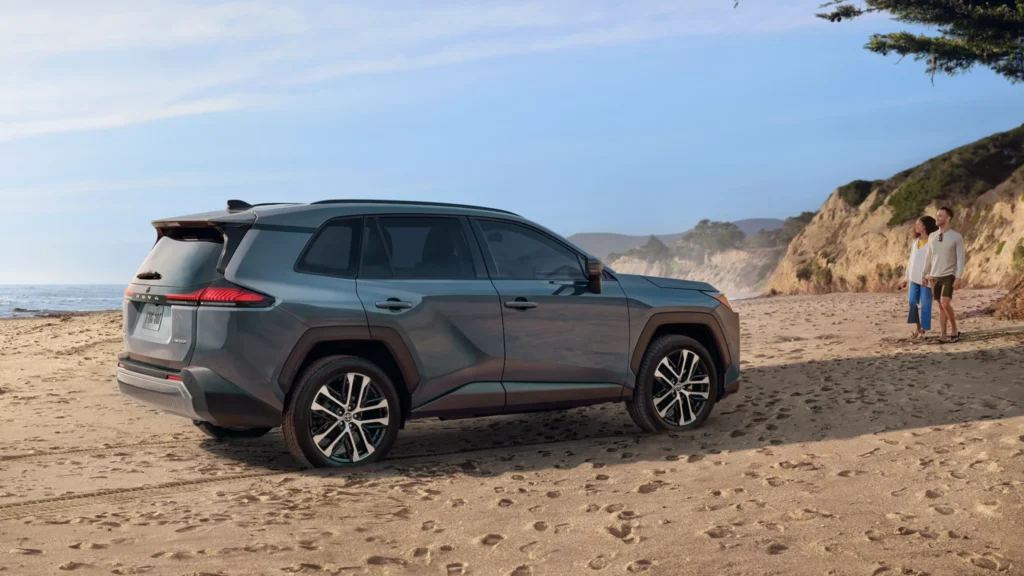
The Toyota RAV4 Hybrid continues to set the benchmark in this segment, and it’s easy to see why it remains one of Australia’s best-selling SUVs. Its 2.5L hybrid system produces around 163kW, delivering a strong blend of performance and efficiency, with real-world fuel consumption sitting at roughly 4.8L/100km.
From a driver’s perspective, the Toyota RAV4 excels in everyday usability. It transitions seamlessly between petrol and electric power, remains quiet at low speeds, and feels effortless in urban traffic. On the highway, it’s stable and comfortable, making it a dependable long-distance tourer.
Cabin practicality is another highlight, with over 500 litres of boot space and a well-thought-out interior layout that suits families. Add Toyota’s proven hybrid reliability and strong resale value, and it becomes clear why this SUV continues to dominate.
The Toyota RAV4 Hybrid is widely regarded as dependable, but it’s not without compromise. The biggest drawback is long wait times and high demand, which can make availability frustrating for buyers. Additionally, the driving experience leans toward comfort rather than engagement, and the CVT-style transmission can feel less responsive under hard acceleration.
| Specifications | Toyota RAV4 |
| Engine | 2.5L petrol-hybrid |
| Battery capacity | 88kW |
| Combined power | 163kW |
| Combined torque | 221Nm |
| Drivetrain | FWD/AWD |
| Fuel consumption | 4.7L/100 km |
Kia Sorento
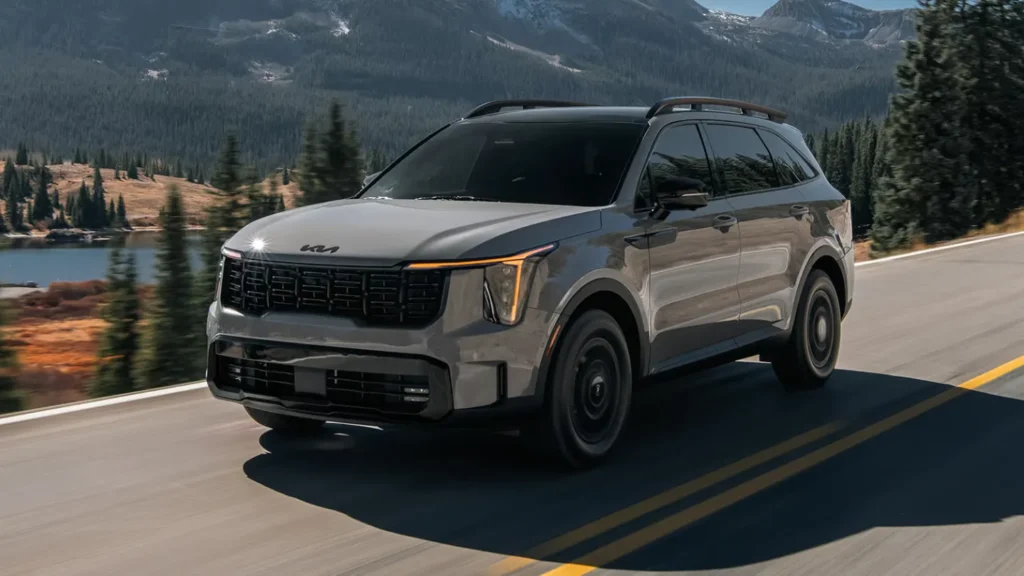
The Kia Sorento Hybrid fills a crucial gap in the market as a true three-row hybrid SUV that doesn’t feel like a compromise. Powered by a 1.6L turbocharged hybrid system producing around 169kW, it delivers solid performance for a vehicle of its size while maintaining fuel consumption of around 5.7L/100km.
On the road, the Kia Sorento leans toward comfort rather than sportiness, with a refined ride that suits long-distance touring, a key consideration for Australian families. The suspension tune and cabin insulation make it particularly well-suited to highway driving.
Inside, the Kia Sorento impresses with a premium-feeling cabin, large infotainment displays, and flexible seating across three rows. It’s one of the few hybrids that can genuinely replace a diesel family SUV without sacrificing practicality.
The Kia Sorento Hybrid’s main compromise comes from packaging and drivetrain limitations. In some configurations, boot space is slightly reduced compared to diesel variants due to battery placement. It also doesn’t offer the same towing capacity as diesel versions, which may matter for caravanning families.
| Specifications | Kia Sorento |
| Engine | 1.6L turbo petrol-hybrid |
| Battery capacity | 1.5kWh |
| Combined power | 169kW |
| Combined torque | 350Nm |
| Drivetrain | FWD/AWD |
| Fuel consumption | 5.5-5.7L/100 km |
Hyundai Santa Fe
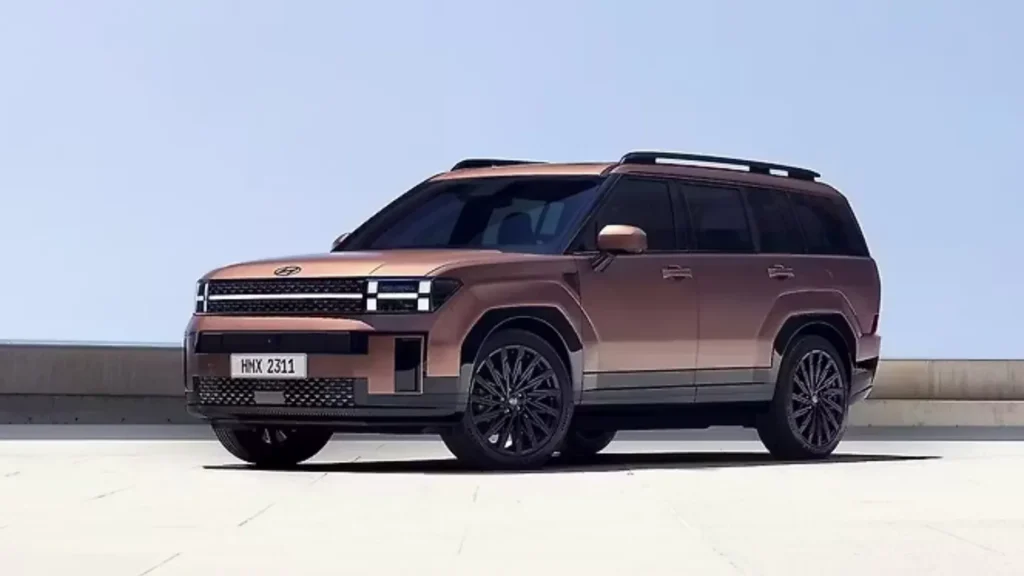
The Hyundai Santa Fe Hybrid represents a shift toward design-led practicality in the large SUV segment. Its 1.6L turbo hybrid setup delivers around 175kW and 367Nm, offering a noticeable step up in torque compared to many rivals.
What stands out most is the interior packaging. The boxy exterior design translates into a more spacious cabin, improved headroom, and better cargo usability. It feels particularly well thought-out for families who need flexibility.
On the road, the Hyundai Santa Fe prioritises comfort and refinement. It’s quiet, composed, and easy to drive, with a hybrid system that operates smoothly in both city and highway conditions.
While the Hyundai Santa Fe Hybrid excels in comfort, it can feel less efficient in real-world highway driving, where hybrids typically rely more on the petrol engine. Its larger size and weight also mean it’s not as nimble in tight urban environments as smaller SUVs.
| Specifications | Hyundai Santa Fe |
| Engine | 1.6L turbo petrol-hybrid |
| Electric motor | 44-60kW |
| Battery capacity | 1.83kWh |
| Combined power | 172kW |
| Combined torque | 367Nm |
| Drivetrain | FWD/AWD |
| Fuel consumption | 5.6L/100 km |
Honda CR-V e:HEV
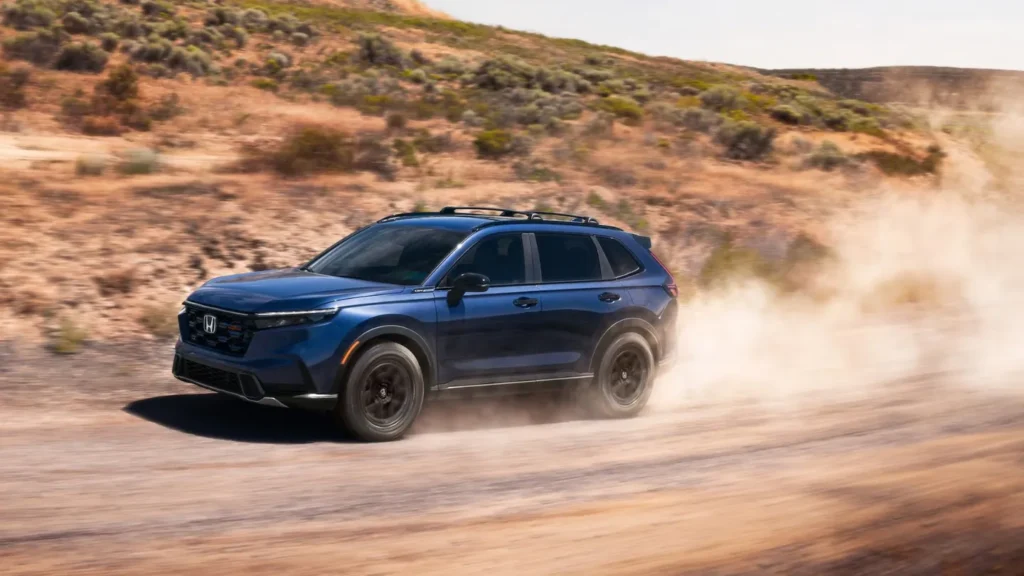
The Honda CR-V e:HEV offers one of the most technically sophisticated hybrid systems available today.
Its two-motor setup eliminates the need for a traditional transmission, allowing the petrol engine to act primarily as a generator. This gives the Honda CR-V a uniquely smooth, EV-like driving feel, particularly in urban environments.
Fuel efficiency is also a strong point, with figures approaching 5.9L/100km, while the driving experience remains quiet and responsive.
Inside, the Honda CR-V focuses on practicality, offering a spacious cabin, clever storage solutions, and a user-friendly infotainment system. Build quality is also a standout, reinforcing Honda’s reputation for durability.
The Honda CR-V e:HEV’s advanced system is a strength, but it can also be a drawback. Some drivers may find the non-traditional driving feel, where engine revs don’t always match acceleration, a bit unusual. It’s also typically priced higher than non-hybrid versions, which may affect value perception.
| Specifications | Honda CR-V e:HEV |
| Engine | 2.0L petrol-hybrid |
| Electric motor | 135kW |
| Battery capacity | 1.1kWh |
| Combined power | 135kW |
| Combined torque | 335Nm |
| Drivetrain | FWD |
| Fuel consumption | 5.5L/100 km |
GWM Haval H6
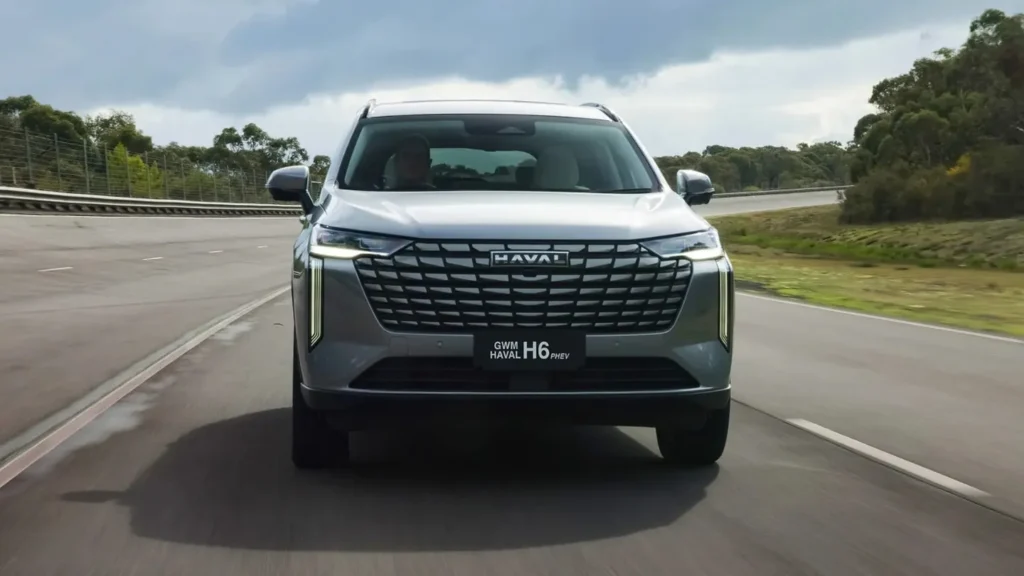
The GWM Haval H6 Hybrid has emerged as a serious contender by offering impressive performance at a relatively accessible price point. Its hybrid system delivers strong outputs, some variants pushing performance levels that rival more expensive SUVs, while still maintaining respectable efficiency.
Behind the wheel, the GWM H6 feels quick and responsive, particularly in urban driving where instant electric torque gives it a noticeable edge. It’s one of the more performance-oriented hybrids in this segment.
The interior is well-equipped, with large screens, modern design, and a generous list of standard features. While brand perception is still evolving, the value proposition is hard to ignore.
The GWM H6 Hybrid offers strong value, but long-term ownership is still something of an unknown compared to more established Japanese brands. Resale value and dealer network maturity may also lag behind key rivals in Australia.
| Specifications | GWM Haval H6 |
| Engine | 1.5L turbo petrol-hybrid |
| Electric motor | Dual electric-motors |
| Battery capacity | 1.7kWh |
| Combined power | 179kW |
| Combined torque | 530Nm |
| Drivetrain | FWD |
| Fuel consumption | 5.2L/100 km |
MG ZS Hybrid+
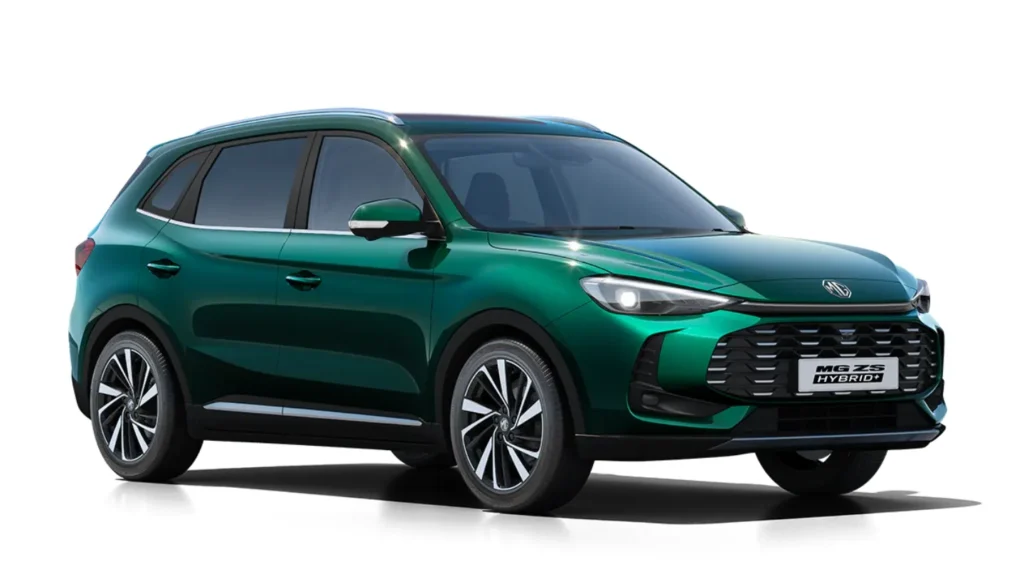
The MG ZS Hybrid+ is designed to make hybrid ownership accessible to a broader audience. As a compact SUV, it prioritises ease of use, affordability, and efficiency. It’s particularly well suited to city driving, where its hybrid system can maximise fuel savings in stop-start traffic.
While it doesn’t offer the outright space or power of larger SUVs, it compensates with low running costs and a simple, user-friendly driving experience. Its growing popularity reflects a shift in the market, with more buyers prioritising affordability alongside electrification.
As a budget-focused option, the MG ZS Hybrid+ makes a few compromises. Interior quality and refinement aren’t on par with more expensive rivals, and performance is modest, particularly when the battery isn’t heavily assisting. It’s best suited to urban use rather than long-distance touring.
| Specifications | MG ZS Hybrid+ |
| Engine | 1.5L petrol-hybrid |
| Electric motor | 100kW |
| Battery capacity | 1.83kWh |
| Combined power | 158kW |
| Combined torque | 465Nm |
| Drivetrain | FWD |
| Fuel consumption | 4.7L/100 km |
Nissan X-Trail e-Power
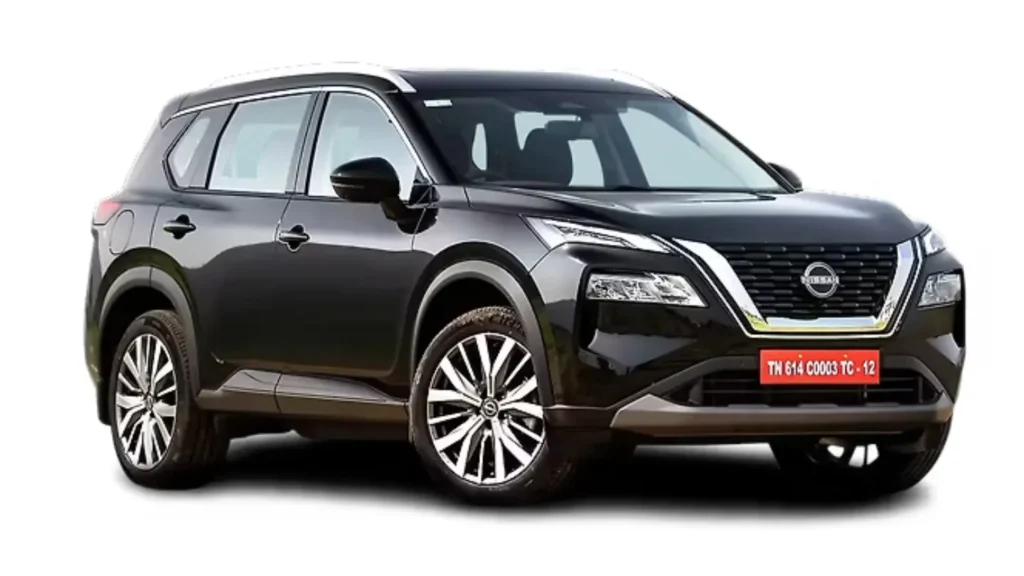
The Nissan X-Trail e-Power takes a fundamentally different approach to hybrid technology. Instead of combining petrol and electric drive, the petrol engine acts solely as a generator, while the wheels are driven entirely by an electric motor. The result is instant torque and a smooth, EV-like driving experience.
With outputs around 157kW and fuel consumption of approximately 6.1L/100km, it strikes a balance between performance and efficiency.
The Nissan X-Trail also excels in practicality, offering flexible seating, clever storage solutions, and a comfortable ride. It’s particularly appealing to buyers who want an EV-style driving feel without committing to charging infrastructure.
The Nissan X-Trail e-Power’s unique system delivers smooth performance, but it can lead to higher real-world fuel consumption on highways, where the petrol engine works harder as a generator. Some drivers may also notice engine noise under load, which contrasts with its otherwise quiet nature.
| Specifications | Nissan X-Trail e-Power |
| Engine | 1.5L turbo-petrol |
| Electric motor | Dual-electric motors |
| Battery capacity | 2.1kWh |
| Combined power | 157kW |
| Combined torque | 525Nm |
| Drivetrain | FWD/AWD |
| Fuel consumption | 6.1L/100 km |
Lexus LBX Hybrid
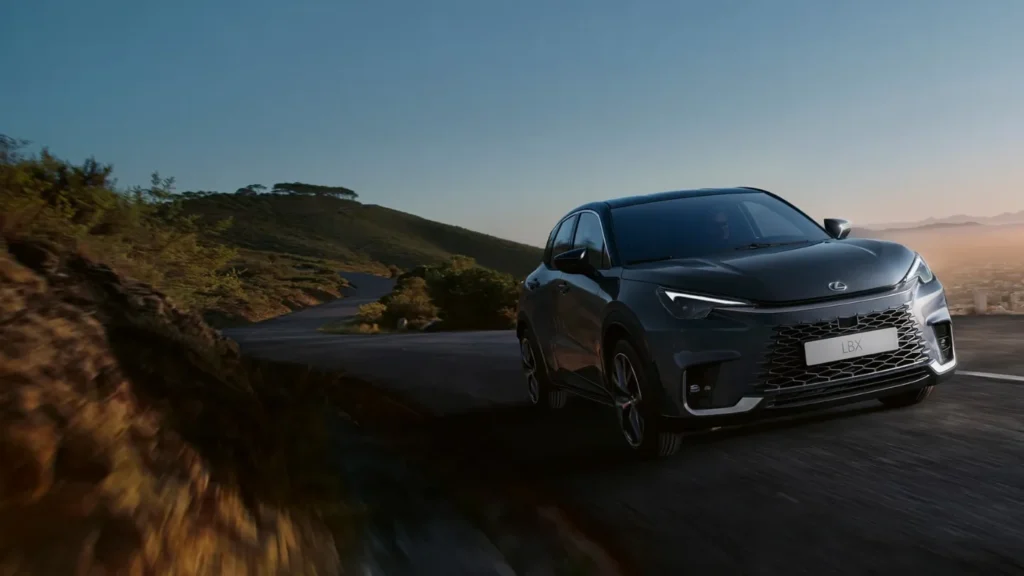
The Lexus LBX Hybrid proves that hybrid SUVs can also deliver genuine luxury in a compact package. It focuses heavily on refinement, with a quiet cabin, high-quality materials, and a smooth hybrid system that prioritises comfort over outright performance.
This is a vehicle designed for urban buyers who value premium feel and efficiency in equal measure. Despite its smaller size, it maintains the attention to detail expected from the Lexus brand.
The Lexus LBX Hybrid prioritises luxury over practicality, which brings some trade-offs. Rear seat space and boot capacity are limited compared to larger SUVs, making it less suitable for families. It’s also positioned at a premium price point for its size.
| Specifications | Lexus LBX Hybrid |
| Engine | 1.5L petrol-hybrid |
| Electric motor | 69kW |
| Combined power | 100kW |
| Combined torque | 185Nm |
| Drivetrain | FWD/AWD |
| Fuel consumption | 3.8L/200 km |
Kia Carnival
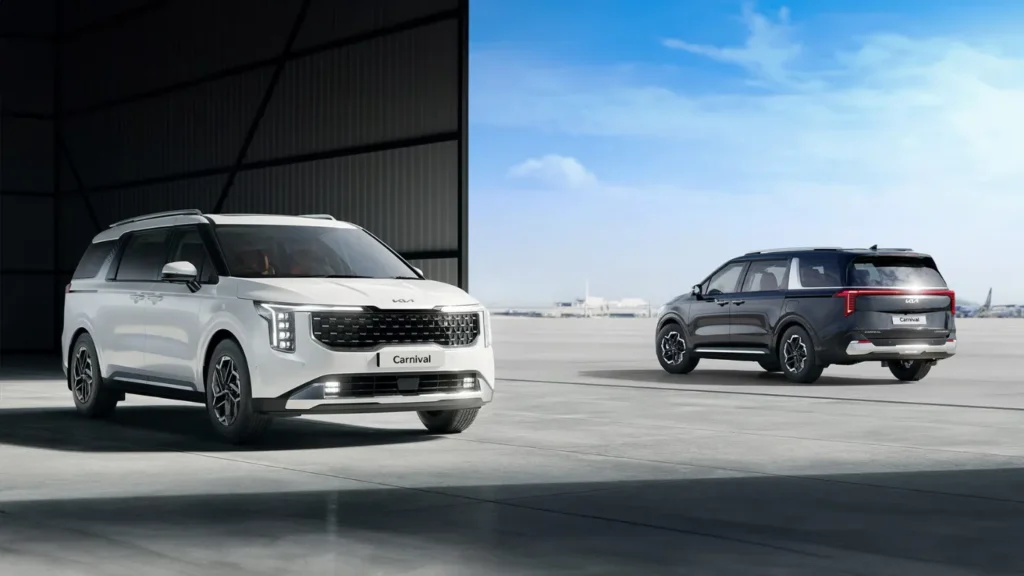
The Kia Carnival Hybrid is the wildcard in this list but for many Australian families, it may be the most practical option of all. While it’s technically a people mover rather than an SUV, it delivers unmatched space, flexibility, and real-world usability, combined with hybrid efficiency.
Under the bonnet, the Carnival Hybrid uses a 1.6L turbocharged petrol engine paired with an electric motor, producing around 180kW and driving the front wheels through a 6-speed automatic transmission.
Unlike many hybrids that use CVTs, this setup gives it a more conventional driving feel, which will appeal to drivers transitioning from traditional petrol or diesel vehicles.
On the road, the Carnival prioritises comfort and refinement. It’s quiet, smooth, and particularly well suited to long-distance touring, something Australian buyers value highly. The hybrid system improves efficiency significantly compared to the V6 petrol version, especially in urban driving, while still offering strong performance for a vehicle of its size.
One of the main drawbacks is that it’s not an SUV in the traditional sense. It lacks all-wheel drive and off-road capability, which may limit its appeal for buyers who want a more rugged, adventure-ready vehicle.
| Specifications | Hyundai i30 sedan |
| Engine | 1.6L turbo petrol-hybrid |
| Electric motor | 54kW |
| Battery capacity | 1.49kWh |
| Power | 180kW |
| Torque | 367Nm |
| Drivetrain | FWD |
| Fuel consumption | 5.8L/200 km |
GWM Tank 500
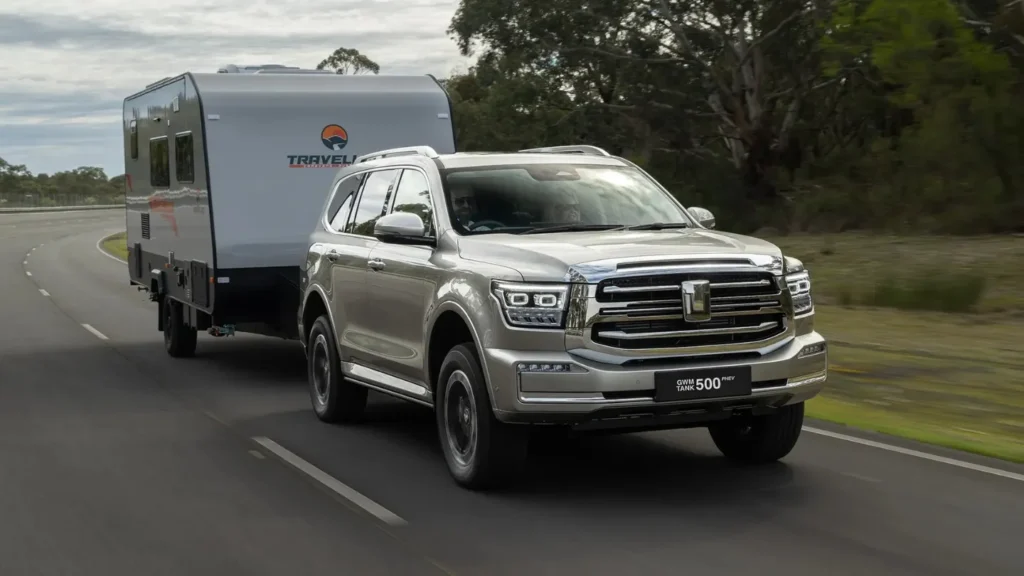
The GWM Tank 500 Hybrid brings something completely different to this list. While most hybrid SUVs focus on urban efficiency, the Tank 500 is built around serious off-road capability, towing strength, and long-distance touring, closer in philosophy to a Toyota LandCruiser than a typical mid-size SUV.
Under the bonnet, it uses a 2.0L turbocharged petrol engine paired with an electric motor, producing a combined 255kW and 648Nm. This makes it one of the most powerful vehicles in your lineup, with performance that feels effortless given its size and weight.
On the road, the GWM Tank 500 prioritises comfort and presence. It’s a large, body-on-frame SUV, which means it feels more substantial than monocoque rivals like the Toyota RAV4 orHonda CR-V. The hybrid system adds smooth low-speed torque, making city driving surprisingly manageable, while highway cruising is relaxed and quiet.
Where it truly stands out is off-road. With a full-time 4WD system, low-range gearing, and multiple terrain modes, it’s designed to handle challenging Australian conditions, from gravel tracks to remote touring. This is one of the very few hybrid SUVs that doesn’t sacrifice capability for efficiency.
One of the main drawbacks is fuel efficiency relative to smaller hybrids. While it’s efficient for a large 4WD, real-world consumption is noticeably higher than mid-size SUVs like the RAV4 or CR-V due to its size, weight, and off-road hardware.
| Specifications | GWM Tank 500 |
| Engine | 2.0L turbo-petrol hybrid |
| Combined power | 255kW |
| Combined torque | 648Nm |
| Drivetrain | 4WD |
| Fuel consumption | 8.5-9.4L/200 km |
Why do hybrid SUVs matter more than ever in 2026?
Hybrid SUVs are no longer just a transitional technology, they’ve become a complete solution for Australian drivers.
They offer significant fuel savings, reduced emissions, and improved refinement, all while maintaining the flexibility needed for long-distance travel. With many models now matching or exceeding traditional petrol and diesel SUVs in performance and comfort, hybrids have firmly established themselves as a mainstream choice.
What’s changed in recent years is how seamlessly hybrid systems now integrate into everyday driving. In urban environments, where many Australians spend the bulk of their time, hybrids can operate on electric power more frequently, dramatically reducing fuel consumption in stop-start traffic. This not only lowers running costs but also creates a quieter, smoother driving experience that feels closer to an electric vehicle than a conventional petrol SUV.
At the same time, hybrids remove one of the biggest barriers to EV adoption: charging infrastructure. For buyers who regularly travel long distances, tow, or venture into regional and remote areas, hybrids provide peace of mind. You still have the convenience of refuelling in minutes at any servo, without needing to plan around charging stops.
Final thoughts
The best hybrid SUVs in Australia in 2026 showcase just how far the segment has evolved.
The Toyota RAV4 Hybrid remains the benchmark for reliability and efficiency, while the Kia Sorento and Hyundai Santa Fe cater to growing families. The Honda CR-V e:HEV and Nissan X-Trail e-Power push hybrid technology forward, and newer players like the BYD Sealion 6 and Jaecoo J7 SHS demonstrate how quickly innovation is accelerating.
For Australian buyers, the biggest takeaway is simple: there’s no longer a compromise in choosing a hybrid SUV, only a wide range of very good options.

Comments
New Comment