




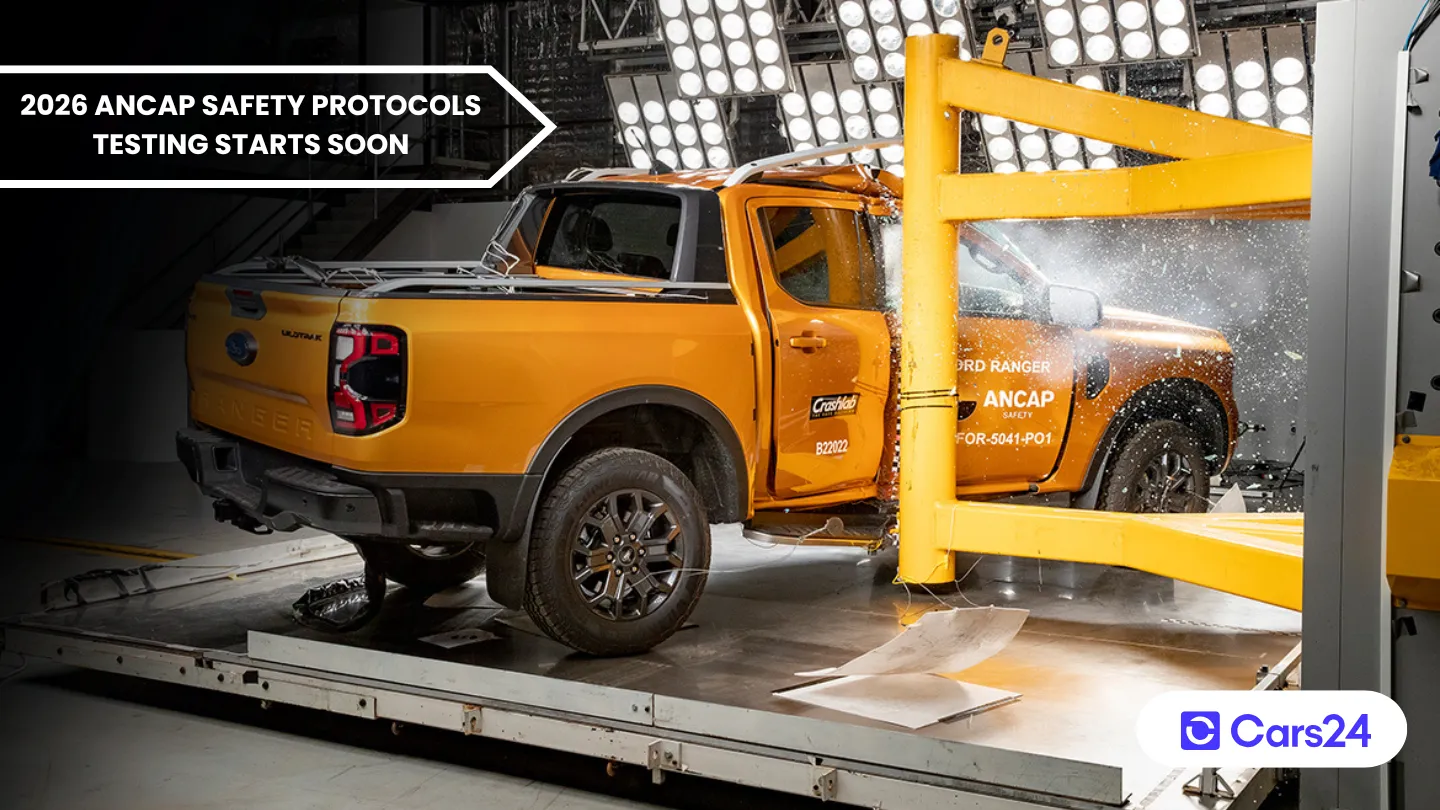
The new 2026 safety testing rules from ANCAP are coming into use soon, starting around April/May 2026, bringing a simpler, more realistic approach to vehicle safety for the next three years. The first ratings are expected to be published in July 2026. The updated system, developed alongside ENCAP, moves away from a checklist to a real-world four “stages of safety” model.
The timeline of the new ANCAP testing
The 2026 ANCAP safety protocols officially came into effect in Australia on January 1, 2026. The first testing under these new protocols is expected to begin around April/May 2026. The first official safety ratings are anticipated to be published in July 2026.
The introduction of these protocols also coincided with the expiry of 2019-dated ANCAP ratings for many popular models, such as Mazda CX-30 and Kia Seltos.
The big shift: Four stages of safety
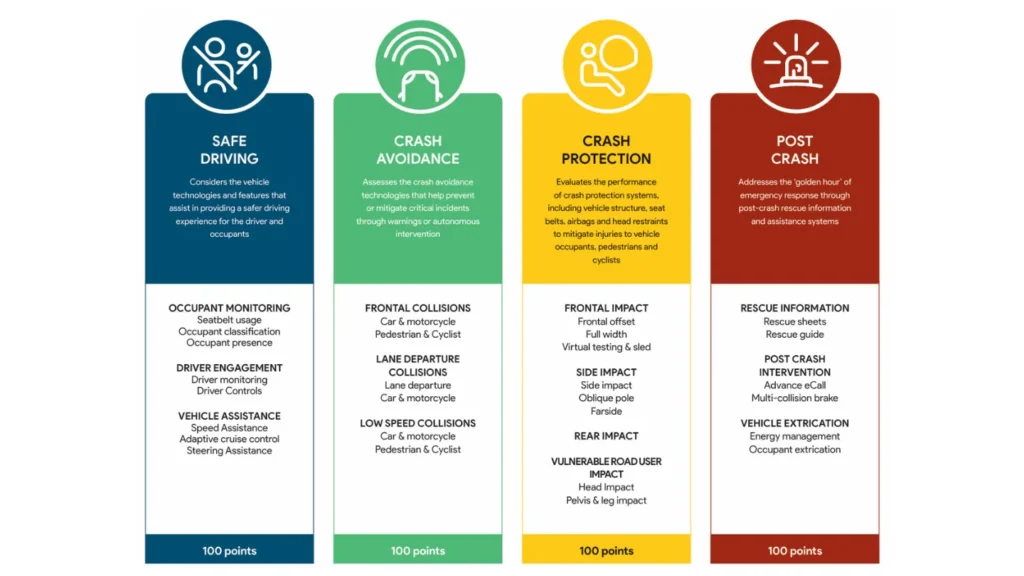
Vehicles are now assessed across four key stages, each scored out of 100, rather than a scattered set of criteria. Cars must meet minimum thresholds in every stage, not just perform well overall, to achieve a 5-star ANCAP rating.
Stage 1: Safe Driving
This stage focuses on preventing crashes before they happen by improving driver behaviour. Its key areas are:
- Driver monitoring systems (fatigue and distraction detection)
- Speed assistance systems (accuracy and driver engagement)
- Touchscreen usability (distraction by design)
ANCAP will now penalise vehicles where key controls are buried in menus and systems are hard to use while driving. There’s also stronger testing of speed sign recognition.
Stage 2: Crash Avoidance
This stage digs deeper into how safety tech actually works on the road. Systems tested include:
- Forward Collision Warning (FCW)
- Autonomous Emergency Braking (AEB)
- Lane Support Systems (LSS)
New ANCAP protocols also test cars in rain and at night, detect vulnerable road users (e.g. road workers in hi-vis gear), and evaluate driver experience. Vehicles can lose points if systems are too intrusive, poorly calibrated, and hard to override.
ANCAP will also assess steering response during lane assist, how aggressively a car corrects its position, and whether systems assist, and not fight the driver. A new addition is testing for pedal misapplication, where a driver accidentally hits the accelerator instead of the brake.
Stage 3: Crash Protection
A stronger focus on real crash scenarios remains the core of occupant safety, but with broader and tougher testing. The key updates include:
- More crash scenarios across different vehicle types
- Deformable barrier replaces rigid wall in frontal crash tests
- More occupants tested; additional front passenger dummy and 2 adults + 2 children in offset tests
- Replacement of the traditional male dummy with a smaller female occupant model
There are strict penalties if a seat or seat rail fails. The car loses 50% of points here, effectively ruling out a five-star rating.
The new 2026 ANCAP protocol also requires that curtain airbags must stay inflated during rollovers, child safety remains central, with testing based on real restraint systems used in Australia and New Zealand.
Stage 4: Post-Crash
This new stage focuses on the “golden hour” after a crash, when survival often depends on a fast response. Its key areas are:
- Multi-collision braking
- Ease of rescue and occupant extraction
- Risks linked to electric vehicles (EVs)
- Safe handling of high-voltage batteries
- Preventing electric shock risks for responders
- Clear external warning signals
ANCAP is pushing for wider adoption of eCall systems, which automatically contact emergency services after a crash.
EV fire risk now under the microscope
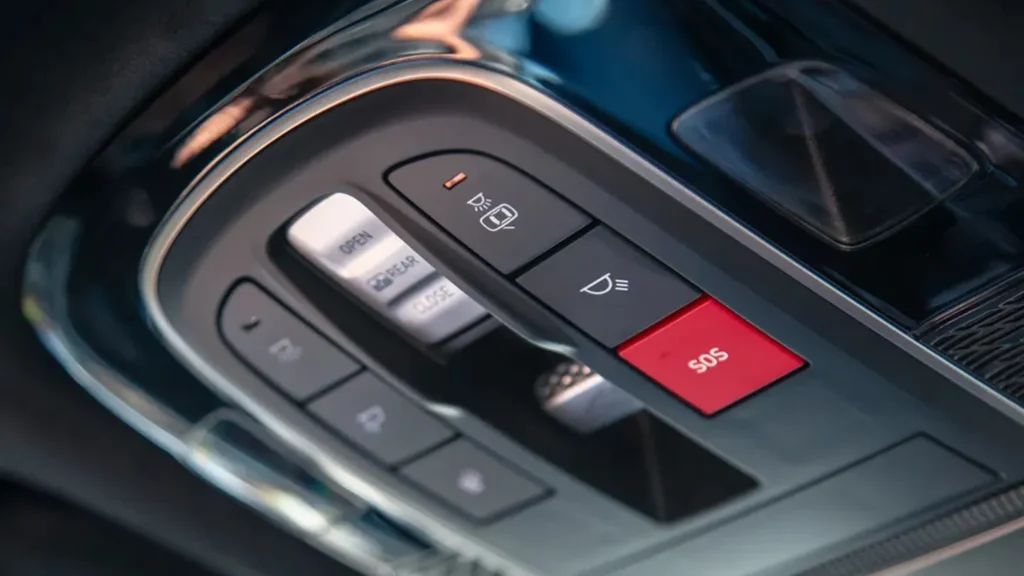
ANCAP is also assessing EV fire risk as more electric cars are coming up on the Australian roads. The vehicle safety authority is going to test whether EV batteries ignite after a crash, how warnings are communicated to occupants and how incidents are signalled externally for safety.
What this means for the car buyers
The 2026 ANCAP protocols raise the car safety bar significantly. For Aussie people, it means smarter tech, better real-world safety performance, greater focus on driver usability and behaviour, and improved protection for families and emergency responders.
For manufacturers, it means higher engineering standards and earlier collaboration with ANCAP to meet requirements. It’s no longer enough for a car to look safe on paper. It has to perform on real roads, with real drivers, in real situations.

Comments
New Comment