




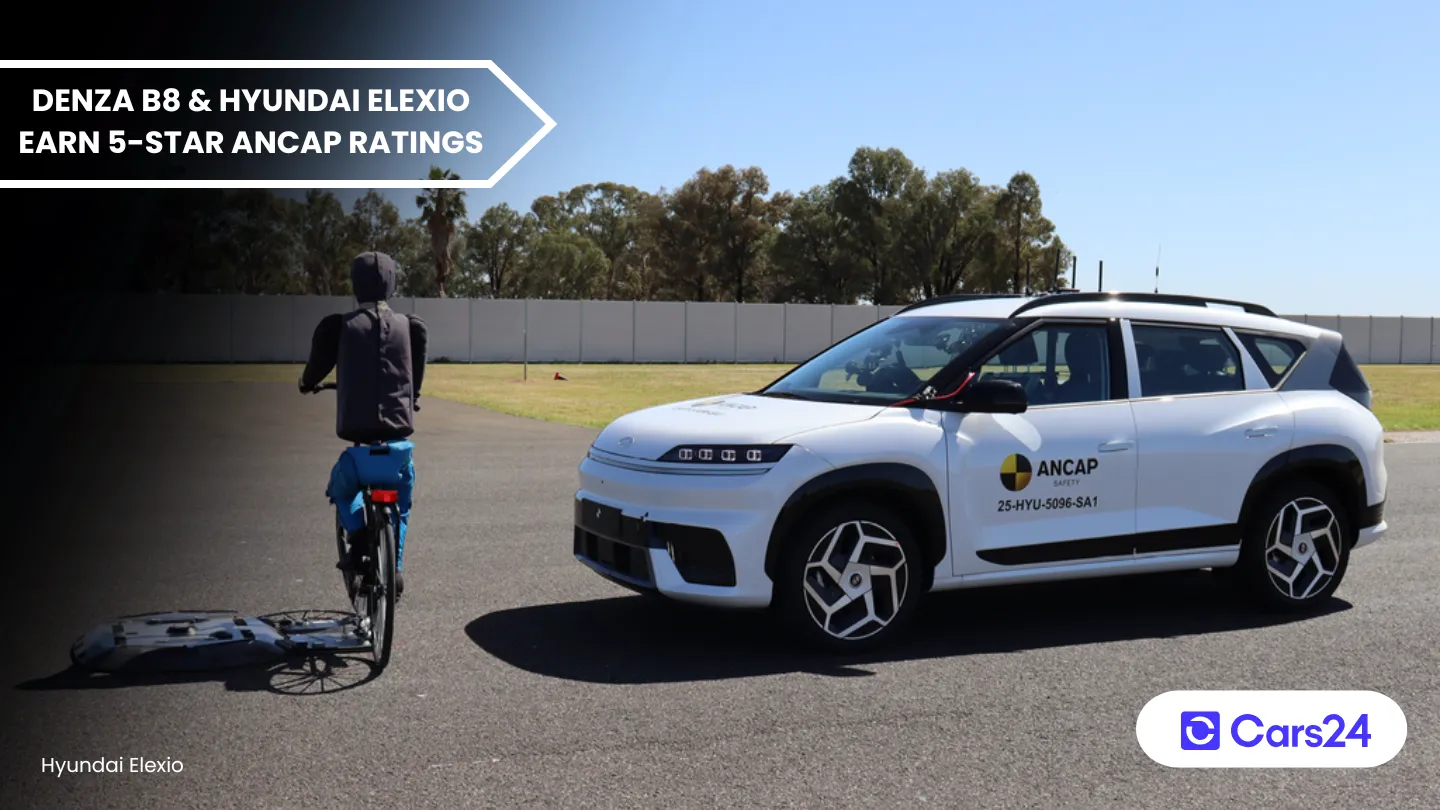
Two new 2026 SUV models, the Denza B8 and Hyundai Elexio, have achieved 5-star ANCAP safety ratings after being evaluated against ANCAP’s 2023–2025 testing and rating standards.
The 2026 Denza B8 is a full-size, premium off-road SUV with a PHEV powertrain and is designed to compete with heavyweights like the Toyota LandCruiser 300 Series and Nissan Patrol. The 2026 Hyundai Elexio is a mid-size, all-electric SUV positioned in the lineup between the Kona Electric and the Ioniq 5.
Breaking down the safety scores of Denza B8
| Assessment | Denza B8 Safety Score |
| Adult occupant protection | 86% (34.40/40) |
| Child occupant protection | 95% (46.81/49) |
| Vulnerable road user protection | 75% (47.52/63) |
| Safety assist | 78% (14.07/18) |
Adult occupant protection – 86%
Adult protection is strong in most direct-impact scenarios. The full compatibility penalty (maximum 8 out of 8) in MPDB testing and the MARGINAL chest rating in the oblique pole test (5.5/6) are the primary structural concerns within an otherwise solid safety performance.
Denza B8’s front structure posed a higher risk to occupants of an oncoming vehicle in the compatibility assessment. However, it got a 3.75/8 in the frontal offset (MPDB) test with the passenger compartment remaining stable.
The Denza B8 is fitted with a centre airbag, which provides GOOD head protection for both front occupants in side-impact scenarios. A rescue sheet is also available, and the doors and windows remain functional for the minimum required time period in the water.
Child occupant protection – 95%
The Denza B8 has a very strong child occupant performance overall, scoring 46.81 out of the maximum 49. The lack of third-row top tethers limits flexibility in 7-seat configurations. Therefore, ANCAP does not recommend the installation of child restraints in the third row.
A direct child presence detection (CPD) system comes as standard. It provides alerts if a child may have been left in the vehicle and can escalate warnings, including activating the AC if the driver fails to respond.
Vulnerable road user protection – 75%
Structural pedestrian protection is mixed, particularly at the pelvis and windscreen pillars. However, active safety intervention performance is consistently GOOD and offsets some structural limitations.
MARGINAL, WEAK, and POOR results were recorded on the stiff windscreen pillars, the base of the windscreen, and the front edge of the bonnet. Pelvis protection was mostly POOR. Femur and lower leg protection was mostly GOOD.
Autonomous emergency braking (AEB) performance was good overall, except for the AEB Backover, where it was MARGINAL performance (scored 1 out of 2).
Safety assist – 78%
Core crash avoidance systems perform strongly. The Denza B8’s Driver Monitoring System (DMS), capable of detecting drowsiness and distraction, is fitted as standard and provides warnings. However, the scoring in this category was relatively modest at 0.59 out of 2. This suggests room for refinement in system robustness or intervention strategy.
Standard safety equipment of Denza B8
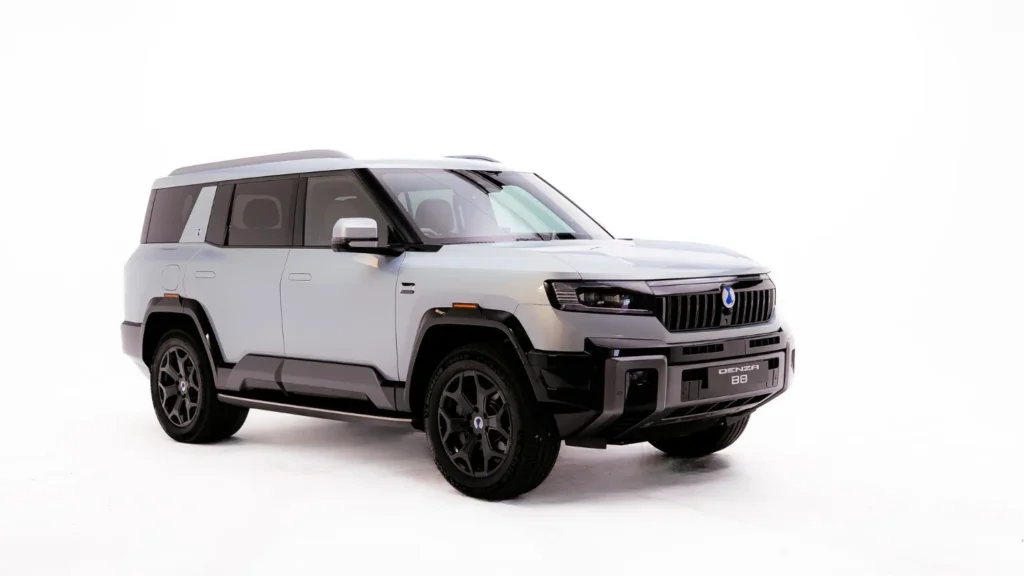
The following active and passive safety features are standard on all Denza B8 variants sold in Australia:
- 14 airbags in 6-seater (11 in 7-seater)
- Autonomous Emergency Braking (AEB)
- Lane Support Suite (LSS)
- Speed Sign Recognition (TSR)
- Adaptive Cruise Control (ACC)
- Blind Spot Monitoring (BSM)
- Driver Attention Alert/Monitoring (DAA/DDM)
- Driver Fatigue Monitoring (DFM)
- Child Presence Detection (CPD)
- Collision Avoidance Systems
- Front and rear parking sensors
- 360-degree surround-view camera system
- Electronic Stability Control (ESC)
- Door Opening Warning (DOW)/Safe exit warning
- Tyre Pressure Monitoring (TPMS) system
- Auto High Beam LED headlights
- Intelligent Power Brake System and Auto-Hold
More: Hyundai’s 2026 Australia line-up revealed
Breaking down the safety scores of the Hyundai Elexio
| Assessment | Hyundai Elexio Safety Score |
| Adult occupant protection | 88% (35.47/40) |
| Child occupant protection | 86% (42.41/49) |
| Vulnerable road user protection | 77% (48.60/63) |
| Safety assist | 85% (15.42/18) |
Adult occupant protection – 88%
The Elexio demonstrates strong structural crash protection in most scenarios, particularly side impact. However, the MARGINAL chest ratings in the oblique pole test (5.36 out of 6), dashboard injury risks, and footwell seam integrity issue are clear engineering weaknesses. The centre airbag performance in the pole test is another area Hyundai could refine, as it did not sufficiently prevent head contact between front occupants.
Across most crash configurations, protection for critical body regions of front occupants was rated GOOD. Unlike the Denza B8, the Elexio scored a low compatibility penalty of 1 out of 8, indicating a lower risk posed to occupants of an oncoming vehicle. Post-crash provisions are comprehensive.
Child occupant protection – 86%
Dynamic crash protection for children is very strong. However, the absence of a CPD system is notable in a modern 5-star vehicle, and it limits the technology-based child protection score.
The Type A capsule in the Hyundai Elexio could not be correctly installed in the rear outboard positions using the vehicle seatbelt. A Child Presence Detection (CPD) system is not available, and the On-board Safety Features score of 7 out of 13 reflects this absence.
Vulnerable road user protection – 77%
Active safety intervention is consistently GOOD across most forward scenarios. However, structural pedestrian protection remains an area requiring improvement. WEAK and POOR results were recorded at stiff windscreen pillars, rear of the bonnet, base of the windscreen, and front edge of the bonnet.
Pelvis protection ranged from GOOD to POOR, with an overall low score of 1.23 / 4.5. Backover AEB performance (scoring 1 out of 2), being MARGINAL, also limits overall pedestrian mitigation capability.
Safety assist – 85%
The Elexio performs very strongly in core AEB car-to-car scenarios and emergency lane interventions (reflected in a 2.5/3 score of lane support systems). However, the POOR lane keep assist performance and the unassessed AEB Head-On category prevent it from being class-leading in this segment. Driver monitoring (DMS) is fitted as standard and can detect drowsiness and distraction, scoring 1.65 out of 2 in the test.
Standard safety equipment of the Hyundai Elexio
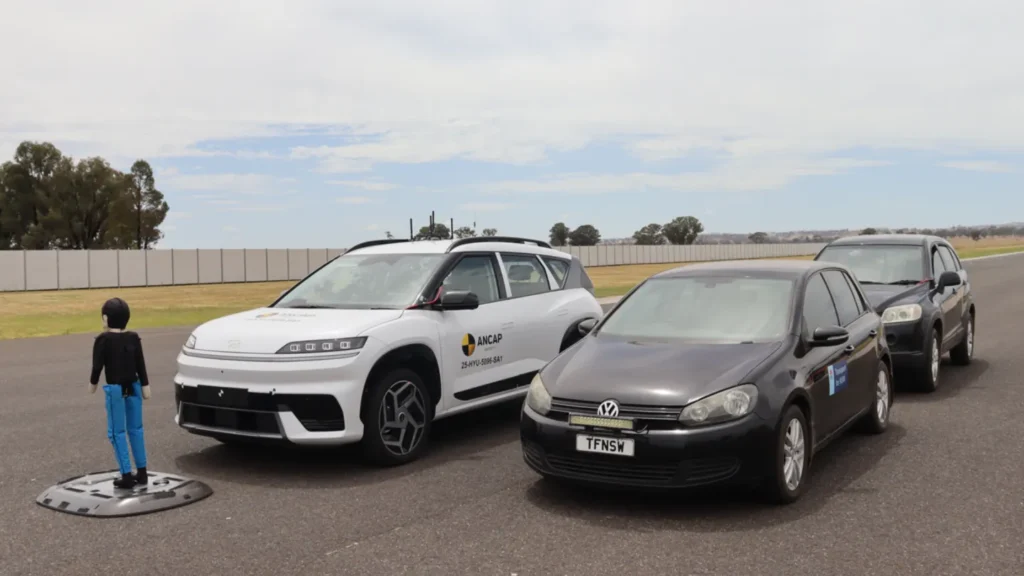
The 2026 Hyundai Elexio comes equipped with a comprehensive Hyundai SmartSense safety suite in a single Elite trim level.
- 9 airbags
- Autonomous Emergency Braking (FCA 2.0)
- Adaptive Cruise Control
- Lane Support Systems (LSS)
- Blind-Spot Monitoring
- Highway Driving Assist 2 (HDA 2)
- Surround View Monitor (SVM) with a 3D view
- Remote Smart Park Assist 3 (RSPA 3)
- Parking Collision-Avoidance Assist
- Rear Cross-Traffic Collision-Avoidance Assist (RCCA)
- Safe Exit Assist (SEA)
- Driver Attention Warning (DAW)
- Rear Occupant Alert (ROA)
- Intelligent Speed Limit Assist (ISLA)
- Tyre Pressure Monitoring (TPMS)
What does ANCAP say about both SUVs?
Carla Hoorweg, CEO, ANCAP, stated, “Consumers are expecting increasingly comprehensive safety performance from new vehicles in the market, regardless of powertrain. These five-star results demonstrate solid occupant protection combined with advanced crash avoidance technology, providing confidence for families and fleet buyers alike.”
Final word about the Denza B8 and Hyundai Elexio
The Denza B8 and Hyundai Elexio both achieved 5-star ANCAP ratings but show different strengths and weaknesses. Denza B8 excels in side impact and child protection, with solid AEB and rescue features, yet scores a full MPDB compatibility penalty, shows some weakness in pole tests, pedestrian protection and 3rd-row tethering.
Hyundai Elexio delivers strong full-width and side protection with good AEB performance, but reveals weakness in chest and upper-leg risks in MPDB/pole tests, footwell integrity, pedestrian pelvis protection and subpar lane-keep assist.

Comments
New Comment