




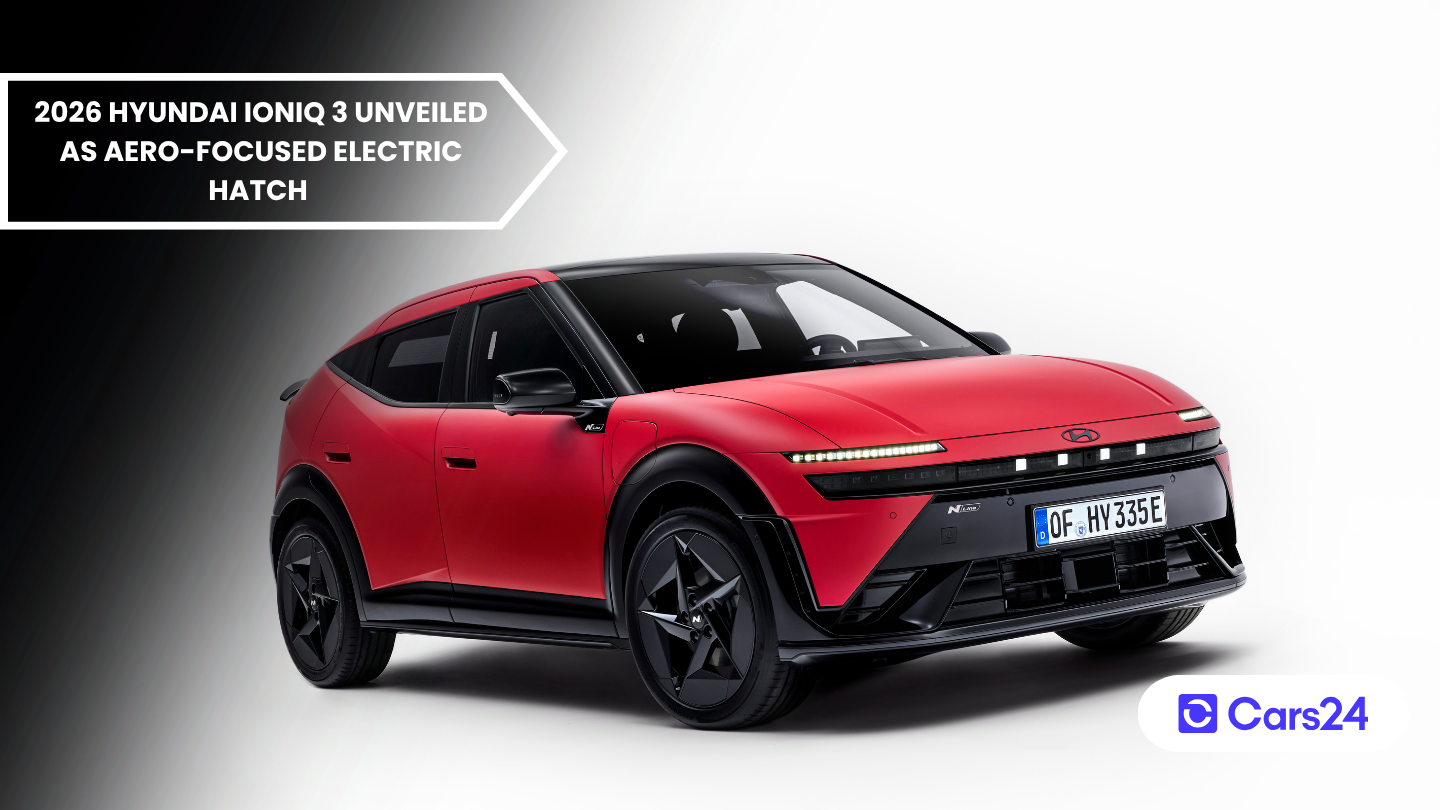
Hyundai Motor Company has unveiled the all-new IONIQ 3, a fully electric compact hatchback aimed at delivering practical, user-friendly mobility for everyday driving in Europe. Positioned as the newest entry in the IONIQ lineup, the model focuses on aerodynamic efficiency, interior space, and intuitive in-car technology.
Built on the brand’s dedicated EV architecture, the IONIQ 3 blends a clean design philosophy with functional packaging, targeting young families and urban users seeking a balance between usability and electric performance.
Aero Hatch design prioritises efficiency and space
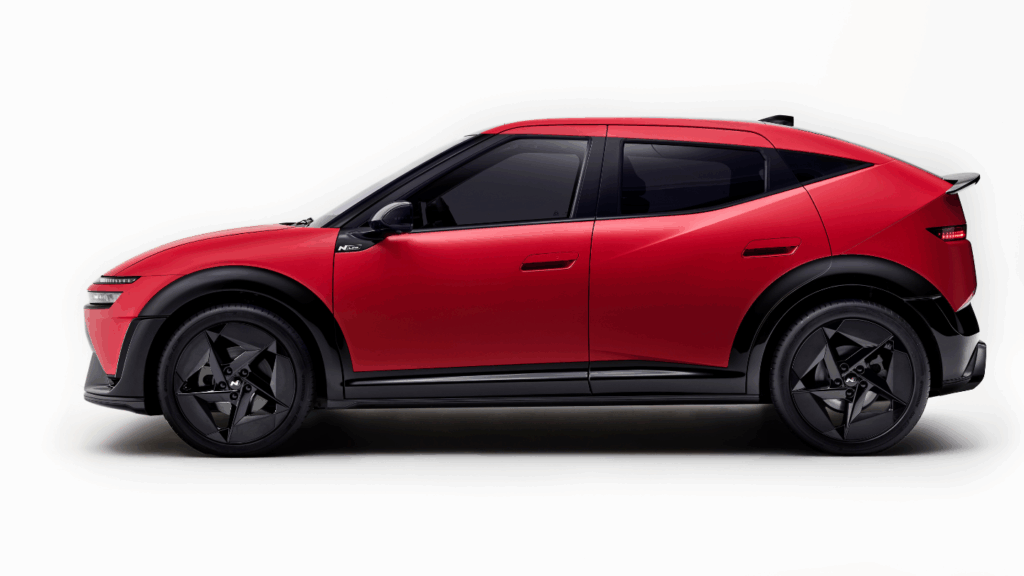
A key highlight is Hyundai’s new “Aero Hatch” body style, designed to optimise airflow while maximising cabin room.
- Low, streamlined front profile
- Straight roofline over occupants for improved headroom
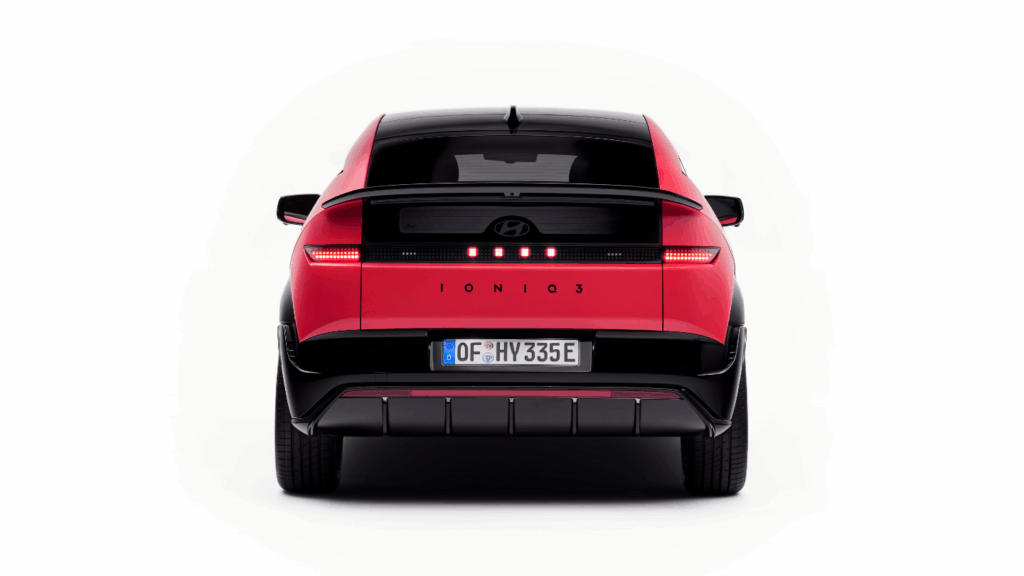
- Tapered rear design integrating a subtle spoiler
This approach results in a target drag coefficient of 0.263, which is competitive for the segment and directly contributes to improved driving range.
The exterior follows Hyundai’s ‘Art of Steel’ design language, characterised by:
- Minimal, sharply defined surfaces
- Pixel-style lighting signatures
- Four-dot motif referencing the letter “H” in Morse code
Multiple personalisation options will be available, including 11 exterior colours, varied interior themes, and wheel sizes ranging from 16 to 19 inches. A sportier N Line variant adds more aggressive styling elements.
Platform, battery options and range
The Hyundai IONIQ 3 is underpinned by Hyundai Motor Group’s Electric-Global Modular Platform (E-GMP), here using a 400-volt architecture for efficiency and cost balance. Two battery configurations are offered:
| Variant | Battery | WLTP Range |
| Standard Range | 42.2 kWh | 344 km |
| Long Range | 61 kWh | 496 km |
Power output varies slightly depending on configuration:
- Up to 107.8 kW (147 PS)
- Torque: 250 Nm
- Drive layout: Front-wheel drive
Performance figures include:
- 0–100 km/h: 9.0–9.6 seconds
- Top speed: 170 km/h
Charging and energy capabilities
Charging performance is aligned with everyday usability rather than peak output figures:
- DC fast charging (10–80%): ~29–30 minutes
- AC charging: up to 22 kW
- Vehicle-to-Load (V2L) capability (interior and exterior)
The inclusion of Plug & Charge and an integrated EV route planner simplifies long-distance usage.
Interior focuses on space and practicality
Despite compact exterior dimensions (4,155 mm length), the IONIQ 3 emphasises interior packaging. Key highlights include:
- Flat-floor layout enabled by EV platform
- 2,680 mm wheelbase for improved legroom
- Seating for five adults, including usable rear space
- 441-litre boot capacity, including a 119-litre underfloor “Megabox”
Hyundai describes the cabin as a “Furnished Space”, with a layout inspired by furniture design. Materials include recycled and bio-based elements, with design cues drawn from 1970s Italian interiors. Available comfort features include:
- Relaxation seats
- Heated and ventilated seating
- Dual-zone climate control
- Ambient lighting
- BOSE premium audio system
New infotainment and connected tech
The Hyundai IONIQ 3 marks the European debut of Hyundai’s Pleos Connect infotainment system, based on Android Automotive OS.
Display options include:
- 12.9-inch standard screen
- 14.6-inch larger display
Key features:
- Native app ecosystem and customisation
- Integrated navigation and EV routing
- Digital Key 2 (smartphone and wearable access)
The system is designed to reduce complexity, focusing on intuitive controls rather than feature overload.
Safety and driver assistance
The model is equipped with Hyundai’s SmartSense suite of advanced driver assistance systems, including:
- Highway Driving Assist 2 (HDA2)
- Remote Smart Parking Assist (RSPA)
- Blind-Spot View Monitor (BVM)
- Surround View Monitor (SVM)
- Memory Reverse Assist
Additional safety elements include:
- Seven airbags
- Projection LED headlamps with intelligent lighting functions
European focus and production
The Hyundai IONIQ 3 has been designed specifically for European customers and will be produced at Hyundai’s plant in İzmit, Türkiye. The localisation strategy reflects Hyundai’s push to strengthen its EV presence in the region.
Dimensions and key specifications
| Specification | Figure |
| Length | 4,155 mm (4,170 mm N Line) |
| Width | 1,800 mm |
| Height | 1,505 mm |
| Wheelbase | 2,680 mm |
| Boot capacity | 441 L |
| Drag coefficient | 0.263 |
| Weight | 1,550–1,580 kg |
Launch timeline
The Hyundai IONIQ 3 has been revealed for Europe, with Hyundai confirming the model is production-ready, although an exact launch timeline has not yet been specified. For Australia, the electric hatchback is expected to arrive in early 2027, with detailed specifications and pricing to be announced closer to its local launch.
What does it mean for buyers?
The Hyundai IONIQ 3 signals Hyundai Motor Company’s continued push to make electric vehicles more accessible and practical for everyday use. Rather than focusing on outright performance or premium positioning, this model leans into efficiency, space, and ease of use—areas that are increasingly relevant for first-time EV buyers.
Its compact footprint combined with a relatively large cabin and 441-litre boot makes it suitable for urban environments without sacrificing practicality. At the same time, a sub-0.27 drag coefficient and up to 496km WLTP range suggest it is engineered to minimise range anxiety in real-world conditions.
The introduction of the Pleos Connect system based on Android Automotive OS also reflects a broader shift toward software-defined vehicles, where user experience and seamless connectivity are becoming key differentiators.
For markets like Europe and eventually Australia the IONIQ 3 is positioned as a volume EV, aimed at buyers who prioritise usability, predictable running costs, and a straightforward ownership experience over high performance or luxury features.

Comments
New Comment