




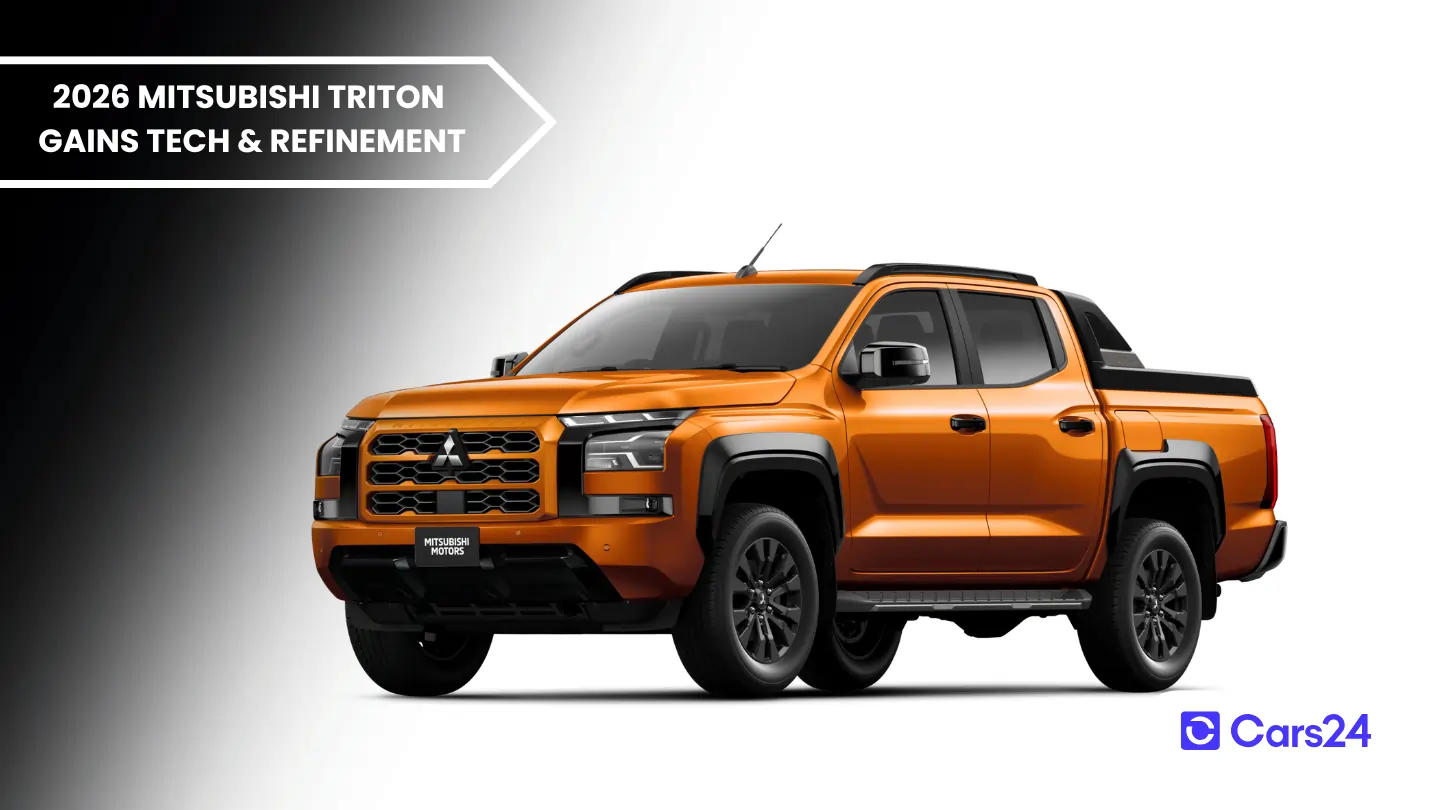
Mitsubishi Motors Australia Limited has detailed its 2026 model year (26MY) Triton update, focusing on areas that matter most to ute buyers: ride comfort, in-cabin technology and everyday usability.
Rather than reinventing the formula, Mitsubishi has refined it. The changes are incremental on paper, but collectively aimed at making the Triton a more rounded dual-cab particularly for buyers who split their time between work duties and long-distance driving.
The updated range will arrive in Australian showrooms in May 2026, with pricing spanning from $37,090 to $65,590 (RRP).
Suspension overhaul targets real-world comfort
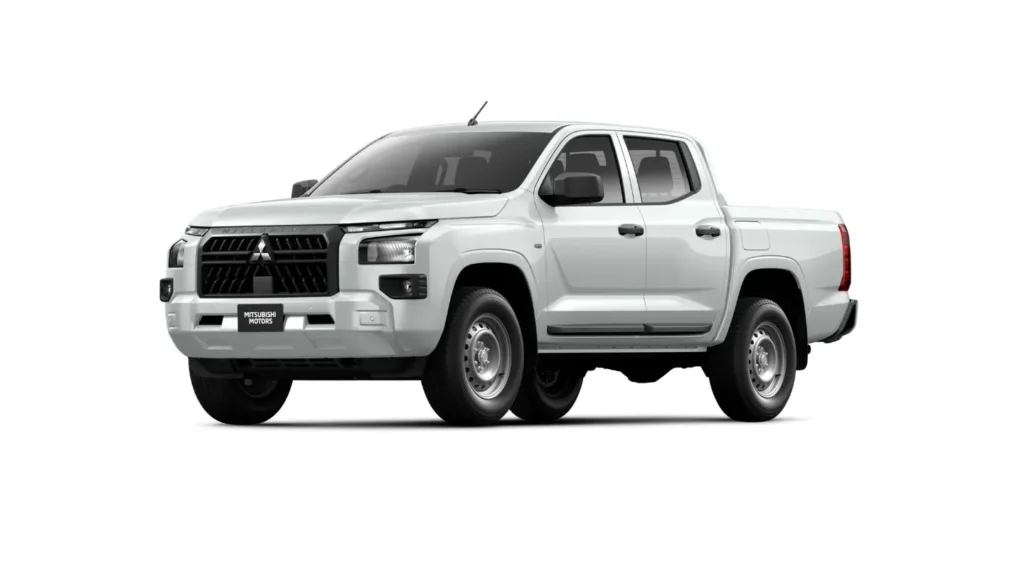
The most significant mechanical revision lies beneath the surface.
Mitsubishi has reworked the front and rear suspension setup across the entire Triton range, introducing:
- Lower front spring rates for improved compliance
- Revised shock absorber valving for quicker response
- Larger rear dampers to better manage load and rebound
The intent is clear: reduce harshness without diluting the Triton’s core capability. Early indications suggest improved ride composure, particularly over corrugated surfaces and urban imperfections areas where ladder-frame utes often struggle.
Importantly, Mitsubishi retains a split approach:
- GLX and GLX+ continue with heavy-duty 4-leaf rear suspension (work-focused)
- GLX-R, GLS and GSR use a 3-leaf setup (comfort-oriented)
This dual-character tuning reflects Triton’s broad buyer base.
YAMAHA Performance Damper adds refinement to GSR
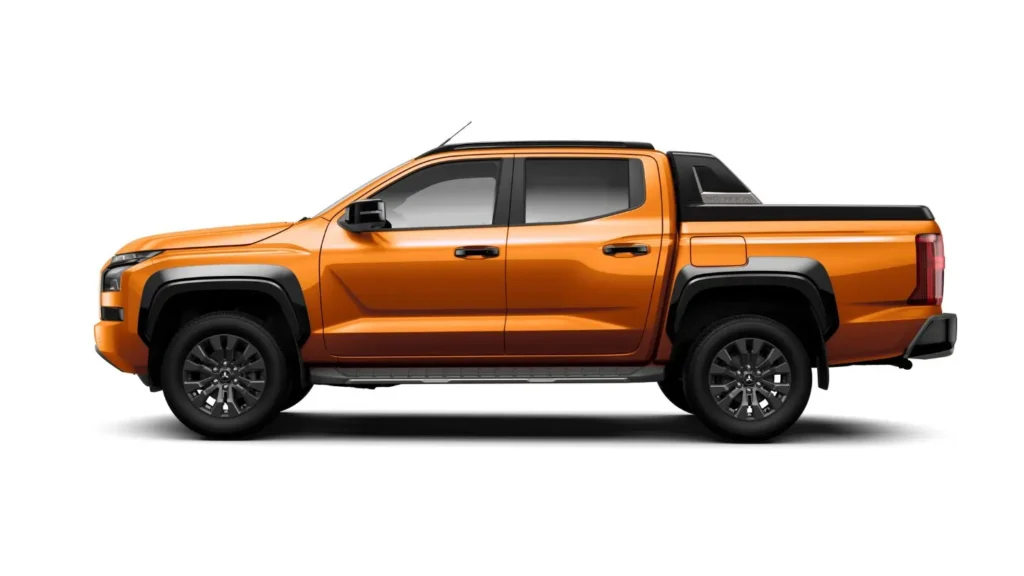
A notable addition for 2026 is the introduction of the YAMAHA Performance Damper on the flagship GSR.
Mounted laterally across the chassis (front and rear), the system works to:
- Reduce vibrations and noise (NVH)
- Improve steering linearity
- Enhance high-speed stability
- Deliver smoother cornering transitions
While not a traditional performance upgrade, it signals Mitsubishi’s intent to push the Triton further into lifestyle territory, where refinement is increasingly expected.
MITSUBISHI CONNECT brings Triton up to speed
The 26MY update also introduces MITSUBISHI CONNECT to the GSR, marking the first time the Triton adopts a fully integrated connected car platform.
Key functions include:
Safety and security
- SOS emergency assistance
- Automatic collision notification
- Stolen vehicle tracking
- Geo-fencing, curfew and speed alerts
Remote vehicle control (via app)
- Remote climate operation
- Lock/unlock functionality
- Vehicle locator
- Light and horn activation
With a built-in 4G telematics unit and smartphone integration, this addition closes a notable gap between Triton and newer rivals in the segment.
Subtle but practical design updates
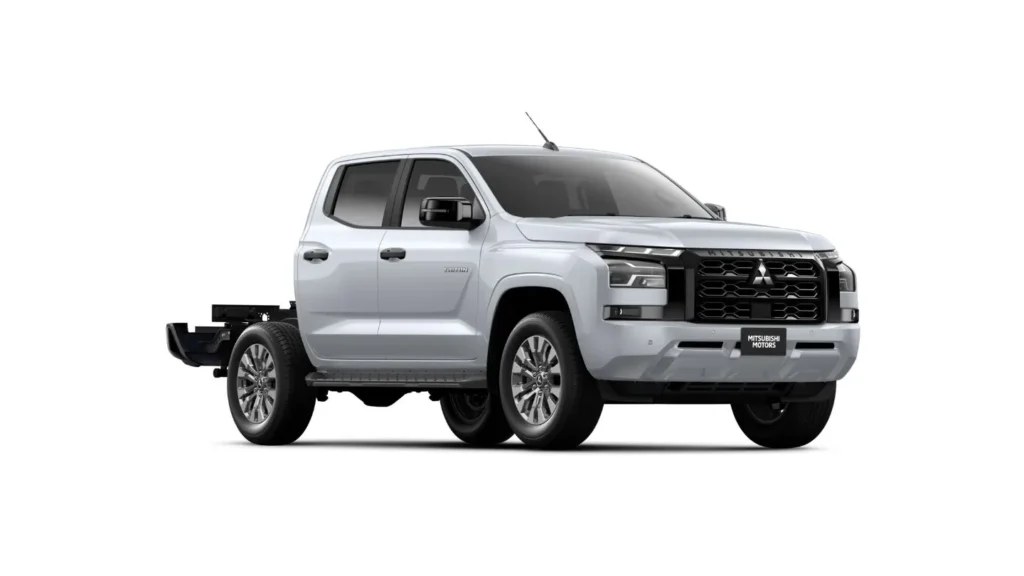
Visually, the 2026 Mitsubishi Triton remains largely unchanged, though select variants gain small but noticeable tweaks.
Exterior highlights (GLS and above)
- Blacked-out Dynamic Shield styling
- Updated grille finishes
- Black mirror caps
Interior improvements
- New dash-mounted cup holders (GLS)
- Soft-touch materials with contrast stitching
- Wireless charging and dual-zone climate control on higher trims
These are usability-focused upgrades rather than headline changes, but they improve day-to-day livability.
Powertrain unchanged but still competitive
Mitsubishi has retained the existing drivetrain and with good reason.
Powertrain specifications
| Specification | Details |
| Engine | 2.4L bi-turbo diesel 4-cylinder |
| Power | 150 kW |
| Torque | 470 Nm |
| Transmission | 6MT / 6AT |
| Drivetrain | 4×2 / 4×4 |
| Fuel Economy (L/100 km) | 7.5 – 7.7 |
The engine continues to deliver strong mid-range torque and competitive efficiency. While some rivals are moving toward electrification, Triton’s diesel setup remains fit for purpose especially for towing and load-carrying duties.
2026 Mitsubishi Triton price list (Australia)
| Variant | Drivetrain | Body Style | Transmission | Price (RRP) |
| Mitsubishi Triton GLX 4×2 | 4×2 | Single Cab Chassis | 6AT | $37,090 |
| Mitsubishi Triton GLX 4×2 | 4×2 | Double Cab Pick-Up | 6AT | $44,190 |
| Mitsubishi Triton GLX 4×4 | 4×4 | Single Cab Chassis | 6AT | $44,440 |
| Mitsubishi Triton GLX 4×4 | 4×4 | Club Cab Chassis | 6AT | $47,590 |
| Mitsubishi Triton GLX+ 4×4 | 4×4 | Club Cab Pick-Up | 6AT | $50,690 |
| Mitsubishi Triton GLX 4×4 | 4×4 | Dual Cab Chassis | 6MT | $47,940 |
| Mitsubishi Triton GLX 4×4 | 4×4 | Dual Cab Chassis | 6AT | $50,190 |
| Mitsubishi Triton GLX 4×4 | 4×4 | Dual Cab Pick-Up | 6AT | $51,640 |
| Mitsubishi Triton GLX+ 4×4 | 4×4 | Dual Cab Chassis | 6AT | $52,690 |
| Mitsubishi Triton GLX+ 4×4 | 4×4 | Dual Cab Pick-Up | 6AT | $53,990 |
| Mitsubishi Triton GLX-R 4×4 | 4×4 | Dual Cab Pick-Up | 6AT | $57,440 |
| Mitsubishi Triton GLS 4×4 | 4×4 | Dual Cab Chassis | 6AT | $58,590 |
| Mitsubishi Triton GLS 4×4 | 4×4 | Dual Cab Pick-Up | 6AT | $60,140 |
| Mitsubishi Triton GSR 4×4 | 4×4 | Dual Cab Chassis | 6AT | $62,590 |
| Mitsubishi Triton GSR 4×4 | 4×4 | Dual Cab Pick-Up | 6AT | $65,590 |
Ownership remains a key strength
The Mitsubishi Triton continues to be backed by Mitsubishi’s 10/10/10 Diamond Advantage program, which includes:
- 10-year/200,000km warranty (conditional)
- 10 years capped price servicing
- 10 years roadside assistance
In a segment where total cost of ownership is critical, this remains a strong selling point.
Incremental gains, targeted improvements
The 2026 update for the Mitsubishi Triton is best described as targeted refinement rather than reinvention.
Mitsubishi has focused on:
- Improving ride quality without compromising durability
- Introducing connected tech where it was previously lacking
- Enhancing comfort in higher-grade variants
However, the unchanged powertrain and conservative interior updates mean it doesn’t leapfrog the segment in innovation.
The trade-off:
- Pros: Better ride, improved tech, strong value, class-leading ownership package
- Cons: No electrification, limited design evolution, incremental cabin upgrades
Bottom line
The 2026 Mitsubishi Triton strengthens its position as a well-rounded, value-focused ute. It may not set new benchmarks, but it addresses key weaknesses particularly in ride comfort and connectivity without disrupting its core appeal.
For buyers prioritising durability, ownership costs and now improved refinement, the updated Triton remains a compelling option in Australia’s highly competitive ute market.

Comments
New Comment