




Key highlights:
- Patrol’s 3550kg GVM puts it outside current NVES rules
- Maximum payload reaches 848kg in the entry-level Ti
- Its 3700kg towing rating beats several large SUV rivals
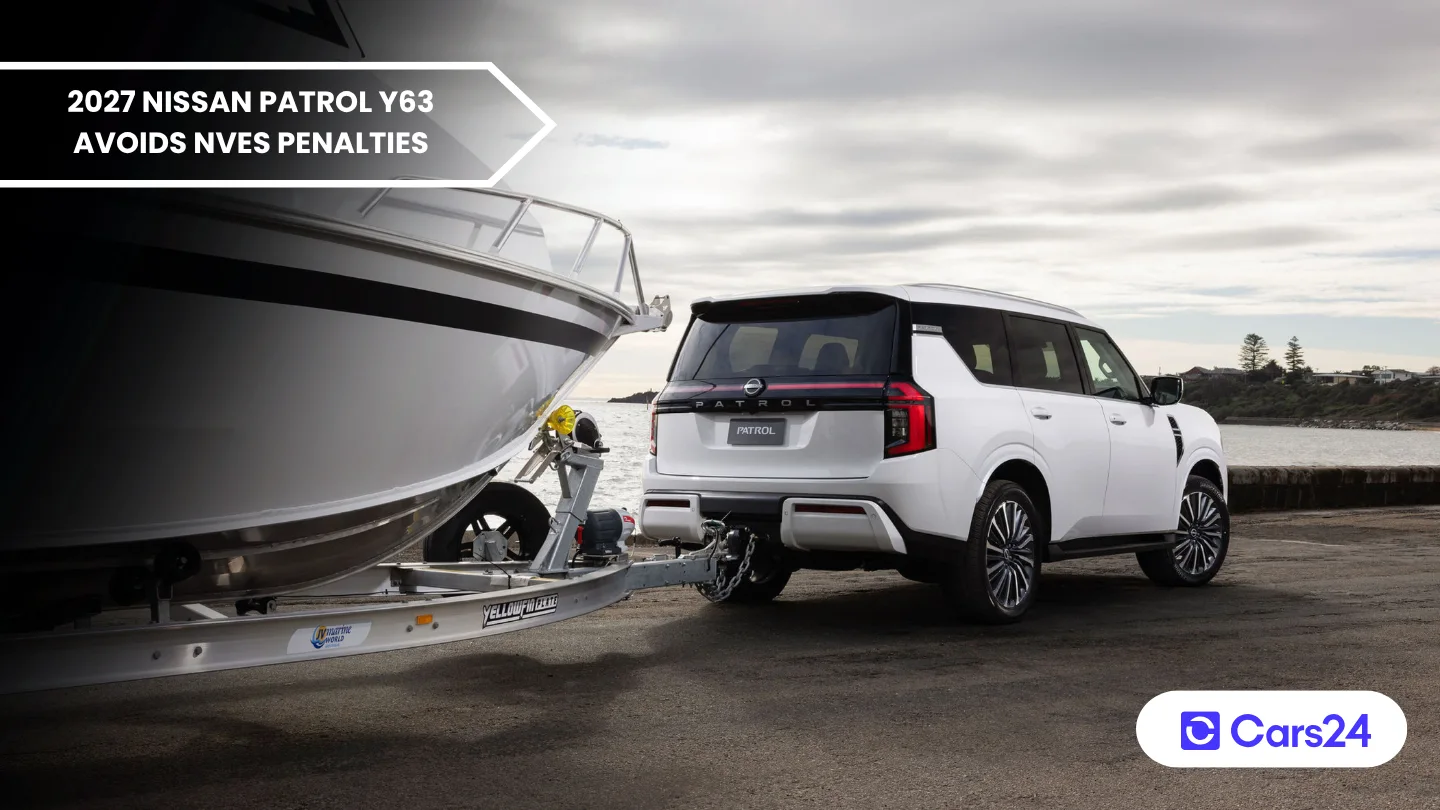
The new Nissan Patrol Y63 full-size SUV will sit outside Australia’s current New Vehicle Efficiency Standard (NVES) rules, thanks to a higher gross vehicle mass (GVM) of 3550kg. The change gives the large off-road SUV more capacity for passengers, luggage and accessories, but also means it avoids potential government emissions penalties under the standard as it stands.
Nissan Australia has confirmed the revised GVM ahead of the first customer deliveries, which are due to begin next month. However, the government is considering changes that could bring heavier vehicles into the emissions policy from July 2027.
Higher GVM takes Patrol outside current NVES rules
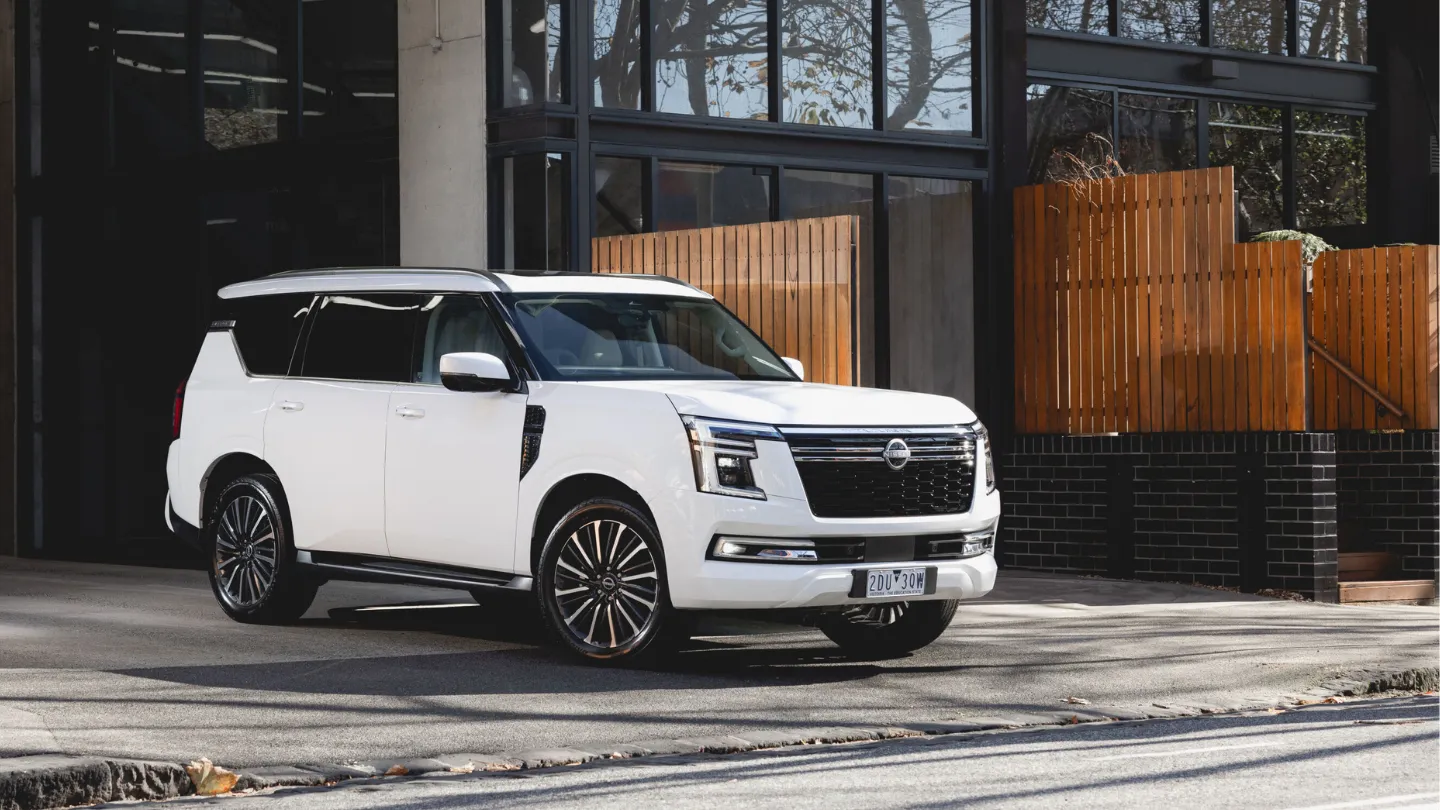
The Patrol Y63’s 3550kg GVM places it in a heavier vehicle classification that currently sits outside the NVES. Other vehicles in this category include the Toyota LandCruiser 70 Series, Ford Ranger Super Duty and Ram 1500.
Nissan says the higher GVM is intended to provide “greater payload capacity and improved practical usability for customers”.
The increase also lifts the Patrol’s maximum payload to 848kg, depending on the grade, and that gives owners more capacity to carry passengers, cargo and accessories. However, the exemption may not last indefinitely.
Earlier this year, the Australian Government opened a public consultation on proposed changes that would extend the NVES to vehicles with a GVM between 3501kg and 3855kg from 1 July 2027.
The consultation outcome and any resulting legislative changes have yet to be finalised. The government is also considering a new requirement for vehicles with a GVM between 3500kg and 3855kg to carry lab-tested fuel economy ratings from 30 June 2027.
The Patrol’s current classification therefore keeps it outside the existing emissions rules, but the proposed changes could affect its position in the future.
Nissan publishes fuel consumption figures
Mandatory fuel consumption labelling does not currently apply to the Patrol Y63, but Nissan Australia says it has tested the vehicle under the New European Driving Cycle (NEDC), also known as ADR 81/02. The company quotes combined fuel consumption of 12.2 litres per 100 kilometres across the range.
That compares with 14.4L/100km for the outgoing Patrol Y62 under the same testing standard.
| Patrol Y63 grade | Wheel size | Claimed fuel consumption |
|---|---|---|
| Ti and Ti+ | 18-inch | 12.2L/100km |
| Ti-L and Ti-L+ | 20-inch | 12.2L/100km |
| Pro-4X | 20-inch | 12.2L/100km |
| Ti-L Reserve | 22-inch | 12.2L/100km |
The figures provide a laboratory-tested reference for the new Patrol, even though mandatory fuel consumption labelling does not yet cover it.
Also read: 2027 Nissan Patrol Y63: Full prices and specs
More payload and higher towing capacity
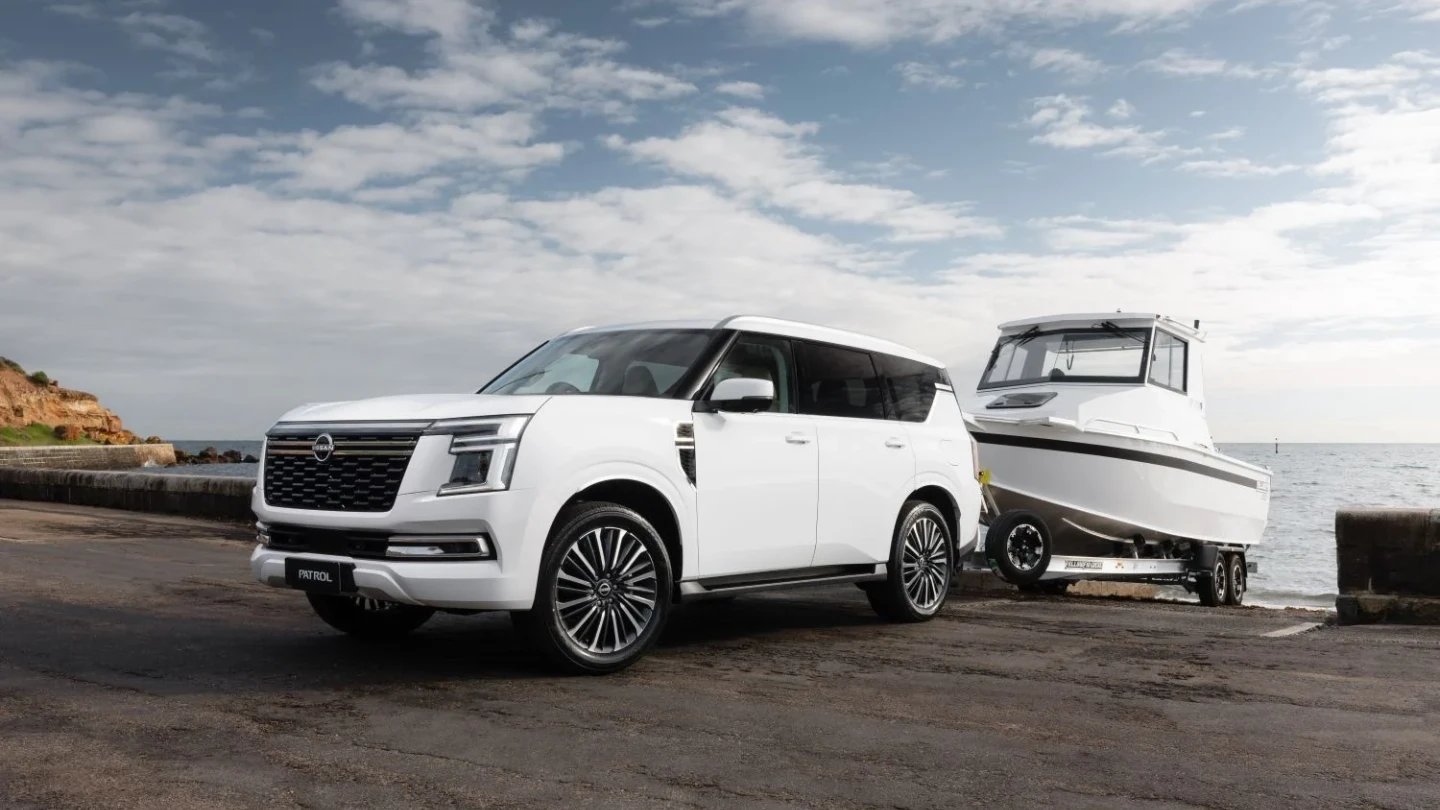
The Patrol Y63 has a GVM of 3550kg, compared with 3500kg for the outgoing Patrol, and its lower kerb weight also contributes to the increased payload capacity. Nissan quotes a maximum payload of 848kg for the entry-level Ti, while the range-topping Ti-L Reserve carries 734kg.
In a media release, Nissan compared the Patrol with the Toyota LandCruiser 300 Series and Denza B8, claiming it offers higher payload and braked towing capacity than its rivals, depending on the grade and towbar fitted. The Patrol’s maximum braked towing capacity is 3700kg, exceeding the ratings of several large SUVs:
| Vehicle | Maximum braked towing capacity |
|---|---|
| Nissan Patrol Y63 | 3700kg |
| GMC Yukon | 3628kg |
| Toyota LandCruiser 300 Series | 3500kg |
| Denza B8 | 3500kg |
The Patrol’s 3700kg rating also depends on the towbar and towing configuration fitted.
2027 Nissan Patrol Y63 dimensions and weights
The following figures show how the Patrol’s dimensions, ground clearance, weight and towing specifications vary across its six grades.
| Specification | Ti / Ti+ | Ti-L / Ti-L+ | Pro-4X | Ti-L Reserve |
|---|---|---|---|---|
| Length | 5325mm | 5325mm | 5325mm | 5325mm |
| Width, excluding mirrors | 2040mm | 2040mm | 2065mm | 2040mm |
| Height, unladen | 1945mm | 1950mm | 1945mm | 1945mm |
| Wheelbase | 3075mm | 3075mm | 3075mm | 3075mm |
| Front/rear track | 1730/1725mm | 1730/1725mm | 1730/1730mm | 1730/1730mm |
| Ground clearance, unladen | 226mm | 231mm | 219/271mm | 220/272mm |
| Approach angle | 25.0° | 25.0° | 26.5/29.0° | 24.5/27.0° |
| Departure angle | 23.0° | 23.5° | 23.0/25.5° | 23.0/25.5° |
| Ramp breakover angle | 24.0° | 25.0° | 23.0/27.5° | 23.0/27.0° |
| Kerb mass | Ti: 2702kg; Ti+: 2731kg | Ti-L: 2770kg; Ti-L+: 2776kg | 2792kg | 2816kg |
| Gross vehicle mass (GVM) | 3550kg | 3550kg | 3550kg | 3550kg |
| Payload | Ti: 848kg; Ti+: 819kg | Ti-L: 780kg; Ti-L+: 774kg | 758kg | 734kg |
| Gross combined mass (GCM) | 6800kg | 6800kg | 6800kg | 6800kg |
| Braked/unbraked towing | 3700/750kg | 3700/750kg | 3700/750kg | 3700/750kg |
| Maximum towball download | 370kg | 370kg | 370kg | 370kg |
| Electronic trailer brake controller | Not available | Not available | Standard | Standard |
| Wheels and tyres | 18-inch, 265/70 R18 | 20-inch, 275/60 R20 | 20-inch, 275/60 R20 all-terrain | 22-inch, 275/50 R22 |
| Suspension | Coil, multi-link independent | Coil, with adaptive damping | Adaptive air suspension, with intelligent adaptive damping | Adaptive air suspension, with intelligent adaptive damping |
The ground clearance, approach, departure and ramp breakover figures for the Pro-4X and Ti-L Reserve reflect their standard and off-road modes.

Comments
New Comment