




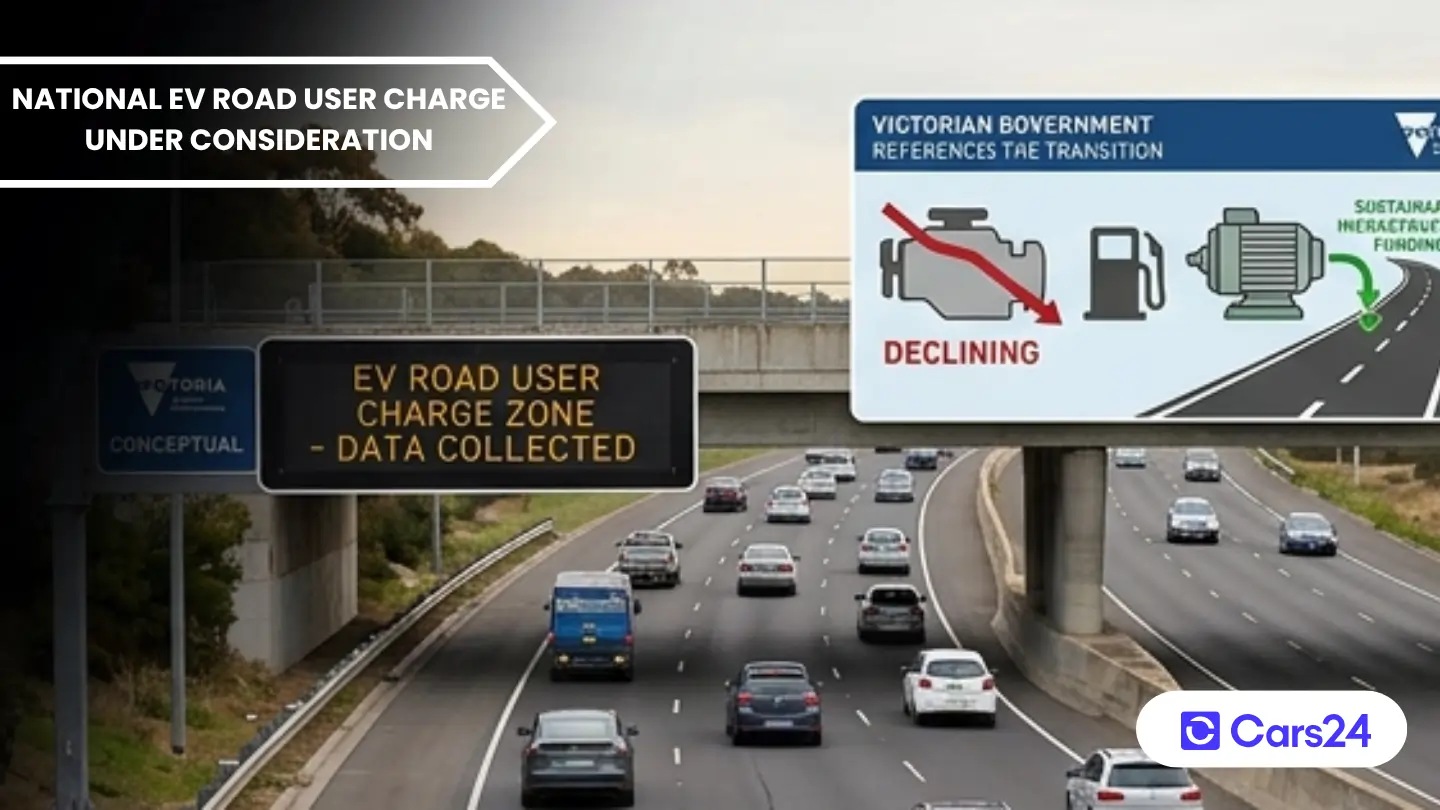
The Australian Government is weighing the introduction of a national road user charge for electric vehicles (EVs), as it faces mounting pressure over the long-term sustainability of fuel excise revenue.
A proposal is reportedly being developed within Treasury and could be presented as part of a broader tax reform package alongside the federal budget in May. The plan would see EV drivers charged based on distance travelled, with enforcement potentially handled by state and territory governments.
Shift away from fuel excise reliance
The move comes as the government looks to offset declining fuel excise revenue, a tax currently applied to petrol and diesel purchases at the pump.
Fuel excise is indexed twice a year in line with inflation and rose from 51.6 cents to 52.6 cents per litre on February 2, 2026. Despite recent increases in fuel prices, the charge remains fixed per litre and continues to generate significant revenue, with petrol contributing around $7.3 billion and diesel about $17.6 billion annually.
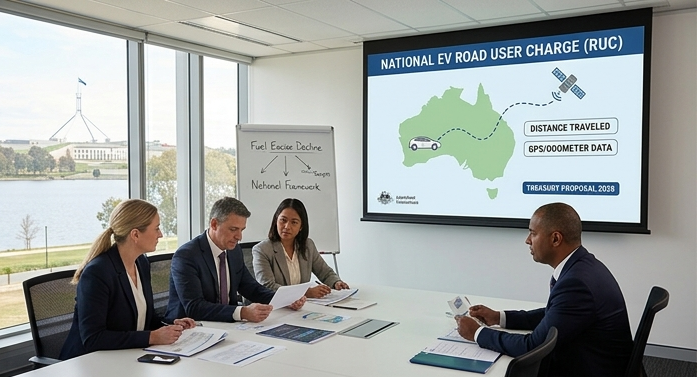


However, with EV adoption accelerating, the government is exploring alternative ways to ensure road users contribute to infrastructure funding. Treasurer Jim Chalmers has previously confirmed the government is “accelerating work” on a national EV road user charge, though he has ruled out cutting fuel excise to ease pressure on motorists.
How the charge could work
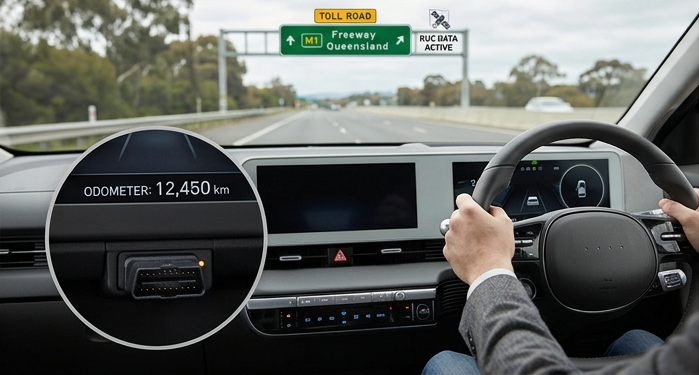
Under the proposed model, EV road use could be tracked via in-car GPS systems or through annual odometer readings, with a potential rollout targeted around 2028.
The concept of distance-based charging has gained traction following the High Court of Australia’s 2023 ruling invalidating state-based EV road user charges, prompting a shift toward a unified national framework.
Lessons from past state policies
Several Australian states had previously attempted to introduce EV-specific road user charges. Victoria was the first to implement such a scheme in 2021, charging drivers 2.8 cents per kilometre, before the High Court struck it down.
Other jurisdictions, including New South Wales, South Australia, and Western Australia, had also been considering similar measures but have since paused their plans pending federal direction.
Industry and stakeholder response
The Australian Electric Vehicle Association has called for a broader, more equitable system that applies to all vehicle types rather than targeting EVs.
The group advocates for a universal, weight-based distance charge that would eventually replace fuel excise entirely, aligning road funding with actual usage and vehicle impact.
In a previous statement, AEVA national president Chris Jones said such a model would ensure fairness while supporting the transition to low-emission transport.
International comparisons and future outlook
Australia’s discussions mirror developments overseas. In New Zealand, the government has announced plans to phase out fuel excise in favour of a universal road user charge system by 2027, applying to all vehicle types based on distance and weight.
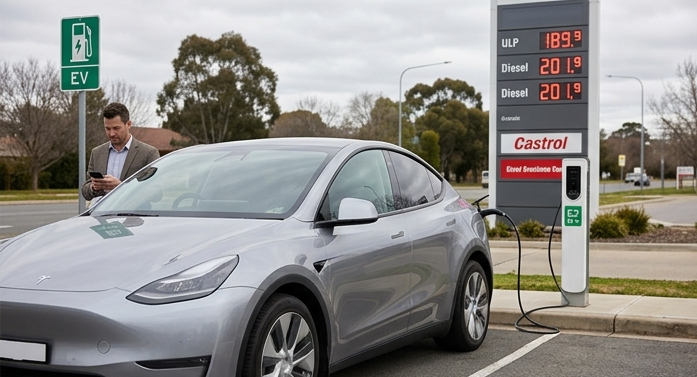
The debate comes as EV uptake continues to grow locally. In 2025, a record 103,270 EVs were sold in Australia, accounting for 8.3 per cent of total vehicle sales, a figure expected to rise significantly over the next decade.
With projections suggesting EVs could exceed 30 per cent of new car sales by 2030, the federal government faces increasing pressure to implement a sustainable and equitable road funding model that keeps pace with the shift away from internal combustion engines.

Comments
New Comment