




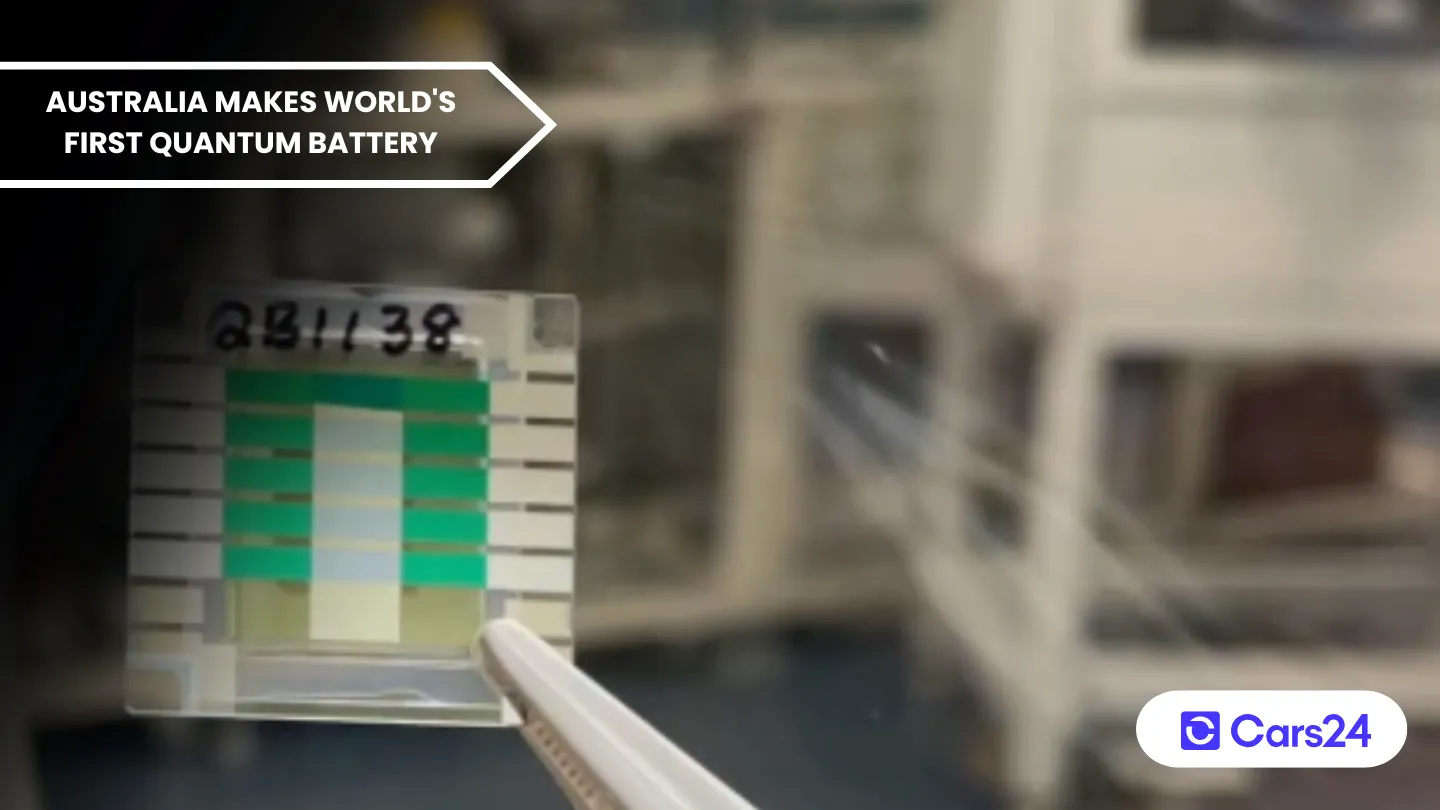
While most of the industry is focused on solid-state batteries, researchers at the CSIRO (the national science agency) have unveiled something far more futuristic: a working prototype of a quantum battery.
Led by CSIRO in collaboration with RMIT University and the University of Melbourne, the project marks what’s being described as the world’s first proof-of-concept quantum battery.
A radical shift in how batteries work
Unlike today’s Li-ion batteries, which rely on chemical reactions, quantum batteries operate using principles from Quantum Mechanics. The key concepts include Superposition and Entanglement.
Instead of chemical storage, this prototype uses a multi-layered organic microcavity and is charged wirelessly via a laser, hinting at a future with no cables at all.
Built and proven

This isn’t just a lab idea. The Australian team has successfully demonstrated a device that can charge, store, and discharge energy, all using quantum behaviour rather than traditional battery chemistry.
According to project lead Dr James Quach at CSIRO, the long-term vision is ambitious. It includes charging EVs faster than refuelling petrol cars and charging devices wirelessly over long distances.
It gets faster as it gets bigger
One of the most fascinating discoveries is how quantum batteries behave at scale. Dr Quach explains that larger quantum batteries charge faster and that this is the opposite of conventional batteries. This “counterintuitive” effect could be a game-changer for EVs, where larger battery packs are the norm.
Also read: Donut Lab reveals world’s first all-solid-state battery
What this battery could do for EVs
If the technology becomes commercially viable, it could completely reshape the EV landscape. It takes about 20–40 minutes to charge an EV battery at a DC fast charger and hours on home AC charging.
A quantum battery could get charged in seconds or minutes, potentially faster than filling up petrol or diesel cars, with the possibility of wireless charging over long distances. The last point could even eliminate the need for traditional charging infrastructure.
Still early, but promising
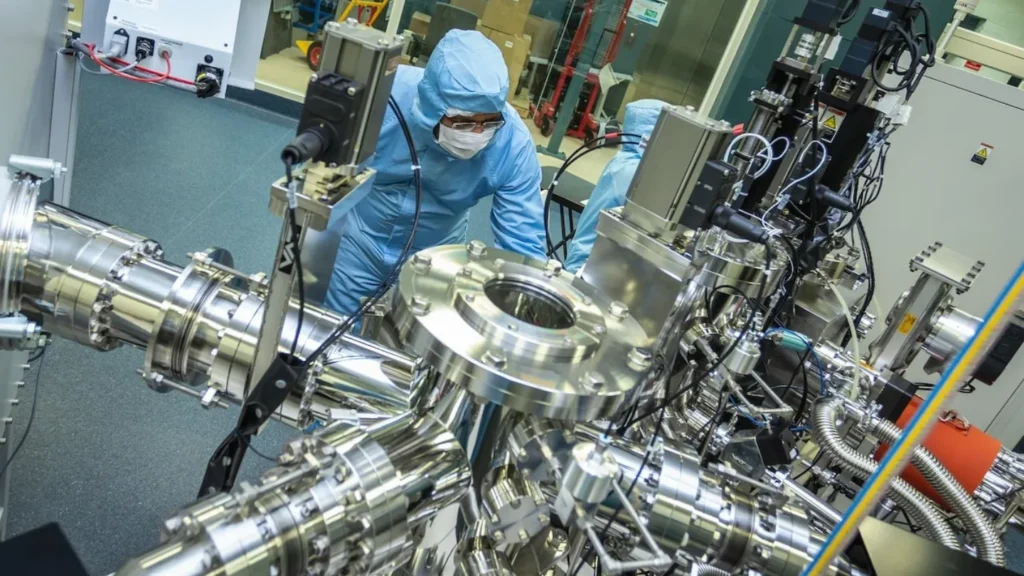
Despite the breakthrough, quantum batteries are still in early development. The current prototype has shown the ability to retain stored energy for millions of times longer than its charging duration.
The battery’s energy retention lasted six orders of magnitude longer than charge time. The team has verified this performance using advanced spectroscopy techniques.
However, the biggest hurdle is, as Dr Quach puts it, “The next step is improving how long energy can be stored. If we can overcome that hurdle, we’d be that bit closer to commercially viable quantum batteries.”
Next steps for the research team
The CSIRO is now actively looking for industry partners to help push the technology forward. While commercial use is still years away, the research has confirmed key theoretical predictions, demonstrated real-world functionality and has opened the door to next-generation energy systems.
Comments
New Comment