




Key highlights
- Chery Australia COO Lucas Harris says a five-star ANCAP rating is not a minimum requirement for success in the family SUV segment.
- The Lepas L6 lacks eCall functionality, although Chery says the required hardware is already fitted and software support will follow.
- The SUV’s ANCAP safety rating is expected later in November 2026, with the outcome under the latest testing protocols still uncertain.
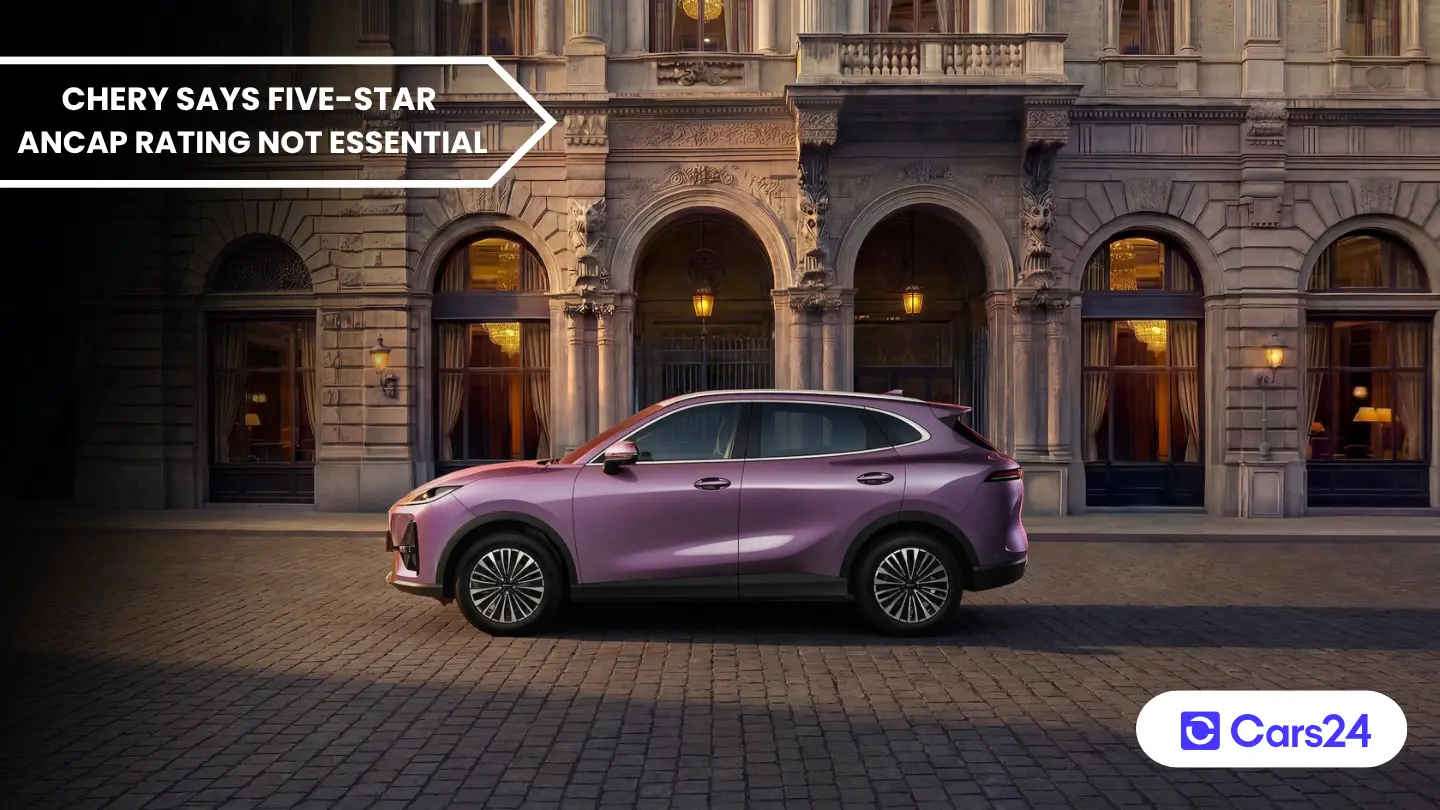
Chery Australia has questioned whether a five-star safety rating is essential for family SUVs, even as its newly introduced Lepas L6 prepares to undergo an ANCAP assessment.
Speaking at the Australian launch of the Lepas L6, Chery Australia chief operating officer Lucas Harris said a maximum safety score should not necessarily determine whether a family SUV succeeds in the market.
Harris, who oversees the Chery and Lepas brands locally, acknowledged the importance of independent safety assessments but argued that a five-star result should not be treated as the minimum standard for every family vehicle.
He also recognised the role ANCAP plays in encouraging manufacturers to improve vehicle safety, describing its work as challenging but necessary.
The comments come at a time when Australian buyers are increasingly paying attention to independent crash-test results, particularly when shopping for vehicles used to transport families.
A five-star ANCAP rating can be an important selling point in the competitive mid-size SUV segment, where established models and newer Chinese entrants compete for the same buyers.
However, Chery’s position suggests the company does not believe the absence of a maximum rating would automatically make a vehicle unsuccessful.
Read more: Chery confirms three iCaur SUV variants for Australia from 2027
Lepas L6 missing eCall functionality under new ANCAP rules


One of the questions surrounding the Lepas L6 is whether it can achieve a five-star ANCAP safety rating under the organisation’s updated 2026 testing criteria.
The SUV does not currently offer eCall functionality, an emergency communication feature that can automatically contact emergency services following a serious crash.
The technology has become part of ANCAP’s latest assessment framework, with points awarded for systems that can help emergency responders reach occupants after an accident.
Harris confirmed that the Lepas L6 already has the necessary hardware for eCall, but Chery is still working on the backend infrastructure required to activate the feature.
He said the functionality would be introduced in the near future without requiring owners to have additional equipment installed in their vehicles.
However, it remains unclear whether the planned update will be enough to secure the points needed for a five-star result.
The Lepas L6’s ANCAP rating is expected to be published later in November 2026, which should provide a clearer picture of how the SUV performs against the latest requirements.
New ANCAP criteria make five-star ratings harder to achieve
ANCAP’s 2026 testing protocols go beyond traditional crash protection and the availability of driver assistance technology.
The updated framework also places greater emphasis on how these systems perform in real-world driving conditions, including whether they respond appropriately to different road situations without unnecessarily interfering with the driver.
This means simply fitting a long list of safety features is no longer enough. Manufacturers must demonstrate that the technology works effectively and provides meaningful assistance.
The tougher requirements have already produced mixed results for new vehicles entering the Australian market.
The Geely EX2 and GAC Aion UT have both secured five-star ANCAP ratings under the current protocols, while the BYD Sealion 5 received a three-star result.
For Australian buyers, these results highlight why safety ratings should be considered alongside equipment levels, price and other ownership factors when comparing family SUVs.
Chery says ANCAP should guide buyers, not penalise brands
Despite questioning the need for five-star ratings across the family SUV segment, Harris defended ANCAP’s role in the Australian automotive industry.
He said independent safety assessments give consumers useful information and encourage manufacturers to improve their products rather than simply treating lower scores as a reason to criticise brands.
His comments also reflect a wider challenge for manufacturers, as meeting increasingly demanding safety requirements can add development time and complexity to new vehicles.
Euro NCAP, which provides the basis for much of ANCAP’s testing framework, has previously acknowledged that a four-star vehicle can still offer a good level of safety, even if it does not represent the highest available standard.
The cost of developing vehicles to achieve maximum ratings can also influence what manufacturers ultimately charge buyers.
For the Lepas L6, however, the immediate question is whether its planned eCall functionality and existing safety equipment will be enough to meet ANCAP’s latest requirements.
Until the assessment is published, Australian buyers will have to wait before knowing whether Chery’s new family SUV can achieve the maximum five-star result.

Comments
New Comment