




Key highlights
- The suspension follows a second reported rear axle failure involving the Omoda 5 in Malaysia.
- Australian-market examples are sold as the Chery C5 and are manufactured in China.
- Earlier axle-related safety campaigns also affected Omoda 5 vehicles in Malaysia and Indonesia in 2024.
New registrations of the Chery Omoda 5 have been suspended in Malaysia after another reported rear axle failure prompted authorities to investigate the small SUV’s safety.
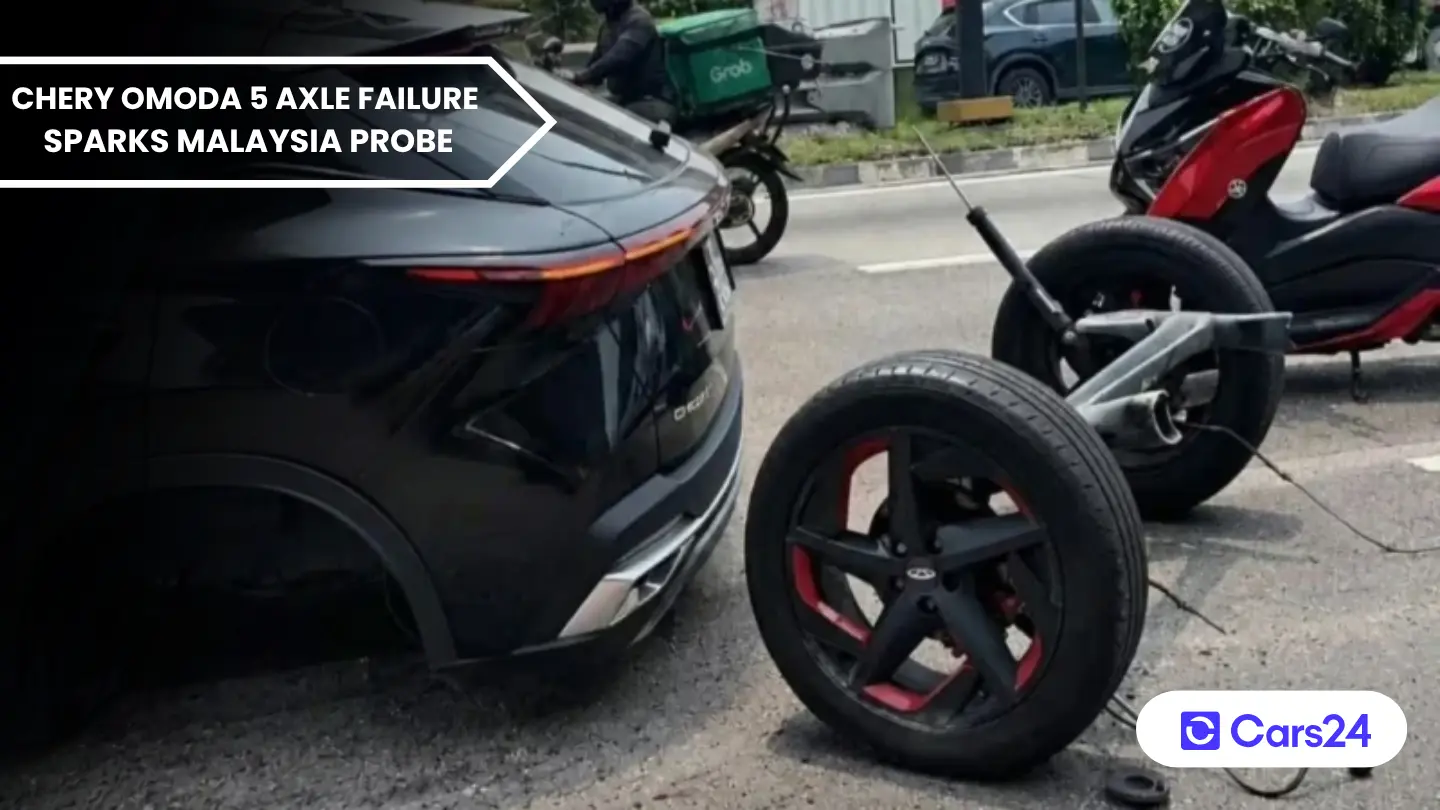
Malaysia’s Road Transport Department, known as JPJ, announced the temporary suspension on October 11, 2026, following an incident reported in Johor Bahru on October 6. Images and videos circulating on social media reportedly showed an Omoda 5 with its rear axle assembly and wheels separated from the vehicle’s body.
The suspension applies to the relevant vehicle type approval, meaning new registrations have been halted while the investigation proceeds. JPJ has also flagged a technical audit covering the vehicle’s production and assembly processes, component suppliers, quality control systems and axle weld inspections.
Authorities have said the suspension will remain in place until corrective and preventive measures are implemented and the safety risks have been addressed.
The action raises questions about the component’s reliability, although the investigation will need to establish the cause of the latest failure before any conclusions can be drawn.
What does the investigation mean for Australian buyers?

The incident has a direct connection to Australia’s small SUV market, but the vehicles sold here are not identical to those affected by the Malaysian suspension.
Chery Australia sells the model as the Chery C5, a small SUV competing with vehicles such as the MG ZS, GWM Haval Jolion and Hyundai Kona. Australian-market examples are manufactured in China, whereas the Malaysian-market vehicles involved in the earlier cases were locally assembled.
Chery Australia has confirmed that it is aware of the Malaysian incident but says it has received no reports of similar failures in Australia.
“There have been no reported incidents in Australia,” the company said in a statement. It added that its vehicles undergo testing and quality control procedures intended to ensure compliance with Australian safety regulations and standards.
That distinction matters for local owners and prospective buyers. A reported failure in another market does not automatically establish that Australian vehicles share the same fault, particularly when production locations and suspension designs can differ.
However, the absence of reported Australian incidents does not, by itself, establish that every vehicle is free from risk. The findings of the Malaysian investigation and any subsequent action by Chery or Australian authorities will be important to watch.
Rear suspension design is a key difference

The Omoda 5 has undergone changes since it was introduced, including a revision to its rear suspension.
Earlier versions of the model used a torsion-beam rear suspension layout. This design connects the rear wheels through a crossmember that twists as the suspension moves. It is generally simpler than an independent multi-link arrangement, in which the wheels can move more independently of one another.
The updated Australian-market C5 uses independent multi-link rear suspension, as does the related E5 electric SUV. The facelifted Malaysian model, renamed the Chery O5 in September 2025, also adopted multi-link suspension.
These differences are relevant when comparing vehicles across markets, but they do not establish the cause of the reported failure. That will depend on the investigation’s findings, including the condition and design of the affected components.
This is not the first axle-related safety investigation

The latest Malaysian case follows an earlier incident that led Chery to recall 600 Omoda 5 vehicles in the country in 2024 as a precaution.
A separate safety campaign was also conducted in Indonesia in May 2024, covering 420 vehicles. Chery Indonesia said it had investigated a rear axle component supplier and contacted owners to arrange inspections. Replacement parts were provided free of charge where required.
The two earlier campaigns highlight why the latest investigation warrants attention, even though the vehicles were assembled in different markets.
For Australian owners, the practical step is to monitor official recall notices and communications from Chery Australia rather than assume that an overseas suspension automatically applies locally. Anyone who notices unusual rear-end noises, changes in vehicle stability or other concerning behaviour should arrange an inspection with an authorised service centre.
As of October 14, 2026, Chery Australia has reported no similar incidents locally. The outcome of the Malaysian investigation should provide a clearer picture of what caused the latest failure and whether further action is needed.

Comments
New Comment