




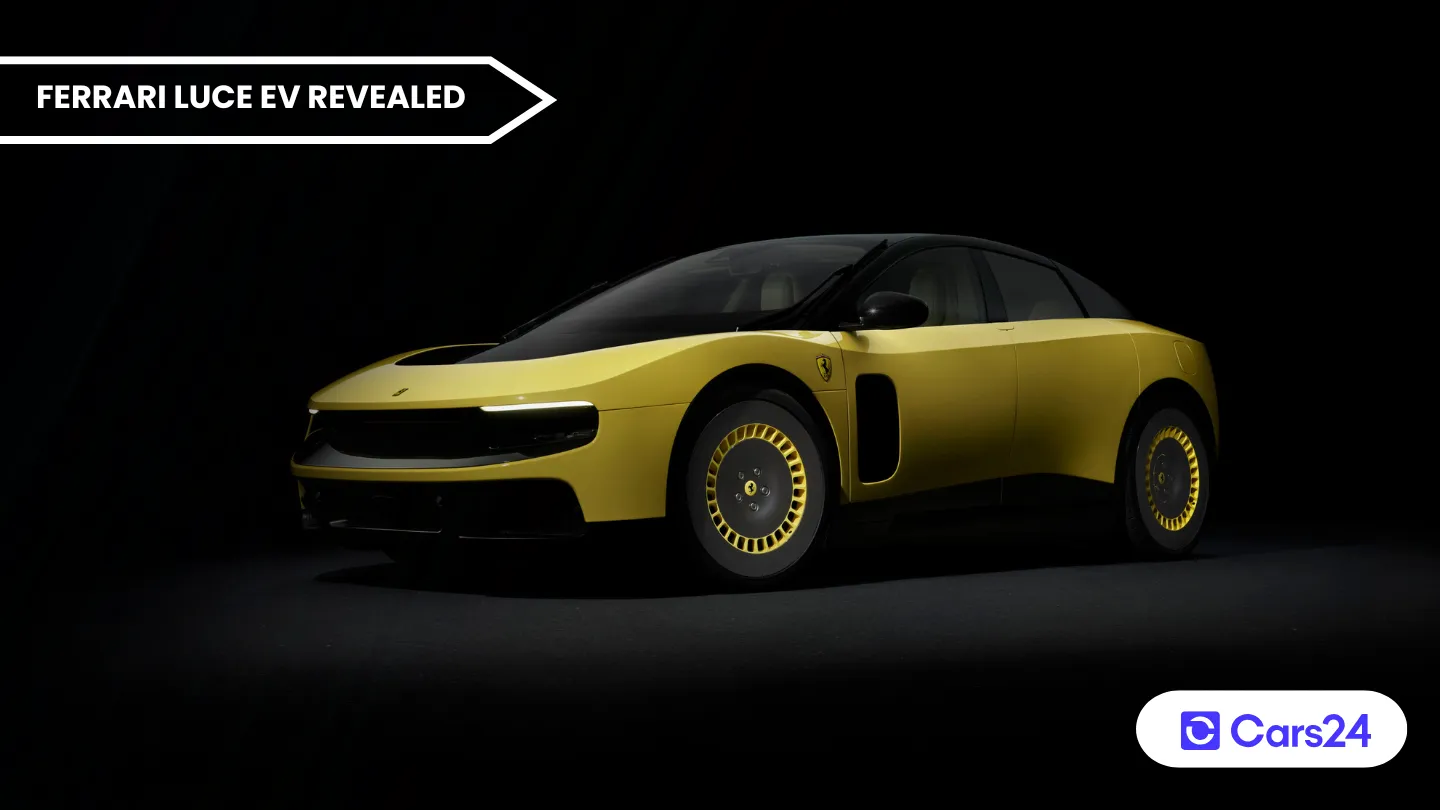
Ferrari has revealed the Ferrari Luce EV, a landmark luxury grand tourer described by Maranello as a new chapter for the Prancing Horse. Brand’s first-ever electric car was unveiled at the Vela di Calatrava (Città dello Sport), Rome. On the same date in 1947, Ferrari took its first-ever victory when the 125 S won the Gran Premio di Roma at the Baths of Caracalla circuit, driven by Franco Cortese.
The name Luce means “light” in Italian. Ferrari says it represents clarity, direction and the idea of lighting the way forward. It is meant to be a complete Ferrari experience built around an all-electric platform.
Ferrari has developed and manufactured the major components of the Luce EV in-house at Maranello, even taking the help of NASA to fine-tune acceleration. The project includes more than 60 new patents, and Ferrari says future assistance will cover all electric components, including batteries, under its Ferrari Forever philosophy.
There is no word on the pricing of the Ferrari Luce yet, but it is confirmed to arrive in Australia. The local pricing of the Luce EV is expected to sit in the seven-figure territory, especially after the LCT.
Mind-boggling performance specs of Ferrari Luce
The Luce EV uses a dedicated electric platform with 4 electric engines (and 12 electric motors), one for each wheel. Total output is in Launch Control mode.
Its battery has 210 cells across 15 modules and is integrated into the floor. Ferrari says it can recharge 70kWh in 20 minutes on a fast charger capable of up to 350 kW. Here are the performance details:
| Specification | Ferrari Luce EV |
|---|---|
| Batter capacity | 122kWh |
| Maximum power | 772kW |
| Maximum torque | 990Nm |
| Acceleration (0-100km/h) | 2.5s |
| Acceleration (0-200km/h) | 6.8s |
| Top speed | 310km/h |
| DC fast charging | Up to 350kW |
| Estimated range (WLTP) | 530km |
Ferrari hands design duties to Apple designers
The design of this EV is one of the biggest talking points. Ferrari brought in LoveFrom, the creative collective led by Sir Jony Ive and Marc Newson, to work alongside the Ferrari Design Studio led by Flavio Manzoni.
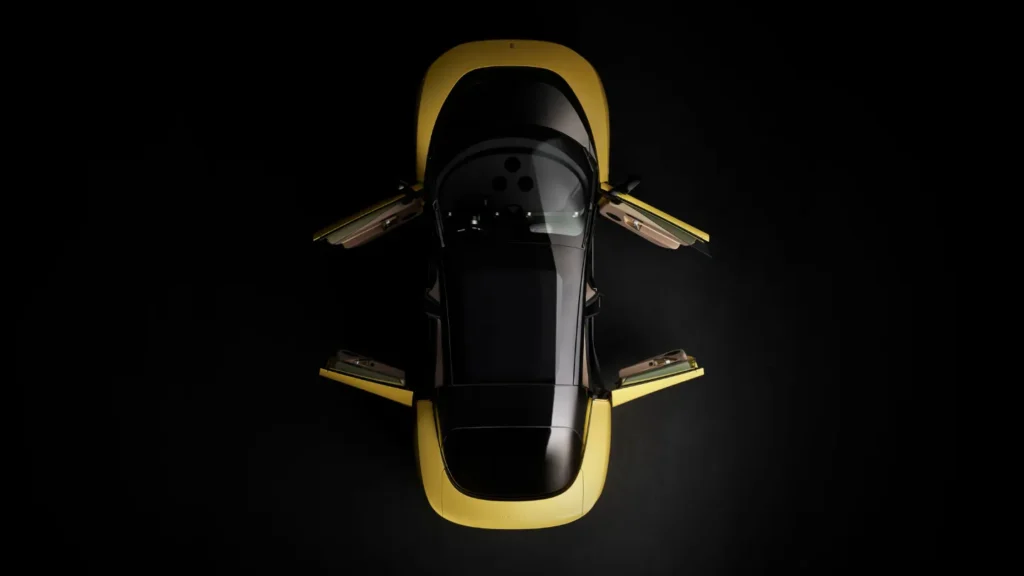
That outside involvement gave the Luce a very different design approach. The guiding idea was simplification: cleaner forms, smoother surfaces and a unified design language across the exterior, interior and digital interface.
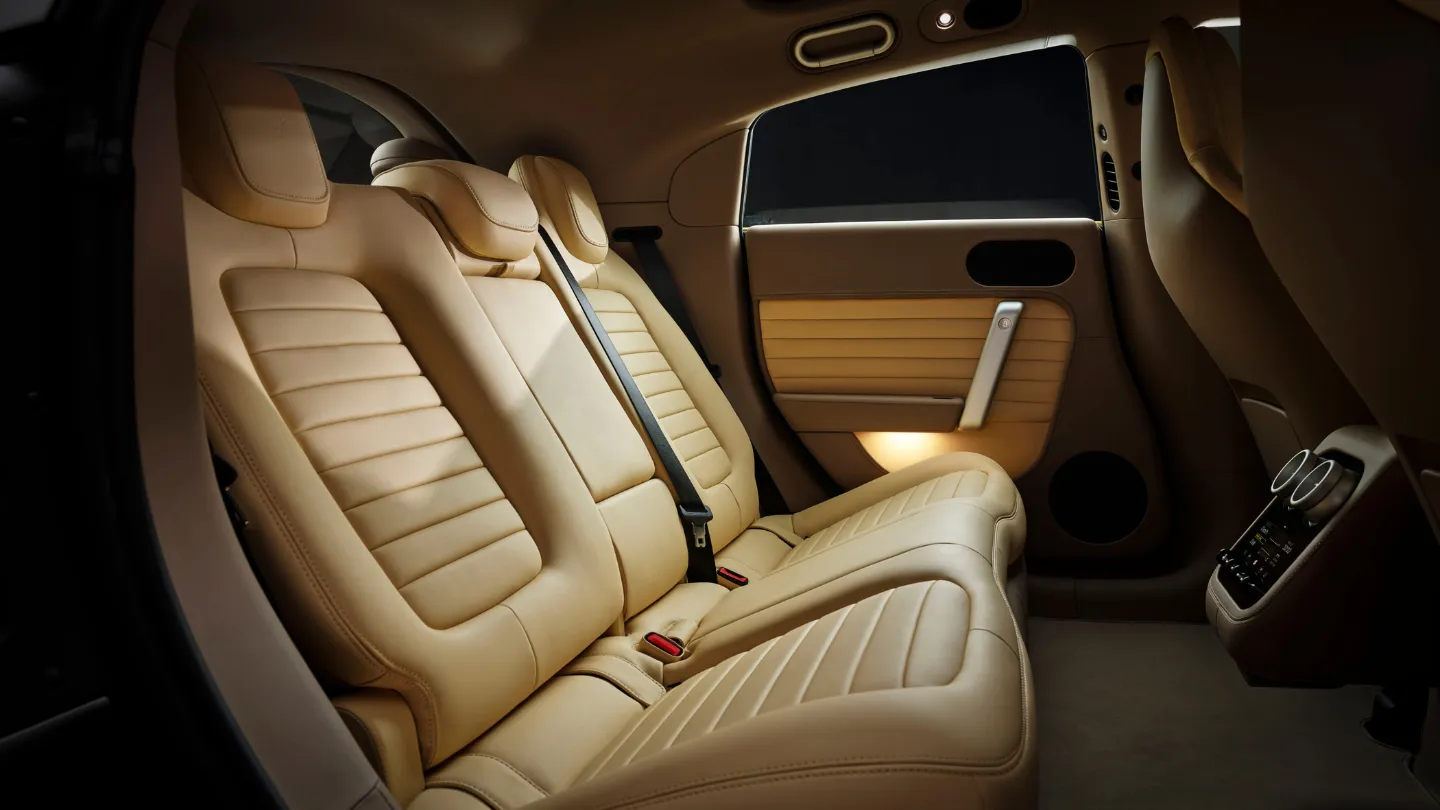
The electric platform allowed Ferrari to rethink the car’s proportions. The Luce has four doors and five seats, making it Ferrari’s first 5-seat car. Ferrari says this was not possible with traditional front-mid-engine transaxle layouts.
Ferrari Luce exterior: Smooth, clean and aero-led
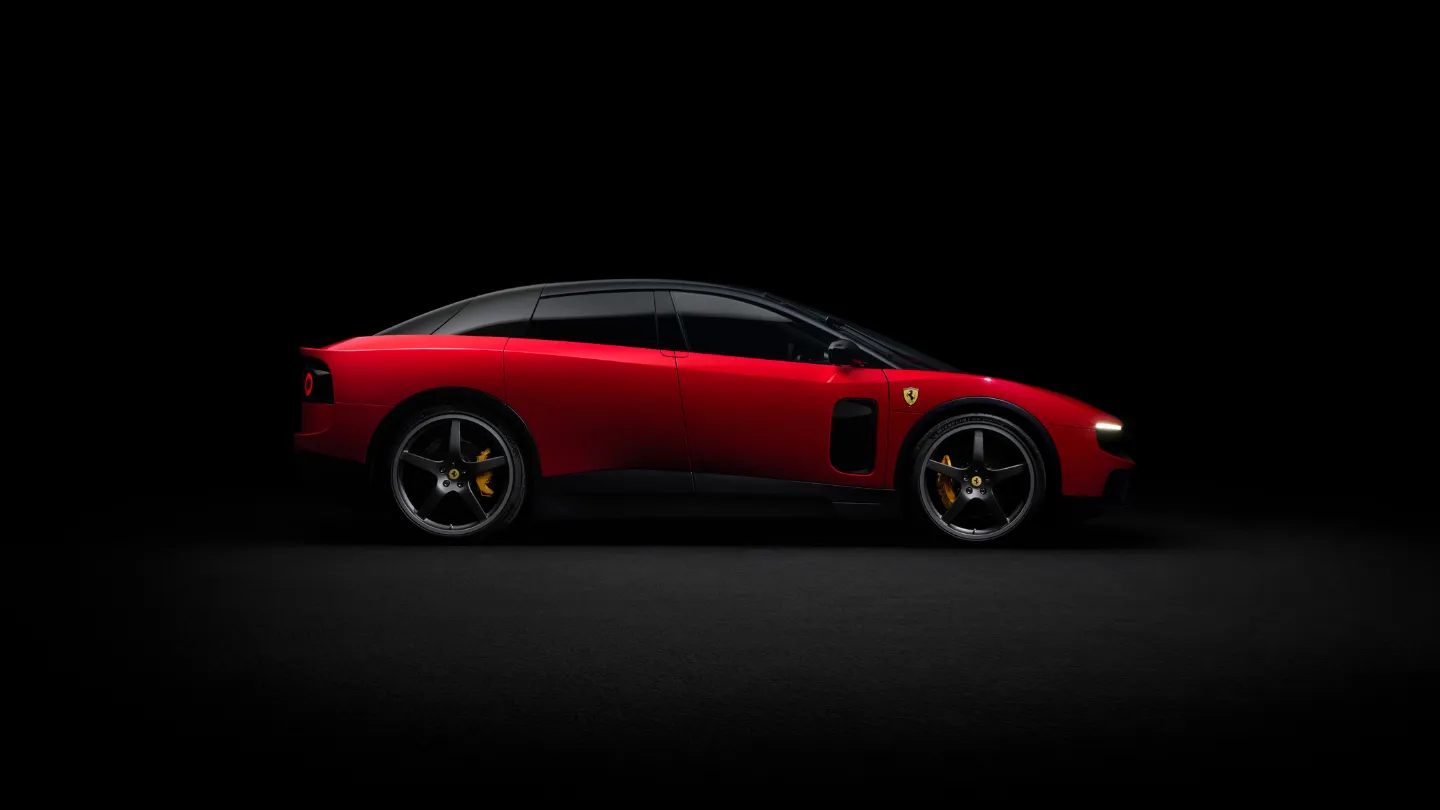
The Luce EV’s defining visual feature is its glass house, described as a pure, shell-like form extending below the beltline. The front and rear aerodynamic wings appear to float around the car, helping performance while preserving the smooth shape.
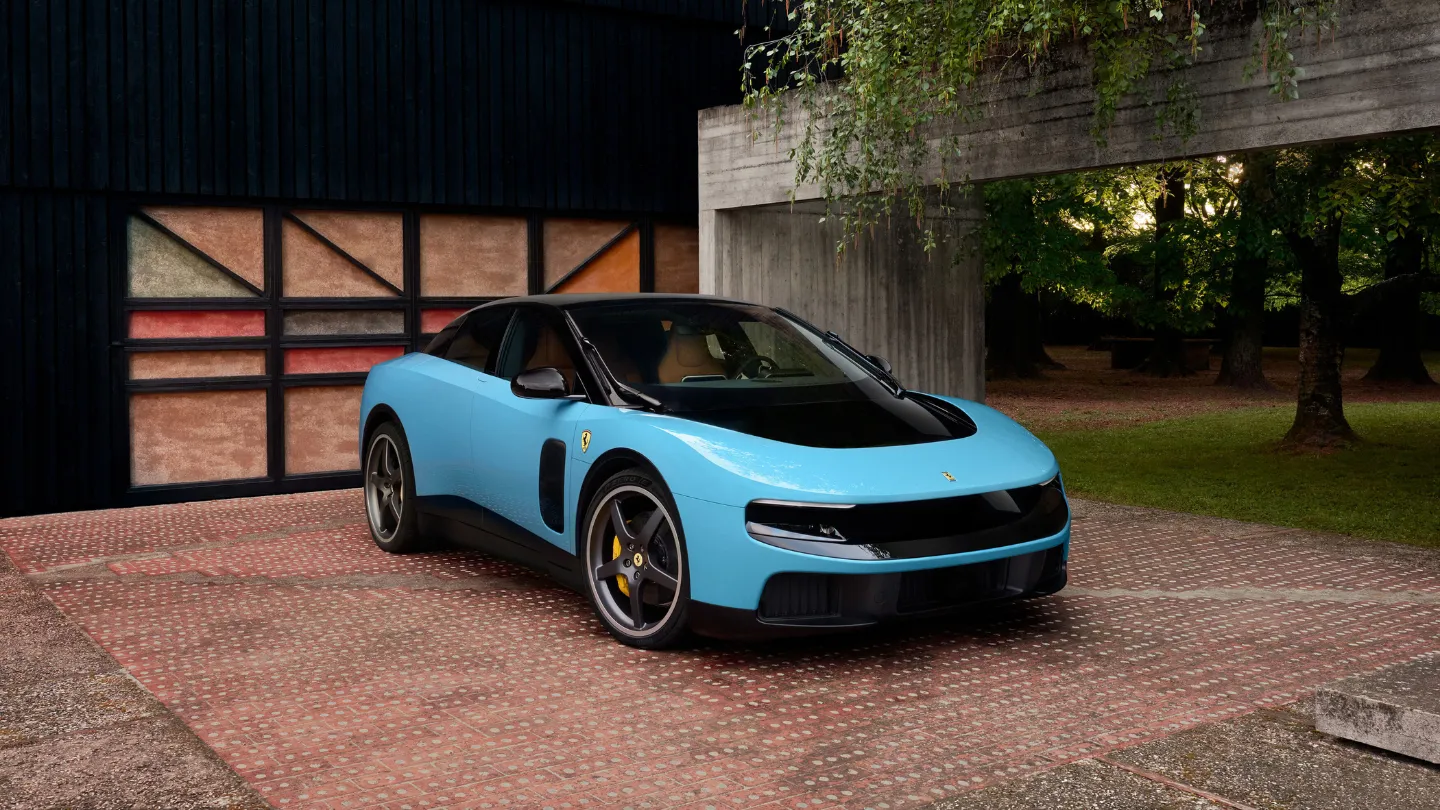
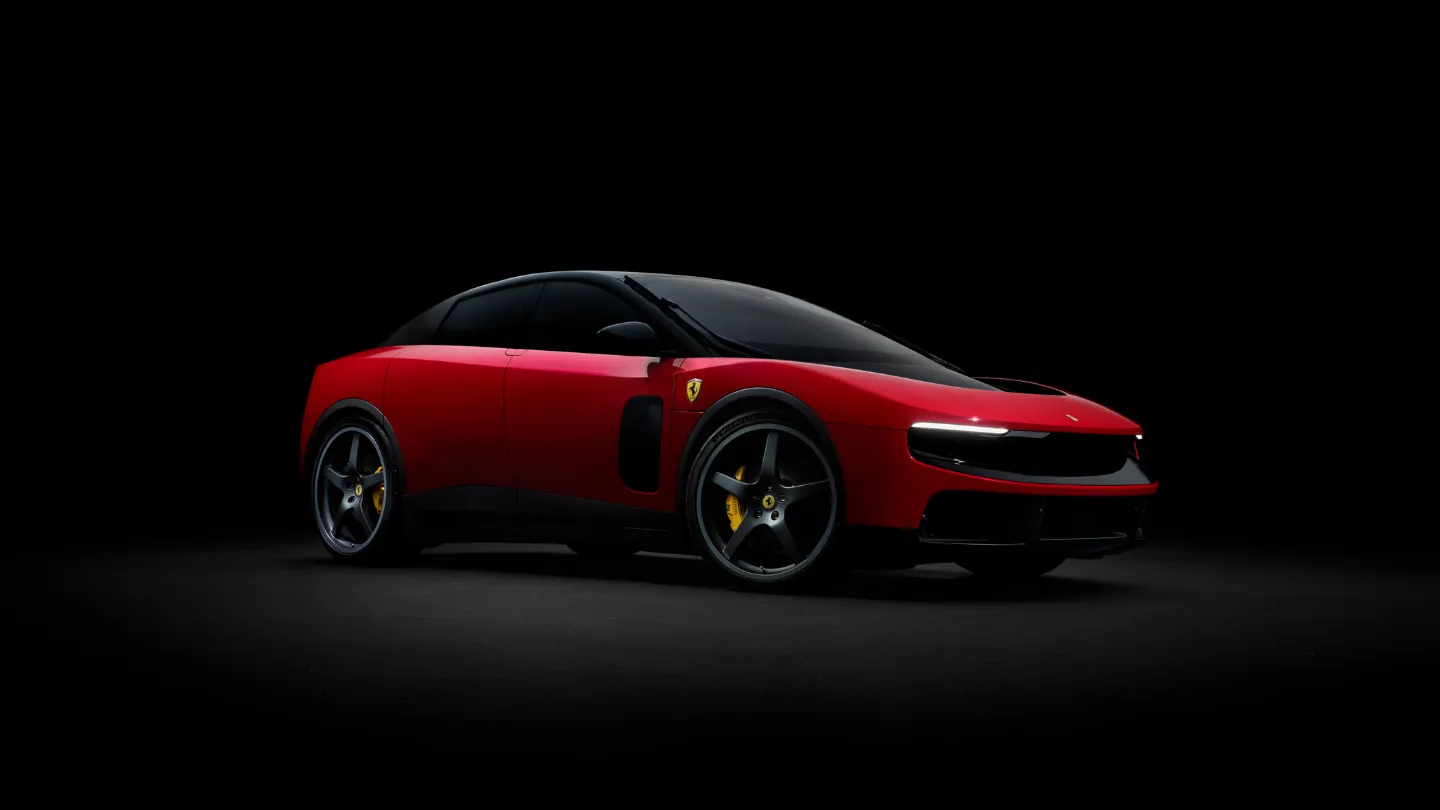
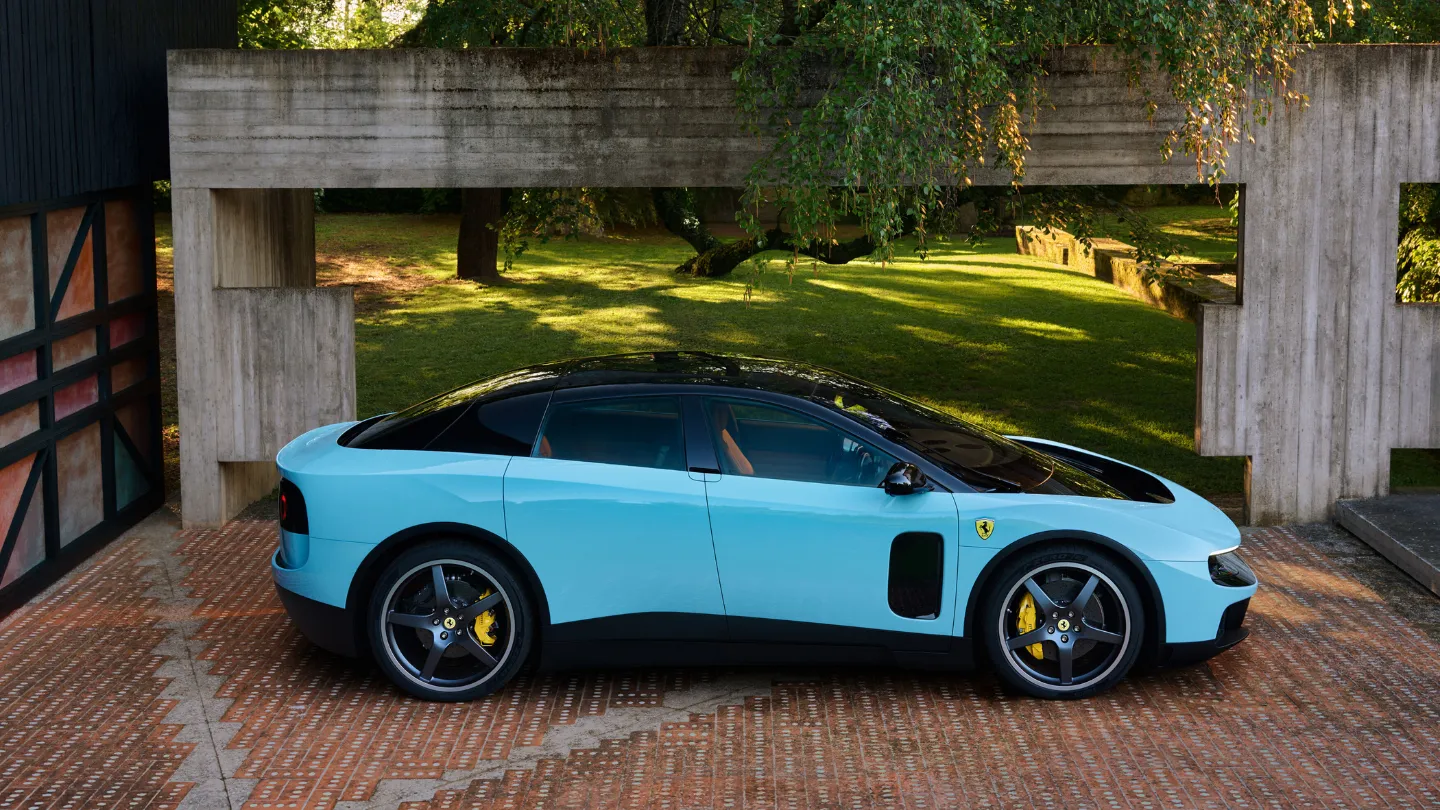
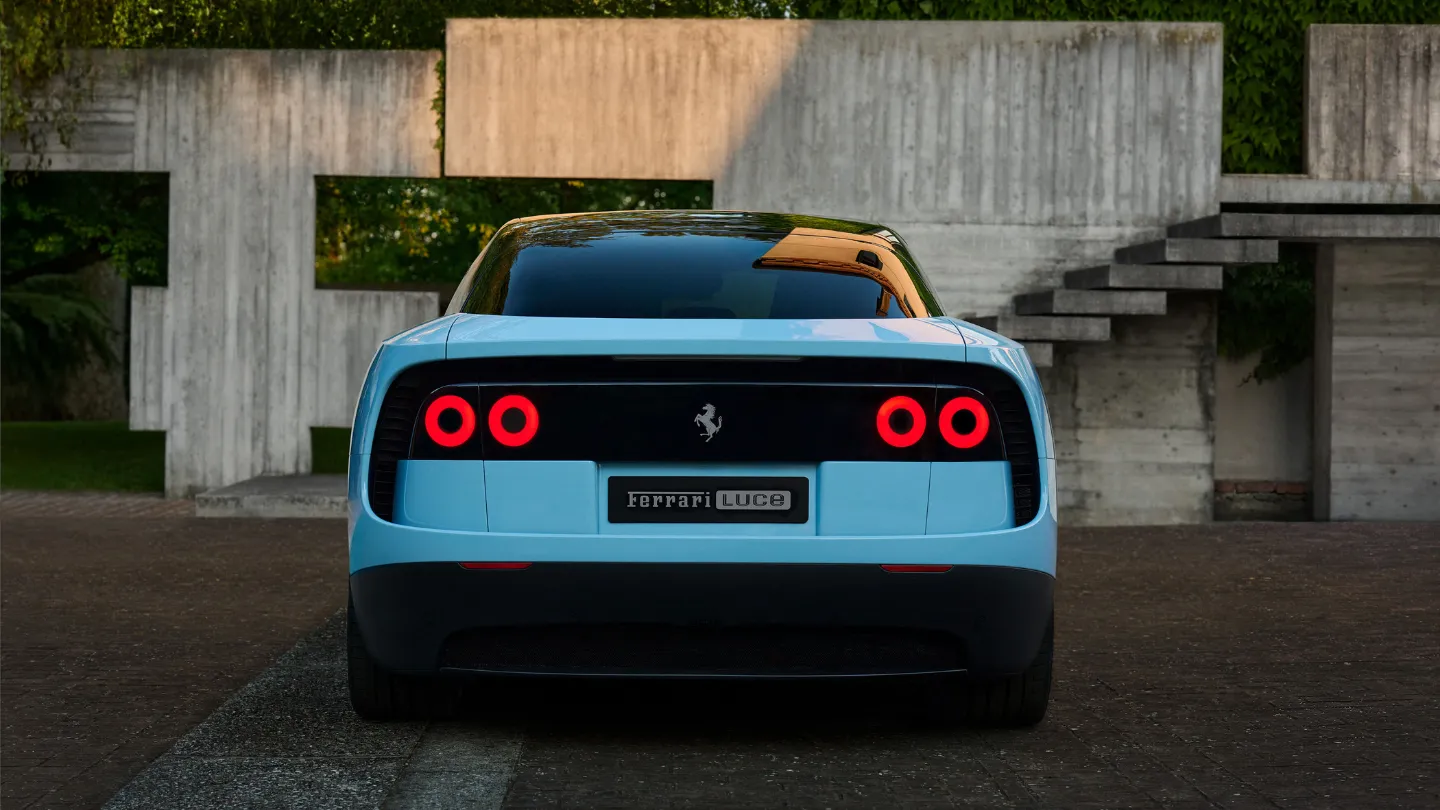
The lighting is also integrated into the surfaces. The front and rear light panels are transparent, and Ferrari says the lights visually recede when switched off. The rear halo lights are said to reference the clarity of the 360 Modena and 458 Italia.
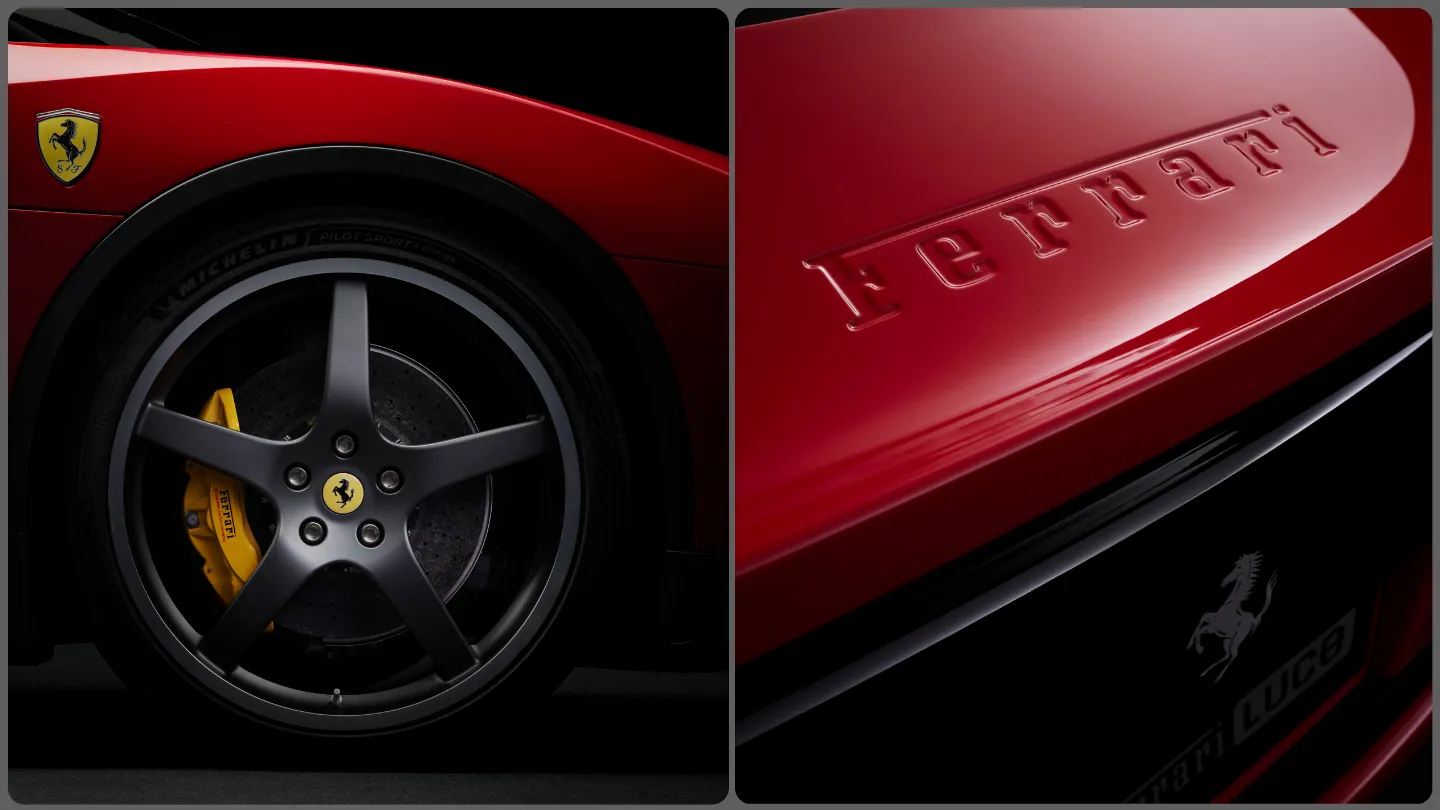
The Luce also gets the largest staggered wheels ever used on a series-production Ferrari road car: 23 inches at the front and 24 inches at the rear. Two wheel designs are mentioned: an open five-spoke forged design and an aerodynamically optimised turbine design.
Launch colours include Azzurro la Plata, Giallo Luce, Rosso Dino, Bianco Artico and Rosso Fiammante. The special yellow is inspired by Ferrari’s historic logo colour and appears on the wheel hubs and steering wheel.
Ferrari Luce interior: EV goes against the giant touchscreen trend
Ferrari has focused on tactile control rather than going fully screen-heavy. The cabin combines mechanical buttons, dials, toggles and switches with digital displays developed with Samsung Display.
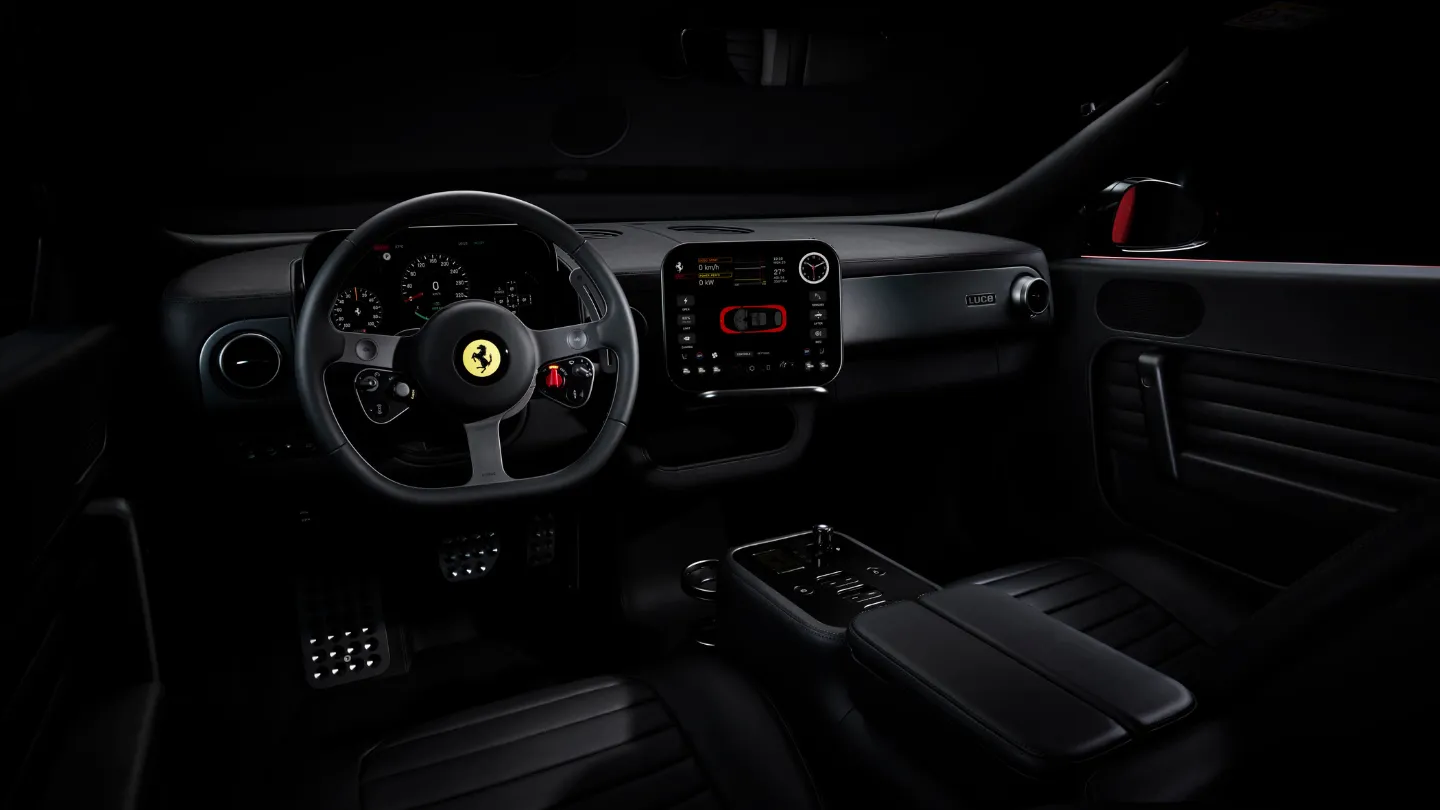
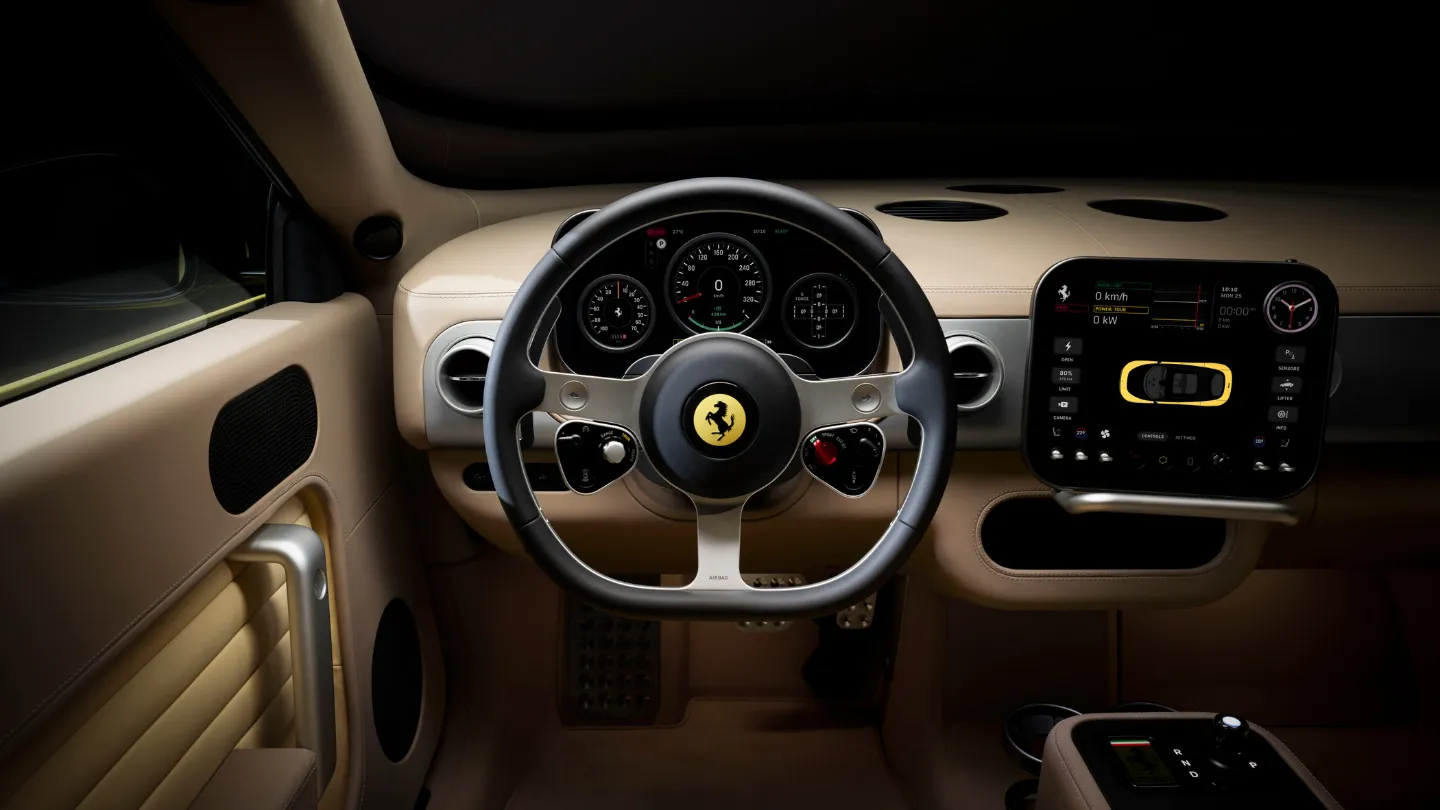
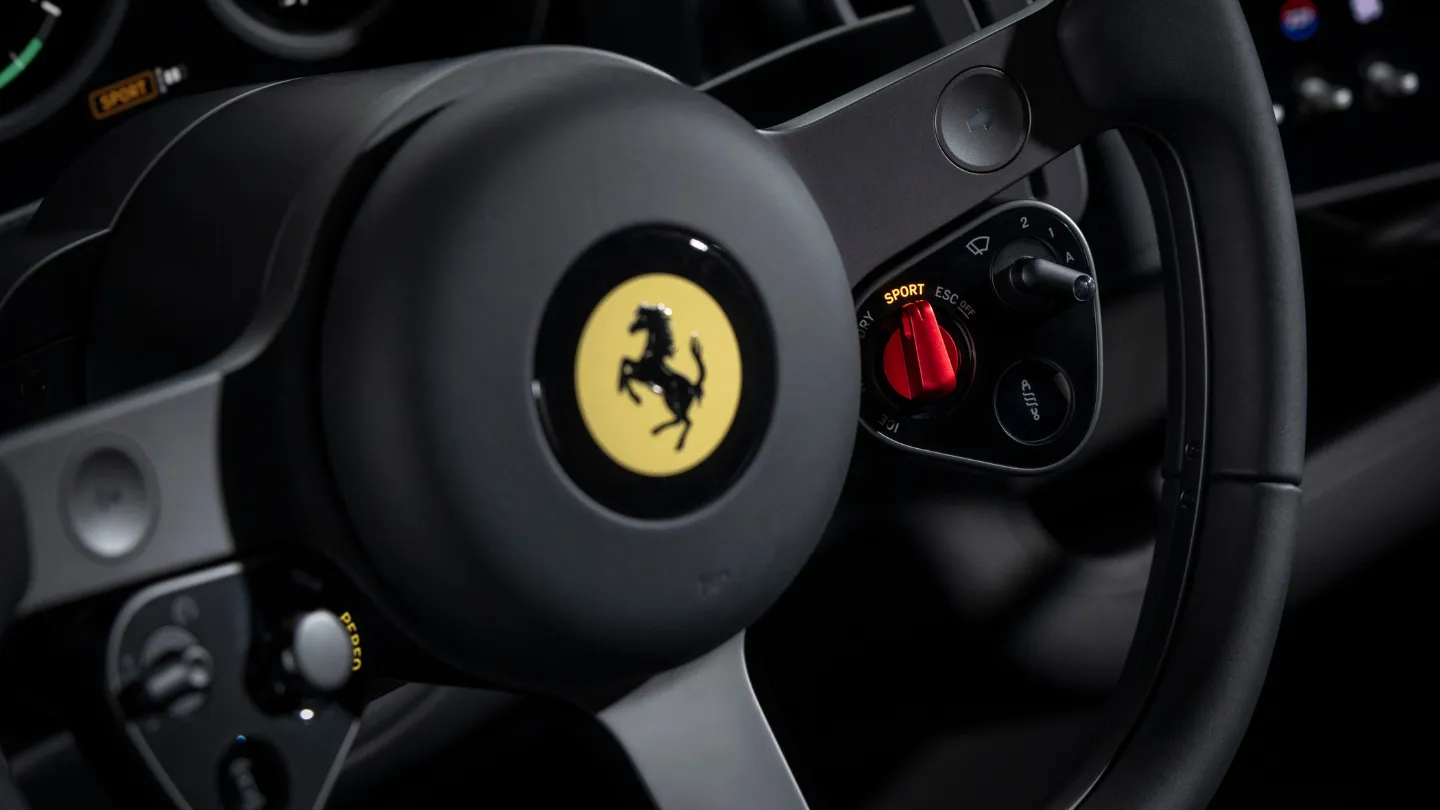
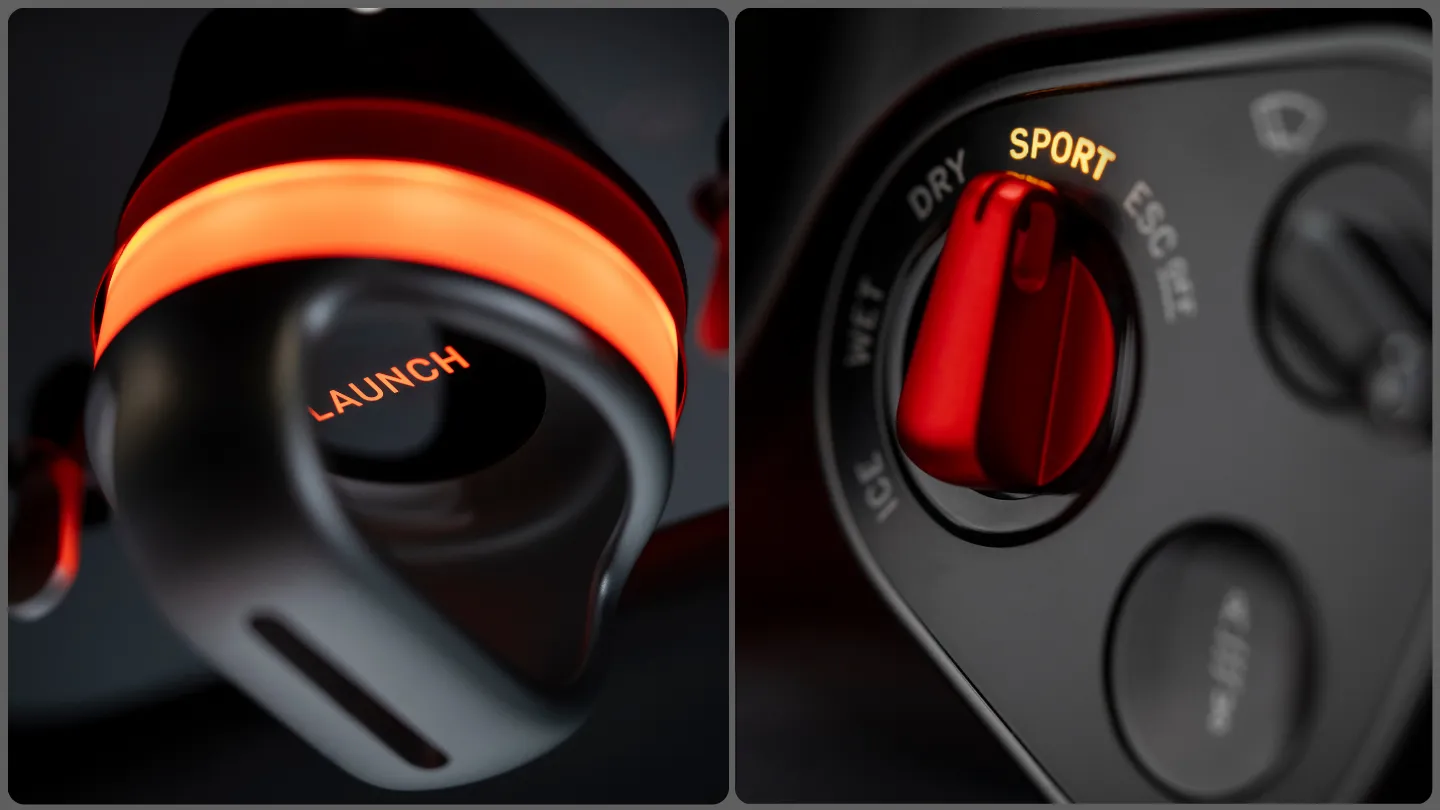
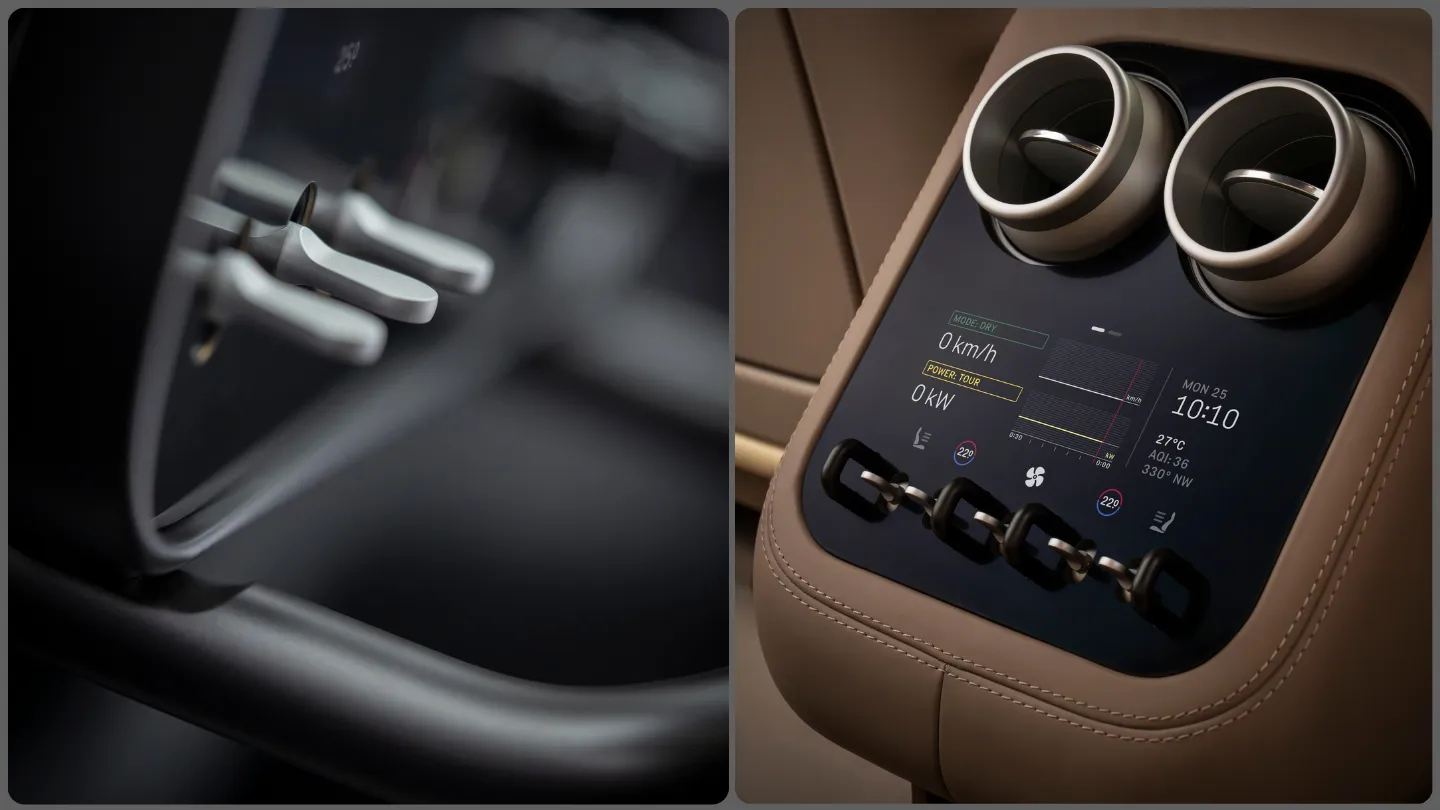
The steering wheel is made from 100% recycled aluminium and includes analogue control modules. The traditional Manettino remains, while the e-Manettino manages energy and range. The driver also gets torque-control paddles: the right paddle increases available torque, while the left paddle increases energy recovery and deceleration.
The instrument display uses layered OLED screens, while the central control panel can pivot towards the driver or passenger. Physical climate controls remain available for quick access. The key is made from Corning Gorilla Glass and uses an E-Ink display, which Ferrari says is a world first in automotive use. “MyFerrari Luce” app controls the climate, charging, and monitors other metrics.
The audio system is also serious: 21 speakers, 24-channel amplification and 3000 W of power, with Ferrari’s own Audio Signature presets including Studio, Concerto, Immersive, Opera and Electronic.
Also read: Ferrari Luce EV’s stripped-down technical details
Ferrari’s EV makes noise, but not fake noise
Ferrari says the Luce’s sound is not synthesised. Instead, a sensor captures vibration from the electric axle, then Ferrari filters, equalises and amplifies it, similar in principle to how an electric guitar amplifier works.
The result is meant to be authentic and functional, not theatrical for the sake of it. Sound intensity changes with the e-Manettino mode, from quiet comfort in Range to stronger expression in Performance.
Aerodynamic record of the Ferrari Luce EV
Ferrari says the Luce has the lowest drag coefficient in its road-car history. Aerodynamic work took more than five years, including about 6000 CFD simulations, 250 hours of scale-model wind-tunnel testing and 80 hours with a full-scale car.
Active grilles manage cooling and drag, while the suspension can lower the front by 10 mm at speed. The aero wheel design alone reduces drag by around 5%.
Despite the performance focus, Ferrari also calls the Luce its most comfortable car ever, helped by active suspension, extensive soundproofing and the first elastically mounted rear subframe in Ferrari history.
Ferrari Luce ownership support
Ferrari’s 7-year maintenance programme applies to the Luce, covering routine maintenance for the first seven years. The Luce also gets a dedicated 8-year warranty for key electric powertrain components, including the front and rear axles, battery and charging system.
The big picture
The Ferrari Luce is the brand’s most serious step yet into the electric era. It is fast, technically dense and deliberately different from a conventional EV.
Ferrari’s message is clear: the Luce is not meant to replace the brand’s combustion soul, but to prove that a fully electric Ferrari can still feel engineered, emotional and unmistakably Maranello.

Comments
New Comment