





Key highlights
- The Ford Tourneo will switch from a 2.0-litre diesel to a 2.5-litre PHEV powertrain from April to June 2027.
- The Tourneo PHEV will offer up to 51km of electric driving range under the WLTP test cycle.
- Prices will start at $73,340 before on-road costs for the Active SWB PHEV.
Ford Australia will replace the diesel-powered Tourneo with a plug-in hybrid (PHEV) powertrain from the second quarter of 2027. The updated Ford Tourneo is scheduled to arrive between April and June 2027 as a 2027.25 model-year vehicle. It will continue to be offered in two grades, Active and Titanium X, with both using a short-wheelbase configuration.
The switch means the Ford Tourneo will no longer be offered with the 2.0-litre turbo-diesel currently producing 125kW and 390Nm. That engine drives the front wheels through an eight-speed automatic transmission. Instead, the new Ford Tourneo PHEV will use the same basic hybrid system as the Transit Custom PHEV already sold in Australia. Ford says the change was partly influenced by Australia’s New Vehicle Efficiency Standard (NVES), which will impose tighter carbon dioxide limits from January 2027.
Read more: 2023-2026 Ford Mustang recalled over sudden power loss risk
More electric driving, less diesel
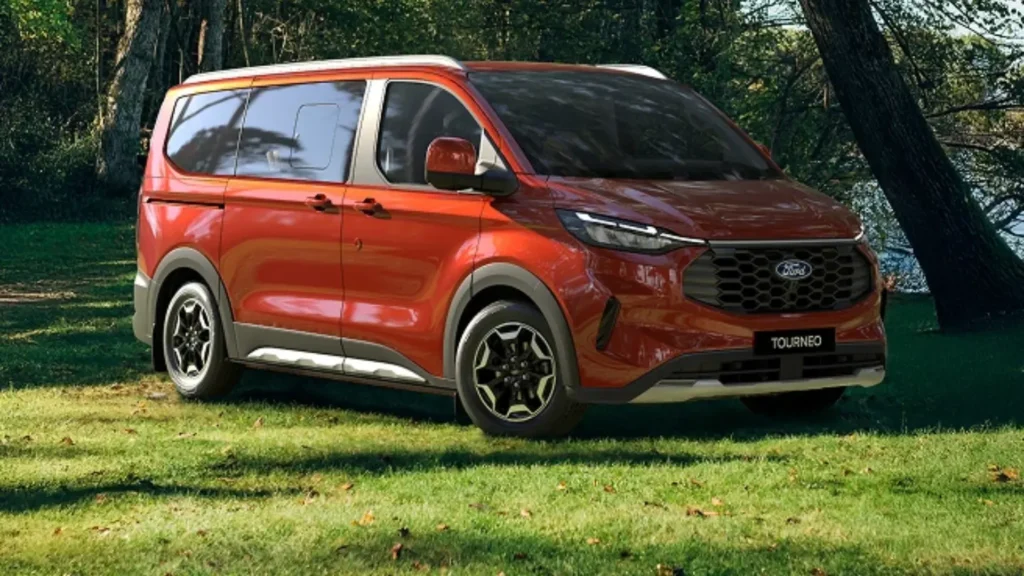
The Ford Tourneo PHEV combines a 2.5-litre naturally aspirated petrol engine with an electric motor, an 11.8kWh nickel manganese cobalt battery and an electronic continuously variable transmission. The petrol engine produces 86kW and 209Nm, while the electric motor produces 111kW and 320Nm. Combined system output is rated at 171kW, with drive sent to the front wheels. The Ford Tourneo PHEV has a claimed electric driving range of up to 51km on the WLTP cycle. That’s slightly less than the 53km claimed for the Transit Custom PHEV, with Ford attributing the difference to the Tourneo’s greater weight and additional seating and equipment.
Australian fuel-consumption figures for the new Tourneo PHEV have not yet been confirmed. In the UK, equivalent versions are rated at 1.8L/100km under the WLTP test cycle, although that figure should not be treated as an Australian specification. The PHEV’s towing capacity for Australia has also not been confirmed. In the UK, the equivalent Ford Tourneo PHEV is rated to tow up to 1850kg with a braked trailer, while the current Australian diesel Tourneo can tow up to 2500kg. That difference could be important for Australian buyers who use a people mover for more than simply carrying passengers.
Ford Tourneo PHEV pricing
The new Ford Tourneo PHEV will cost $2250 more than the current MY27 diesel versions.
| Model | Price before on-road costs |
| 2027.25 Ford Tourneo Active SWB PHEV | $73,340 |
| 2027.25 Ford Tourneo Titanium X SWB PHEV | $76,840 |
The outgoing MY27 Ford Tourneo Active SWB diesel is priced from $71,090 before on-road costs, while the Titanium X SWB costs $74,590. Ford Australia has not announced any other equipment changes as part of the powertrain update.
What does the change mean for Australian buyers?
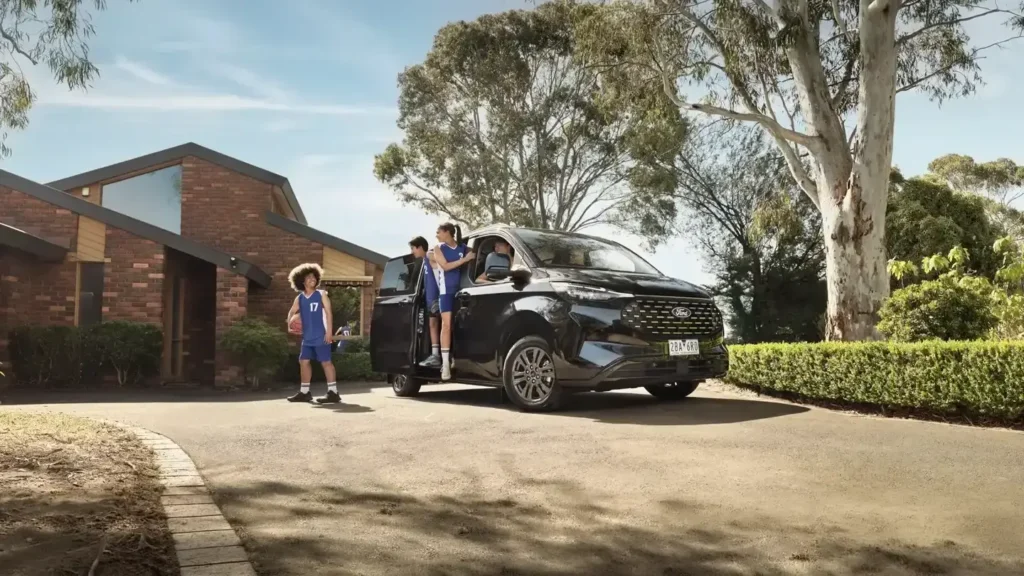
The Ford Tourneo is one of the smaller players in Australia’s people mover market, sitting behind the Kia Carnival and Hyundai Staria. Ford says it expects the PHEV to generate additional customer interest, but does not anticipate a fundamentally different sales rate.
The model has recorded 280 sales between January and August 2026, down 46.3 per cent compared with the 521 examples sold during the same period in 2025. The move to PHEV power gives Ford Tourneo buyers the ability to cover shorter trips using electric power while retaining a petrol engine for longer journeys. For a large family vehicle, that combination could be useful for buyers who want some of the benefits of electrification without switching to a fully electric vehicle.
The Ford Tourneo PHEV will also sit alongside the diesel-powered Transit Custom, which Ford Australia says will remain available. The commercial van range is not being shifted to an all-hybrid and electric lineup. For now, Ford Australia is yet to confirm Australian fuel-consumption figures, towing capacity and any further equipment changes for the Ford Tourneo PHEV ahead of its 2027 arrival.

Comments
New Comment