




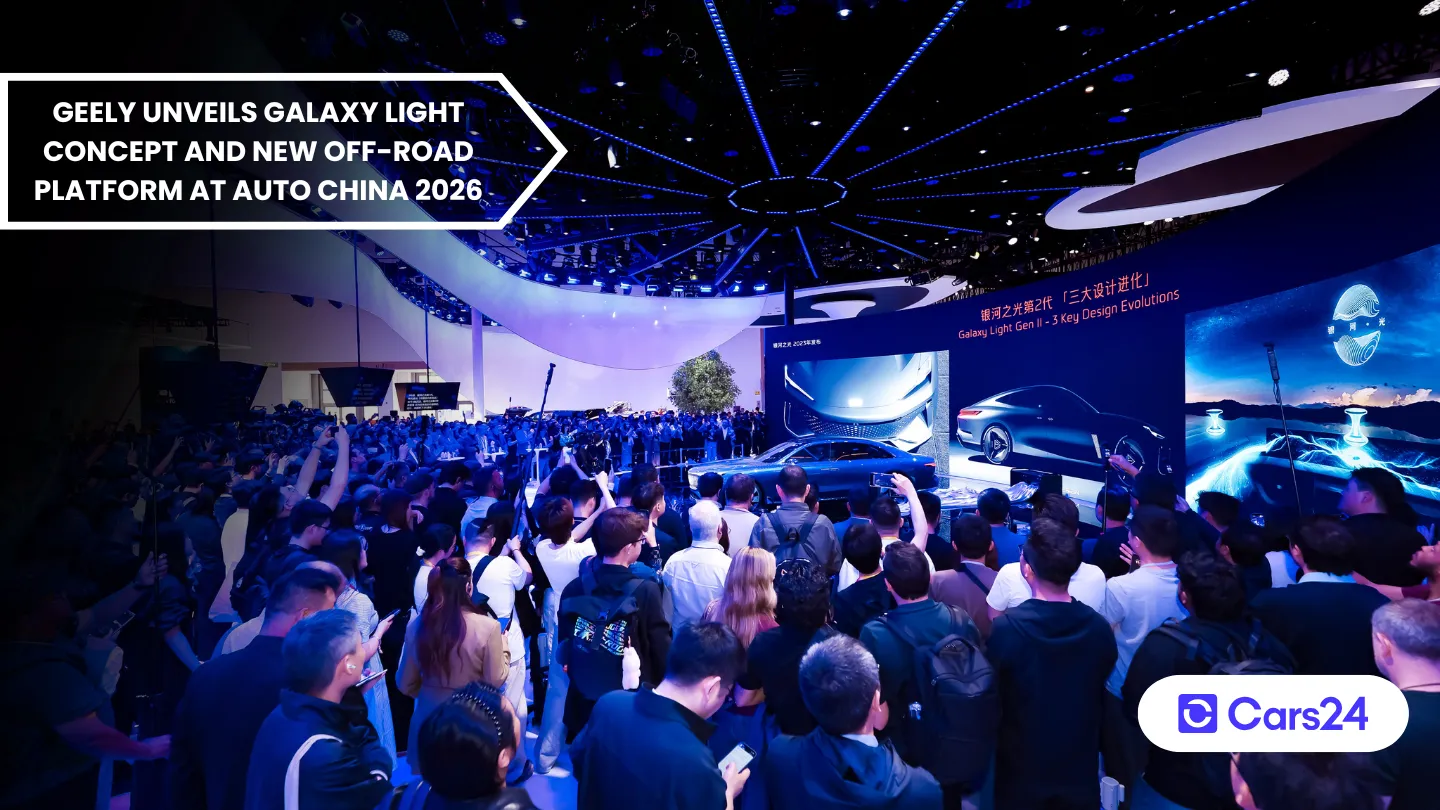
Geely Auto has made a bold statement at Auto China 2026, pulling the wraps off its “Galaxy Light” 2nd Generation Concept car and what it calls the world’s first dedicated off-road new energy vehicle (NEV) architecture.
A new design direction
The Galaxy Light 2nd Generation Concept marks a clear step up in Geely’s design ambitions. Built around the brand’s “Ripple Aesthetics” philosophy, the concept draws on Chinese cultural imagery from Hangzhou’s West Lake to traditional “Jiwen” patterns while aiming squarely at a global audience.
Outside, the car carries a “tiger raising its head” stance, a flowing roofline, and “Flying Eaves” headlights with an integrated Crystal Blade beam system. At the rear, “Dawning Sun” taillights blend a sunrise aesthetic with a starry-sky feel.
Inside, warm timber finishes meet crystal-clear surfaces, and an intelligent lighting system mimics shifting daylight conditions. A “Three Pools Mirroring the Moon” audio system and “Chinese Chair” seating round out what Geely is positioning as a premium, culturally rooted cabin experience.
Read more: Geely EX2 EV show offer announced ahead of Melbourne Motor Show debut
Off-road EV that doesn’t compromise
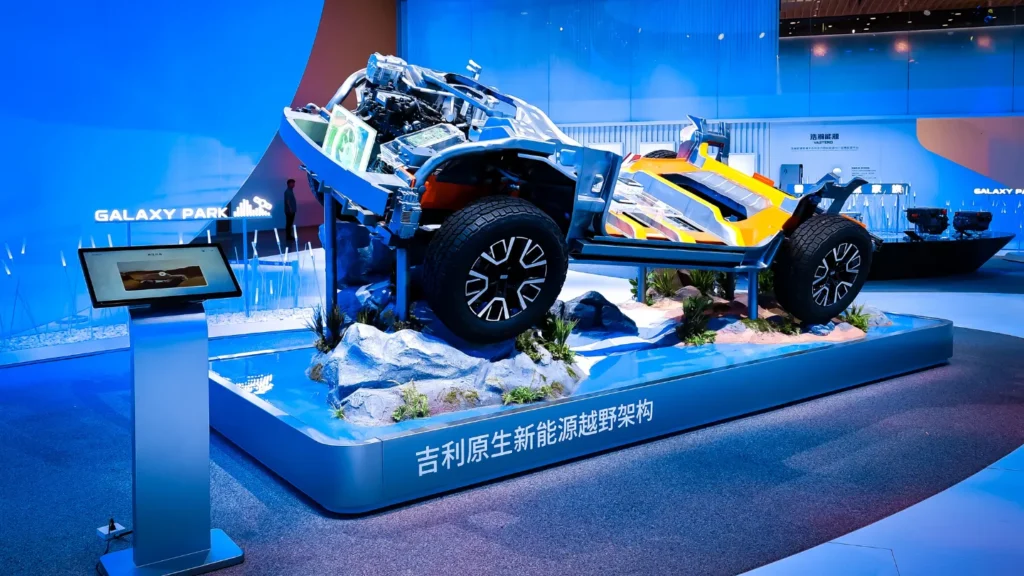
Perhaps the bigger news for SUV and off-road fans: Geely has revealed a native NEV off-road architecture the first of its kind globally backed by 40 years of engineering know-how.
The platform packs a front-mounted high-power P3 motor alongside dual independent P4 in-wheel motors at the rear. Combined output clears 1,000 horsepower, with 0–100 km/h in under four seconds. That’s territory usually reserved for supercars costing several times more.
Key hardware includes double-wishbone suspension front and rear, a 50:50 axle weight distribution, a recessed battery with six-layer base protection, and a physical separation between fuel, electrical, and cooling systems to cut fire risk. AI handles torque distribution across all four wheels in real time, and a one-touch recovery mode helps drivers escape tricky terrain.
For Australians who use their 4WDs seriously whether it’s Fraser Island, Cape York, or the High Country this kind of capability in an electric platform is worth watching closely.
Read more: Geely Starray EM-i receives its first OTA update
Hybrid tech sets fuel efficiency records
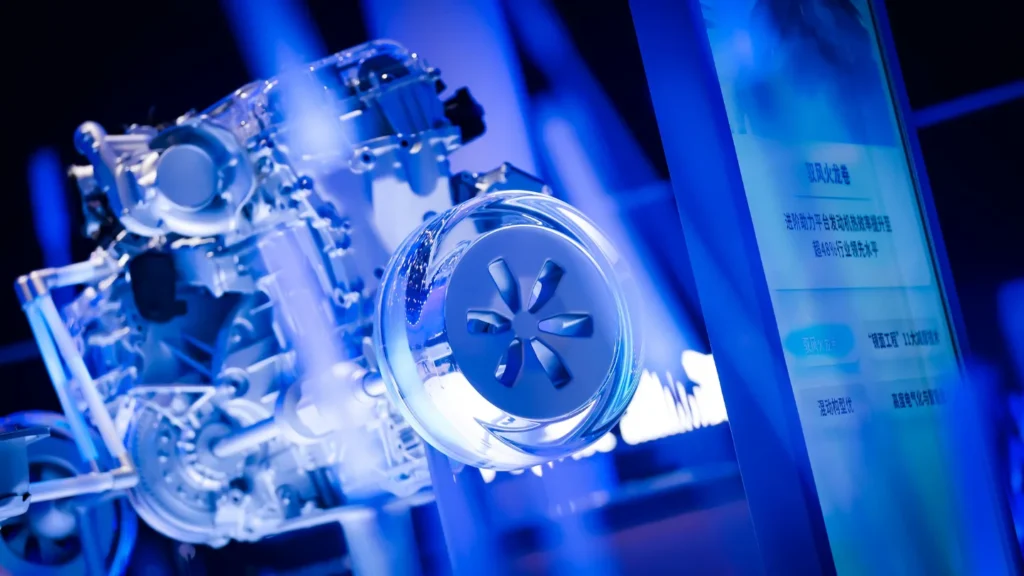
Geely’s i-HEV Intelligent Hybrid System also took centre stage. The system’s engine hits a thermal efficiency of 48.41%, which Geely claims is the highest of any mass-produced engine in the world, 12 per cent better than the industry average.
In real-world testing, the Emgrand i-HEV recorded a fuel consumption of just 2.22 litres per 100 kilometres, enough to earn a Guinness World Record.
The system delivers up to 230 kW of motor power and can run in pure-electric mode up to 66 km/h. Geely has also put it through 15,000 hours of bench durability testing, equivalent to around 4.8 million kilometres of driving, more than 20 per cent beyond Japanese industry benchmarks.
Read more: 2026 Geely EX5 arrives with more battery and range
Strong sales, bigger plans
Geely reports 709,358 vehicles sold in the first quarter of 2026 alone, leading all Chinese automotive brands. The Galaxy series, launched just three years ago, has now shifted over two million units in 37 months.
At the show, Geely launched the Galaxy M7 long-range hybrid, featuring a 225 km pure-electric range and a combined range of 1,730 km. The Galaxy M9 “Black Gold Intelligent Radiance Edition” also made its debut, along with global pre-orders opening for the Galaxy Xingyao 7 mid-size hybrid sedan.
Between four and five new hybrid models are planned for 2026, with updates coming to existing lines including the Xingrui, Xingyue L, Boyue, and Emgrand.
What does it mean for Australia?
While Geely vehicles currently reach Australian buyers mainly through the Volvo-owned brands under its umbrella, the technology on show in Beijing signals where the broader group is heading. As Chinese brands continue pushing into the Australian new car market, Geely’s pace of development particularly in hybrid efficiency and off-road EV capability makes it a name worth tracking.

Comments
New Comment