




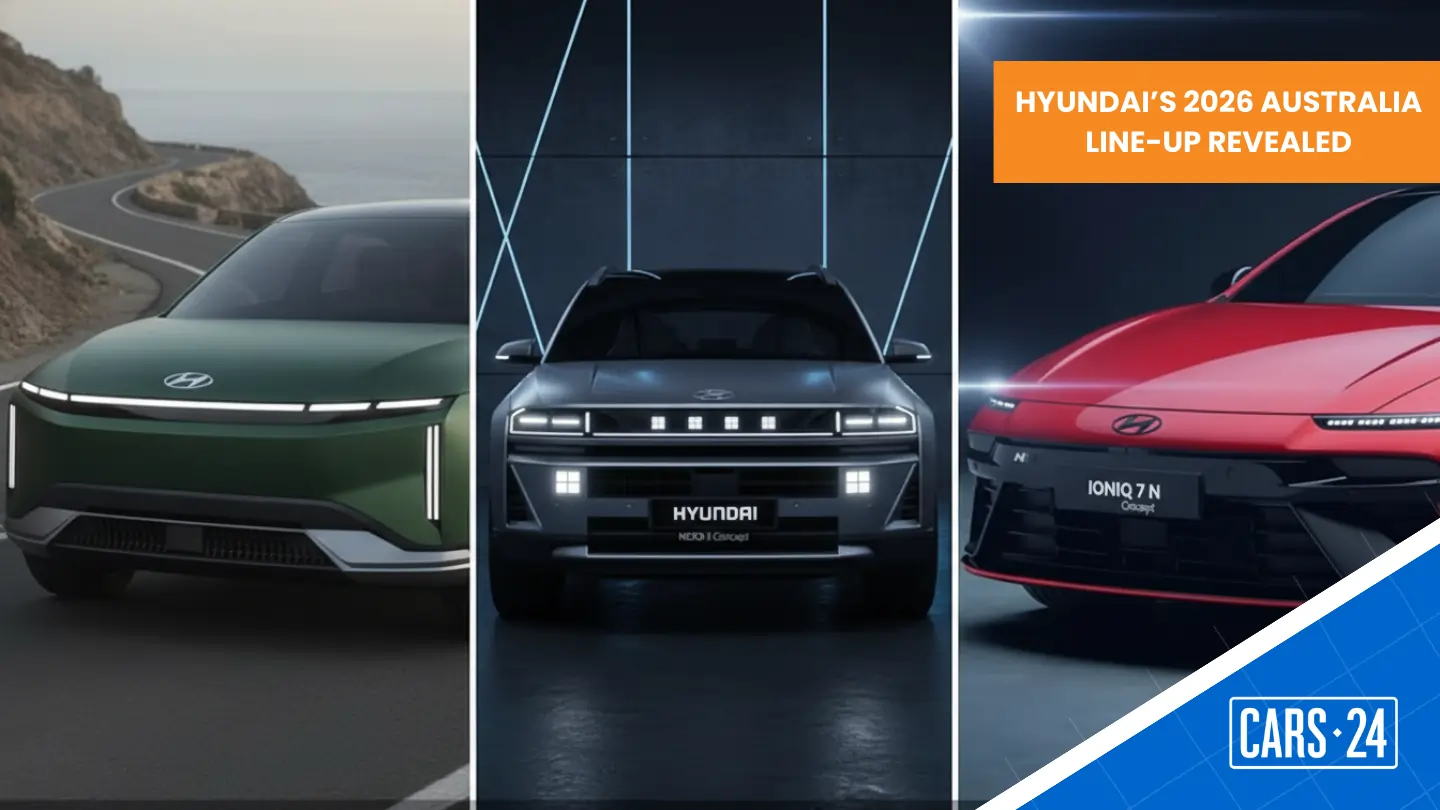
Hyundai has cemented its position as Australia’s fifth-best-selling automotive brand for 2025, recording a 7.7 per cent sales increase and delivering 77,208 vehicles over the year. With that coveted top-five ranking now firmly in its sights, the Korean brand is preparing a busy 2026, headlined by new electric models, a fresh N performance flagship, and replacements for some of its highest-volume nameplates.
From an all-new electric SUV to a track-focused Ioniq 6 N, here’s what Hyundai has planned for Australia over the next 12 months.
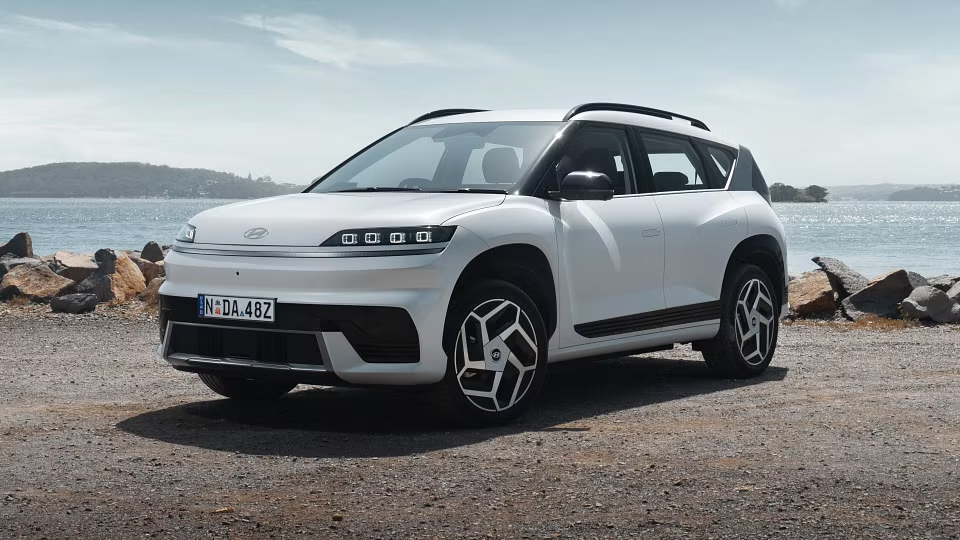


Hyundai Elexio electric SUV
The most significant arrival for Hyundai in 2026 will be the new Elexio electric SUV, positioned as an EV alternative to the popular Tucson.
Sharing its underpinnings with the Kia EV5, the Elexio will be built in China and will go head-to-head with key rivals such as the Tesla Model Y and BYD Sealion 7. At launch, Hyundai will offer just a single variant, pitched with a higher starting price than the Model Y RWD but boasting a superior driving range, while undercutting the closely related Kia EV5 Air Long Range.
The Elexio is expected to play a crucial role in Hyundai’s electrification strategy, targeting families and fleet buyers looking for a mid-size SUV without internal combustion.
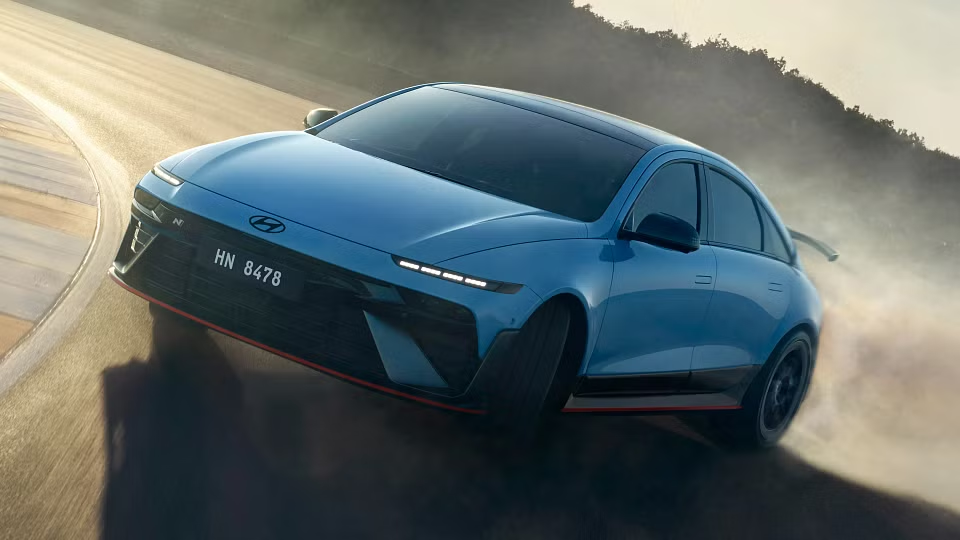
Hyundai Ioniq 6 N
Hyundai’s N division will add a new halo car in 2026 with the arrival of the Ioniq 6 N, following the performance-focused Ioniq 5 N SUV.
While not expected to be a high-volume seller, the Ioniq 6 N is designed to generate attention and reinforce Hyundai’s performance credentials. Peak outputs are rated at 478kW and 770Nm in boost mode, with Hyundai targeting a 0–100km/h time of 3.2 seconds.
Beyond straight-line pace, the Ioniq 6 N will receive extensive powertrain and driveline upgrades to make it genuinely track-capable. Driver engagement is also a focus, with selectable sound generation that mimics an internal combustion engine and virtual gear shifts designed to replicate the feel of a dual-clutch transmission.
Regular versions of the Ioniq 6 are also due for an update alongside the N model, bringing revised styling, improved infotainment, and powertrain tweaks. However, recent changes to the Ioniq 5 suggest the Ioniq 6 range may be simplified.
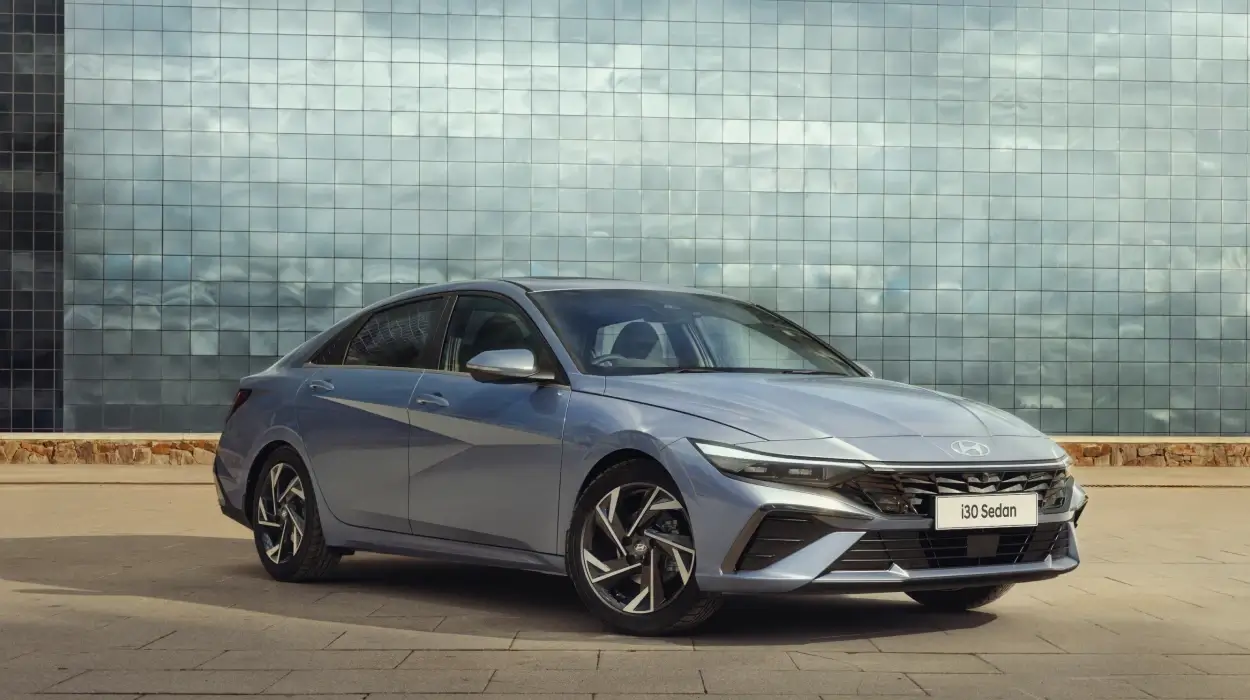
New-generation Hyundai i30 Sedan
On the high-volume side of the market, an all-new i30 Sedan is expected to break cover later this year ahead of an Australian launch.
Spy photos indicate the new model will retain an angular, dynamic look, but move closer to the design language of the larger Sonata. Expect an aggressive front bumper, high-set daytime running lights, and a full-width horizon-style light bar up front.
At the rear, a six-window glasshouse and fastback-style roofline will give the new i30 Sedan a larger, more premium appearance than the outgoing model. Under the skin, it will share its platform with the Kia K4, opening the door to petrol, turbo-petrol, and hybrid powertrains. Australian buyers, however, may see a more limited engine line-up when the model launches locally.
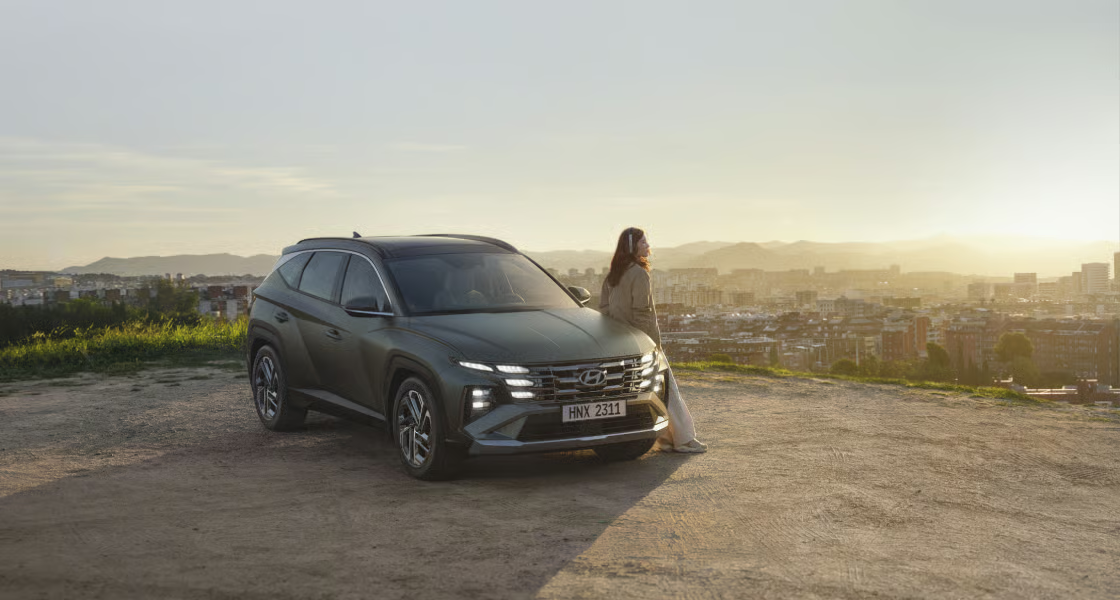
Next-generation Hyundai Tucson
A replacement for the Tucson medium SUV is also expected to debut later in 2026, and early signs suggest a significant design shift.
Camouflaged test vehicles reveal a squarer, boxier profile inspired by Hyundai’s ‘Art of Steel’ design language, first seen on the hydrogen-powered Nexo. This marks a departure from the sharp, angular styling of the current Tucson.
Powertrain details remain unconfirmed, but industry rumours suggest the next Tucson could ditch traditional petrol and diesel engines altogether, moving to a line-up focused on hybrid and plug-in hybrid options.
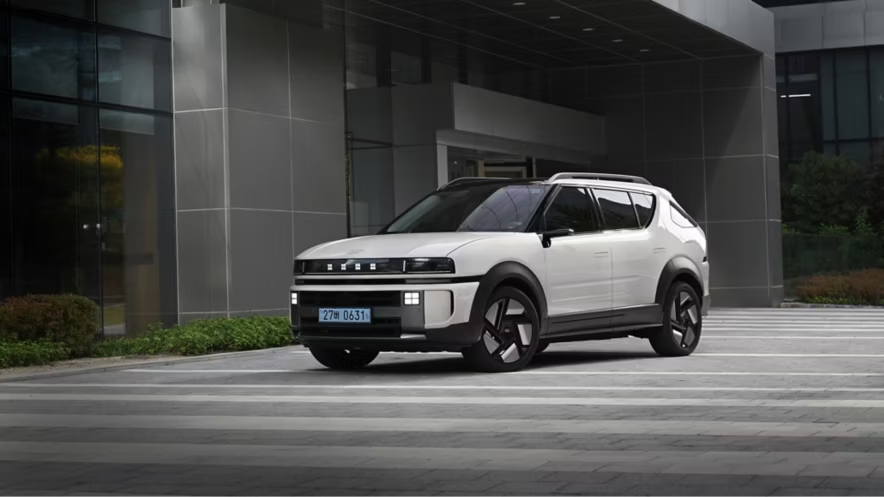
Hyundai Nexo FCEV
Hyundai will also continue its push into alternative powertrains with the arrival of the next-generation Nexo hydrogen fuel-cell electric vehicle in Australia during 2026.
Don’t expect big sales volumes, however. With hydrogen refuelling infrastructure still limited nationwide, the updated Nexo is likely to remain fleet-focused, mirroring Hyundai and Toyota’s broader long-term commitment to hydrogen technology rather than immediate mainstream adoption.
The big picture
With strong sales momentum behind it, Hyundai is entering 2026 with one of its most diverse and ambitious Australian line-ups yet. From mainstream sedans and SUVs to high-performance EVs and hydrogen-powered flagships, the brand is clearly aiming to protect and potentially strengthen its top-five sales position in an increasingly competitive market.
More details on pricing, specifications, and local timing are expected as each model edges closer to launch.

Comments
New Comment