




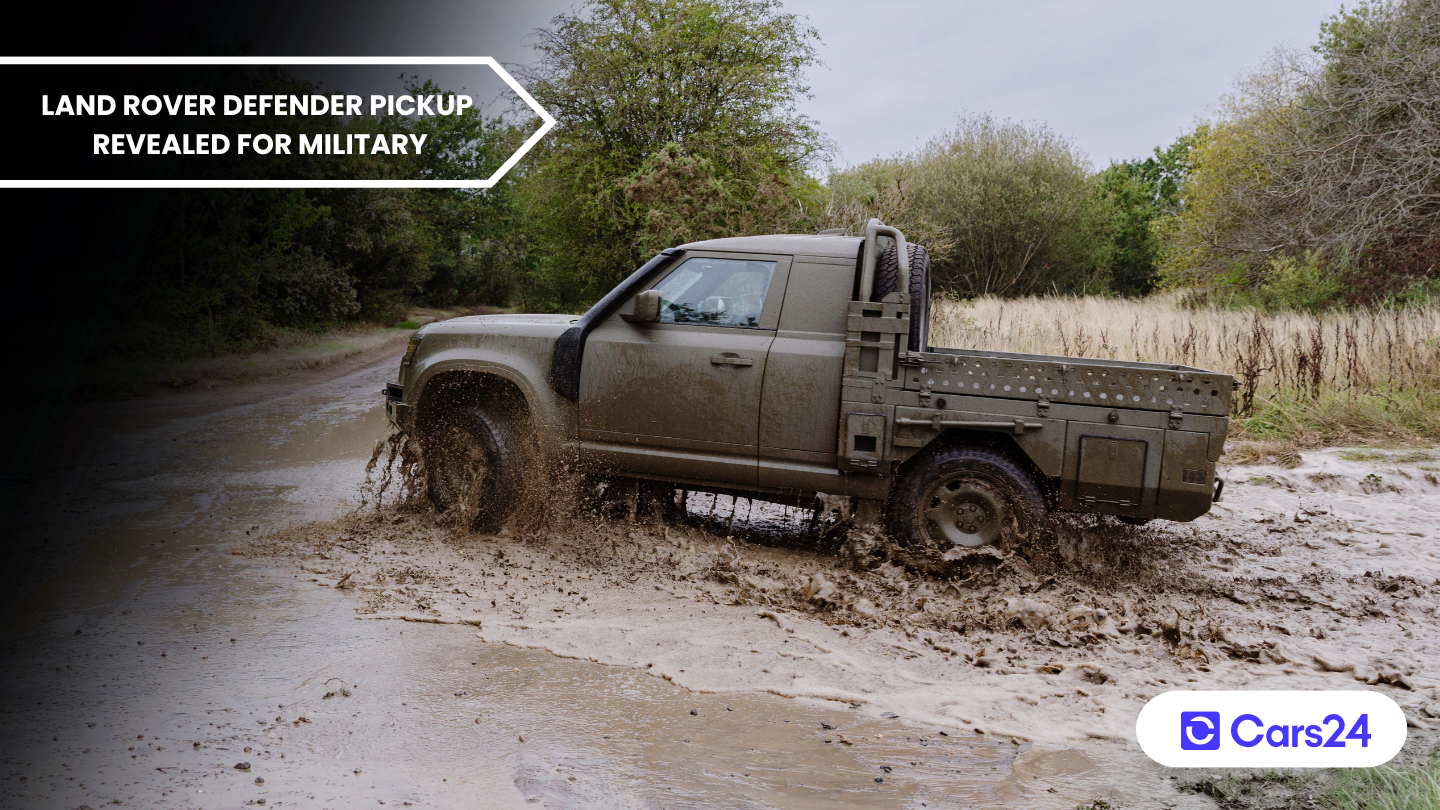
Land Rover has given the world its first proper look at a Defender pickup, though it’s not one Australians will be able to order from their local dealer any time soon. Jaguar Land Rover (JLR) has revealed three new military-spec versions of its current-generation Defender, badged Wolf Series II, including a single-cab pickup called the Defender Utility Vehicle (UV). It’s the first pickup body style built on the current L663 Defender platform since the model launched in 2020, but it’s destined for army depots rather than showrooms.
If you’ve been following rumours of a civilian Defender pickup being developed for Stellantis-owned Jeep in North America, don’t get the two mixed up. That’s a separate project entirely. This one is purpose-built for defence organisations, and JLR has been clear it’s not a preview of what everyday buyers might eventually see.
Read more: Stellantis could help JLR build a Defender pickup in the US
Built on the same platform as the SUV
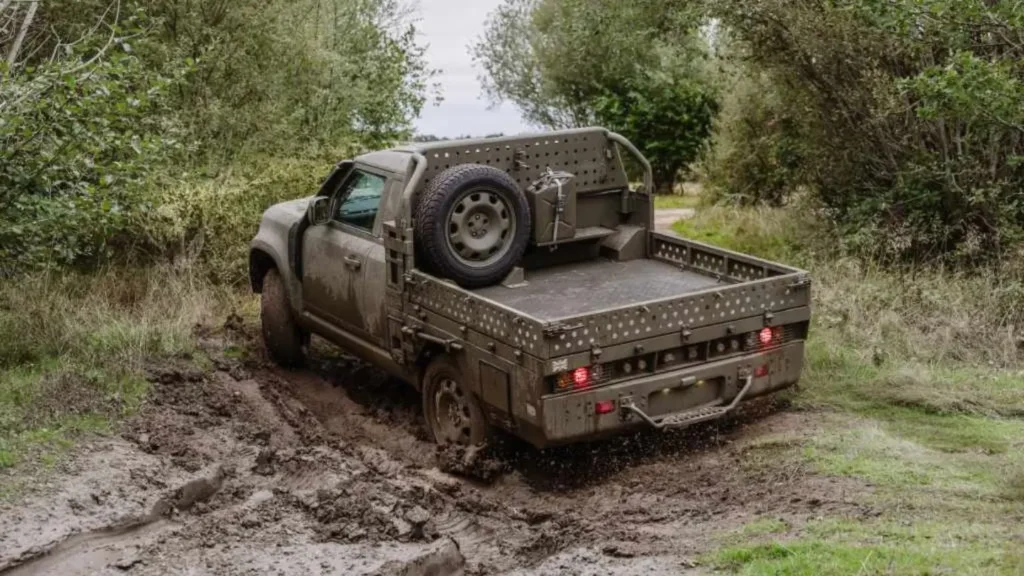
What makes the Defender UV notable from an engineering standpoint is what it doesn’t do: it skips the ladder-frame chassis that most utes and pickups rely on. Instead, it shares the aluminium monocoque D7x platform underpinning every other Defender variant on sale today.
JLR argues this construction method delivers a stiffer body and better payload capacity than traditional body-on-frame trucks. The company claims the platform’s torsional rigidity sits at 29kNm per degree, which it says is three times stiffer than comparable ladder-frame designs. Whether that translates into real-world advantages for military use over the rougher, more repairable simplicity of a body-on-frame ute is something only time and field service will confirm.
Two other variants join the pickup
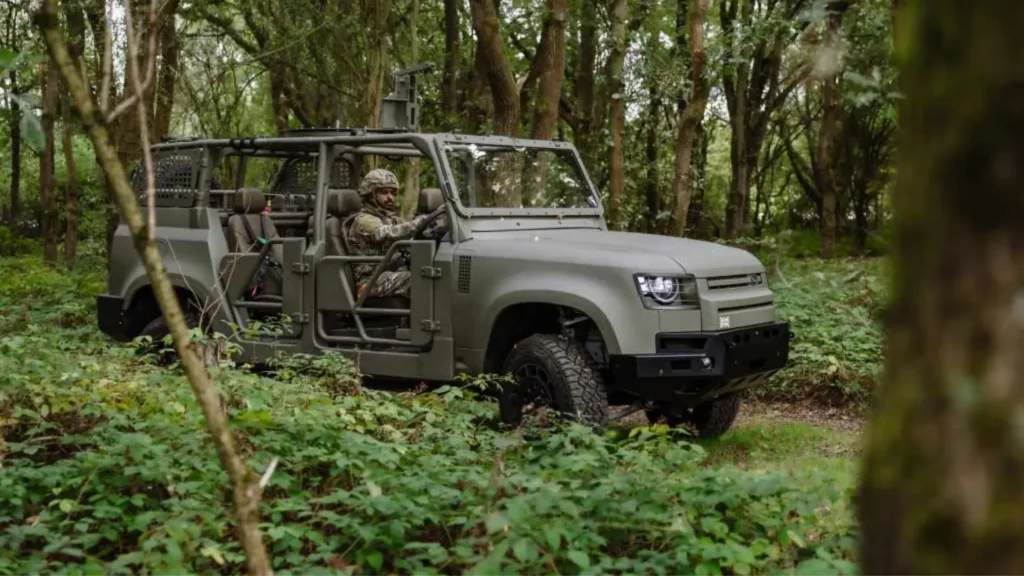
Alongside the UV, JLR also revealed the Tactical Mobility Vehicle (TMV) and the Mono-Tactical Mobility Vehicle (M-TMV). All three were shown off at the British Army’s DVD 2026 defence show at Millbrook Proving Ground in Bedfordshire, tackling mud and water crossings with a snorkel-equipped demonstrator.
JLR says these three are just the start, describing them as the first of many Wolf Series II variants planned for the D7x platform. Technical specifications remain scarce for now, which isn’t unusual at this stage of a military tender process.
A tender bid, not a retail launch
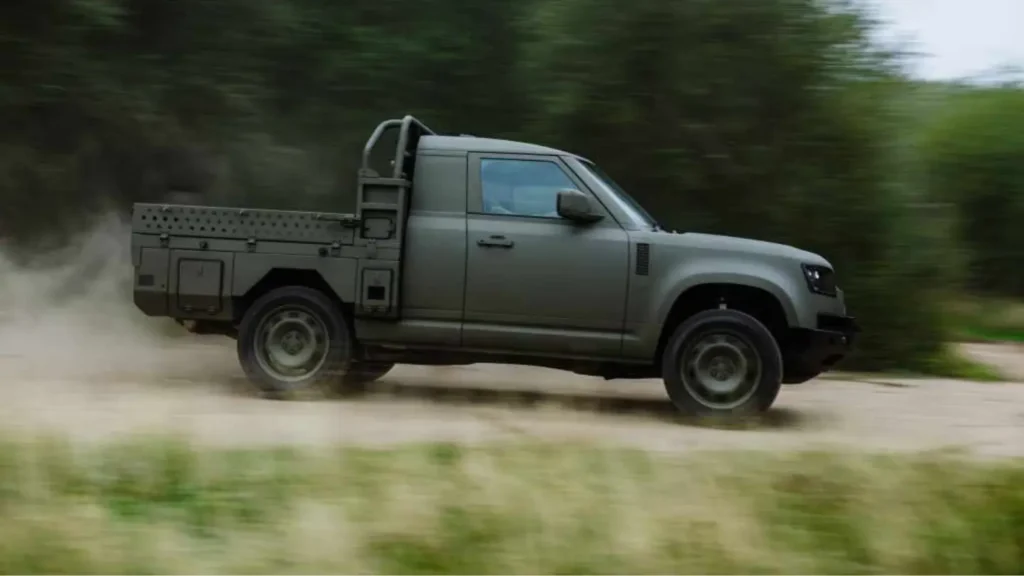
The Wolf Series II range has been built specifically to meet the UK Ministry of Defence’s Light Mobility Vehicle tender requirements. JLR is pitching the vehicles to the UK military as well as other NATO defence organisations, through a newly formed Defender Defence Division.
This isn’t JLR’s first rodeo with military Land Rovers. The original Land Rover Series I served British forces from 1948, and the Wolf name itself dates back decades to earlier military variants. JLR is positioning Wolf Series II as a direct continuation of that history rather than a new direction.
Defender managing director Patrick McGillycuddy said the model’s construction allows the platform to be adapted across a wide range of military roles, while pointing to the vehicle’s UK design and engineering as part of its appeal to defence buyers.
British-built, unlike the civilian range
There’s an interesting local production wrinkle here. While current retail Defenders are all built in Slovakia, JLR has confirmed the Wolf Series II vehicles are designed and engineered in the UK, with British-made engines likely to be diesel units from JLR’s Wolverhampton facility. It’s a point JLR is clearly keen to highlight to a UK government tender panel, tying the bid to domestic manufacturing and “sovereign capability.”
The Wolf Series II range also sits alongside JLR’s existing Defender Expert lineup, which already supplies vehicles to police, fire and border force organisations around the world.
Why does this matter for Australian buyers?
None of this changes anything for anyone shopping a Defender in Australia today, where the model remains the top-selling large luxury SUV over rivals like the BMW X5 and Mercedes-Benz GLE. But it’s a useful reminder that Land Rover has been quietly testing pickup-body engineering on its current platform well before any civilian version reaches production. If a retail Defender pickup does eventually arrive, whatever JLR learns from fielding the UV in military service will likely feed into it, even indirectly.
For now, this remains a defence-industry story rather than a car-buying one. Anyone hoping for a dual-cab Defender ute in local showrooms will need to keep waiting for confirmation out of the Stellantis camp.

Comments
New Comment