




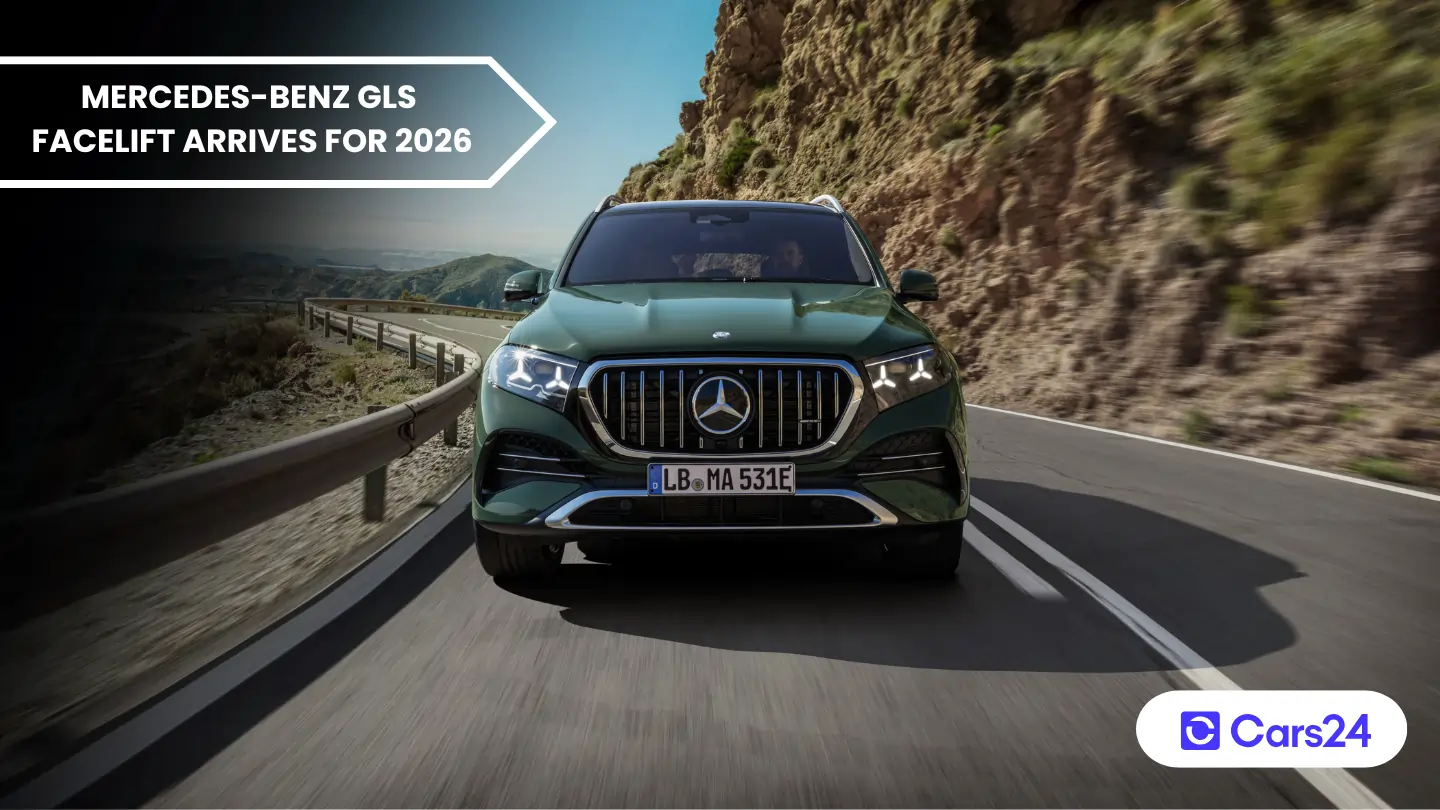
Mercedes-Benz has revealed a comprehensively updated GLS, continuing to position it as the “S-Class of SUVs.” The latest iteration leans heavily into comfort, electrification, and software-driven intelligence, while introducing subtle but meaningful upgrades across performance, design, and in-cabin technology. The result is a flagship SUV that prioritises refinement and long-distance usability over outright reinvention.
Powertrain and performance
| Specification | Mercedes-Benz GLS 580 4MATIC | Mercedes-Benz GLS 450 4MATIC | Mercedes-Benz GLS 350d 4MATIC | Mercedes-Benz GLS 450d 4MATIC |
| Engine type | 4.0L V8 petrol | Inline-6 petrol | Inline-6 diesel | Inline-6 diesel |
| Key updates | Improved response, efficiency, flat-plane crankshaft | Better responsiveness and refinement | Improved emissions and efficiency | Enhanced thermal and friction efficiency |
| Output / Torque | 395 kW / 750 Nm | 560 Nm (+12%) | Not specified | Not specified |
| Notable tech | Redesigned turbo, balance shafts | Electric auxiliary compressor | Electrically heated catalyst | NANOSLIDE tech, advanced piston cooling |
Across the range, all engines now integrate a 48V mild-hybrid system (ISG), enabling smoother start-stop operation, energy recuperation, and additional boost under acceleration. Mercedes-Benz has also focused on improving NVH levels, with added insulation and acoustic treatments contributing to a quieter, more composed driving experience.
Ride and comfort technology
The Mercedes-Benz GLS continues to emphasise ride comfort as a core strength, now enhanced through predictive and adaptive systems.
- Updated AIRMATIC air suspension uses cloud-based data to pre-adjust damping
- Optional E-ACTIVE BODY CONTROL actively manages body movements in real time
- Suspension system analyses driving conditions up to 1,000 times per second
This translates into a noticeably smoother ride, particularly over uneven surfaces, with rear-seat passengers benefiting the most from the improvements.
Advanced driver assistance and computing
At the core of the Mercedes-Benz GLS update is a stronger push toward software-defined capability.
- New MB.DRIVE system powered by MB.OS
- Sensor suite includes:
- 10 exterior cameras
- Up to 5 radar sensors
- 12 ultrasonic sensors
- Key features:
- Adaptive cruise control (DISTRONIC)
- Enhanced parking assist (including diagonal parking)
- Automated reversing assistance
Artificial intelligence processes real-time data from the sensor network, enabling more precise situational awareness. Over-the-air updates ensure the system remains current over time, aligning the GLS with modern software lifecycle expectations.
Interior and technology
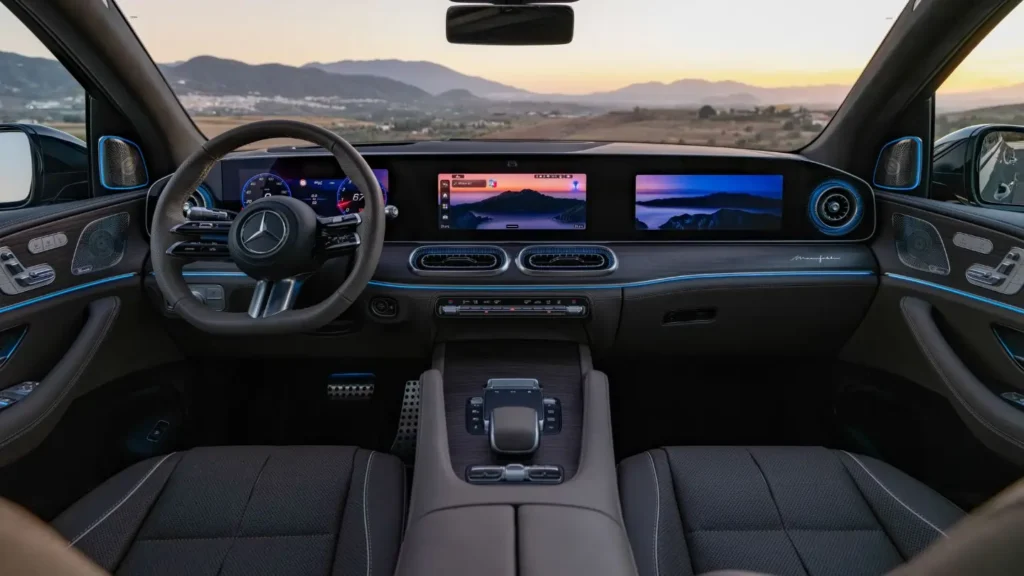
Inside, the Mercedes-Benz GLS adopts a more digital-first layout while maintaining a luxury-focused ambience. The MBUX Superscreen, now standard, stretches across the dashboard as a unified glass surface housing three 12.3-inch displays. This is paired with an AI-powered virtual assistant capable of handling more complex, multi-step interactions.
Rear passengers receive increased attention, with dual 11.6-inch displays, improved control interfaces, and optional productivity features such as video conferencing. Navigation integrates Google Maps data with Mercedes-Benz’s interface, while additional functions like in-car payments and app-based services further extend the digital ecosystem.
Design updates
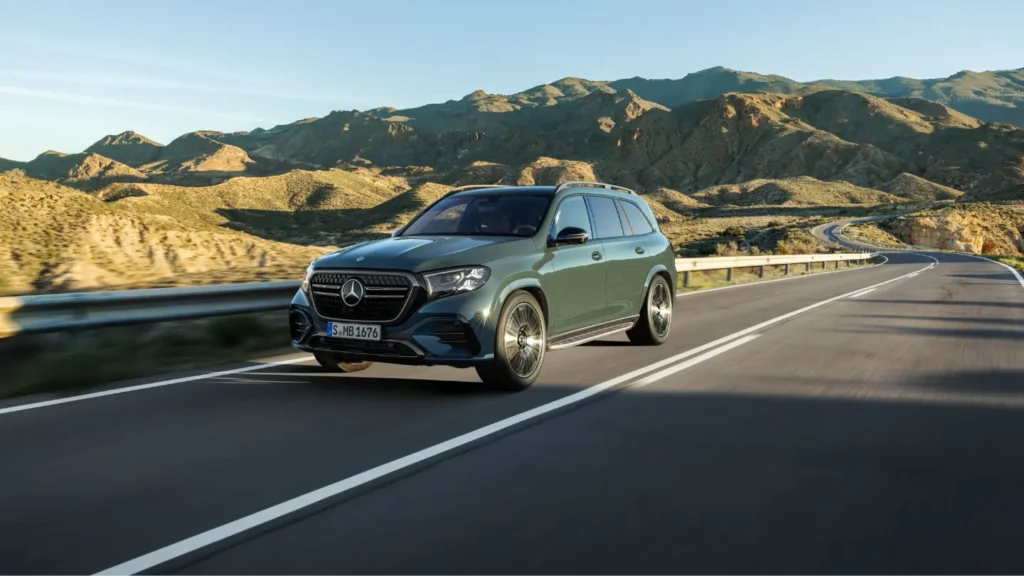
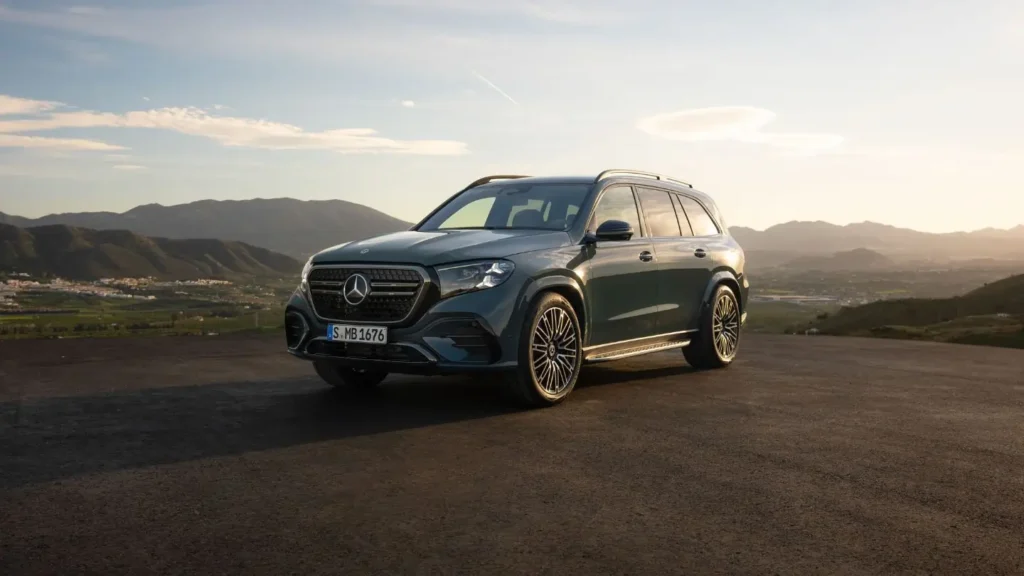
Externally, the changes are evolutionary but deliberate. The GLS adopts a more upright stance with a larger chrome-heavy grille and contour lighting, reinforcing its road presence. The return of the upright bonnet-mounted star, optionally illuminated in some markets, ties the SUV more closely to the S-Class design language.
Lighting technology has also been upgraded, with the latest DIGITAL LIGHT system offering a wider illumination field and improved efficiency. Subtle revisions to bumpers, wheels, and paint finishes round out the visual updates.
Space and practicality
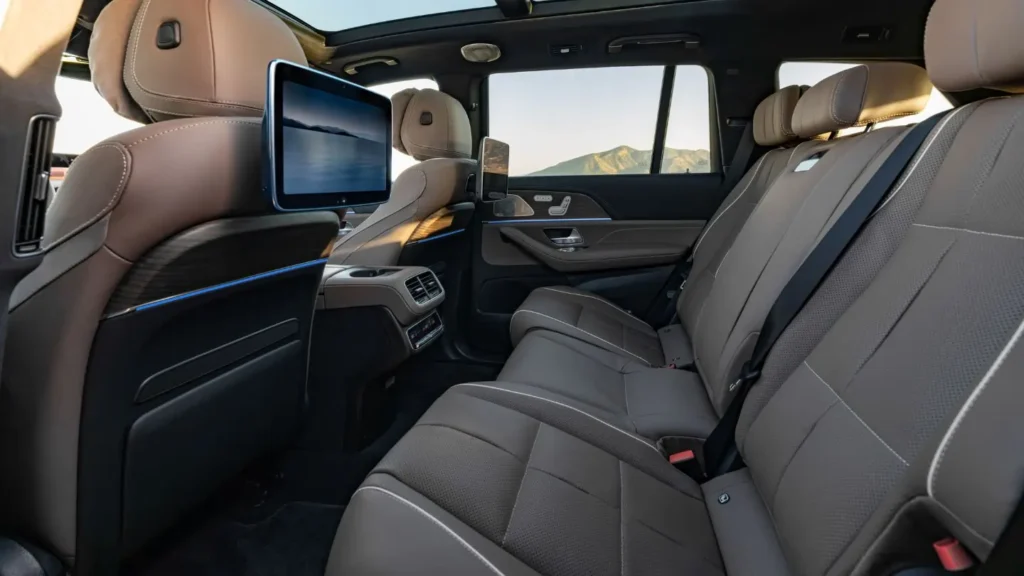
The Mercedes-Benz GLS remains one of the most spacious offerings in its segment, retaining its focus on usability alongside luxury.
- Seven seats as standard with full electric adjustment
- Third row accommodates passengers up to 1.94 metres tall
- Boot capacity extends up to 2,400 litres
- Optional five-zone climate control enhances comfort across all rows
Access and flexibility have also been improved through easier seat folding and entry systems.
Rear-seat luxury focus
Mercedes-Benz has further strengthened the GLS’s rear-seat proposition, particularly for chauffeur-driven use cases.
- Rear Comfort Package Plus adds:
- Massage seats
- Extended climate functions
- Wireless charging and enhanced controls
- ENERGIZING COMFORT programs offer tailored wellness modes
- Improved seat ventilation and new vibration-based massage functions enhance long-distance comfort
Bottom line
The updated Mercedes-Benz GLS does not attempt to redefine the segment but instead refines its existing formula with a clear focus on comfort, efficiency, and digital integration. Powertrain improvements bring incremental gains in responsiveness and emissions readiness, while suspension upgrades meaningfully enhance ride quality, especially for rear occupants. At the same time, the introduction of MB.OS and expanded AI capabilities signals a shift toward a more software-centric ownership experience. Combined with subtle design updates and a stronger emphasis on rear-seat luxury, the GLS continues to position itself as a flagship SUV that prioritises effortless travel, long-distance comfort, and technological longevity over dramatic change.

Comments
New Comment