




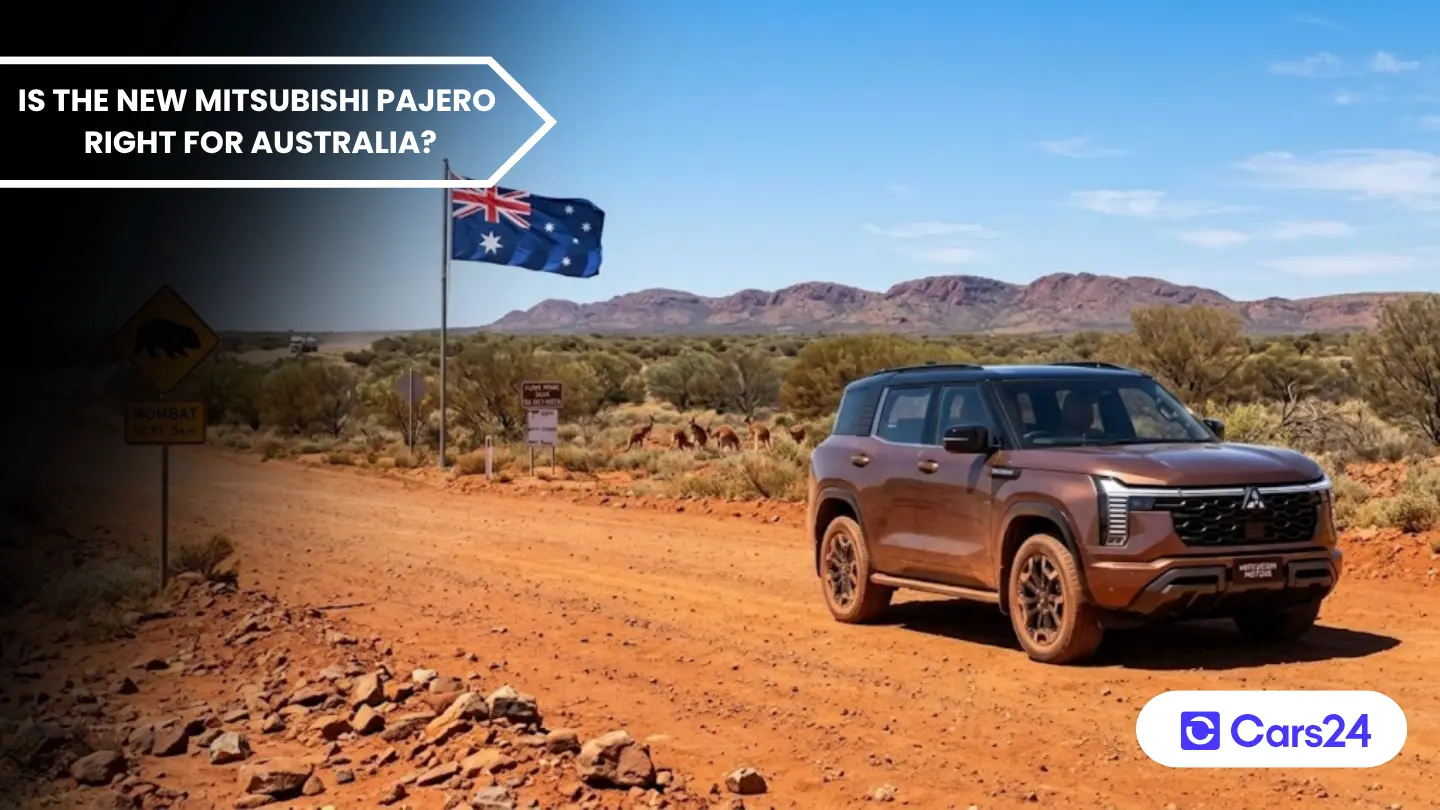
Mitsubishi finally pulled the covers off the new Pajero on 2nd September, and honestly, it’s about time. Five years is a long stretch to leave a nameplate this important on the shelf, especially one that’s clocked up more kilometres on Australian dirt than almost anything else in Mitsubishi’s history.
But here’s the thing that actually gets me excited: this isn’t just Pajero the badge coming back. It’s Pajero the idea coming back, and that idea suits this country a lot better than what it’s replacing.
The Pajero is finally built for Australia’s tough stuff
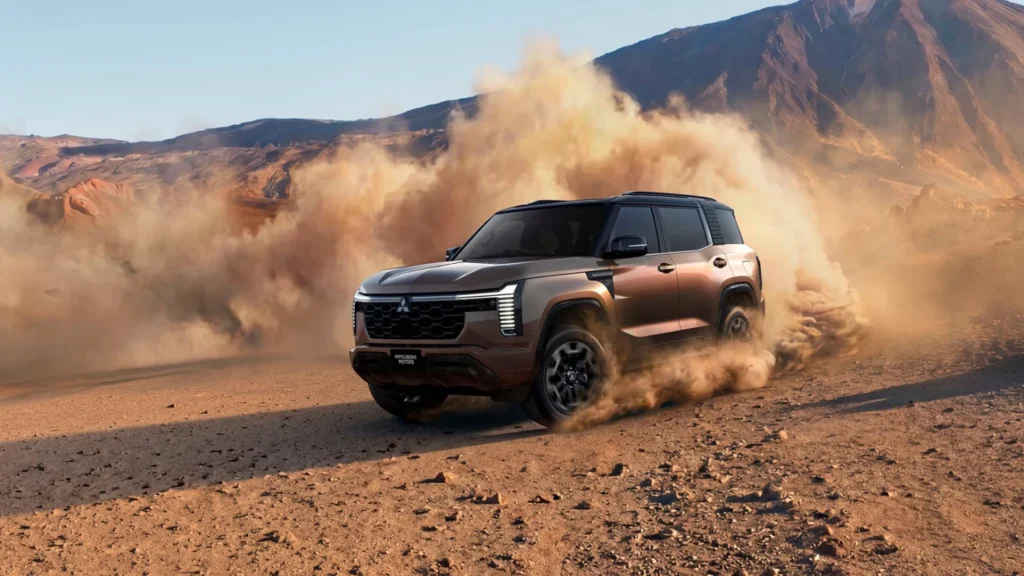
The biggest change is underneath. The previous-generation Pajero used a monocoque construction, while the new model moved to a ladder-frame platform derived from the Triton. Mitsubishi says the chassis has been substantially reworked, with only parts of the front structure shared with the ute. It also gets a five-link rear suspension rather than the Triton’s leaf springs.
That distinction matters. Australian buyers who spend time towing caravans, driving corrugated outback roads or heading deep into the bush tend to gravitate towards vehicles such as the Toyota Prado, Ford Everest and Isuzu MU-X precisely because they are designed around that kind of use.
The new Pajero now plays in the same space. It has 230mm of ground clearance, a 30.4-degree approach angle and 25.8-degree departure angle. Mitsubishi has also confirmed low-range gearing and Super Select 4WD-II.
Diesel power still makes sense
There is another decision that could work particularly well in Australia: Mitsubishi has stuck with diesel. The new Pajero uses a 2.4-litre twin-turbo four-cylinder diesel producing 150kW and 480Nm, paired with a new eight-speed automatic transmission.
A diesel might seem like an odd choice when so much of the industry is moving towards hybrids and EVs. But Australia’s large SUV market isn’t necessarily ready to abandon diesel. For buyers towing a caravan across long distances or travelling hundreds of kilometres between fuel stops, the combination of strong low-end torque and established refuelling infrastructure remains useful.
Mitsubishi also says the new Pajero will offer 3.5-tonne braked towing, putting it directly into the territory Australian buyers expect from serious large SUVs.
Super Select is one of its biggest advantages
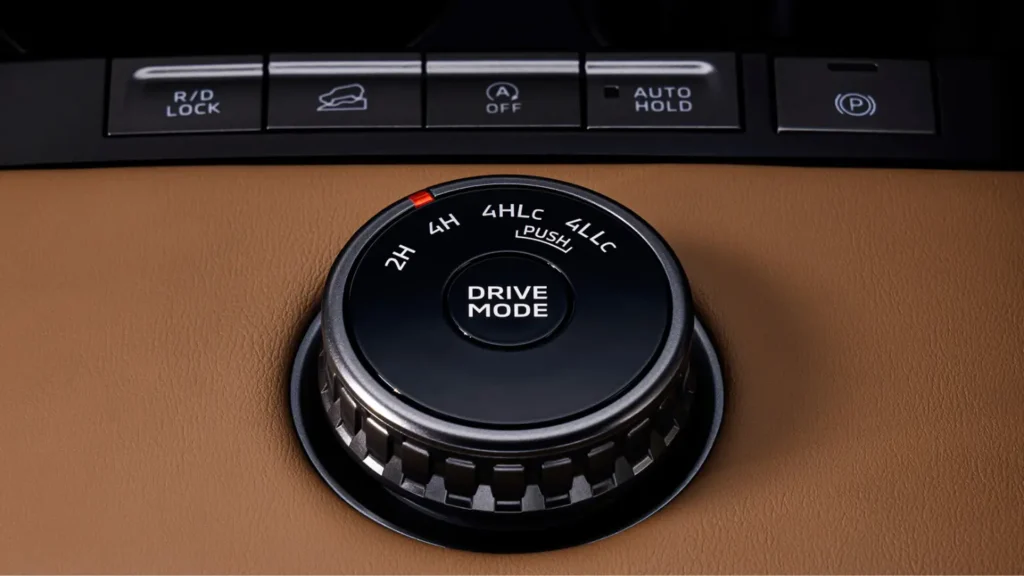
The Mitsubishi Pajero’s four-wheel-drive system could be even more important than its engine. Its Super Select 4WD-II system provides 2H, 4H, 4HLc and 4LLc modes, allowing the driver to switch between rear-wheel drive, full-time four-wheel drive and locked-centre-differential modes with low range.
That’s particularly useful in Australia because conditions can change dramatically within the same trip. You might spend the morning cruising on the highway, hit a gravel road after lunch and then encounter mud, sand or rocks later in the day.
The Pajero’s seven terrain modes, including gravel, snow, mud, sand and rock, are designed to make that transition easier for less experienced off-road drivers too.
It hasn’t forgotten the family
Making a serious off-roader is relatively easy. Making one that your family actually wants to spend six hours travelling in is harder. That’s where the new Pajero could have an advantage. It has seven seats, with the third row getting its own air vents and USB-C ports. The second row can slide by 150mm, while higher grades get features such as heated and ventilated front seats, three-zone climate control and acoustic glass.
Mitsubishi has also moved the Pajero noticeably upmarket, with displays of up to 14.3 inches, a 360-degree camera, wireless smartphone connectivity and a 12-speaker Yamaha audio system available. That is important because Australian buyers don’t necessarily want a bare-bones bush machine. They want Prado-level versatility without having to compromise on everyday comfort.
The new Pajero has the right rivals
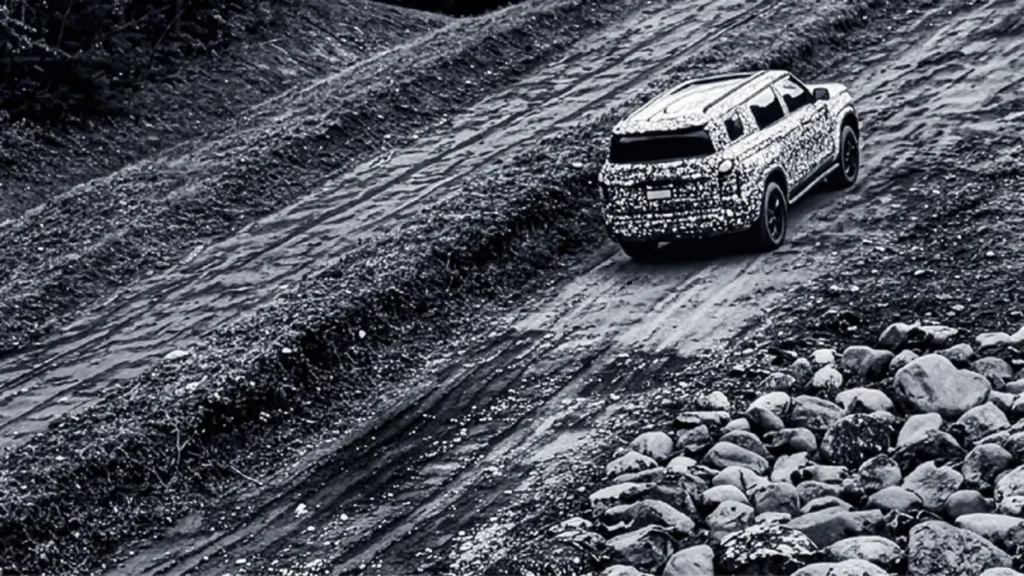
Perhaps the biggest reason the Pajero makes sense for Australia is the market it is entering. The large SUV segment is already dominated by vehicles such as the Toyota Prado and Ford Everest, while the Isuzu MU-X has established itself as another popular ute-based family SUV.
The new Pajero now has the fundamental ingredients to compete with all three. It has a ladder frame, diesel power, seven seats, low range, serious four-wheel-drive hardware and 3.5-tonne towing capability. But unlike some of its competitors, it also carries one of the most recognisable names in Australian off-road history.
Mitsubishi has finally understood what the Pajero needs to be
The old Pajero was already capable, but the new model appears to have a much clearer purpose. It isn’t trying to be an Outlander with a bigger body. It isn’t simply a Triton with an enclosed tray, either.
Mitsubishi has taken the Triton’s proven foundations and substantially re-engineered them for a large family SUV, adding a more sophisticated suspension setup and a more premium cabin.
For Australia, that is probably the right direction. The country doesn’t need another soft-roading seven-seater. It already has plenty of those. What it does need is another genuine alternative to the Prado and Everest, something that can handle a family commute just as comfortably as a long-distance towing trip or a weekend on a remote track.
The new Pajero appears to be exactly that. Pricing and Australian specifications are still to be confirmed, so the final verdict will depend heavily on where Mitsubishi positions it in the market. But if the price is competitive, the returning Pajero could be one of the more logical new SUVs for Australian buyers in 2026. And for a nameplate that has spent almost five years away, that’s a much better reason to come back than simply trading on nostalgia.

Comments
New Comment