




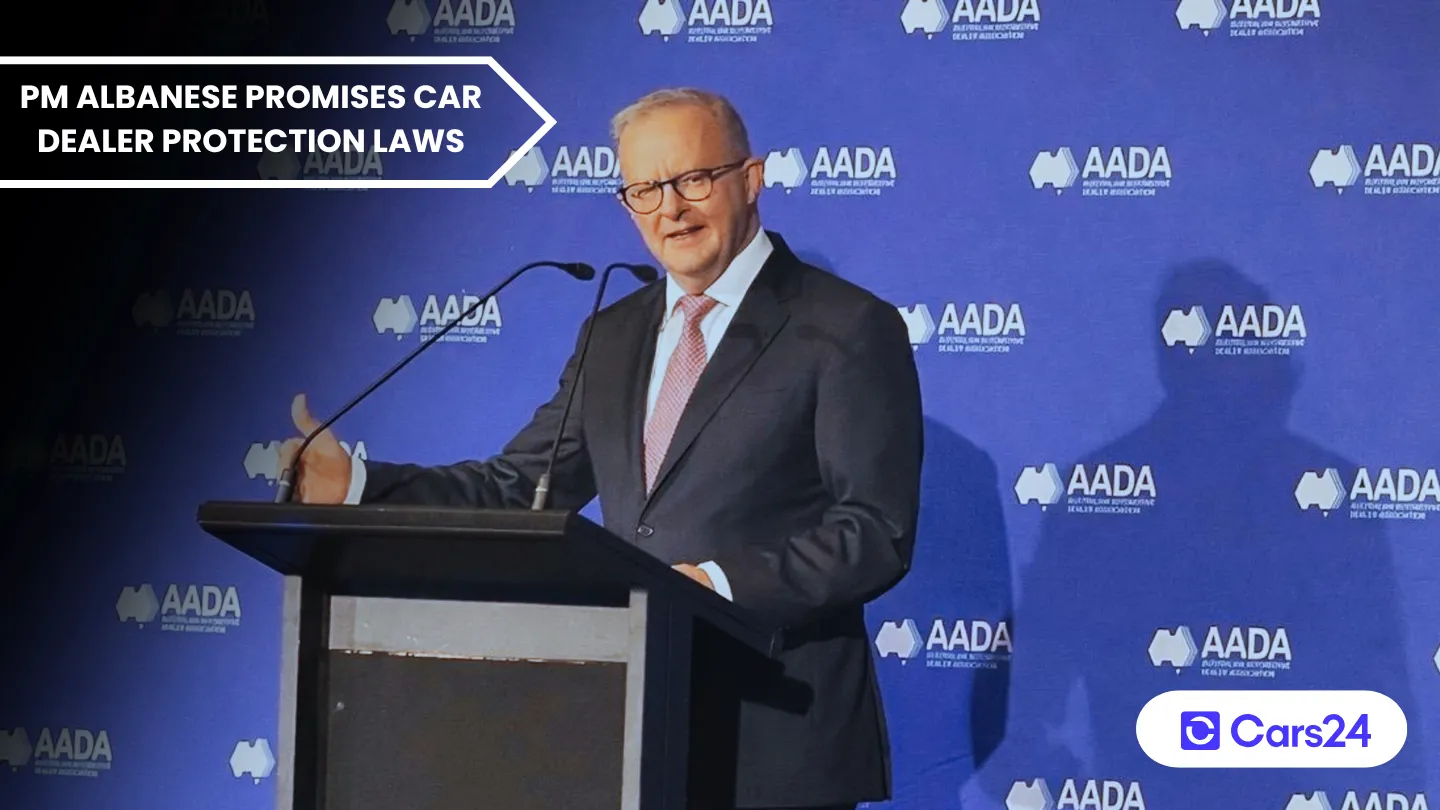
The Australian Government, through Prime Minister Anthony Albanese, has firmly committed to introducing new protections for franchised car dealers to address a significant power imbalance between them and global car makers.
Albanese set a clearer execution timeline while addressing the Australian Automotive Dealer Association (AADA). The announcement comes one year after the Labour Party’s first pledged reforms, as the AADA released its 2026 Dealernomics report.
These measures aim to ensure fair trading practices and protect the local businesses, jobs, and communities that rely on a healthy automotive retail sector.
From consultation to action
Speaking to industry leaders, Prime Minister Anthony Albanese made it clear the government intends to move quickly:
- Focus begins with tackling unfair trading practices
- Next steps to happen in “weeks, not months”
- Goal is to finalise legislation by 2026
He emphasised that protecting consumers starts with protecting dealers, signalling a broader reform agenda.
Industry still waiting for execution
The AADA has spent the past year pushing for stronger protections against unfair contract terms and a formal ban on unfair trading practices affecting franchise dealers.
AADA CEO James Voortman said the industry is still waiting for those commitments to materialise. He stressed that the issue goes beyond dealer profits. Pressure on dealers could lead to job losses and higher car retail prices, and there could be less access to services in regional areas.
The economics behind car dealerships
Despite the size of Australia’s automotive retail sector, profit margins are tight. According to the AADA’s 2026 Dealernomics report:
- 3,868 dealerships operate nationwide, and they
- Employ 64,045 staff and 7,508 apprentices
- Generate $91.3 billion in sales turnover
- Contribute $21.5 billion to the economy
- Pay $8.2 billion in taxes and duties
Profit Breakdown (for a typical $100M dealership)
- Gross profit: $14.0 million
- Finance & insurance: $1.65 million
- Other income: $2.65 million
- Net profit: $3.5 million (3.5%)
Key cost pressures
- Employee costs: 56% of gross profit
- Floorplan interest: 8%
- Rent: 13%
Where dealers actually make money
While vehicle sales dominate revenue, they don’t drive profits. About 86% of turnover comes from new car sales, used car retail and wholesale. But 47% of the gross profit comes from parts and servicing. This imbalance explains why dealers are highly sensitive to:
- Warranty reimbursement rates
- Aggressive manufacturer audit powers
- Contract clauses favouring automakers
- Termination rights
- Disputes over cost responsibility
Growing competition, flat profits
According to Voortman, the market is becoming more crowded, but not more profitable. 28 new car brands (mostly Chinese) have entered Australia in the past five years, and dealer profitability has not increased. He warned that without reform, dealerships could close and local jobs could be lost.
Market pressures adding to the strain
The Dealernomics report also highlights broader market challenges facing dealers:
- 65% of buyers plan to keep their current car longer due to cost-of-living pressures
- 65% still prefer SUVs or utes for their next purchase
- Only 38% are open to buying an EV next
- 53% believe EVs are still too expensive
These factors point to a market dealing with weaker consumer confidence, slower EV adoption than expected and increasing complexity and competition.
Tackling the power imbalance
Albanese directly addressed dealer concerns about negotiating with global car brands. He stated dealers should not lose money for doing the right thing by customers, and the reforms aim to correct a power imbalance with multinational manufacturers.
In a key line, he said, “Manufacturers cannot treat dealers in ways that would be illegal if directed at consumers.”
A broader “fairness” reform
The government is positioning this policy as more than industry support. Instead, it’s framed as a fairness reform for small businesses and a measure that also protects consumers and local communities.
The AADA reinforced this argument, noting that dealer protections help maintain local service networks, warranty support systems, regional access to dealerships and long-term automotive infrastructure.
What this means going forward
While these broader pressures don’t directly impact the legislation, they raise the stakes. For the first time since the original commitment, the Prime Minister has publicly set a timeline and has committed to delivering reforms in 2026. For dealers, this signals that long-awaited protections may finally move from promise to policy.

Comments
New Comment