




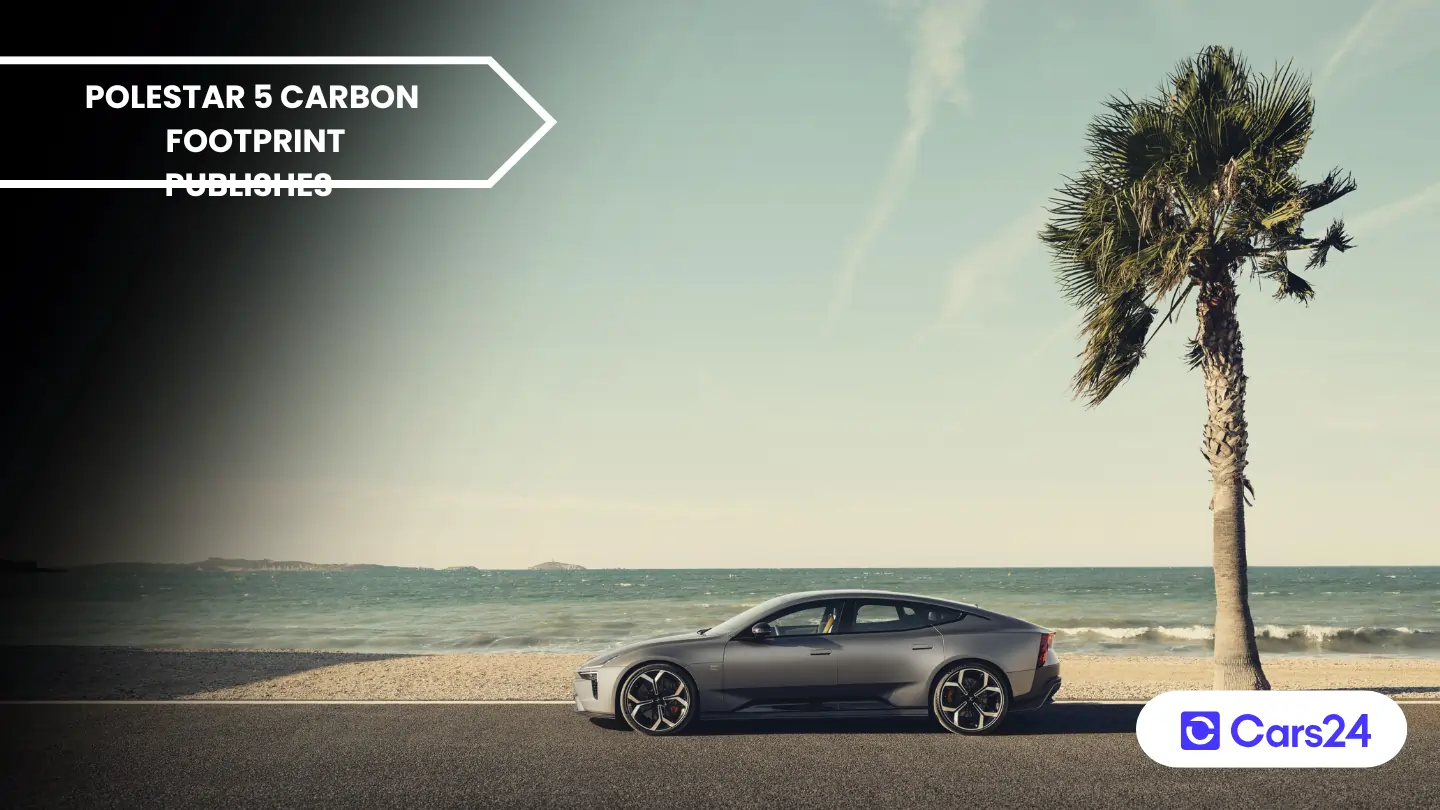
Polestar has released the full carbon footprint of the Polestar 5, continuing its strategy of publishing detailed climate data for every vehicle in its line-up.
The Swedish electric vehicle manufacturer said the four-door GT has a cradle-to-gate carbon footprint of 23.8 tonnes of CO₂ equivalent (tCO₂e). This figure includes emissions generated from raw material extraction, manufacturing, and delivery of the car to customers.
Polestar says it remains the first automotive manufacturer to publish full Life Cycle Assessments (LCAs) across its entire range, a move aimed at increasing transparency about the environmental impact of vehicle production.
Carbon footprint and manufacturing emissions
The company said understanding the emissions generated during manufacturing is essential to reducing the overall climate impact of cars.
According to Polestar, materials used in vehicle production contribute significantly to total emissions, with aluminium being one of the most carbon-intensive materials in modern car manufacturing.
For the Polestar 5:
- 13% of the aluminium used is recycled
- 83% comes from smelters powered by renewable electricity
This sourcing strategy helps avoid more than 14 tCO₂e per vehicle compared with conventional aluminium production methods.
Fredrika Klarén, Head of Sustainability at Polestar, said publishing the data helps highlight where emissions occur in the production process.
“You cannot reduce what you don’t measure. Making the carbon footprint of a car visible helps focus the industry on where emissions occur,” she said.
Renewable electricity used in production
Polestar says renewable electricity is used at facilities involved in producing the Polestar 5, including locations that manufacture battery cell modules and other key battery materials.
Using renewable energy across the supply chain is intended to reduce emissions linked to vehicle assembly and battery production, which are typically among the largest contributors to a car’s manufacturing footprint.
Sustainable materials in the interior
The Polestar 5 also uses several materials designed to lower environmental impact.
The interior includes natural fibre composites developed with Bcomp, using flax-based ampliTex™. According to Polestar, this material:
- Uses 50% less fossil-based material
- Can be up to 40% lighter than conventional plastic composites
Other recycled materials used in the cabin include:
- Econyl carpets made from discarded fishing nets
- Recycled PET textiles
The front luggage compartment also uses a mono-material recycled PET construction, designed to make recycling easier at the end of the vehicle’s life cycle.
Customers who choose leather upholstery can opt for chrome-free Nappa leather supplied by Bridge of Weir, which Polestar says is sourced as a by-product of the food industry.
Performance and charging
Despite its focus on sustainability, the Polestar 5 is positioned as a high-performance electric GT.
Key specifications include:
| Specification | Details |
| Power | Up to 650 kW (884 hp) |
| Torque | 1,015 Nm |
| Driving range | Up to 678 km (WLTP) |
| Electrical architecture | 800-volt system |
| DC fast charging | Up to 350 kW |
| Charging time | 10–80% in around 22 minutes (optimal conditions) |
Availability
The Polestar 5 is now available to order through the company’s website, with deliveries expected to follow once production ramps up.
Comments
New Comment