




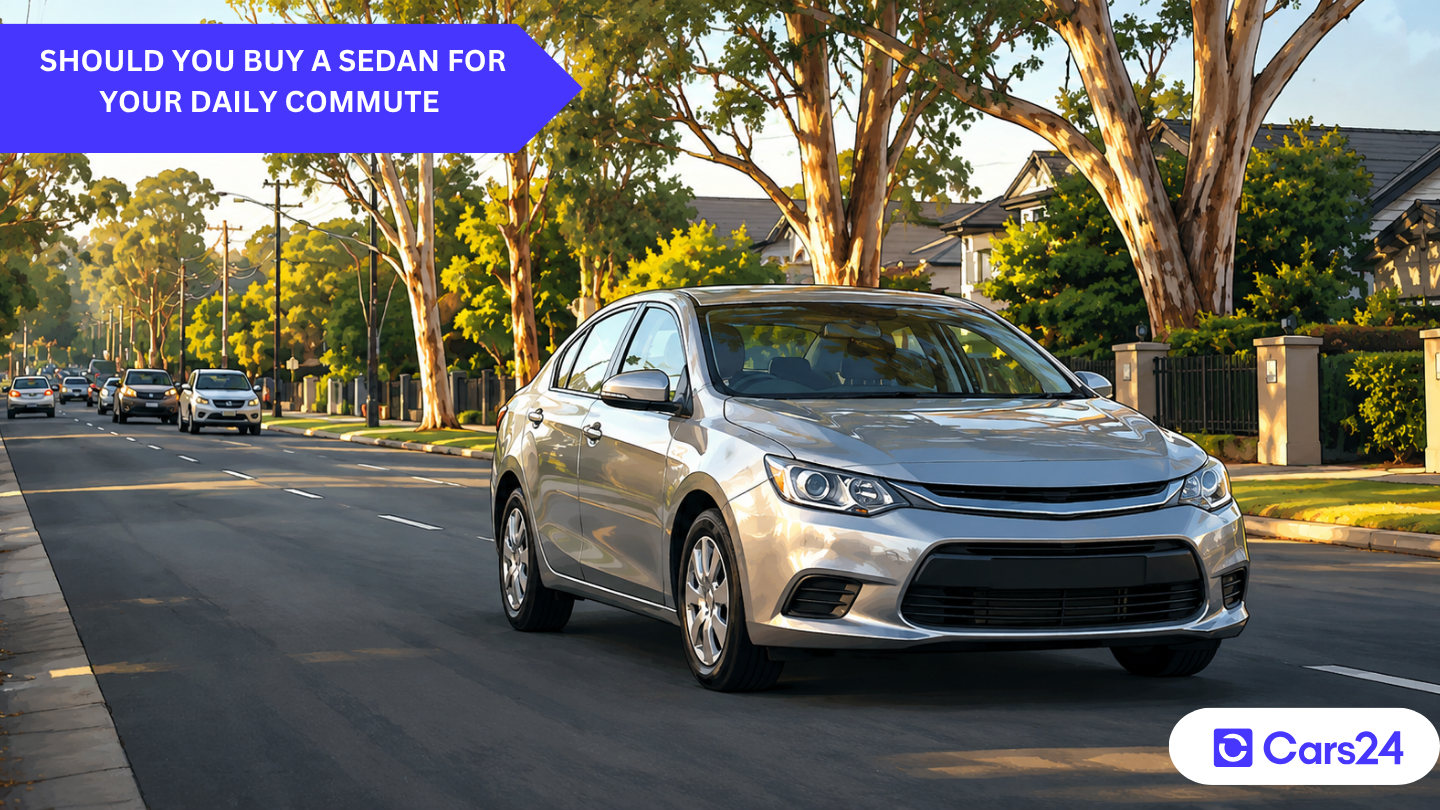
Sedans are not exactly having a loud moment in Australia. SUVs are everywhere, Utes still have their loyal fan base and Hatchbacks remain the easy city answer. Somewhere between all of that, the sedan has gone from being the default family car to the one people pause and reconsider.
If you are looking for the best car for daily commute use, a sedan deserves a proper place on your shortlist. Not because it is the trendiest option or not because SUVs are wrong. But because commuting is not usually about looking adventurous, it is about getting through the week with comfort, predictability and reasonable running costs.
Most weekday driving is fairly simple. You get to work, sit in traffic, find parking, do the school run, stop for groceries and spend most of your time as a car on a road rather than a weekend lifestyle fantasy. That is where a used sedan still earns its keep.
Australia’s new-car market has clearly moved toward SUVs. FCAI reported that SUVs made up 60.7% of Australian new-vehicle sales in 2025, while passenger vehicles made up 13.0%. April 2026 market reporting also showed SUVs at 66.1% of new-vehicle sales, so the direction is clear. Yes, sedans have lost the popularity contest. But popularity and practicality are not the same thing.
Is a sedan still the best car for daily commute use?

A sedan can be one of the best cars for daily commute use if most of your driving is on sealed city, suburban or highway roads, and you usually travel alone or with one passenger. It makes sense if you want something settled, comfortable and easy to live with, without automatically stepping up to SUV size. You still get a proper boot, a lower driving position, good separation between the cabin and luggage, and a road feel that often works well for longer commutes.
It may not be the right fit if your week regularly involves rough regional roads, three child seats, large dogs, prams, camping gear, work tools, towing or a strong preference for sitting higher in traffic. That is the honest version. A sedan is not the universal answer, because no car is. But if your normal week looks like work runs, school pick-ups, shopping, gym bags, office parking and the occasional airport trip, a used sedan can still do the job beautifully.
Why are Australians buying fewer sedans?
Australians are buying fewer sedans because the everyday family car has changed shape. For many buyers, the SUV now feels like the safer, easier and more flexible choice. The higher seating position helps in traffic, the boot opening is easier to load, and getting kids, prams or weekend gear in and out can feel less awkward. For families, older drivers or anyone who likes a taller driving position, that appeal is easy to understand.
But those benefits matter most when you use them often. If your week is mainly office runs, school drop-offs, supermarket stops, suburban roads and the occasional highway drive, you may not need the extra height or bulk every day.
Australia is still a car-reliant country. ABS Census data shows 52.7% of the Australian workforce drove to work by car only on Census day in 2021, making the car the most common commute mode across every state and territory. At the same time, the way people work has changed. ABS says 36% of employed people usually worked from home in August 2025, which means many buyers are now choosing a car for hybrid weeks, mixed errands and shorter daily routines rather than a full five-day office commute.
For that kind of driving, the best commuter car is not always the biggest one. It is the car that makes your regular week easier, cheaper and more comfortable. And for plenty of Australians, that still leaves room for a sedan.
What makes a sedan practical for everyday Australian driving?
A sedan fits this routine because commuting is less about capability and more about comfort, consistency and cost. You want a car that feels steady in traffic, comfortable on the freeway, manageable in parking spots and sensible at the fuel pump. You want enough space for bags, groceries and luggage, but you may not need the height, bulk or cargo opening of an SUV.
Fuel cost also matters. ACCC reported that annual average retail petrol prices across Australia’s five largest cities were 179.3 cents per litre in calendar year 2025. That is not a small background cost if you drive regularly across suburbs or commute on longer routes.
Official fuel figures still need common sense. The Australian Automobile Association’s Real-World Testing Program found that 76% of tested petrol, diesel and hybrid vehicles used more fuel in real-world conditions than advertised. That is why no buyer should treat lab fuel numbers as a promise.
Still, efficient sedans and hybrid sedans remain worth considering. Toyota lists the Camry Hybrid at 4.0L/100km in laboratory results, while Hyundai lists the i30 Sedan Hybrid at 3.9L/100km combined. For a daily driver, that matters. A commuter car is not just bought once, rather it is paid for every week through fuel, tyres, servicing, parking and insurance.
Sedan vs SUV for daily commuting
For commuting, the better choice depends on what the car does most of the time.
| Factor | Sedan | SUV |
| Daily office driving | Comfortable, settled and usually less bulky | Comfortable, with a higher seating position |
| Parking | Often easier to place in tighter spaces | Can feel larger, depending on the model |
| Boot use | Good for bags, groceries and luggage | Better for prams, bulky cargo and tall items |
| Family use | Works for small families or occasional rear-seat use | Better for frequent child-seat and cargo loading |
| Fuel and running costs | Can be efficient, especially in hybrid form | Varies widely by size, weight and drivetrain |
| Road feel | Often planted on sealed roads | Higher view, more body height |
| Best fit | Commuters, couples, small families | Families, regional drivers, bulk-cargo users |
An SUV makes sense when you regularly use the height, extra space and flexible loading. A sedan makes sense when your everyday driving does not really need all of that. That is the bit worth pausing on.
Many buyers compare a car against the biggest, busiest day they can imagine: airport runs, bulky shopping, weekend gear, family visits. But your daily driver should first be judged against the week it will actually live through office runs, school drop-offs, parking, traffic, fuel stops and regular suburban roads.
For everyday commuting, the smarter choice is not always the car that can do more. It is the car that does your routine better.
Are used sedans good value in Australia right now?
Used sedans can be good value because the market has moved so strongly toward SUVs. Australia’s used-car market has also become more balanced after the volatility of earlier years.
AADA reported that dealer sales accounted for 48.6% of the used-car market in 2025, up from 39.1% in 2024, suggesting more buyers were looking for certainty through dealer-led channels. AADA’s mid-year automotive insights also noted that SUVs continued to support used-market growth, while demand for passenger vehicles showed a noticeable decline. That does not mean every sedan is cheap or that every SUV is overpriced, but it does show why used sedans are worth a closer look if your priority is everyday commuting.
But it does mean buyers who are not emotionally locked into SUVs can compare more calmly. If fewer people are chasing a body style, a practical buyer may find a stronger match in the sedan aisle.
This is where used sedan cars for sale become interesting. You are often looking at cars that still offer comfort, boot space, safety features and fuel efficiency, but without the same demand heat attached to popular SUV segments. For a commute-first buyer, that makes used sedans worth looking at before defaulting to an SUV.
Which sedan type suits your daily commute?
The right sedan depends on how and where you drive. Instead of looking for one “best” sedan, think in practical groups.
| Sedan type | Best for | Examples to compare |
| Compact sedan | First-car buyers, solo commuters, city-suburban driving | Toyota Corolla Sedan, Hyundai i30 Sedan, Kia Cerato Sedan, Mazda 3 Sedan |
| Mid-size sedan | Longer commutes, highway drives, more rear-seat comfort | Toyota Camry, Mazda 6, Hyundai Sonata |
| Hybrid sedan | Fuel-conscious commuters and stop-start traffic | Toyota Camry Hybrid, Toyota Corolla Sedan Hybrid, Hyundai i30 Sedan Hybrid |
| Larger used sedan | Comfort-focused buyers who do not need SUV height | Selected Camry, Mazda 6 and older large sedan options |
A compact sedan is often enough for city and suburban driving. It is easier to live with, usually more affordable than larger cars and still gives you a boot.
A mid-size sedan makes more sense if your commute includes longer freeway stretches or if rear-seat comfort matters. A hybrid sedan deserves attention if your weekly kilometres are high and fuel spend stings.
A reliable sedan car is not reliable because a listing says it is. It becomes a reliable sedan car when the service history, inspection, odometer, PPSR and condition all stack up.
What should you check before buying a used sedan?
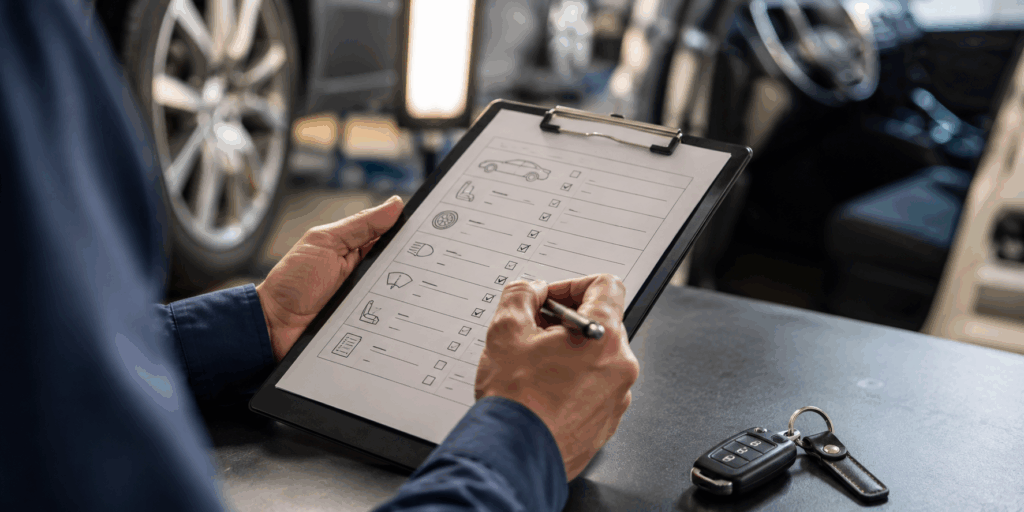
Before you choose a used sedan, look beyond the badge, price and kilometres. The real question is whether that specific car has been properly checked. A sedan can be a smart commuter buy, but only when the PPSR, service history, odometer, VIN, tyres, brakes, suspension, safety features and inspection report all line up.
Start with the PPSR, because it gives you a clearer picture of the car’s background. A PPSR search can show whether a vehicle is recorded as free from debt and may also show if it has been stolen or written off. After that, move to the physical checks. NSW Government’s used vehicle inspection checklist recommends checking details such as the engine number, VIN, build date, compliance plate, tyres and oil leaks, along with getting the vehicle inspected by a qualified mechanic at a licensed repairer.
Safety should not be an afterthought either, especially if this car will handle your daily commute. ANCAP says structural protection and active crash-avoidance ability are essential to a five-star safety rating, among other criteria. For a commuter sedan, look for the strongest safety rating available for that model year, along with electronic stability control, multiple airbags, a reversing camera, autonomous emergency braking and blind-spot monitoring where available.
When you are comparing second-hand sedans, the better listing is not always the cheapest one. It is the one that gives you fewer doubts before you book the test drive.
How does Cars24 make buying a used sedan easier?
Cars24 helps reduce used-car risk by making inspection, history checks and post-purchase support part of the buying journey.
Cars24’s used-car pages list Edge benefits such as a 30-Day Return Guarantee*, 300-point inspection, car condition report, RWC and PPSR included, 3-month roadside assistance and rego transfer service. Cars24’s used-car page also says certified cars come with a 3-month warranty, test-drive option and other add-on benefits. That matters because most used-car anxiety comes from not knowing what you are missing.
| *Terms and eligibility apply. At the time of writing, Cars24’s return policy says eligible vehicles must be purchased directly from Cars24, returned within 30 calendar days of delivery, driven no more than 1,000 kilometres from delivery, and returned in the same condition with documents, keys and accessories intact. |
With a private listing, you may be judging the car from photos, price, kilometres and a short description. With Cars24, you can compare inspected sedans with clearer condition details, PPSR support and a return window if the car does not suit your life.
That is important for a commuter car because the test is not just how the car looks online. It is how it feels in your real week. Can you park it easily? Does the boot work for groceries? Is the cabin comfortable after 40 minutes in traffic? Does it feel right once the car is actually on the road?
That is where inspection, warranty, roadside assistance and return support help reduce the fear of choosing wrong and become more than features.
What happens after you buy a used sedan from Cars24?
Buying the car is only one part of the decision. With a Cars24 certified car, you also get support for the part that comes after, when the sedan becomes part of your actual routine.
The 30-Day Return Guarantee* gives you time to see how the car fits into everyday life, not just how it feels during a quick test drive. You can understand how it handles morning traffic, whether the boot works for your weekly shop, how easy it is to park in your usual spot, and whether the driving position still feels comfortable after a few real commutes.
Cars24 certified cars also come with warranty and roadside assistance support, which helps make the early ownership period feel more secure. That matters when you are buying a daily driver. This is not a car you use once in a while for a weekend plan. It is the car that gets you to work, home, appointments, school runs, errands and everything in between.
A reliable daily sedan should feel easy to live with even after the excitement of buying it settles. Cars24 helps make that decision feel more considered, supported and less dependent on guesswork.
Final verdict: should you buy a sedan for your daily commute?
Yes, you should consider a sedan for your daily commute if most of your driving is across city, suburban or highway roads and you do not need SUV height, ute toughness or three-row practicality every week. SUVs may have the market momentum in Australia right now, but the best car for daily commute use is not always the one everyone else is buying.
For many Australians, a used sedan still offers a strong mix of comfort, fuel sense, boot space, road manners and value. It works especially well for solo drivers, couples, small families, first-car buyers and anyone who wants a proper everyday car without unnecessary bulk. So, when you are comparing used sedan cars for sale, do not just ask whether sedans are still popular. Ask whether the car suits your actual week.
If the answer is yes, a sedan can still be one of the smartest commuter choices on the road. Ready to compare inspected options? Browse Cars24’s used sedan cars for sale in Australia, or explore used cars in Sydney, Melbourne, Brisbane and Perth if you want to compare options by location.
FAQs
Is a sedan still a good car for daily commuting in Australia?
Yes. A sedan is still a good daily commuter car if most of your driving is on sealed city, suburban or highway roads. It suits drivers who want comfort, boot space, easy road manners and reasonable running costs without needing SUV height or extra cargo flexibility.
What is the best car for daily commute use?
The best car for daily commute use is the one that matches your normal routine. A sedan works well if you usually drive alone or with one passenger, carry moderate luggage and park regularly. An SUV works better if you often carry bulky gear, children, pets or need easier access.
Are used sedans good value in Australia?
Used sedans can offer good value because Australian demand has shifted strongly toward SUVs. Pricing still depends on model, age, kilometres, condition and history, but sedan buyers may find strong commuter options if they compare carefully and avoid buying only on price.
Is a sedan better than an SUV for commuting?
A sedan can be better than an SUV for commuting if you want a lower, calmer and less bulky car for city and highway use. An SUV is better if you regularly need a higher seating position, wider boot opening, easier child-seat access or more cargo flexibility.
What makes a reliable sedan car?
A reliable sedan car has verified service history, consistent odometer readings, a clean PPSR check, strong safety features and a proper inspection report. Reliability should be judged by the individual car’s condition and maintenance record, not only by the badge or model name.
Should I buy a hybrid sedan for commuting?
A hybrid sedan is worth considering if you drive regularly and fuel cost matters. Models such as the Toyota Camry Hybrid and Hyundai i30 Sedan Hybrid have strong official fuel-consumption figures, but real-world fuel use depends on traffic, driving style, load and conditions.
What should I check before buying a used sedan?
Before buying a used sedan, check the PPSR, service history, odometer, VIN, tyres, brakes, suspension, safety rating and inspection report. Also look for clear condition details and warranty support, especially if you are buying online.

Comments
New Comment