




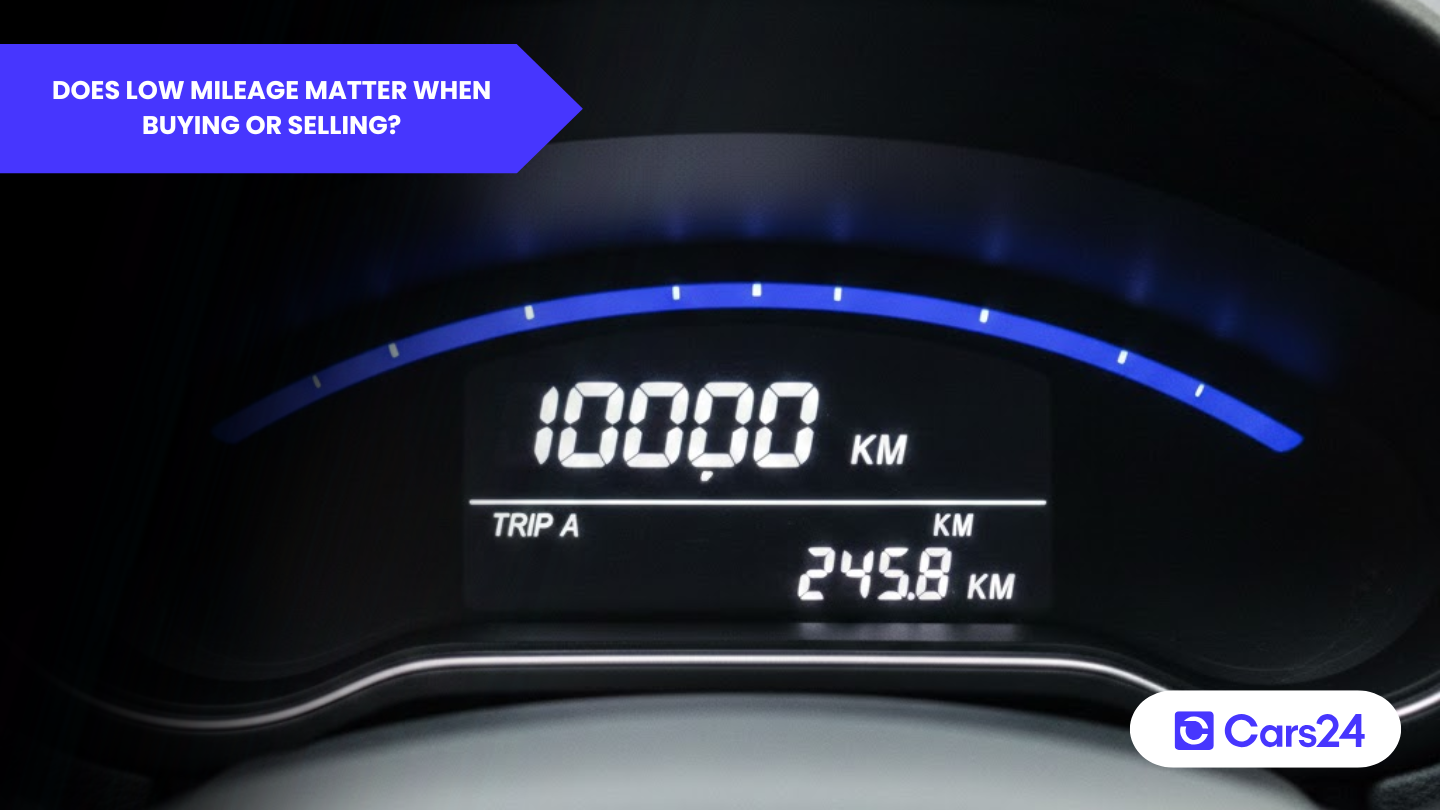
It’s intuitive to go to a car dealer, look at a shiny, sleek used car, and ask, “How many k’s has it done?” But does low mileage matter when buying or selling a car? Yes, but not in a straightforward way.
Low kilometres can look reassuring, but they don’t tell the full story. A used car’s service history, place of driving, and underlying issues often matter more than the number you see on the odometer. This article will help you know why low mileage is not always healthier than high mileage, and how you can buy a good low-mileage car.
What is considered low mileage on a car in Australia?
Buyers, dealers, and industry experts often use 15,000 km as the baseline for standard car mileage (kilometres driven). Anything below this is “good,” but “low” usually implies a car driven less than 10,000 km per year. This is also applicable when you sell a car.
What is the average km per year on a car in Australia?
Australians drive an average of 11,100 to 13,800 kilometres per year in passenger cars, though estimates vary between official census data and industry benchmarks.
The most recent Survey of Motor Vehicle Use by the Australian Bureau of Statistics (ABS) reported an average of 11,100 km per passenger vehicle. The Australian Automobile Association (AAA) identifies a “typical” Australian passenger vehicle as being driven 13,800 km per year in its Transport Affordability Index.
What is the ideal mileage for a used car?
You can say that the ideal mileage for a used car in Australia is typically under 10,000–12,000 km per year.
How does mileage affect the value of a car?

While age matters, mileage (k’s driven) is a primary indicator of wear and tear, and buyers often use it as a shorthand for the vehicle’s remaining lifespan. This used car age vs. mileage blog will tell you why kilometres alone are not the only factor for the car’s condition.
In Australia, 100,000 km acts as a psychological “cliff edge”. Cars above this range often see a sharp drop in resale value. Buyers filter out cars above this mark in online searches, and many manufacturer warranties or fixed-price servicing plans end around here. You can quickly find your car’s value here.
Why low mileage can be worse than high mileage
Mileage isn’t the single most important factor for buying or selling a car. Cars are designed for regular use, and when they sit idle, critical components deteriorate over time, more than wear from use.
Suppose 2 options of identical 10-year-old cars. The “garage queen” (16,000 kilometres or low mileage) sat in a driveway for months at a time. Its rubber seals and hoses became brittle and cracked (dry rot). The fuel in the tank degraded into a gummy varnish, and its tyres developed permanent flat spots. You will not just buy a car, but also incur big expenses in repair and replacement.
The “commuter” (200,000 kilometres or high mileage) was driven daily, and the regular use kept the engine oil circulating, which self-lubricated the seals and kept them flexible. Because it was serviced on a strict schedule, it remains in good working condition. Now, which one would you buy?
Read more about how you can find hidden value in a high-mileage car.
Why service history matters
Service history provides the only proof that a car’s mechanical components have been protected against internal wear, regardless of its mileage. A car driven for 130,000 km with no service history may come at a “bargain” because the mileage is average.
However, the buyer has no way of knowing if the timing belt was ever replaced. Three months later, the belt may snap, causing catastrophic engine failure that costs thousands of dollars to repair.
On the other hand, a car with a full service history may be priced higher, but the buyer knows the conditions of its parts. A full service history also ensures any existing manufacturer warranty remains valid when you buy a used car.
For sellers, a complete service logbook can increase your car’s resale value, and it also helps you sell a car much faster because it builds immediate trust with potential buyers. Here are further suggestions on how to sell a car.
Highway vs. city driving car mileage

The way you drive and where you drive determine the mechanical stress placed on the vehicle, rather than just the kilometres travelled. Experts and mechanics often prefer a “country car” with higher highway mileage over a lower-mileage city car because highway driving is a low-stress mode for a vehicle.
On Australian motorways, an engine maintains its optimal operating temperature. Minimal gear shifts, consistent RPMs, fewer braking events, etc., reduce wear on the transmission, clutch, and brake pads.
Low-mileage cars used exclusively for short city trips (like peak-hour school runs) are often flagged by experts as higher risk. Their engines develop carbon deposits, oil dilution, and parts deterioration due to start-stop traffic. Keep these driving factors in mind when you are out to buy a car.
Upcoming costs for idle sitting low-mileage used cars
When buying low-mileage used cars, the primary risk is time-based decay rather than wear. Experts warn that the price tag is just the start, and buyers must budget for several immediate and hidden upcoming costs, especially for cars that were just standing in the garage.
Expect to replace brittle hoses, belts, gaskets, and even “dry rot” tyres. You may also need to replace oils and fluids. The idle sitting cars also often get seized or fail due to a lack of lubrication. You may need to replace batteries, the braking system, and the fuel system, also. You must also consider these factors when you want to sell a car.
Does mileage matter for electric cars?
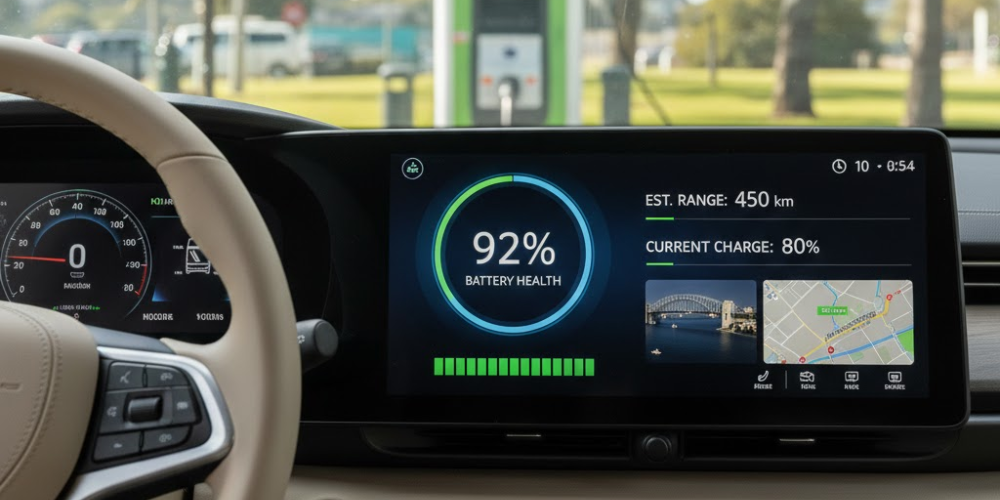
Mileage (kilometres driven) matters less for the main drivetrain components of the used electric vehicles (EVs) in Australia than it does for petrol cars. The critical factors are battery health and age, which are influenced more by charging habits and climate.
Batteries naturally lose capacity over time, regardless of whether the car is driven or not. Frequent use of high-power DC fast charging, charging to 100% regularly, and consistent high temperatures can accelerate battery degradation.
As an EV buyer, you should focus on essential things like battery state of health (SoH), warranty status, and service history. EVs also have fewer moving parts in their motors and components like suspension, brakes, and steering are cheaper to replace than a major engine replacement in ICE cars.
How to buy a low-mileage used car in Australia?
You should be careful and use a specialised approach when buying a low-mileage used car in Australia because low kilometres can sometimes mask neglect from inactivity. Here are some simple steps:
Step 1: Verify the odometer and history
Run a Personal Property Securities Register (PPSR) search and cross-reference the odometer with service records and registration papers. Be wary of unusually low mileage (e.g., under 5,000km/year).
Step 2: Audit the time-based service history
Look for consecutive yearly stamps in the logbook and ensure age-sensitive parts like timing belts have been changed.
Step 3: Conduct a static physical inspection
Inspect tyres, wiper blades, door seals, and engine hoses for dry rot or cracking. Also, inspect fluids to check whether the car has been sitting idle for too long.
Step 4: Do a test drive
Listen for squeals or grinding (rusted rotors) and vibrations for flat-spotted tyres. Test every button, as window motors and AC seals can seize if not operated regularly.
Step 5: Get a pre-purchase inspection done
Many low-mileage issues (like internal engine sludge or dried-out internal seals) are invisible; a professional inspection is highly recommended.
Step 6: Finalise legalities and protection
Confirm statutory warranty, and complete the transfer and insurance before driving away.
Why vehicle check before buying must be done?

A professional pre-purchase inspection (PPI) is considered essential before you buy a used car because it provides technical and legal protections that a standard “Roadworthy Certificate” (RWC) and a basic test drive do not cover.
A professional vehicle check before you buy a car is designed to find specific issues that the untrained eye or a basic history check will miss. These are issues like flood damage, undisclosed accident repairs, and odometer tampering.
Under the Australian Consumer Law (ACL), you have rights to a car of “acceptable quality.” A PPI report from the date of sale serves as critical evidence that the fault was likely pre-existing, which is necessary to claim a refund or repair from a dealer. A thorough inspection also helps you identify upcoming costs before you commit.
What’s more? A PPI report gives you negotiation power when you do vehicle check before buying, and you can ask the seller to lower the price due to certain faults and even request repairs before delivery.
And if you are wondering, “How to sell my car for the best price?” The used car inspection works for you, too, as it builds trust with the buyers and indicates you have nothing to hide in your car.
FAQs
Is it okay to buy a car with 300,000 km?
Yes, but with caution. They are generally only worth it if you can repair them well at no high cost, or the price is exceptionally low. A full service history and a professional inspection are non-negotiable.
What mileage is best to sell a car?
Just before 100,000 km. This is a major “psychological barrier” for buyers. Selling between 50,000–70,000 km or with 10–20% of the original warranty remaining typically yields the highest resale percentage.
How many kilometres is good for a used car?
12,000–15,000 km per year of age. For example, a good 5-year-old car should have between 60,000 and 75,000 km.
How many kms are too many when buying used?
Over 200,000 km is where risk levels rise significantly for most passenger vehicles. Dealers often use 160,000 km as a cut-off because providing warranty support beyond that becomes difficult.
Is it worth buying a car with high mileage?
Yes, for the right price and working condition. High-mileage cars (200,000+ km) can be bargain jackpots if they have thorough logbooks and were used for highway driving. They suit buyers prioritising upfront value over future resale.

Comments
New Comment