




Thinking about getting your car windows tinted? Your intent is good because no one wants to feel like they’ve just opened an oven door, returning to their car parked out in the sun.
But getting pulled over for illegal dark tint is pretty frustrating, because it’s preventable. There could be fines, defect notices, and even rego cancellation.
Coppers often use tint meters to measure the VLT of your car window tinting, to determine if it’s illegal, and to issue penalties when it breaks the law. That’s why we have written this extensive guide.
Understand everything about car window tinting, from how it works to state-wise car tinting laws and how to get car window tinting removed.
What is car window tinting?
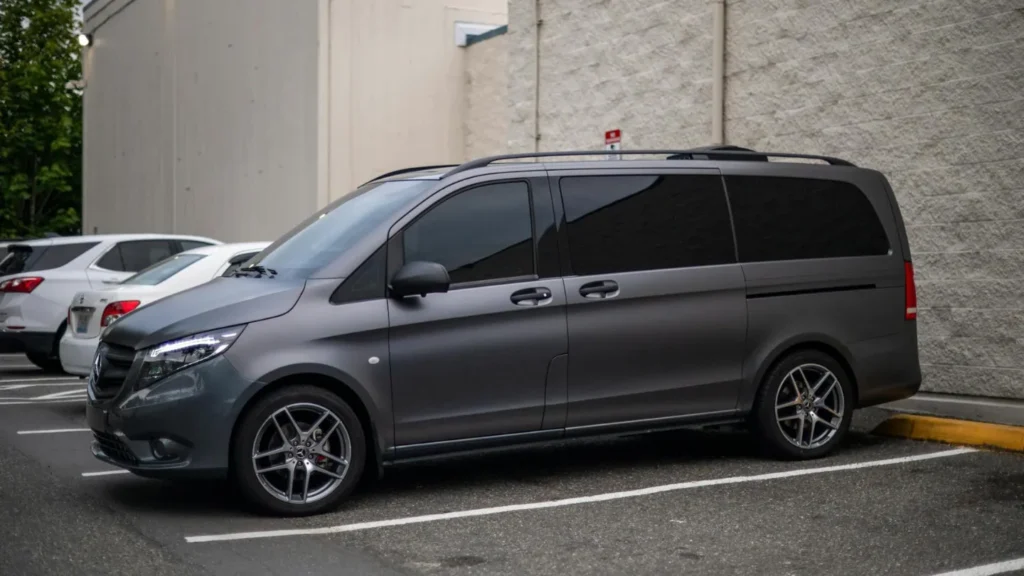
Car window tinting is the application of thin tinted film to the inside of a car’s windows, designed to block heat, reduce glare, and block UV rays inside the car. This makes the car cabin cooler, protects your skin and the interior from fading, and gives you more privacy.
In Australia, while slightly tinted car windows are legal, many people get pulled over for over-the-limit car tinting. For instance, the darkest legal car tint in most states is 35% for the front side car windows. The legal car tinting limits (mentioned later) are measured by VLT (Visible Light Transmission).
There are typically 4 types of car window tinting films available in Australia, which are dyed, metalised, carbon, and ceramic (most durable). Many people also use advanced car tinting films like hybrid, crystalline, and photochromic films.
While high-quality car tints can last a decade, budget options fail sooner under the sun. You must immediately get the car window tinting replaced if you notice discolouration, bubbling, damage, or reduced clarity in the tint film because it becomes illegal.
What is VLT in car window tinting legality?
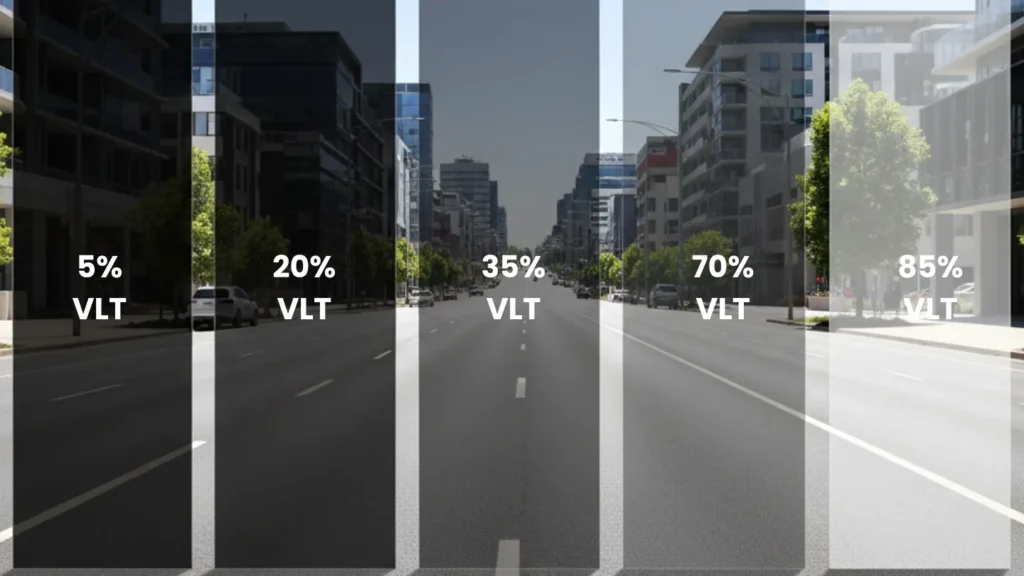
Car window tinting works by blocking external light like sunlight, and there is a legal and safety limit to how much light you can block inside your car. VLT helps you measure the amount of light blocked by a car window tint film.
VLT (Visible Light Transmission) = how much light gets through the car window glass (%)
A high VLT number (e.g., 50%) means the tint is light and lets more light into the car.
A low VLT number (e.g., 5%) means the tint is very dark and blocks most light coming into the car.
Lower VLT number = darker tint = illegal
What are the average lifespans of different car window tinting films?
While high-quality professional installs can last a decade, budget options often fail much sooner under the harsh Australian sun. Here are the estimated lifespans of the four commonly used car tinting films:
- Dyed film: 2–5 years
- Metalised film: 5–8 years
- Carbon film: 5–10 years
- Ceramic film: 10–15+ years
Why do people want tinted car windows?

Ever got in your car after it’d been sitting in a car park on a 38-degree day and you felt like you were sitting in a pizza oven? In Australia, car window tinting is widely considered a necessity rather than just looking cool.
Intense summer heat makes it a critical tool for protecting both you and your car from the worst of the heat and UV radiation. Here are some key benefits of tinted car windows in Australia:
- Heat reduction and climate control: Legal car tints can block significant UV radiation and keep the cabin cooler, which reduces the load on your AC and improves fuel efficiency.
- Glare reduction: Tints cut down harsh sunlight glare during the day and blinding LED headlights at night. This makes driving easier on your eyes and improves reaction time on the road.
- Privacy & security: Darker glass makes it harder for thieves to see valuables. Plus, the film helps hold glass together if it shatters in an accident.
- Car interior protection: Tint acts like sunscreen for your new car, stopping seats from fading and dashboards from cracking.
MORE: Car modifications in Australia: what’s legal & what’s not
What are the laws regarding car window tinting in Australia?
Each Aussie state and territory sets its own tint laws, but they all use the same measuring system of VLT. The following table summarises the legal VLT requirements for passenger vehicles in Australia:
| State | Windscreen | Front side windows (VLT) | Rear side & back windows (VLT) | Reflectivity limit |
|---|---|---|---|---|
| NSW | Top 10% only | 35% (5% tolerance) | 20% (with side mirrors) | Prohibited |
| VIC | Top 10% only | 35% | 20% (with side mirrors) | 10% |
| QLD | Top 10% only | 35% | 20% | 10% |
| WA | Top 10% only | 35% | 20% | 10% |
| SA | Top 10% only | 35% | 20% | 10% |
| TAS | Top 10% only | 35% | 20% (with side mirrors) | Not specified |
| NT | Top 10% only | 35% | 15% | Non-reflective |
| ACT | Top 10% only | 35% | 20% | Not specified |
Note: These limits apply to passenger vehicles
Critical car window tinting legal details
- Total VLT is what counts: The law applies to the combined VLT of the factory glass and tint film. Most cars already have lightly tinted glass from the factory. So if you paste a 35% VLT film on top, the final result might actually be below 35%, which makes it illegal.
- Windscreen tinting is illegal: Full windscreen tinting is illegal everywhere in Australia. Only a sun strip within the top 10% of the windscreen or above the wiper sweep is allowed.
- Reflective tint: Most states allow up to 10% reflectivity (same as plain glass) while NSW bans reflective tint entirely.
- Relaxed commercial vehicles laws: Windows behind the driver in goods-carrying vehicles (utes, vans, and trucks) may be allowed 0% VLT (fully blocked), only if dual side mirrors are fitted.
- Condition of tint matters: Bubbling, peeling, torn or damaged tint, even if it was legal when installed, is considered a safety hazard across all states and can lead to a defect notice or fine.
How do the cops detect illegal car window tinting?
The Aussie cops aren’t just eyeballing your tint anymore and making a guess. Australian Highway Patrol and transport officers often use portable electronic photometers (or tint meters) that give them your car window tinting’s VLT instantly during a roadside pull over.
How to calculate your car window tint VLT?

A higher VLT number means lighter/less dark, a lower number means darker. A standard completely clear glass has up to 90% VLT, while 0% VLT is a solid wall (no light passes through). So 35% VLT means only 35% of light gets through, which is moderately dark.
The confusing bit may be that your car window factory glass already blocks some light (about 70-80% VLT). When you add tint film on top, you multiply these numbers.
Law authorities measure the combined VLT. Here is how you can accurately calculate the VLT for your car window tinting:
Step 1: Find your car’s factory glass VLT
Look for a small stamp in the corner of your window, which often shows a factory tint code or factory VLT percentage. OR
Visit a local workshop for a precise VLT test using a photometer (tint meter). These devices shine light through the glass and instantly show the VLT percentage. These are the same tools cops use roadside.
You’ll typically see two types of photometers: horseshoe-style meters for side windows and two-piece magnetic meters for fixed glass, like the rear window.
Step 2: Calculate final/combined VLT for legal limit
Formula: [Factory Glass VLT %] × [Tint Film VLT %] = Final VLT %
For example, applying a “35% legal tint” film on your car windows with a 70% factory glass VLT results in a final VLT of 24.5%.
The final VLT = 0.70 × 0.35 = 0.245 or 24.5%
You may enter a shop thinking, “I’ll get 35% film because that’s the legal limit,” but you’re actually getting a darker car window tint, which is illegal in most Australian states. So, always check your car windows’ combined VLT.
What are the penalties/fines for car window tinting in Australia?
In Australia, penalties for illegal car window tinting are on-the-spot fines, defect notices, and potential rejection of insurance claims. Although the car tinting legal limits are largely consistent across Australia (35% VLT for front side windows), the financial penalties vary significantly by state. This table summarises the state-wise penalties for illegal car window tinting in Australia:
| State | Fines/Penalties | Primary consequence |
|---|---|---|
| NSW | $423 + 3 demerit points | Defect notice, unroadworthy until fixed |
| VIC | Not specified; $192 for minor offence | Defect notice, unroadworthy, potential court |
| QLD | $361 + 1 demerit point | Defect notice, removal of tint |
| WA | $100-200 for first offences | Defect notice (yellow sticker), mandatory tint removal |
| SA | Not specified; $200+ expiation fee + demerit points + court penalties | Defect notice, summons |
| TAS | Not specified; up to 40 penalty units | Defect notice, 3 months imprisonment for repeat offences |
| NT | Not specified | Defect notice, unroadworthy |
| ACT | Not specified; up to 20 penalty units | Defect notice, infringement notice |
There are three major risks other than these state fines regarding illegal car window tinting in Australia:
1. Insurance problems: Most insurers see illegal tint as an unauthorised modification. If you crash, they may reduce your payout or deny the claim completely.
2. Registration suspension: If you ignore a defect notice or keep driving with an active one, your rego can be suspended or cancelled.
3. Roadworthy failures: Illegal car tint must be professionally removed first to obtain a Roadworthy Certificate (RWC) or “Pink Slip” and sell your car.
Things to consider before getting your car windows tinted
Getting your car windows tinted should be a carefully thought-out decision because ignoring the VLT laws could land you in trouble. Get your tint too dark, and you’ll cop a fine, fail your rego inspection, and potentially void your insurance. Here are key considerations before getting your car windows tinted:
- Legal limits (crucial): Australian regulations are strict regarding VLT in the tinted car windows, and each state has different rules.
- Film material and performance: The window tint material impacts heat rejection, clarity, longevity, and even cellphone signal interference.
- Insurance risks: If your tint is found to be illegal (too dark), it can render your vehicle unroadworthy and your car insurance void, and even lead to claim rejections if an accident occurs.
- Warranty: Ensure the installer provides a written warranty against defects like fading, bubbling, or peeling.
- Curing period: Do not roll down windows for 3 to 5 days (or as your installer recommends) after installation to allow the adhesive to set properly.
- Go easy on cleaning: Do not clean the inside of the windows for at least two weeks (or as recommended). The film needs time to fully bond and harden.
- Professional vs. DIY car tinting: Professional installation is recommended to avoid bubbling, peeling, and dirt entrapment while DIYing. Bad tinting can impair visibility and lead to fines.
What are the types of car window tint films?
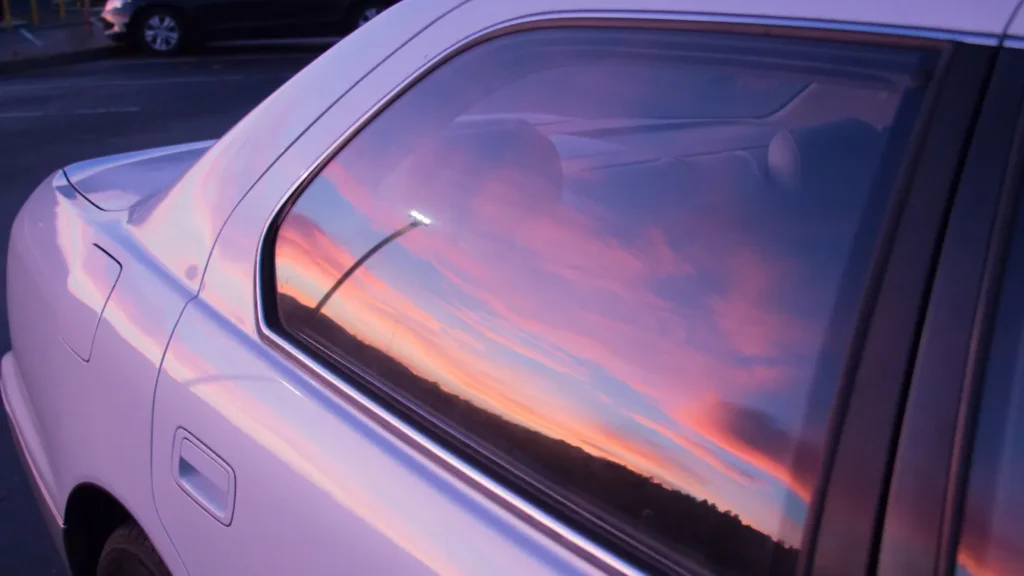
In Australia, there are four common types of car window tinting films: dyed, metalised, carbon, and ceramic, and some advanced options like hybrid, crystalline, and photochromic films.
Common car window tinting films
1. Dyed film: This is the most basic option, made from a thin plastic film with a layer of dye, which is primarily chosen for aesthetics and privacy. It offers limited heat rejection and can fade over time, sometimes turning purple.
2. Metalised film: This film contains tiny metallic particles embedded within the film layers, which reflect heat and UV rays effectively, and is more durable and scratch-resistant than dyed film. The metal content can interfere with electronic signals like GPS, mobile phones, and radio reception.
3. Carbon film: This type uses carbon particles in the film construction, offering a non-metal alternative with a stylish matte finish. It provides a good balance of heat rejection, UV protection, and durability without signal interference.
4. Ceramic film: This is considered the gold standard as it uses advanced nano-ceramic technology (tiny, non-conductive ceramic particles). It offers superior heat and UV rejection, high optical clarity, and shatter resistance without any signal interference.
Advanced and specialised car window tinting films
1. Hybrid film: Combines both dyed and metalised layers to provide a balance between affordability, heat rejection, and reduced signal interference compared to fully metalised films.
2. Crystalline film: A high-end, multi-layered film that is nearly transparent but uses advanced nanotechnology to reject significant amounts of heat and UV rays.
3. Photochromic (smart) film: An emerging technology that can automatically adjust its shade or opacity based on the intensity of sunlight and temperature.
How much does car window tinting cost in Australia?
Car window tinting costs in Australia typically range from $200 to $800 for a full vehicle, depending mainly on the film technology and vehicle size. Here are the average costs for different car window tinting film types in Australia:
- Dyed film: $150-$350
- Metalised Film: $250-$450
- Carbon Film: $300-$550
- Ceramic Film: $450-$750+
- Ultra-Premium/IR-Blocking: $650-$900+ (Advanced films for maximum infrared heat rejection)
The price jump from dyed to ceramic is steep, but you should also factor in that ceramic lasts years without fading, blocks way more heat, and doesn’t interfere with your tech.
Average car window tinting price range by vehicle type
Tinting a Toyota Yaris costs less than tinting a LandCruiser. If you’re driving a big ute or a people mover, expect to pay more because there’s simply more glass to cover.
- Small hatch: $225–$400
- Sedan: $240–$535
- SUV/4WD: $260–$650
- Single-cab ute: $200–$330
- Van/people mover: $325–$700+
Car window tinting cost factors
Understanding how quotes are calculated helps you avoid feeling ripped off. Professional services typically use the following factors to provide a quote:
- Glass surface area: Larger windows or a higher number of windows increase the cost.
- Installation complexity: Curved windows (like steep rear screens) or frameless doors require more skilled labour and time, which can bump up the price.
- Condition of existing tint: If old, bubbling, or faded film must be removed, professionals charge extra for the labour.
- Location: Highly urbanised areas with higher overheads may have slightly higher rates, while competitive metro areas sometimes offer better deals.
- Warranty inclusion: Premium quotes often include a lifetime manufacturer’s warranty against bubbling, peeling, or fading.
Steps to getting a good car window tinting in Australia
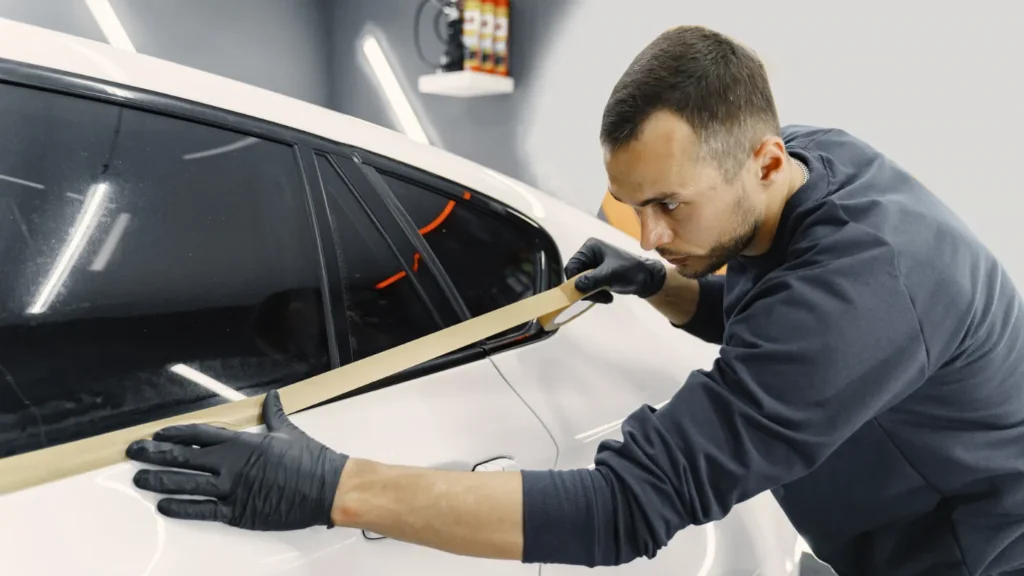
Think of this like getting a roadworthy certificate done properly. Do it once, do it right, and you won’t be stressing every time you see flashing lights.
Step 1: Check your state’s legal car tint limits
Before you even look at tint shades, confirm the VLT rules for your state or territory. For instance, front side window tints almost everywhere in Australia require at least 35% VLT and NSW bans reflective (mirrored) tint entirely.
Step 2: Choose a certified professional (skip the DIY)
DIY tint kits might look cheaper, but they may end in bubbles, peeling, and poor visibility if not done carefully, and that can lead to fines. Look for WFAANZ members (more on that below) and a proper manufacturer’s warranty covering bubbling, peeling, and fading.
Step 3: Test the combined VLT always
This is where most people get caught out. Modern car windows already have factory tint (usually around 70–80% VLT). Adding a “35% film” doesn’t mean your window stays legal. Read how to calculate VLT in a former section.
A good installer uses a calibrated tint meter (photometer), measures your bare glass first, and then calculates which film shade keeps the final combined VLT legal.
Step 4: Ask for a tint compliance certificate
Once the job’s done, request a car window tinting certificate. This document lists the final measured VLT of each window, acts as proof of legality, and helps clear police defect notices. The legal tinting proof also protects you if your insurer questions the modification.
Step 5: Final check and aftercare
Before you drive off, do a proper inspection. Do a VQS (visual quality standard) and look for clean edges, no dirt, and no air bubbles. Give the tint film enough curing time according to the installer’s instructions exactly. Do not roll the windows down until the adhesive is fully set.
How to identify a good car window tinting service in Australia?
Identifying a good car window tinting service in Australia involves verifying their business, ensuring high-quality materials, and confirming they adhere to strict national standards for safety and legality. Here are some key factors you should consider to find a good car window tinting service in Australia:
- Positive reputation: Check for consistently high ratings and positive reviews on independent platforms or ask for recommendations from friends and family.
- WFAANZ membership: Look for members of the Window Film Association of Australia and New Zealand (WFAANZ) who must adhere to a strict code of ethics and changing state laws and product technologies.
- Business registration: Verify the company has a valid Australian Business Number (ABN) or Australian Company Number (ACN) through the Australian Business Register (ABR).
- Licensed and insured: Many legitimate services carry public liability and workers’ compensation insurance to protect your vehicle and their staff during the installation.
- Premium brands: Top-tier services partner with established global brands and will proudly explain the different car window tint types and their technologies.
- Lifetime warranties: A written manufacturer’s warranty (often lifetime) against common defects like bubbling, peeling, or fading.
- Professional installation standards: Good service providers prioritise a dedicated process, seamless edge finishing, and ADAS knowledge.
- Legal compliance and verification: They should use a VLT meter before and after installation and provide a compliance certification/sticker.
- Transparent quotes: Legitimate quotes are comprehensive and upfront, including labour, materials, and any removal fees for old tint, with no hidden charges.
MORE: Tips to protect your car from extreme heat and sunlight
Maintenance tips for tinted car windows
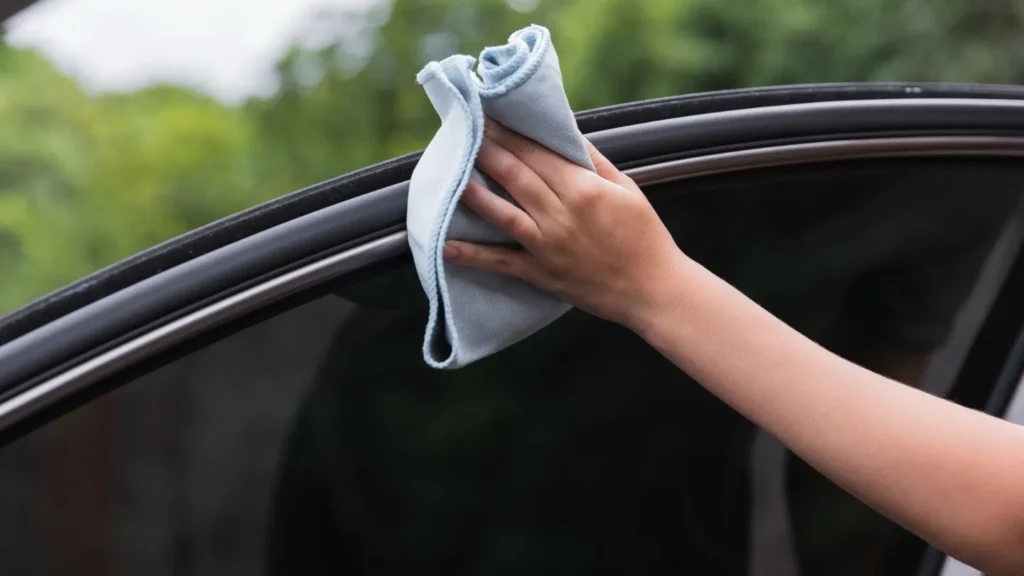
To ensure your car window tint remains effective and clear under the intense Australian sun, proper maintenance is essential. Follow these aftercare and cleaning steps to prevent premature fading, bubbling, or peeling:
- The immediate curing period: Freshly installed tint requires time to bond with the window glass. Wait to roll down your windows for 3 to 5 days after installation.
- Avoid initial cleaning for a few weeks: The film moisture can take up to a month to evaporate. Avoid any internal cleaning and ignore small bubbles, as these should disappear as the film cures.
- No harsh cleaners: Avoid ammonia-based cleaners, use tint-safe cleaners or mild soap, and use soft or microfiber cloths only to avoid micro scratches.
- Protect physical damage: Release your seatbelt slowly to avoid small tears in the tint, prevent pet scratches, and ensure your window’s seals are dirt-free.
- Heat and sun management: Use front sunshades on extremely hot days and try to park in shade.
- Regular inspections: Inspect the edges of the film for any signs of lifting. Catch a small “peel” early to repair it before it becomes larger.
How to get car window tinting removed safely?
You might want to remove your car window tinting because it’s illegal, old, peeling off, you’re selling the car, or you just don’t like it. Here’s what you should know before you peel it off yourself, or with a professional:
The DIY (do it yourself) method
Safely removing car window tinting at home requires a “heat and peel” approach to soften the adhesive before removal. Some online communities suggest DIY methods to remove car window tints, such as:
- Steaming: Use a handheld garment steamer to apply direct heat, soften the glue, and pull away the film.
- Heat gun or hairdryer: Hold a heat gun or hairdryer at a safe distance from the glass and peel away the film slowly as the glue loosens.
- Ammonia & sun method: Spray an ammonia-based cleaner on the inside of the tint, cover it with a black plastic garbage bag to trap the sun’s heat to dissolve the adhesive over 30-60 minutes.
- Post-removal cleanup: Remove any residual glue with soapy water or a dedicated adhesive remover, and gently scrape.
Warning: There are several critical risks of DIY car window tint removal, such as destroying rear defrosters, glass damage, leaving stubborn adhesive residue, and inhaling harmful fumes and chemicals.
The professional car window tinting removal process
Unlike DIY methods, professionals use specialised equipment to ensure no damage to the car.
- High-temperature steaming: Industrial steamers soften the adhesive and pull away the tint film layers as a single sheet.
- Adhesive dissolution: Specialised non-corrosive chemical solvents and scrapers remove the glue safely.
- Final inspection: The service ends with a deep clean and inspection.
The benefits of professional removal are zero risk to the rear glass, warranty protection, and mess-free removal.
The cost factors in the professional car window tint removal include bubbled or brittle film (takes longer), bundled deals for simultaneous tint replacement, and the labour factor. Costs for professional car tint removal generally range from $80 to $400, depending on the vehicle size and the condition of the old film.
Conclusion
Done right, car window tinting protects you from brutal heat, shields your interior, reduces glare, and makes driving easier on your eyes and body. Done wrong, it can land you with fines, defect notices, insurance headaches, and a car that’s unroadworthy.
Moreover, it’s crucial to understand your car’s final VLT with professional testing and keep it within legal limits. Choose a quality tint film that suits Australian conditions, use a reputable installer, respect your state’s laws, and look after the tint once it’s on. That’s about it to drive stress-free, safe from the harsh climate, and without getting pulled over often.
FAQs
- Can you tint the front windscreen in Australia?
Any aftermarket film on the front windscreen is illegal everywhere in Australia. Expect the visor band or sun strip to be within the top 10% of the glass or above the wipers’ reach.
- Is 35% or 20% car window tint darker?
20% tint is darker. The 20% is the Visible Light Transmission (VLT), which measures the percentage of light that passes through the glass. For example, 20% VLT blocks 80% of light, whereas 35% VLT blocks only 65%.
- What does 70% tint look like on a vehicle?
A 70% tint is nearly transparent and often only slightly noticeable to the naked eye. It adds a very subtle “smoked” or toned effect rather than a dark shade.
- What is the vehicle window tint legal limit in Victoria?
For passenger vehicles in Victoria, the legal limits for car window tinting are:
- Front side windows: Minimum 35% VLT
- Rear side & back windows: Minimum 20% VLT (provided the vehicle has dual external rear-view mirrors)
- Reflectivity: Under 10% reflectance (the same as untreated glass).
- Condition: The film must not be bubbled, damaged, or distorted.

Comments
New Comment