




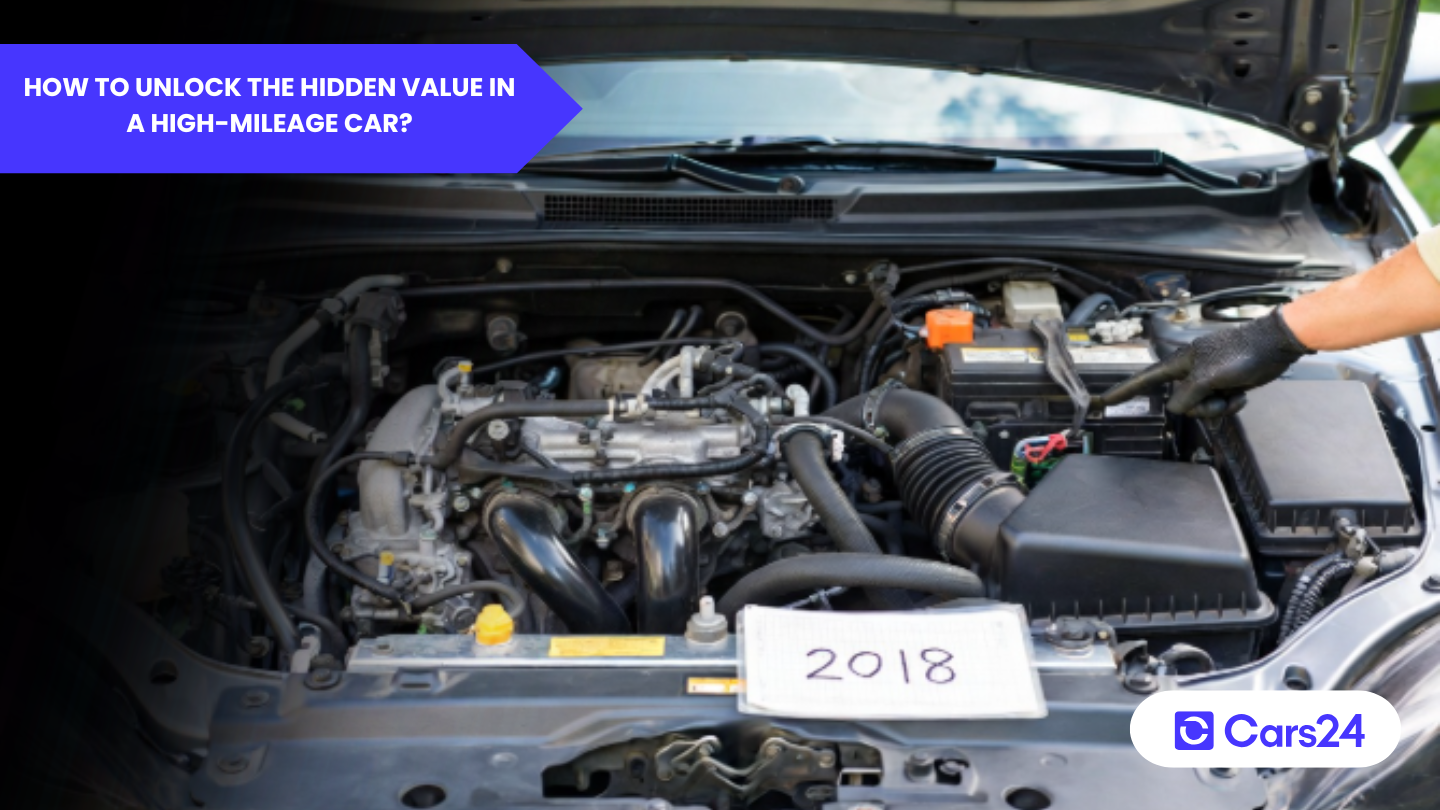
You see a big number on the odometer, and your mind races: “expensive repairs and hidden faults.” But not many consider finding the hidden value in a high-mileage car.
Fear often makes people miss bargains or overpay for low-mileage cars that were never properly looked after. Mileage is just one factor in a used car purchase.
Here, you learn about the checks you can do to find the best value high-mileage used car. You will also know the insights that help you spot potential scams and hidden clues about high-mileage used cars.
What are high-mileage cars?
A high-mileage car is generally defined as any vehicle that has exceeded 160,000 kilometres. A car is typically considered high mileage for its age if it exceeds an average of 15,000–20,000 km per year.
Used cars nearing 200,000 km are high-mileage, high-risk cars that are approaching the “end of life” for some major components.
The 160,000 km benchmark is used by the NRMA and state regulations because statutory warranties on used cars from dealerships often expire once a vehicle reaches 10 years of age or 160,000 km (whichever comes first).
However, benchmarks shift based on the vehicle type. Small cars often reach their practical limit around 250,000 km, SUVs and family cars go further, and commercial/diesel cars or utes can even last 300,000 to 500,000 km.
If you think low kilometres are always good, you might like to read the discussion on whether low mileage always means a healthier car.
How to tell if a used car has high kilometres or mileage?
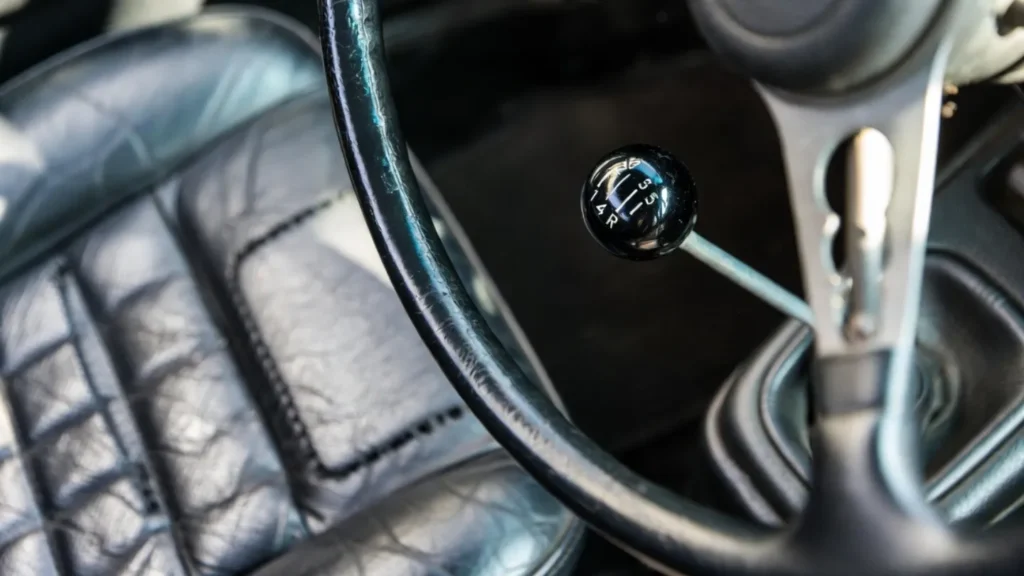
The first thing you do is ensure the used car’s odometer is accurate. Then you must look beyond the dashboard and use a 3-pronged approach: checking physical touchpoints, verifying documentation, and using diagnostic tools.
1. Inspect high-frequency touchpoints
A car’s odometer might show low kilometres, but the physical condition of parts that the driver touches constantly often reveals the truth of heavy use. Look for smooth spots, cracks, or excessive wear.
2. Verify via documentation & records
In Australia, several official and semi-official records can be used to cross-reference the current odometer reading. You can check the service history logbook, PPSR and car history reports, and even service stickers. An ideal used car age vs. mileage balance is also important and revealing.
3. Use technology & professional tools
Modern vehicles store mileage data in multiple hidden locations beyond the instrument cluster. You may need a professional engineer, mechanics and tools for this used car inspection. For instance, a professional pre-purchase inspection (PPI) can spot even subtle clues like “windscreen pitting” (a high-mileage wear).
How do you decide what mileage is too much, and what’s the right number? You’ll find this answer in our write-up about the ideal mileage for a used car.
What to check on a high-mileage car? For the best value used car
To find the hidden value in a high-mileage car in Australia, you must perform a multi-point inspection that covers history, mechanical health, and physical wear. Many experts recommend the following checks before you buy a high-mileage used car:
1. Essential documentation & history
Ensure services occur regularly. Check for stamps from licensed mechanics rather than just handwritten notes. Specifically look for receipts for big repairs, timing belt/chain (usually due every 100k–160k km), water pumps, and transmission flushes.
Don’t forget to check logbook entries for electronics repair, like O2 sensors, ABS sensors, etc. Do the PPSR check and a VIN match. It’s a good practice when you want to buy any used car.
2. Mechanical checks
If you are not mechanically minded, booking a professional pre-purchase inspection is the best way to find a used car’s value. Do under-the-hood checks like oil quality, coolant condition, belt and hose integrity, and battery health.
Also, look at the exterior and the underbody. See for compromised repairs, panel alignment, tyre wear patterns, fluid leaks, etc. A professional mechanic can handle these checks efficiently.
3. Run a check on minor/ancillary systems
While the engine is the heart of a car, the failure of minor systems can make a car unusable or extremely expensive to repair. Look at the wear on interior parts and electronics like the steering wheel, the rubber on the brake pedal, and buttons.
Check whether the warning lights are working and do a full tech test by operating every button – AC, windows, infotainment, etc. Ensure the apertures, seals and auxiliary mechanicals, like the wiper motors, horn, external lights, etc., operate smoothly. Also, see if the replaced or repaired parts and electronics are of high quality.
4. Highway vs. city high-mileage
A country car with high highway mileage is frequently preferred by mechanics over a lower-mileage city car. High-mileage highway-driven cars experience less mechanical stress than city-driven ones.
Highway-driven cars often have “pitting” (tiny chips) on the radiator fins, headlights, and front fascia from bugs and road debris at high speeds. City cars are more likely to have door dings, curb-scraped wheels, and minor dents from parking lots and heavy traffic.
5. The detecting test drive
Always request that the engine be started when it is stone-cold. A warm engine can hide starting issues or smoke. Moreover, look for smooth transmission, no gear grinding, and no shuddering for automatic cars. Check steering and braking on a plain, straight road and the suspension bounce.
When you are dealing with a low-kilometre car, a discussion on whether low mileage matters when buying or selling will give you good insights.
Ultimate red and green flags on a high-mileage car
| Aspect | Red flags 🔴 | Green flags 🟢 |
|---|---|---|
| Documentation | Missing service books, long gaps between services | Comprehensive service logbook with invoices |
| Engine | Warm engine on arrival to hide issues | Receipts for major milestone repairs within the last 40,000 km |
| Cabin & Tyres | The odometer kms don’t match the cabin wear | Four reputable brand tyres with plenty of tread |
| Mechanical | Weird engine noises, blue/white smoke | The engine starts without chugging/smoke |
| Transmission | Slipping, delayed, or jerking | Smooth gear shift, no issues |
| Ownership | Multiple short-term owners | Long-term ownership by a single person (PPSR) |
| Fluids | Dirty or inconsistent fluids | Clean coolant and engine oil |
| Suspension | Poor steering or suspension | Good suspension & steering performance |
| Interior | Dashboard warning lights are on | Interior tidiness and fully functional electronics |
What are some of the most reliable high-mileage cars?
In Australia, experts and long-term ownership data consistently point to Japanese and South Korean brands as the most reliable high-mileage cars. These makes are celebrated for their engineering durability, less turbocharging, less complex electronics, parts availability, and ability to surpass 300,000 km with routine maintenance.
| Car category | Recommended models | Why? |
|---|---|---|
| City/small | Toyota Corolla, Mazda 3, Hyundai i30, Honda Civic & CR-V | High parts availability, build quality, and low-cost routine servicing |
| Family SUV | Toyota RAV4, Mazda CX-5, Subaru Forester & Outback | Strong safety ratings and proven long-term mechanical track records |
| Work/adventure | Toyota HiLux & LC, Ford Ranger, Mitsubishi Triton & ASX | Durable diesel engines and heavy-duty chassis |
| Luxury | Lexus RX & ES | Consistently ranked #1 reliable brand due to strict quality control |
Tips to buy a good high-mileage used car

Buying a high-mileage car requires shifting your focus from the initial price to the long-term sustainability of the used car. Experts emphasise that the best high-mileage car is often one with a flawless maintenance record rather than just the lowest price.
1. Calculate the true cost of ownership (TCO)
You must factor in ongoing expenses to understand the real cost of owning a high-mileage car. Budget for “end-of-life” parts like alternators, water pumps, or suspension bushings that typically fail after 160,000 km. Also, it’s good to estimate annual fuel costs, service frequency and costs, and insurance & registration expenses.
2. Negotiate smartly
High mileage is one of your strongest levers during price discussions, especially in private sales. Use specific findings from a PPI to justify a lower offer. Service gaps are also leveraged.
3. Verify the “highway km” claim
Ask the seller about that high-mileage used car’s commute. Highway driving in regional Australia is significantly easier on a vehicle’s engine and transmission than stop-start city driving.
4. Check the PPSR report
For a small fee, a PPSR check confirms the car isn’t stolen, written off, or carrying hidden debt that could lead to repossession.
5. Daylight inspections are better
Never inspect a high-mileage car at night or in the rain, as these conditions easily hide paint ripples, oil leaks, and interior wear.
6. Research model longevity
Some models are destined for the junkyard at 100,000 km, while others can reliably reach 400,000 km. Look for models with a high volume of high-km examples still for sale online, as this is a sign of durability.
Pros and cons of buying high-mileage cars
Wondering, “Is a high-mileage car worth buying?” Well, buying a high-mileage car is a strategic trade-off between lower upfront costs and higher long-term maintenance risks. Here are some primary pros and cons of buying high-mileage cars summarised:
| Pros | Cons |
|---|---|
| 1. Lower purchase price | 1. Expect increased repair and replacement frequency and costs |
| 2. Have already depreciated much (often 50%+) | 2. Higher running costs due to poor fuel efficiency |
| 3. Premium models become accessible | 3. Outdated technology and modern safety features |
| 4. An expensive major service may already be done | 4. Major components are closer to their end-of-life |
| 5. Typically lower premiums | 5. May come without any remaining statutory or manufacturer warranty |
| 6. More room for negotiation and savings | 6. Lenders & banks may refuse to finance older cars |
| 7. Lower registration costs | 7. May be harder to sell later |
| 8. Higher statistical risk of catastrophic failure |
Final words
Not all highly driven cars are bad, and if you can find the hidden value in a high-mileage car, it could be a great budget buy for a few years. Similarly, a low-mileage car does not always mean a healthier car. You have to follow a fundamental principle.
Try this rule: buy condition, not the odometer. If the paperwork, mechanic, and test drive back it up, a high-km car can be the smartest, cheapest move you make. This also applies when you want to sell your car at the best resale value.

Comments
New Comment