




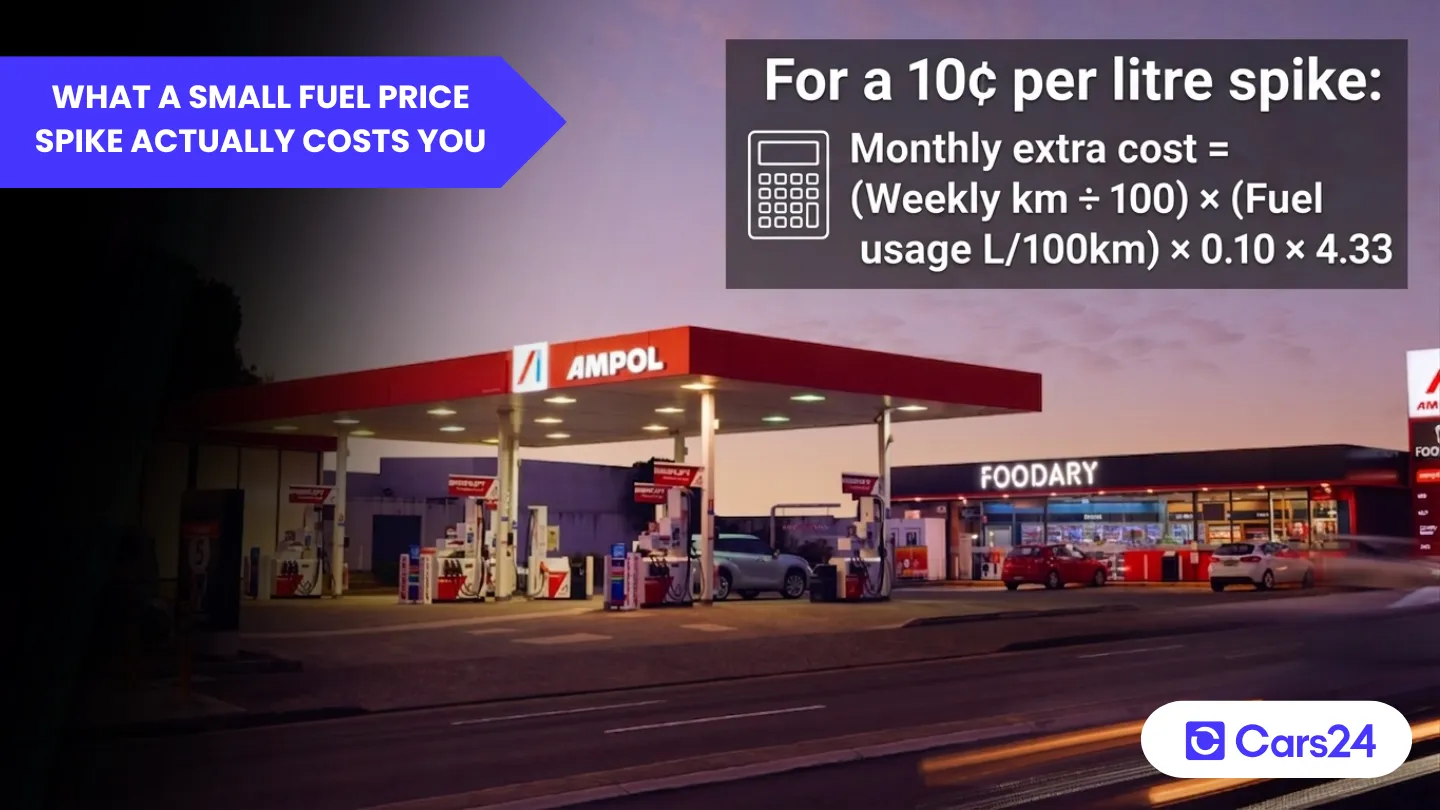
Everyone is feeling the pinch at the pump right now, but many can’t quantify exactly what that pinch means for their household budget over time. If petrol holds at $2.60/L for months, the impact quietly adds up.
Here we have made a simple formula to make informed decisions about your budget. Whether that’s changing your driving habits, adjusting the budget, or finally having that serious conversation about a more efficient vehicle. Learn what small fuel price spikes actually cost you in the long-term.
Weekly and monthly breakdown of the fuel spike cost
We’ll model a typical Australian driver for these calculations:
Monthly distance: 1,000–1,170 km
Weekly distance: 230–270 km
Baseline fuel prices (Sydney 2026):
- Petrol (ULP91): $2.06–$2.07/L
- Diesel: $2.95/L
| Vehicle Type | Fuel Usage (L/100km) | Weekly Cost | Monthly Cost | +10c Spike (Monthly) | +20c Spike | +50c Spike |
| Compact Petrol | 6.5 – 8.5 | $31 – $48 | $135 – $208 | $6 – $10 | $12 – $20 | $30 – $50 |
| Mid-Size SUV Petrol | 9.0 – 11.5 | $43 – $65 | $187 – $281 | $9 – $13 | $18 – $26 | $45 – $66 |
| Mid-Size SUV Hybrid | 5.5 – 6.5 | $26 – $37 | $113 – $160 | $5 – $7 | $10 – $14 | $25 – $35 |
| Diesel 4×4 Ute | 9.5 – 11.5 | $64 – $91 | $277 – $394 | $10 – $13 | $20 – $26 | $50 – $65 |
Fuel price spikes don’t hit everyone equally. Small cars absorb some cost, hybrids soften them, and SUVs and utes magnify them.
SUVs & utes pay ~2x the spike impact of hybrids. Diesel utes are hit the hardest during the ongoing (Middle East crisis) fuel spike cycles due to the higher baseline price ($2.95/L) and higher consumption.
Car type with the fuel price spikes buffer
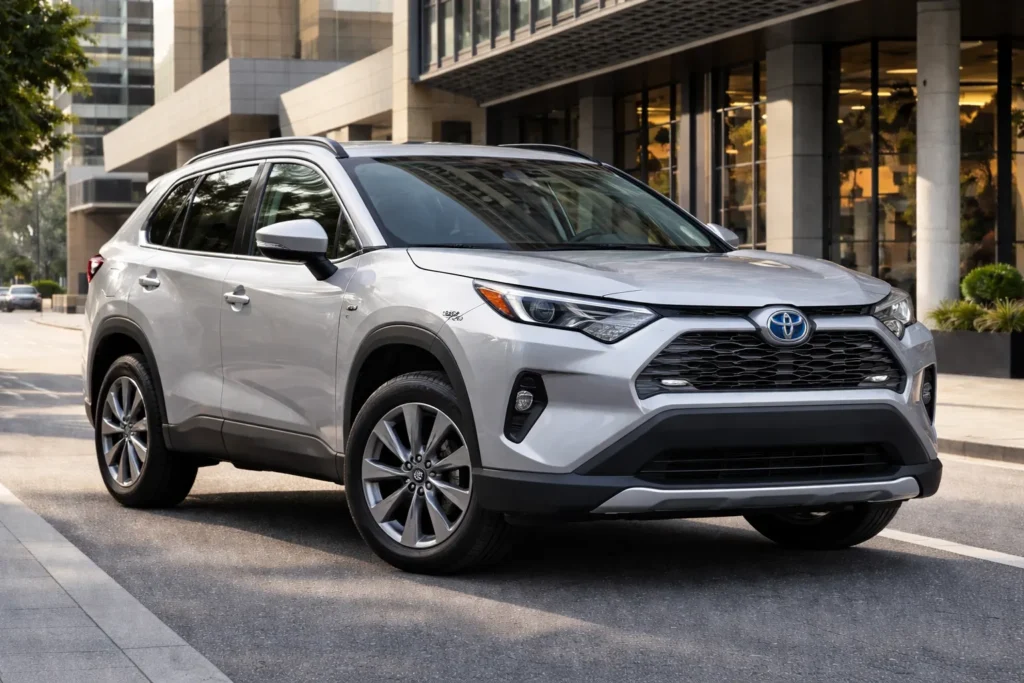
Hybrids (HEVs and PHEVs) have the lowest exposure to price spikes. Even at a +50¢/L fuel spike, it only costs $25–$35/month more for a car.
HEVs, specifically, are one of the safest, most reliable, and cost-effective car options for Australians in the long-term (as described here).
Breakdown of the fuel spike cost (with the temporary excise cut)
The standard fuel excise of 52.6¢/L has been cut to 26.3¢/L for a 3-month period, until 30th June 2026. The retail fuel price should drop by the same amount for you.
| Vehicle Type | Fuel Usage (L/100km) | Weekly Cost (Excise cut) | Monthly Cost (Excise cut) |
|---|---|---|---|
| Compact Petrol | 6.5 – 8.5 | $27 – $42 | $117 – $182 |
| Mid-Size SUV Petrol | 9.0 – 11.5 | $38 – $57 | $165 – $247 |
| Mid-Size SUV Hybrid | 5.5 – 6.5 | $23 – $33 | $100 – $143 |
| Diesel 4×4 Ute | 9.5 – 11.5 | $58 – $83 | $251 – $359 |
As you can see, the excise cut immediately reduces monthly fuel bills by roughly $18–$35 (for small cars) and $25–$50 (for SUVs & utes). For some Aussie families that have 2 SUVs, the instant savings are about $70–$100/month.
The cost of fuel spikes stays the same because the spike impact depends on the fuel consumption and car distance, not on the baseline price.
Calculate your own fuel price spike impact
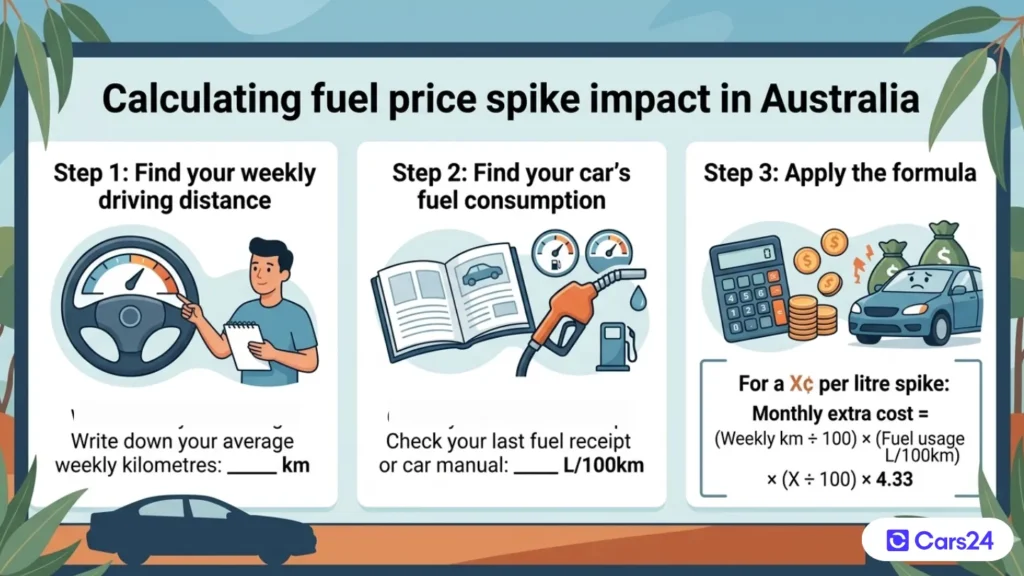
Here’s your simple three-step formula. Grab a calculator (or your phone) and plug in your numbers.
Step 1: Find your weekly driving distance
Write down your average weekly kilometres: ______ km
Step 2: Find your car’s fuel consumption
Check your last fuel receipt or car manual: ______ L/100km
Step 3: Apply the formula
For a 10¢ per litre spike:
Monthly extra cost = (Weekly km ÷ 100) × (Fuel usage L/100km) × 0.10 × 4.33
For a 20¢ per litre spike:
Monthly extra cost = (Weekly km ÷ 100) × (Fuel usage L/100km) × 0.20 × 4.33
For a 50¢ per litre spike:
Monthly extra cost = (Weekly km ÷ 100) × (Fuel usage L/100km) × 0.50 × 4.33
Here is a real-world example:
A tradie driving a Toyota HiLux ute 500 km per week with fuel consumption of 10 L/100km, facing a 20¢ spike.
(500 ÷ 100) = 5
5 × 10 = 50 litres per week
50 × 0.20 = $10 extra per week
$10 × 4.33 = $43.30 extra per month
Final words
Compact petrol cars are manageable but sensitive to fuel price spikes. A SUV and ute is most exposed to the price risk. Hybrid provides the best protection against fuel price volatility.
You can still reduce your fuel bill if you switch to cheaper fuel stations (if available nearby), drive smoothly, lighten your car load and drag, check tyre pressure, use public transport, or carpool.

Comments
New Comment