




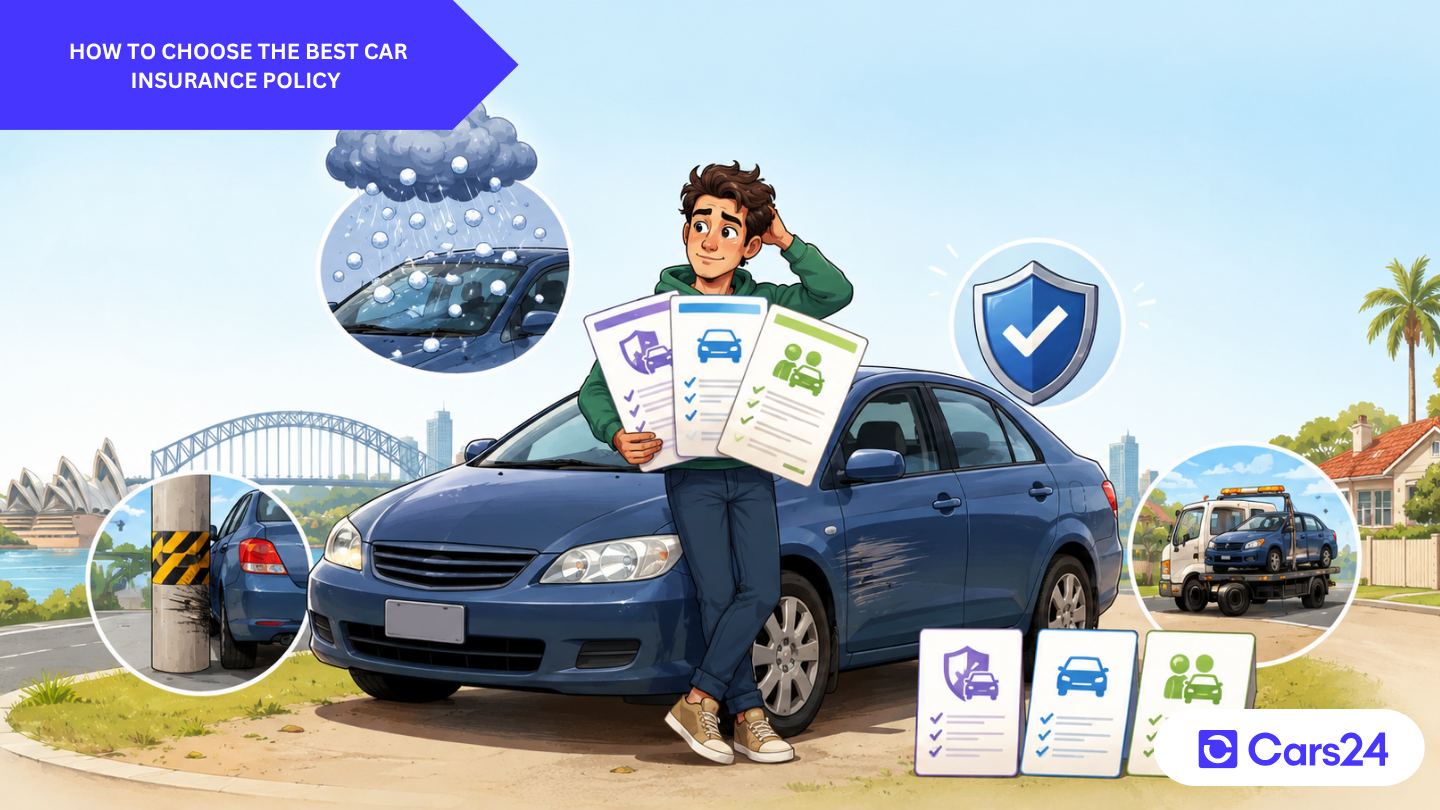
Most people compare car insurance by price first, which makes sense. Nobody wants to pay more than they need to. But the cheaper quote only really matters if the cover still works when something goes wrong. A car insurance policy in Australia needs to suit the car as much as the driver. An older hatchback you own outright, a financed SUV, a hybrid family car and a ute used for work all carry different risks. Where the car is parked, who drives it, how much it would cost to repair and whether you could replace it without stress all change what “good cover” actually looks like.
This guide is general information only and does not consider your personal objectives, financial situation or needs. Always read the relevant Product Disclosure Statement and Target Market Determination before buying a policy.
What should you know before comparing car insurance?
Before you compare car insurance, it helps to separate the basics. CTP is compulsory in Australia, but it only covers personal injury claims, not damage to cars or property. Comprehensive car insurance gives broader protection by covering your car and damage you cause to others for insured events. Third party property damage insurance is more limited, as it covers damage you cause to other cars or property, but not usually your own car.
If you are buying a used car, check the vehicle properly before choosing cover. PPSR status, finance owing, written-off history, condition, market value and modifications can all affect how much protection you may need.
What does car insurance cover in Australia?
Car insurance in Australia usually sits across four main types of cover.
CTP insurance means Compulsory Third Party insurance. It is required for registration and helps cover injuries to people caused by your car. It does not cover damage to your car, someone else’s car or other property.
Third party property damage insurance covers damage your car causes to someone else’s vehicle or property. It usually does not cover damage to your own car.
Third party fire and theft insurance includes third party property damage, plus cover if your car is stolen or damaged by fire.
Comprehensive car insurance is the broadest common car insurance policy. It generally covers damage to your car and damage your car causes to other vehicles or property after an insured event. Depending on the policy, it may also cover theft, fire, storm, hail, flood, towing, windscreen damage, hire car and personal items.
The key detail is this: comprehensive cover is broad, but it is not unlimited. The policy wording decides what is included, what is excluded and what conditions apply when you claim.
How does CTP insurance differ by state?
CTP works differently across Australia, so national advice needs state context.
In NSW, CTP is commonly called a Green Slip and is required before registration. In Victoria, the Transport Accident Charge is included in registration and helps fund the TAC scheme. In Queensland, vehicle owners choose from licensed CTP insurers and pay for CTP as part of registration.
In South Australia, CTP is part of the registration process and vehicle owners choose a government-approved CTP insurer. In Western Australia, motor injury insurance is paid with vehicle registration and administered through the state scheme. In Tasmania, the MAIB operates the compulsory third party personal injury scheme. In the ACT, the Motor Accident Injuries scheme replaced CTP. In the Northern Territory, compulsory third party insurance is included in registration through the Motor Accidents Compensation scheme.
Is CTP enough for most drivers?
CTP alone is usually too limited for everyday driving risk. Think about the real situations where cars get damaged: a wet roundabout, a tight Woolies car park, a driveway scrape, a hailstorm that rolls through while your car is parked outside or a small rear-end accident in school traffic. CTP will not pay for your bumper, the other person’s car, a damaged fence or towing after a crash.
Even if your own car is not worth much, the car you hit might be. A small mistake involving a newer SUV, EV or European car can become an expensive repair bill.
That is why many drivers treat third party property damage as the practical minimum, not CTP. It does not protect your own car like comprehensive cover does, but it helps protect you from the cost of damaging someone else’s car or property.
What is comprehensive car insurance?
Comprehensive car insurance generally covers both sides of an insured accident: damage to your own car and damage your car causes to other people’s vehicles or property. It is usually worth considering if your car is financed, newer, higher in value, hard to replace or important to daily life. In practice, most car lenders require comprehensive cover while the car is under finance, so check your loan agreement before choosing a lower level of insurance.
Comprehensive cover is also useful when being without the car would seriously disrupt your week. If you rely on the car for work, school runs, family care or regular commuting, benefits such as towing, hire car or choice of repairer matter more than they first seem. It also matters for cars that are more complex to repair. Newer SUVs, hybrids, EVs and tech-heavy cars can involve cameras, radar units, sensors, calibration, battery systems and specialist parts. A minor-looking scrape can cost more than expected.
How should used-car buyers choose car insurance?
Used-car buyers should understand the vehicle before choosing the policy. Insurance is easier to compare when you know the car’s history, condition and likely value. Start with:
- Is there finance owing, a recorded security interest or any loan condition that affects insurance?
- Has the car been written off?
- Is it recorded as stolen?
- Does the odometer reading make sense?
- Has it been serviced properly?
- Are there modifications or accessories that need to be declared?
- What would it realistically cost to replace?
A PPSR search can help check whether a vehicle has a recorded security interest and may show stolen or written-off status. It does not show everything, including full ownership history, odometer readings or the exact amount of finance owing, so use it alongside inspection, service history and condition checks.
If you are still comparing cars, browse used cars for sale in Australia and look at the car’s condition, kilometres, features and ownership context before collecting insurance quotes. Eligible Cars24 cars may include a 300-point inspection, PPSR verification, Car Condition Report, RWC, 30-Day Return Guarantee, 3-month roadside assistance and rego transfer support. These are not insurance products. They help you understand the car before you decide what level of insurance makes sense.
Agreed value vs market value: what is the difference?
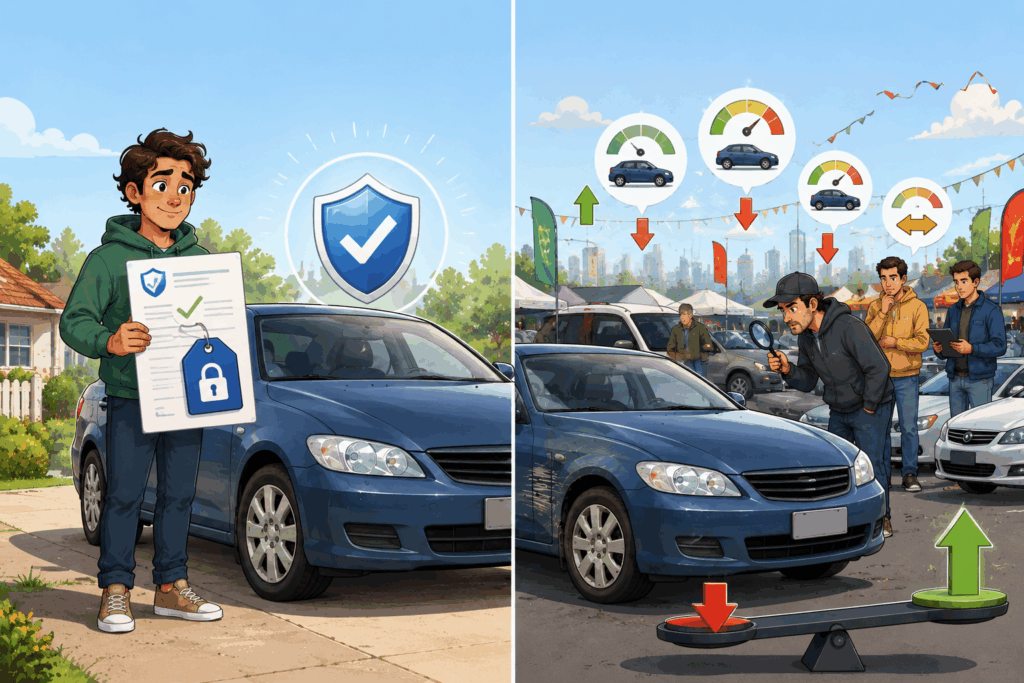
Agreed value is a set amount agreed between you and the insurer when the policy starts or renews. It gives more certainty, but it usually costs more.
Market value is the amount the insurer assesses your car to be worth at the time of the claim. It can cost less, but the payout is less predictable.
For used-car buyers, this matters because two cars with the same badge can be worth very different amounts. Kilometres, service history, variant, condition, location and demand all affect value. A low-kilometre hybrid SUV with clean records may sit in a different price bracket from a higher-kilometre version with patchy history.
Agreed value is often useful for financed, modified, unusually well-kept or harder-to-replace cars. Some insurers ask for photos, documents or a valuation for older, modified or higher-value vehicles. Market value works better when the car is common, lower in value and easy to replace.
How much does car insurance cost in Australia?
Car insurance Australia-wide varies because insurers price risk differently. Your premium changes based on the car, suburb, parking, driver age, claims history, driving record, annual kilometres, cover type, excess, no-claims history and whether the car is financed or modified.
According to the Insurance Council of Australia’s March 2025 Motor Insurance Policy Paper, the average cost of a comprehensive motor insurance policy reached $1,052 per year in 2024, up 42.35% since 2019. The same paper says average claim size rose 42.2% between 2019 and 2024, and average repair time increased from 38.57 days in 2019 to 61.25 days in 2024.
That does not mean your quote will be $1,052. Younger drivers, higher-risk suburbs, expensive cars, modified vehicles and street parking usually cost more. Older drivers with clean records, lower-risk cars and secure parking usually pay less.
Your final premium may also include taxes and charges such as GST and state or territory insurance duty. Insurance duty rules vary by location, so two similar policies in different states may not land at the same final price.
The useful takeaway is simple: get insurance quotes before buying the car, not after. A car that looks affordable on the listing page may feel less affordable once the premium, excess and repair risk are added.
What is a no-claims discount?
A no-claims discount, also called a no-claim bonus or NCD, is a discount some insurers apply when you have not made claims for a period of time. It can make a noticeable difference to your premium, but it is not magic protection from price rises. A protected no-claim bonus may keep the discount in place after a claim, but your overall premium can still rise because of repair costs, location risk, car value or insurer pricing changes.
NCD portability is also not guaranteed. If you switch insurers, check whether the new insurer recognises your previous no-claims history and whether they treat different claim types in the same way. When comparing car insurance companies in Australia, ask what happens after an at-fault claim, a not-at-fault claim, theft, windscreen damage or animal strike. A windscreen-only claim is one common detail to check because some policies treat it separately from accident claims.
How do premium and excess work?
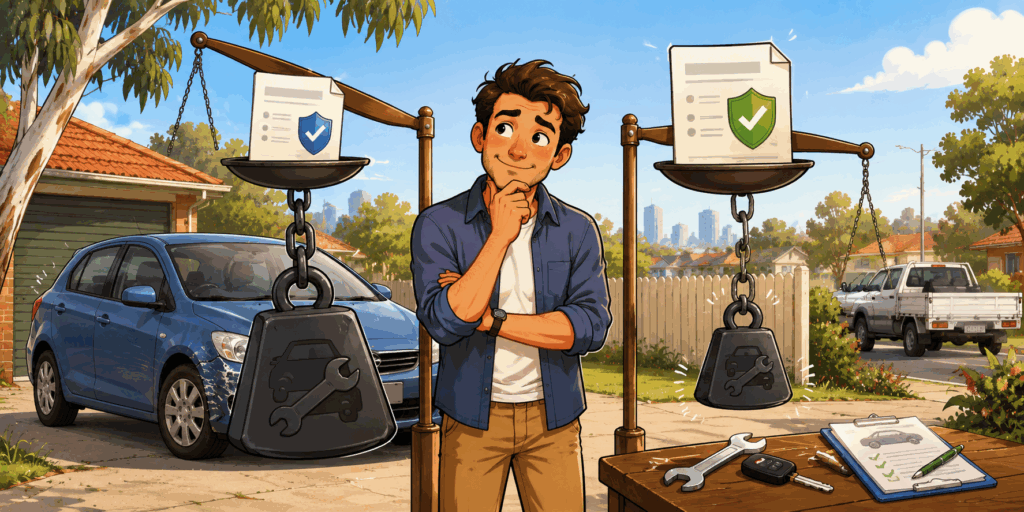
Your premium is what you pay for the policy and your excess is what you pay when you make a claim. A cheaper premium may come with a higher excess. That only works if you could actually afford the excess after an accident.
Choosing a high excess to make the yearly price look better can backfire when you need to claim. Check the basic excess first. Then check for extra excesses that apply to young drivers, inexperienced drivers, unlisted drivers, windscreen claims or certain claim types.
This matters if your car is shared with a partner, sibling, housemate, P-plater or occasional driver and always remember that the cheapest quote is not always the cheapest claim.
How to compare car insurance policies in Australia
A good car insurance comparison process starts by using the same details for every quote. Use the same car, driver list, address, parking type, annual kilometres, cover type, value type and excess. Otherwise, you are not comparing like for like.
When you compare car insurance, check the policy in this order:
- Cover level: Is it third party property, third party fire and theft or comprehensive?
- Car value: Is the policy based on agreed value or market value?
- Excess: What is the basic excess, and can extra excesses apply?
- No-claims discount: How is your no-claims history treated after different claim types?
- Repair rules: Can you choose your repairer, or must you use the insurer’s network?
- Hire car: Is a hire car included after an accident, theft or both?
- Towing: Is towing included after an accident, and are there distance or cost limits?
- Glass cover: Is windscreen cover included or optional?
- Weather cover: How does the policy treat storm, hail, flood and bushfire?
- Drivers: What happens if a young, inexperienced or unlisted driver is behind the wheel?
- Usage: Is private, commuting, business, rideshare or delivery use covered?
- Extras: Are roadside assistance, personal items and accessories included, or sold separately?
- Payment: Does paying monthly cost more than paying annually?
- Claims process: How do you lodge a claim, track repairs and dispute a decision?
You can get quotes directly from insurers, use comparison tools or speak with a broker if your situation is more complex. Just remember that comparison websites may not show every insurer in the market, and a broker may not deal with every insurer either. The PDS and TMD still matter whichever path you use.
Whether you are searching for the best or cheapest car insurance in Australia, the answer usually comes down to the same issue: the best policy is not just the lowest quote, but the one that still protects you properly when something goes wrong.
Does car insurance include roadside assistance?
Roadside assistance is not automatically included in car insurance. Some insurers include it, some sell it as an add-on and some offer it separately. Roadside assistance helps with breakdowns such as flat batteries, flat tyres, lockouts, towing or running out of fuel. Car insurance responds to insured events such as accidents, theft, fire, storm or hail damage, depending on the policy. If you rely on your car daily, roadside assistance is worth comparing. Just do not treat it as a substitute for insurance.
What does car insurance not cover?
Car insurance does not cover every problem that can happen to a car. The exact exclusions depend on the policy, but many policies limit or exclude claims involving:
- mechanical failure
- general wear and tear
- rust or corrosion
- depreciation
- pre-existing damage
- tyre wear not linked to an insured event
- intentional damage
- unlicensed driving
- drink or drug driving
- undeclared modifications
- unsafe or unroadworthy vehicles
- business, rideshare or delivery use that was not disclosed
- driving outside permitted areas
- excluded flood, storm or weather definitions
This is where people get caught. A policy can be called comprehensive and still refuse a claim if the situation falls outside the rules. AFCA received 34,231 general insurance complaints in 2024-25, up 17% from the previous year. AFCA also reported that comprehensive motor vehicle insurance was again the most complained-about general insurance product, making up about a third of general insurance cases.
That does not mean claims always go badly, but it does show why exclusions, claims handling and dispute pathways matter.
What should you check before buying a car insurance policy?
Before buying a policy, ask yourself:
- Could I afford to repair or replace my own car if it was written off?
- Could I afford to pay for damage to someone else’s car?
- Is the car financed, and does my lender require comprehensive cover?
- Is the car parked on the street, in a driveway, in a shared car park or in a locked garage?
- Who else drives the car?
- Are any drivers young, inexperienced or on P-plates?
- Would I need a hire car after an accident?
- Are modifications, accessories or non-standard parts declared?
- Is the car used only privately, or also for commuting, business, rideshare or delivery?
- Does the policy use agreed value or market value?
- How does the insurer treat no-claims discounts?
- Can I afford the excess if I need to claim?
- Have I read the PDS and TMD, not just the quote page?
The right policy is not the one with the nicest ad or the lowest first-year discount. It is the one that still makes sense when something actually goes wrong.
Where Cars24 fits in before insurance
Cars24 does not replace insurance and does not recommend a specific insurer. Its role comes earlier: helping you understand the used car before you choose the cover.
That matters because insurance is not just about the driver. It is also about the car. A used car’s condition, kilometres, finance status, inspection history, roadworthy status, modifications and market value all affect how much protection you may want.
If you are still choosing a used car, start with the car first. Browse used cars online, understand what you are buying, then compare insurance with the full picture in front of you. You can also use the Cars24 car valuation tool if you want a clearer view of your current car’s market value before selling, trading in or thinking about insurance.
The smarter order is simple: understand the car, compare the risk, then choose the car insurance policy.
FAQs about choosing a car insurance policy
What is the best car insurance policy in Australia?
The best car insurance policy depends on your car, budget, driving habits, location and financial risk. Comprehensive cover suits financed, newer or higher-value cars. Third party car insurance suits older, lower-value cars where you mainly want protection from damage you cause to someone else’s car or property.
What is the cheapest car insurance in Australia?
The cheapest car insurance in Australia is usually a lower-cover policy such as third party property damage, but it does not cover damage to your own car. Younger drivers, street parking, high-risk suburbs, modified cars and high excess choices can also change the final price.
Is CTP the same as car insurance?
CTP is compulsory personal injury insurance, but it is not the same as property or vehicle damage cover. It does not pay to repair your car or someone else’s car after an accident. For that, you need third party property, third party fire and theft or comprehensive cover.
What is comprehensive car insurance?
Comprehensive car insurance generally covers damage to your car and damage your car causes to other people’s cars or property after an insured event. Depending on the policy, it may also include theft, fire, storm, hail, towing, windscreen or hire car benefits.
Is third party car insurance enough?
Third party car insurance is enough when your car is older, lower in value and easy for you to replace. It is not enough when losing your own car would create financial stress. It usually covers damage you cause to others, but not damage to your own car.
Should I choose an agreed value or market value?
Choose an agreed value if you want more certainty about the payout if your car is written off or stolen. Choose market value if you are comfortable with the insurer assessing the car’s value at claim time. Agreed value usually costs more, but it is useful for financed, modified or harder-to-replace used cars.
Does car insurance include roadside assistance?
Roadside assistance is not always included in car insurance. Some insurers include it, some sell it as an add-on and some offer it separately. It helps with breakdowns, not insured accident damage, so always check whether it is part of the policy.
Should I get insurance quotes before buying a used car?
Yes. Get insurance quotes before buying a used car so you understand the total cost of ownership. Premiums vary by model, variant, repair cost, driver profile, parking, location and whether the car is financed or modified.

Comments
New Comment