




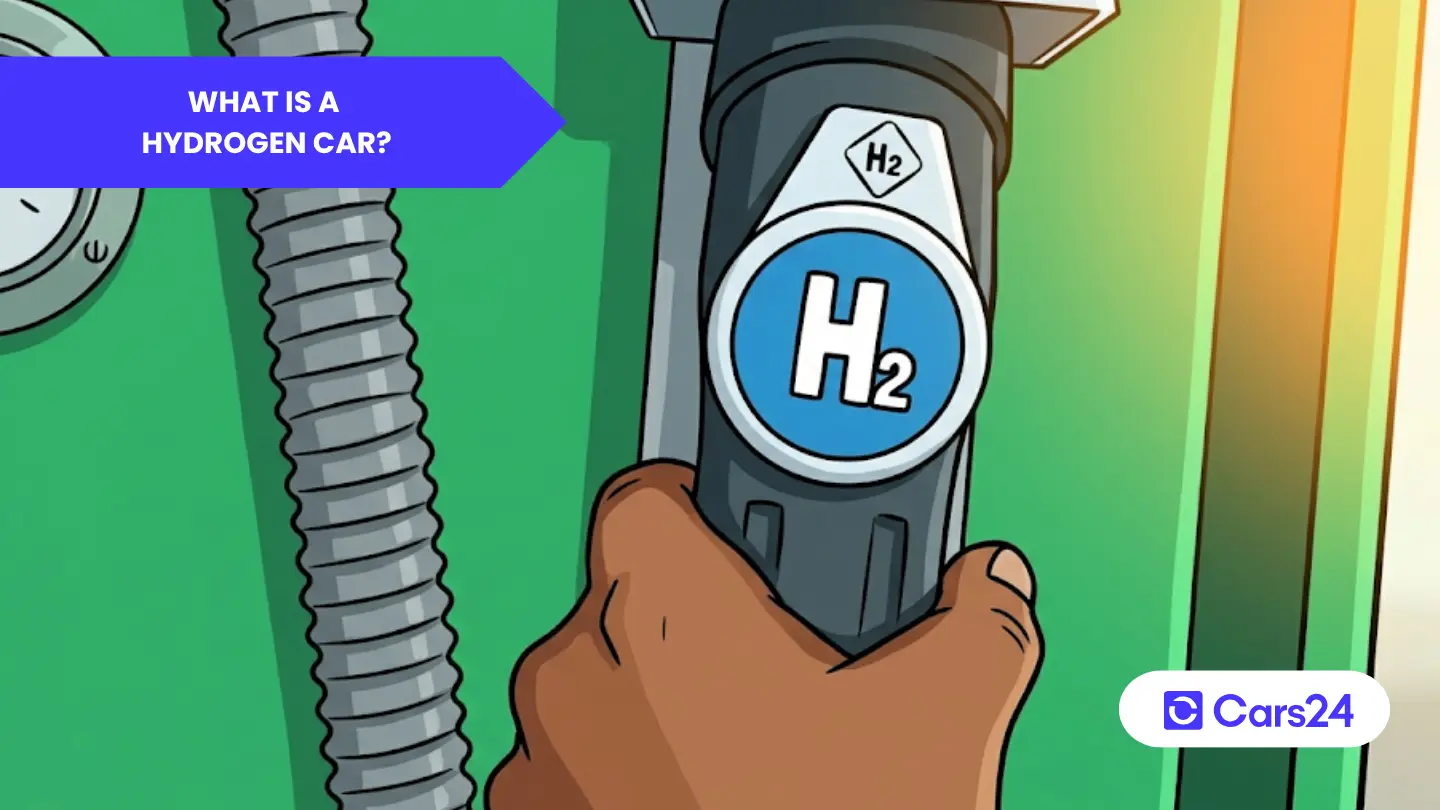
Hydrogen powered vehicles operate very similarly to battery EVs, except they create their own electricity onboard using hydrogen and oxygen.
Despite the technology offering fast refueling times and zero tail pipe emissions, there are currently few hydrogen vehicles due to low infrastructure in Australia.
In this guide by Cars24 Australia we take you through how hydrogen vehicles work, and what they mean compared to electric cars. Plus we’ll tell you if you can purchase one now.
What is a hydrogen car?
Hydrogen cars, also known as hydrogen fuel cell electric vehicles (FCEVs) are electric cars which generate their own electricity. They store hydrogen in a tank, then combine it with oxygen from the air in a fuel cell. This generates electricity to power the wheels. The only emission from the tail pipe is water.
Imagine an electric car with a mini power station contained within. You get all the benefits of an EV, including a whisper-quiet drive. As they have a single speed direct drive transmission system you will notice no gear changes. Simply press the button, put it into Drive and off you go!
The Australian Government’s Green Vehicle Guide confirms that the only emissions from the tail pipe are water vapour and heat.
How do hydrogen cars work?
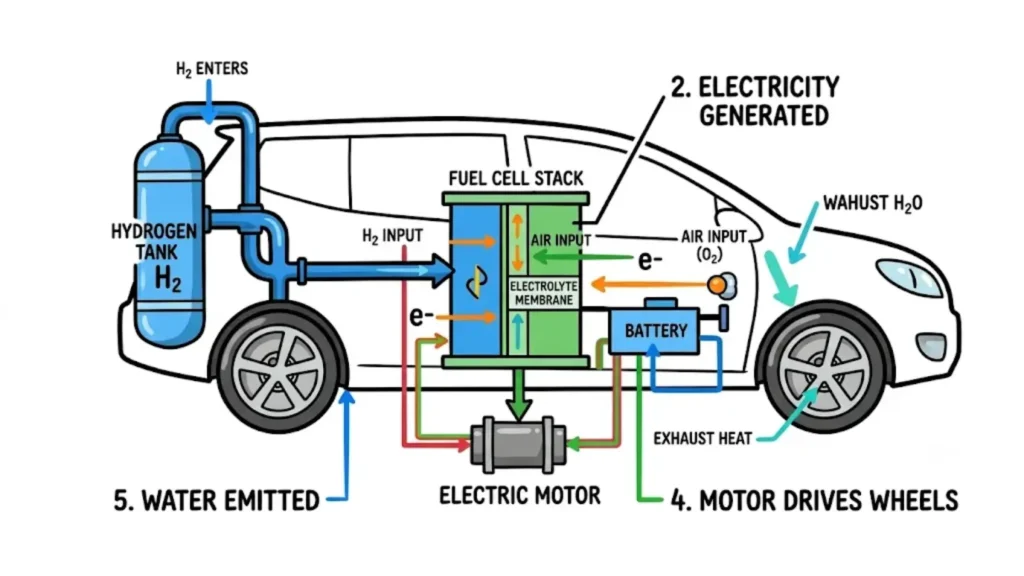
The action happens inside the fuel cell stack, which is a pile of many thin cells. These cells have an anode (positive) and cathode (negative) either side of a thin membrane that will only let protons (tiny charged particles) through.
The following process occurs:
- Hydrogen gas from the tank gets to the anode. This is where a catalyst (usually platinum) breaks down the hydrogen atoms splitting them into protons and electrons.
- The protons pass through the membrane. The electrons can’t so they have to travel round a long circuit outside. This flow of electrons is electricity and powers the motor.
- At the cathode oxygen from the air combines with protons and electrons. They combine to create water. This will then leave the car in vapor form.
This process is a chemical reaction where hydrogen and oxygen combine in an electrochemical reaction. There is no burning involved so there is no noise from the engine or smoke from the exhaust. It can be easily thought of as a rechargeable battery.
What is inside a hydrogen car?
Much of a hydrogen car will look familiar if you have seen an EV. A few parts are different.
- Hydrogen tanks hold the fuel as a gas or liquid, according to RAC. The Toyota Mirai carries three tanks holding 5.6kg of hydrogen, which Toyota rates at around 650km of range.
- The fuel cell stack is where hydrogen and air become electricity.
- A small battery stores spare power and catches energy when you brake. RAC notes it is far smaller and lighter than the pack in a battery EV.
- The electric motor and power electronics manage the electricity and drive the wheels, just like in any EV.
Hydrogen cars vs electric cars
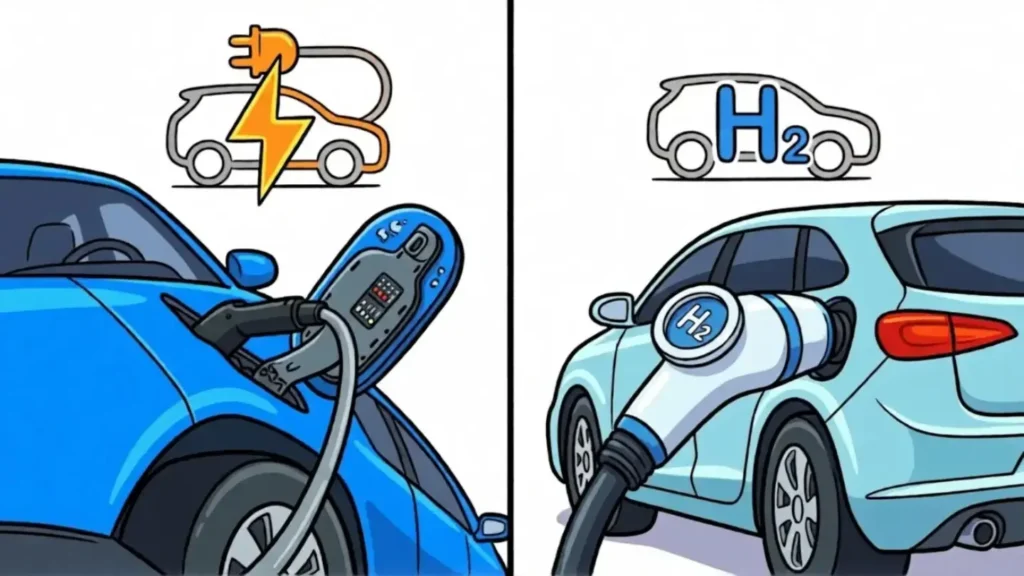
Both are electric cars at heart. The big difference is where the energy lives and how you top it up.
| Hydrogen fuel cell car | Battery electric car | |
| Energy stored in | Hydrogen tanks | Large battery pack |
| Tailpipe emissions | Water vapour and heat | None |
| Refuelling time | About 3 to 5 minutes | Varies by charger, from a fast charge to overnight at home |
| Refuel at home | No | Yes |
| Stations in Australia | Fewer than ten as at 2025 | A growing network of public chargers |
Hydrogen fuel cells are much lighter and can be refilled in less than 5 minutes making them popular for long journeys, fleet vehicles and heavy duty vehicles.
The downside though is availability. Whilst you can simply plug a battery EV into your garage overnight it will need specialist hydrogen stations. This energy intensive process means in general battery electric cars will use less energy to cover the same distance.
Which is better? It really depends on your driving pattern. If you are doing city driving and charging at home then a battery EV would be easier to use right now. If you’re doing long journeys or carrying heavy loads, or have a fleet that returns to the same depot then hydrogen’s quick refilling time becomes a benefit.
If you are weighing up an EV, our guide to the safest affordable electric cars in Australia for 2026 is a good place to start.
Where does hydrogen fuel come from?
Hydrogen is the most common element in the universe, but can only be found trapped in other elements like water and natural gas on earth. How easy it is to extract determines how clean your car will be.
If hydrogen is extracted from coal or gas it creates noxious and greenhouse gases so Green Vehicle Guide explains that it’s important to capture and store these emissions. Green hydrogen uses renewable energy to split water.
Hydrogen cars do not emit any emissions from the tail pipe, but you can use the fuel life cycle emissions calculator from the Green Vehicle Guide to work out the overall footprint of the fuel.
Learn how Australia’s new car emissions rules could affect buyers and the vehicles they choose.
Are hydrogen cars safe?
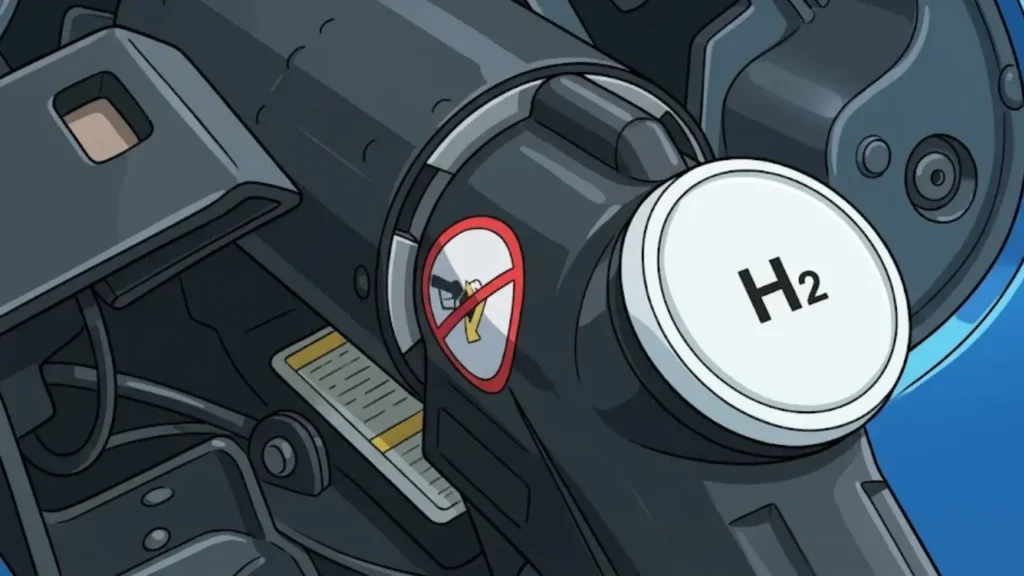
Hydrogen has a bit of an image problem. RAC notes that the Hindenburg disaster and Cold War weapons still shape how people feel about it. Modern cars are a very different story.
Hydrogen is flammable, much like petrol, so cars keep it in tough, purpose-built tanks and fill up through a sealed nozzle. It is also lighter than air, so a leak tends to rise and disperse rather than pool on the ground. The second-generation Toyota Mirai earned a five-star ANCAP safety rating when it launched in Australia.
Can you buy a hydrogen car in Australia?
Unlike a standard car there are two fuel cell cars that have been approved for sale in Australia. These are the Toyota Mirai and Hyundai Nexo however these are both special order only.
The vehicles are supplied to business and government fleets. The Toyota Mirai was designed for a fleet market however as of November 2026 it is still being leased to fleet customers only.
Interesting points to note:
- Toyota is developing a hydrogen fuel cell HiLux. This will be targeted at the fleet market initially however they will have mobile hydrogen refuelling units wherever the fleet is based. However, Toyota’s sales boss has stated they are not ruling out selling them to private customers.
- Hyundai’s second generation Nexo passed its Australian Design Rule Certification in September 2025. It is expected to be released in 2026. As of our last update on 4 November 2026 it still hasn’t been released. Hyundai are currently assessing their next fuel cell model.
Toyota has also tested a hydrogen powered HiAce van. This model doesn’t use a fuel cell but uses a modified engine instead.
If the fuel cell car is below the luxury car tax threshold for fuel efficient vehicles it is exempt from import tariffs and fringe benefits tax under the Electric Car Discount scheme. This applies to vehicles first available from 1 July 2022. Due to changes in rules it is recommended to contact the Australian Taxation Office.
Where can you refuel a hydrogen car?
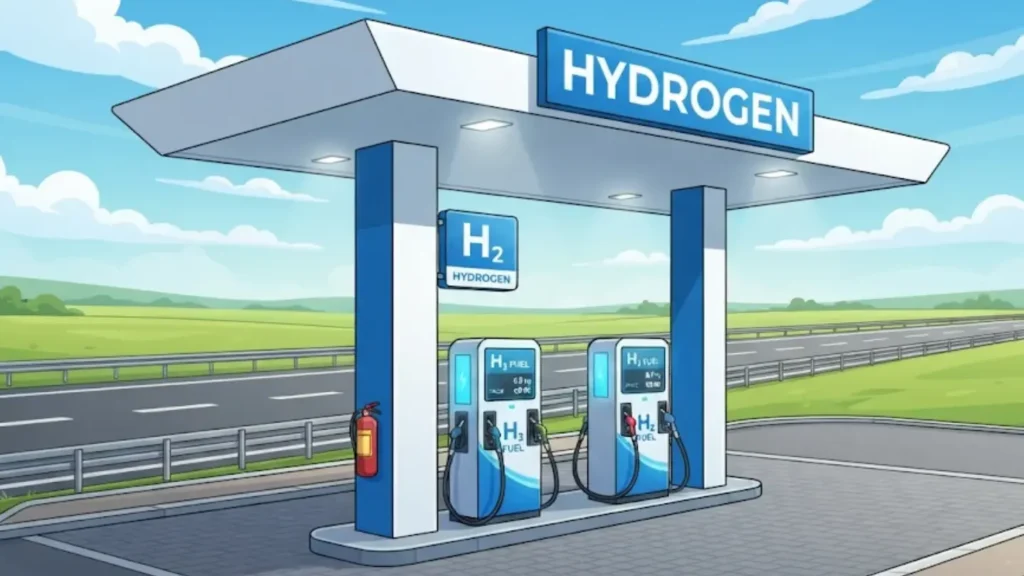
Refuelling a hydrogen car is a relatively straightforward process. The driver connects the hydrogen dispenser nozzle to the vehicle’s refuelling inlet and waits for the tank to fill, which typically takes around three to five minutes. The bigger challenge is finding a station.
According to CSIRO data updated in November 2026, Australia has 10 active hydrogen refuelling station projects, including seven operating facilities and three under construction.
However, not all operating stations are open to the public, with some restricted to manufacturer facilities, industrial sites or dedicated vehicle fleets. This means hydrogen refuelling infrastructure remains extremely limited compared with Australia’s extensive network of petrol stations and growing EV charging network.
Is a hydrogen car right for you?
Hydrogen is exciting, but it is not a practical pick for most households yet. Here is what to weigh up.
- Availability. Only two models are approved and neither is on general retail sale.
- Refuelling access. Your daily routine needs to sit near a station, because you cannot refuel at home.
- Fuel cost. Prices are not widely published in Australia. Toyota estimated about $80 a fill in 2021, so treat older figures with care.
- Servicing and resale. With so few cars on the road, service networks and used values are unproven.
- Fuel source. Ask whether the hydrogen comes from renewable electricity or fossil fuels.
For now, it makes the most sense for fleets that return to base each day and can arrange their own refuelling.
The Cars24 Australia view
At Cars24 Australia, we see hydrogen as a technology well worth understanding, but not yet a practical choice for most households. For now, hybrid and electric cars remain the easier lower emissions options, and we will keep tracking hydrogen as new models and stations arrive.
Yes. It drives with an electric motor but makes its electricity on board from hydrogen instead of storing it in a big plug-in battery.
Only water vapour and heat come from the tailpipe. Emissions from making the hydrogen depend on the method used.
Toyota rates the Mirai at about 650km between refills, according to figures reported by RAC.
About 3 to 5 minutes.
Not through a standard dealer yet. The Toyota Mirai and Hyundai Nexo are the two approved models, and they have mainly gone to fleets.
Comments
New Comment