




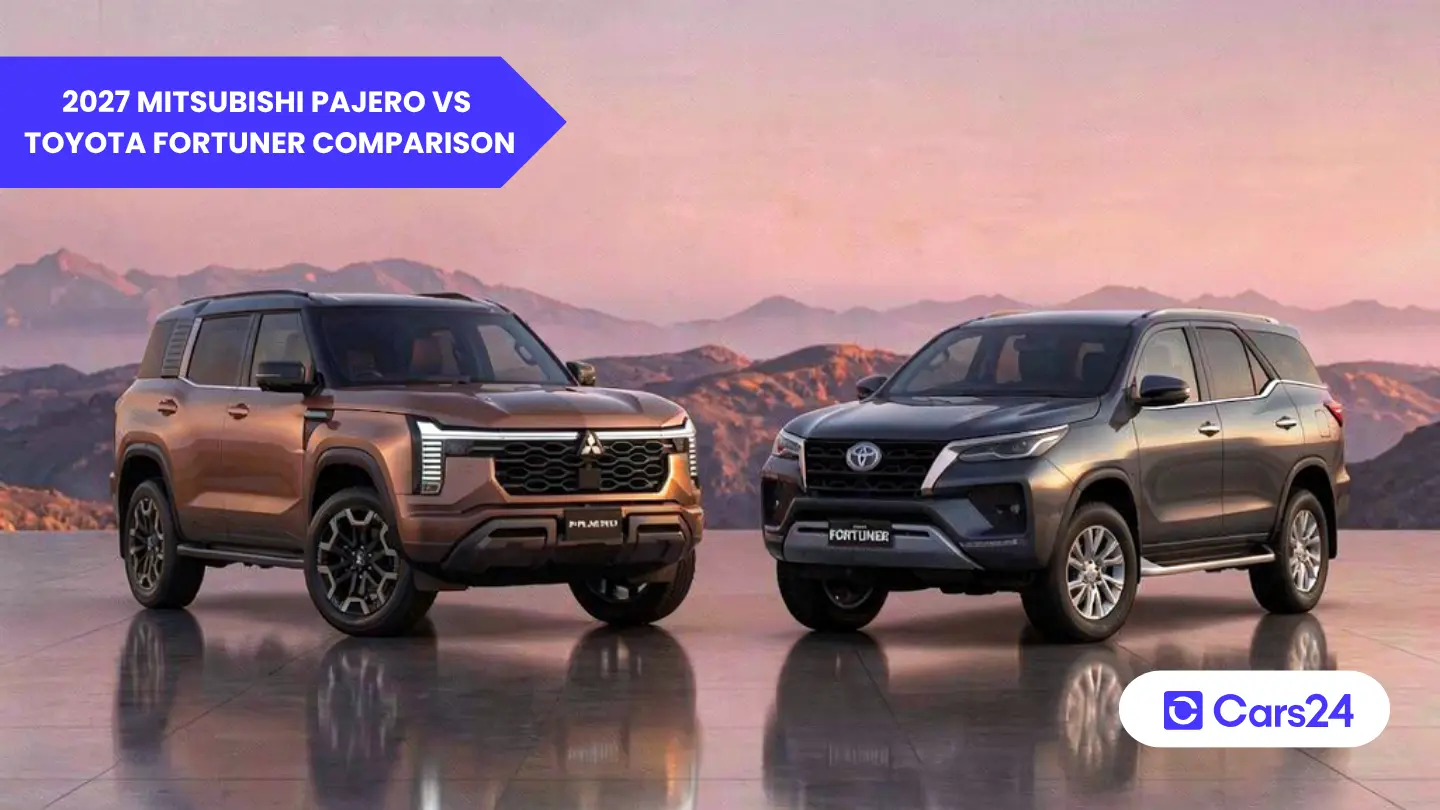
On spec sheets alone, the Mitsubishi Pajero and Toyota Fortuner look like a natural match-up. Both are seven-seaters, ute-based, diesel-powered 4WD wagons built for families who leave the bitumen. But there’s a wrinkle. Toyota Australia has confirmed the Fortuner has been discontinued locally, with all its new vehicle sales ceasing mid-2026.
Practically, that means by the time the new Pajero actually lands here, the Fortuner may no longer be sitting on dealer lots to cross-shop against. We’ve kept the comparison below because the two are a genuinely close match on paper and it’s a useful yardstick for where the new Pajero sits, but the vehicles it’s really lining up against are the ones that beat the Fortuner in the first place: the Prado, Everest and MU-X.
Read more: 2027 Mitsubishi Pajero vs Toyota LandCruiser 300: Comparison
Mitsubishi Pajero vs Toyota Fortuner: Comparison at a glance
| 2027 Mitsubishi Pajero | Toyota Fortuner | |
| Body/chassis | Ladder-frame (Triton-based) | Ladder-frame (HiLux-based) |
| Engine | 2.4L turbo-diesel, 150kW/470-480Nm | 2.8L turbo-diesel (existing Fortuner) |
| Transmission | 8-speed automatic | 6-speed automatic |
| 4WD system | Super Select 4WD-II (2H/4H/4HLc/4LLc) | Part-time 4×4 |
| Seating | 7 (5-seat variant likely for Australia) | 7 |
| Drive modes | Eco, Normal, Gravel, Snow, Mud, Sand, Rock | Standard Toyota off-road modes |
| Infotainment | 12.3–14.3-inch dual screens | Ageing setup, lower-grade dependent |
| Australian availability | Confirmed for 2026, pricing TBA | On sale now, but discontinued locally from mid-2026 |
| Pricing (driveaway) | Not yet announced | $58,404–$72,033 |
Quick answer: Pajero or Fortuner?
On paper, the two are a close match in intent. Both are seven-seat, ute-based, diesel-powered 4WD wagons built for families who actually go off the bitumen. The Toyota Fortuner was the safe, known quantity, available until earlier this year, backed by Toyota’s dealer network, and proven over a decade of HiLux-based reliability. The new Mitsubishi Pajero looks like the more modern vehicle almost across the board, a from-the-ground-up rebuild with a genuinely updated cabin and a beefed-up chassis, though it’s still without confirmed Australian pricing or a local drive to back up the spec sheet. If you were cross-shopping a Fortuner earlier this year, the new Pajero is shaping up to be the more complete package on nearly every measure that mattered.
Pricing and availability: Pajero has a clean slate
The Toyota Fortuner’s final Australian range ran from $58,404 to $72,033 driveaway across GX, GXL and Crusade grades before it was discontinued locally in 2026, buyers were able to order one as recently as earlier this year, so it’s still a fresh reference point for value. The Mitsubishi Pajero doesn’t have Australian pricing yet, and Mitsubishi has only confirmed a 2026 local launch. Given the scale of the changes underneath, expect the new Pajero to land somewhere around or above the Fortuner’s pricing band rather than undercut it, but that’s a guess until Mitsubishi confirms numbers.
CARS24 Australia’s verdict: Pajero
Engines and performance: Fortuner has more torque, Pajero has the newer gearbox
The Mitsubishi Pajero launches with a 2.4-litre four-cylinder turbo-diesel producing 150kW and between 470Nm and 480Nm, depending on variant. It’s paired with an eight-speed automatic. The Toyota Fortuner’s 2.8-litre turbo-diesel produces 150kW and 500Nm and uses a six-speed automatic. So Toyota wins on peak torque, but Mitsubishi has the newer transmission.
The Pajero’s eight-speed automatic should give it a more flexible spread of ratios than the Toyota Fortuner’s six-speed unit, while the engine remains firmly focused on usable torque rather than outright performance. It’s also worth remembering that the Fortuner was never a performance-oriented SUV. Its appeal came from its combination of diesel torque, ute-based durability and off-road ability.
CARS24 Australia’s verdict: Pajero, narrowly
4WD capability: Pajero brings the serious hardware
This is where the Pajero starts to separate itself from the Fortuner. The Toyota Fortuner uses a part-time 4WD system with low range, backed by its HiLux-derived ladder-frame architecture. It’s a genuine off-roader rather than a soft-roader dressed up with rugged styling.
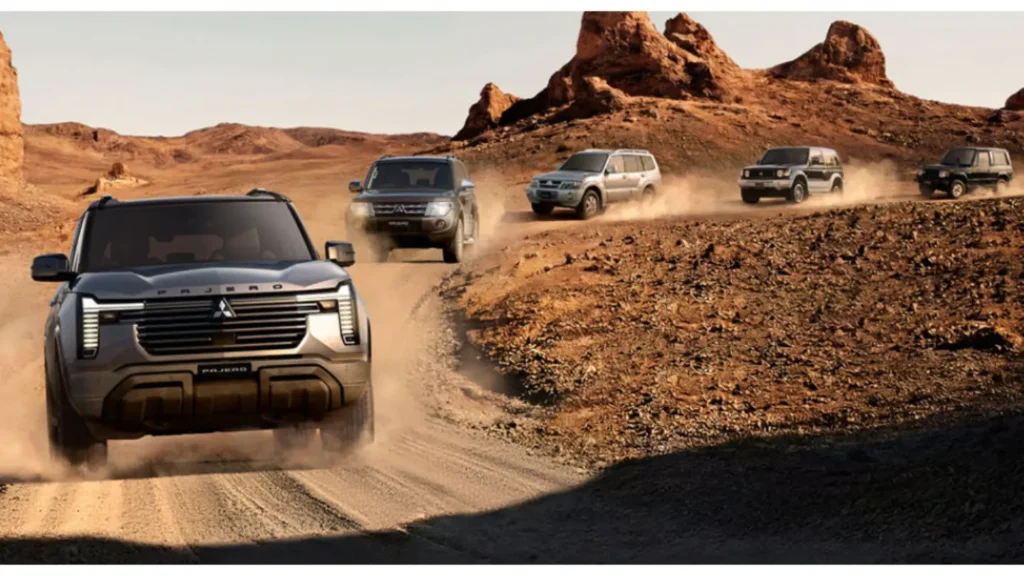
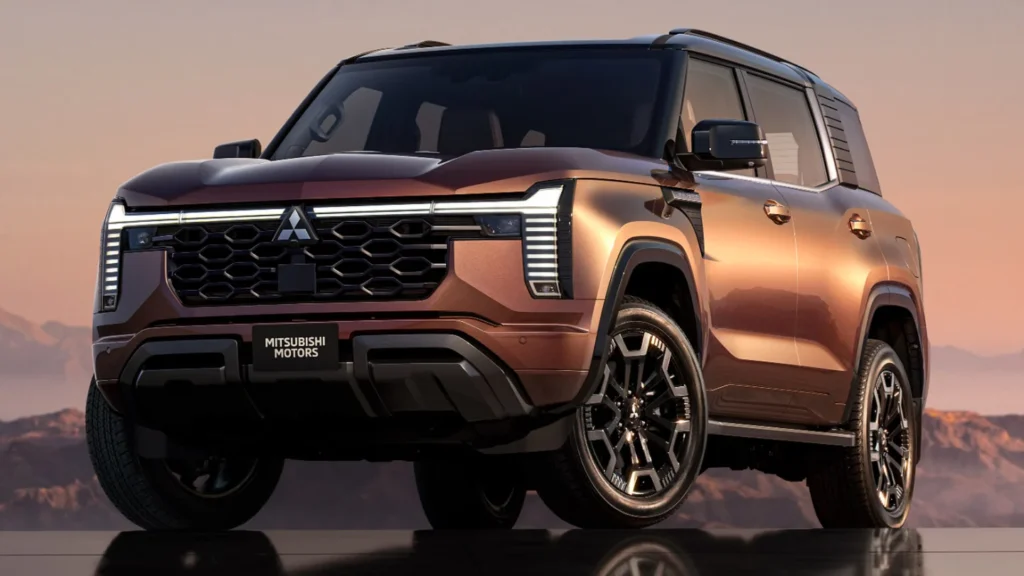
The Mitsubishi Pajero takes a more sophisticated approach. Its Super Select 4WD-II system offers 2H, 4H, 4HLc and 4LLc modes, while seven terrain settings cover Eco, Normal, Gravel, Snow, Mud, Sand and Rock. Mitsubishi has also reinforced the ladder frame compared with the Triton on which it is based and developed a dedicated suspension setup, including a five-link rigid rear axle with coil springs.
That combination is significant because Mitsubishi isn’t simply turning its ute into a wagon. It’s developing the Pajero specifically around the needs of an SUV.
CARS24 Australia’s verdict: Pajero, on paper
Towing: Fortuner has the proven figure
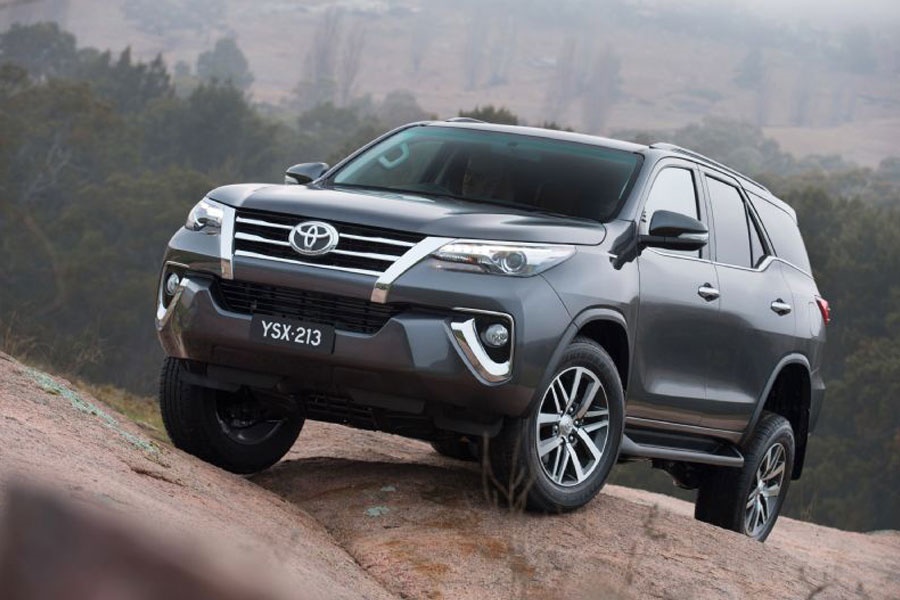
The Toyota Fortuner’s 3100kg braked towing capacity is one of its useful strengths. That’s below the 3500kg benchmark set by several larger 4WD wagons, but it is enough for many caravans, boats and trailers. Mitsubishi hasn’t yet confirmed the Australian Pajero’s towing capacity.
Its 470–480Nm diesel suggests it should have reasonable towing credentials, but there’s no substitute for an official rating. For buyers shopping specifically around towing capacity, the Fortuner therefore retains an advantage, even if that advantage now mainly matters to buyers considering a used example.
CARS24 Australia’s verdict: Fortuner
Interior and tech: This is where the generation gap shows
The Toyota Fortuner’s cabin is functional, but this is one area where its age has become increasingly difficult to hide. The Mitsubishi Pajero represents a much bigger technological step. Higher grades get 14.3-inch infotainment and driver display screens, while other variants use 12.3-inch displays. There’s wireless smartphone charging, USB-C connectivity and dedicated off-road information.
Mitsubishi has also retained physical climate controls, rather than forcing basic functions through a touchscreen. The second row slides 150mm, giving owners more flexibility between passenger space and luggage room. Mitsubishi says the third row has also been designed to accommodate adults. That matters because seven-seat usability is one of the areas where modern large SUVs have moved forward significantly.
CARS24 Australia’s verdict: Pajero
Size and practicality: Pajero looks better suited to modern families
The Pajero measures 4920mm long, 1925mm wide and up to 1910mm tall, with a 2870mm wheelbase. It’s firmly in the large family 4WD category, while its sliding second row adds useful flexibility. The seven-seat configuration is offered globally, while a five-seat version is expected for Australia. That could be particularly useful for buyers who don’t need a third row and would rather have additional luggage space.
The Toyota Fortuner is also a seven-seater, but its packaging reflects the fact that its basic formula dates back much further. Toyota’s decision to discontinue the model also says something about how Australian buyers are using this segment. The company said customers were increasingly moving towards the HiLux or other SUVs instead.
CARS24 Australia’s verdict: Pajero
Off-road ability: Advantage Pajero
The Pajero name has serious off-road credentials, and Mitsubishi clearly wants the new generation to reconnect with that reputation. The old Pajero was a successful Dakar Rally competitor, while the new model brings back a ladder-frame chassis, low-range 4WD and Super Select II.
The Fortuner has its own off-road credibility thanks to its HiLux foundations and conventional 4WD system. But the Pajero’s combination of seven terrain modes, multiple Super Select configurations, reinforced chassis and dedicated suspension development suggests Mitsubishi is targeting buyers who actually intend to take the vehicle beyond the bitumen.
CARS24 Australia’s verdict: Pajero
So, which is best?
Spec for spec, the new Mitsubishi Pajero comes out ahead of the Fortuner on almost every measure: a newer eight-speed transmission versus the Fortuner’s six-speed, a more flexible Super Select 4WD-II system, and a cabin that directly fixes the Fortuner’s most common complaints, dated tech, missing safety gear in lower grades, and a squeezed third row.
The Toyota Fortuner’s case was always about being the known, straightforward option, simple mechanicals, a decade of runs on the board, and Toyota’s dealer and service network behind it. That’s no longer something new buyers can act on, since it’s no longer on sale. However, it’s still a fair yardstick: anyone who looked at a Fortuner earlier this year and is now waiting on the new Pajero is trading a proven, slightly dated package for a more modern one that’s yet to prove itself locally.

Comments
New Comment