




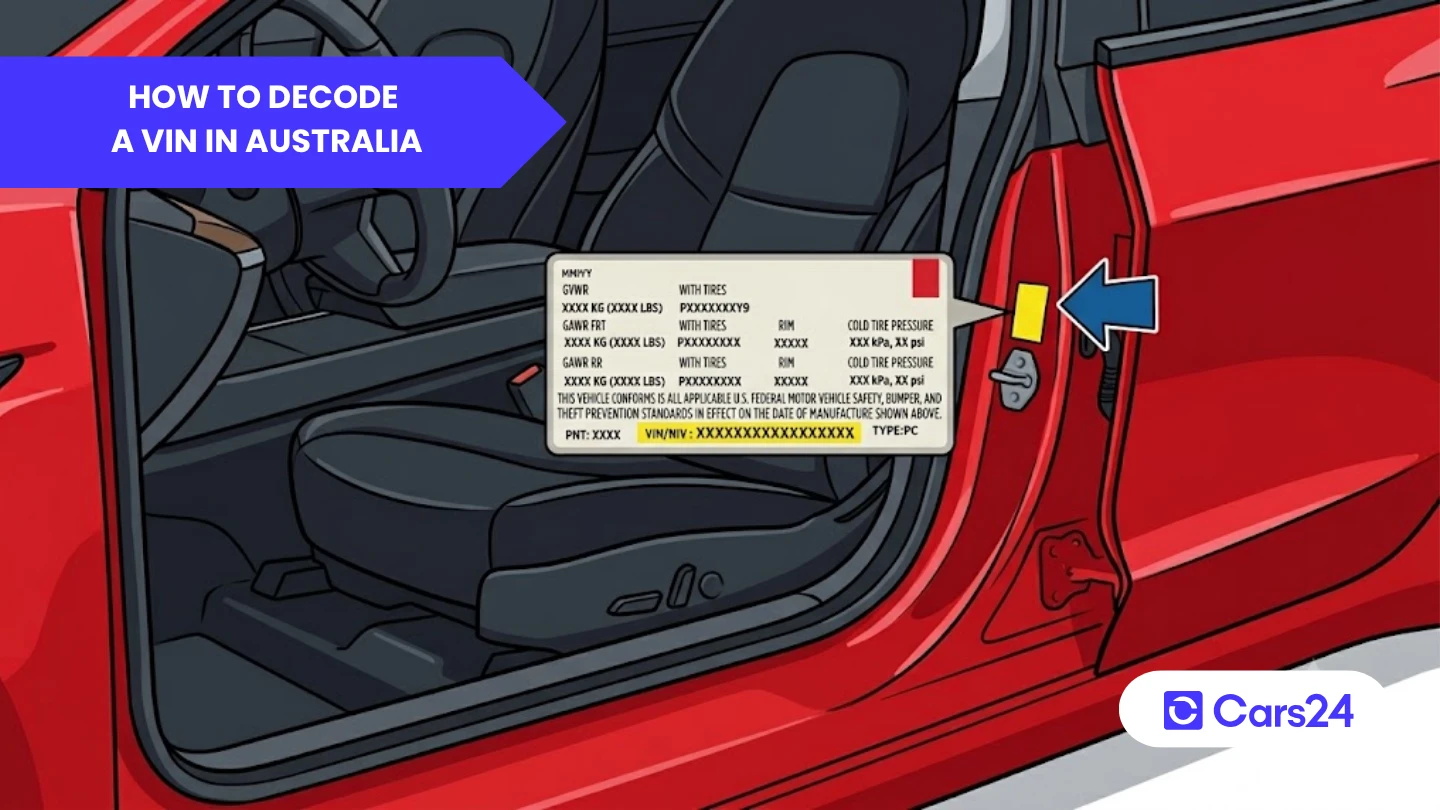
Buying a car can be a once-in-a-lifetime experience for someone. However, buying a used car can sometimes turn that once-in-a-lifetime experience into an unforgettable one. Prior to buying a pre-owned vehicle, it is essential to establish that the car is precisely what the seller claims it to be. One of the easiest ways of doing so is by double-checking the Vehicle Identification Number (VIN). Every vehicle in Australia comes with a VIN, a unique combination of numbers and letters that gives away detailed information about the car, including the manufacturer, model, engine, and the year of production.
Additionally, it helps identify the vehicle and cross-referencing it against national, state, and local databases that keep track of stolen, salvaged, and defunct cars ensures that your prospective purchase does not have an alternative history before it can have a new owner.
We have put together this ultimate guide on VIN numbers, where to find them, what they mean, and how to decode them to ensure that you are purchasing exactly the car you think you are buying. So why do used car buyers in Australia need to know what a VIN number is?
What is a VIN number?
A VIN (Vehicle Identification Number) is a unique combination of 17 characters issued to any vehicle by the manufacturer. This number is the fingerprint of the car, which means that no two cars have the same VIN.
The latest generation of VINs uses international standards and consists of numbers and letters. The VIN of a car can give you an insight into various details about the vehicle, e.g., where and by whom it was manufactured, what body style it has, what kind of engine it has, its model year, and its production sequence. Australian government authorities use VINs to identify vehicles during registration, and for all of them, these numbers are encoded according to specific rules. For example, the VINs of vehicles consist of 17 characters, excluding the letters I, O, and Q, to avoid confusion with similar numbers.
When registering your car, purchasing auto insurance, buying parts, or even when buying a used car, you will see that you need a VIN number, which is one of the most critical identifiers of a vehicle.
Why is a VIN important?
Although many buyers focus on a vehicle’s registration number, the VIN is far more reliable because it stays with the vehicle throughout its lifetime.
Checking a VIN can help you:
- Confirm the vehicle’s identity.
- Verify the make, model and specifications.
- Check if the vehicle has been reported stolen.
- Find out whether it has outstanding finance.
- Identify whether it has been written off.
- Check for outstanding manufacturer recalls.
- Ensure the VIN on the vehicle matches the registration and ownership documents.
Taking a few minutes to verify the VIN could save you from buying a vehicle with costly hidden issues.
Where can you find a VIN?
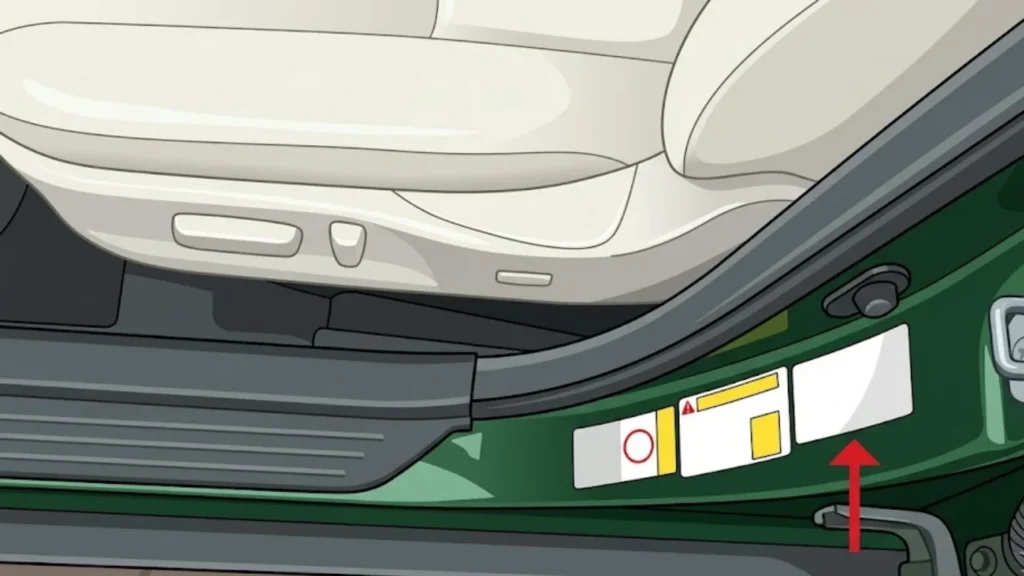
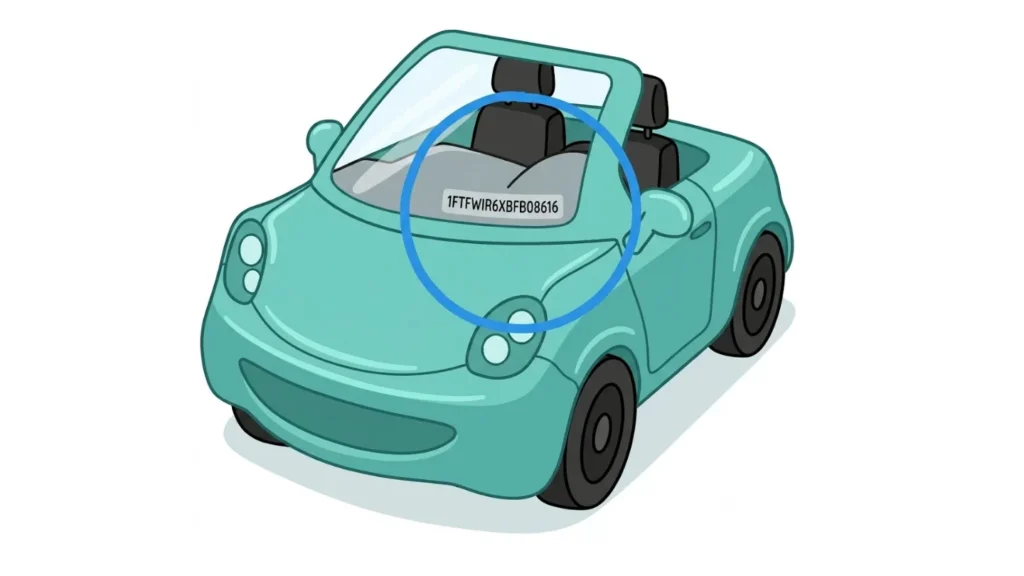
It can be somewhat challenging to locate a VIN. It can be found in several different places depending on the make and model of the vehicle. These places may include:
- On the driver’s side dashboard, visible through the windscreen.
- Inside driver’s door jamb.
- In the engine bay.
- On the vehicle’s compliance plate.
- Registration papers.
- Insurance documents.
- Owner’s manual.
When inspecting a used cat, always compare the VIN displayed on the car with the VIN printed on its paperwork. Any mismatch should be investigated before proceeding with the purchase.
How can you decode a VIN number?
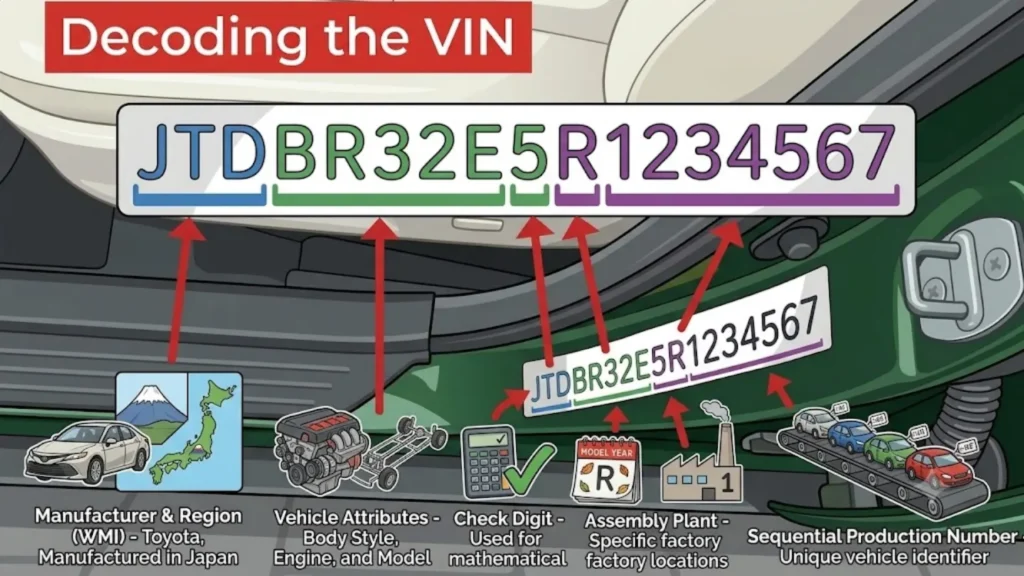
A VIN is made up of 17 characters, with each part revealing different details about the vehicle. Here’s how to read it.
Characters 1–3: World Manufacturer Identifier (WMI)
The first 3 characters give you details about the vehicle’s manufacturer and what the country of origin is. Let’s see an example now:
| Prefix | Country/Manufacturer |
| J | Japan |
| W | Germany |
| 1, 4 or 5 | United States |
| 6 | Australia |
| Z | Italy |
For example, many Toyota vehicles built in Japan begin with J, while German-built BMWs and Mercedes-Benz models often start with W.
Characters 4–8: Vehicle Descriptor Section (VDS)
The next 5 characters describe the vehicle itself. Depending on the manufacturer, these characters can identify:
- Model
- Body style
- Engine type
- Transmission
- Drivetrain
- Safety equipment
Manufacturers use their own coding systems, so these characters vary between brands.
Character 9: Check digit
The 9th character in the VIN is used as the check digit. It is used not to describe the vehicle but rather to identify possible errors in the VIN or fraudulent VIN numbers.
Character 10: Model year
The 10th character in the VIN indicates the car’s model year. As different years may have the same VIN numbers, it is essential always to check this number in correlation with other data concerning the car.
Character 11: Assembly plant
The 11th character indicates the plant where the vehicle was assembled. In other words, the manufacturer can identify where the vehicle was assembled using this code. It is mostly used for quality control and production purposes.
Characters 12–17: Serial number
The final 6 characters are unique to the vehicle and serve as its serial number. They are used to determine the vehicle’s unique production number. In other words, these numbers help differentiate between two cars made by the same manufacturer.
Example of decoding a VIN
Consider this VIN: JTDBR32E5R1234567
Here’s how it can be broken down.
| VIN Section | Meaning |
| JTD | Toyota manufactured in Japan |
| BR32E | Vehicle attributes such as body style and engine |
| 5 | Check digit |
| R | Model year code |
| 1 | Assembly plant |
| 234567 | Unique production number |
While the exact meaning of some characters varies by manufacturer, the VIN structure remains consistent.
How to check a VIN in Australia
Decoding a VIN provides information about the vehicle’s identification but not about its ownership and financial status. It is critical to perform a VIN check before buying a car for the following reasons:
- Outstanding finance
- Stolen vehicle records
- Written-off status
- Recall information
- Registration details
- Vehicle specifications
In Australia, the Personal Property Securities Register (PPSR) is used to check if a vehicle has any encumbrances or is written off, while the National Exchange of Vehicle and Driver Information System (NEVDIS) maintains Australia’s national VIN database that contains VINs used for vehicle registration.
VIN vs registration number

Most people think of a registration number and a VIN as the same thing, however, these are two separate things.
| VIN | Registration number |
| Permanently assigned by the manufacturer | Issued by the state or territory |
| Never changes | Can change if registration changes |
| Identifies the vehicle | Identifies the vehicle’s registration |
Now, when it comes to identification, which one can be used for checking if a used car is not stolen? Well, the VIN is the only real way to identify motor vehicles.
VIN vs engine number
Another pair of terms that are often mixed up with each other are a VIN and an engine number. The former is used to identify a vehicle, while the latter is used to identify the engine that is installed on it.
Therefore, if someone replaces the engine on a car, it will get a new engine number, while the VIN will stay the same.
Common VIN mistakes to avoid
Do not make these common mistakes when searching for a VIN:
- Confusing the VIN with the registration number,
- not entering 17 characters,
- mixing up the numbers 0 and 1 with the letters O and I
- not noting a discrepancy between the VIN on the vehicle and on the documents, and
- purchasing a car based only on the results of a VIN history check.
Checking a VIN can help you avoid a variety of complications in the future.
Cars24 Australia says
A VIN may seem like just a jumble of letters and numbers, but it is much more. It is the key to learning everything about your car. From buying your first set of wheels to upgrading to something new, being able to decode a VIN and do a VIN check will help you find exactly what you are looking for at the right price
Before buying any secondhand vehicle in Australia, always compare your car’s VIN with the documents and perform a VIN history check. This step is essential if you want to maximize your chances of buying a desirable car with the right equipment at a fair price.
No, that’s not possible. Every VIN is unique to a single vehicle.
Yes. Modern vehicles use a standard 17-character VIN, excluding the letters I, O and Q.
Yes. You can decode the VIN yourself, as it doesn’t have any specific symbols that require a VIN decoder, though manufacturer-specific sections can be decoded only with a VIN decoder, the official papers from the manufacturer, or other tools.
Definitely, yes. By checking the VIN, you can see if the car has a financing account, or if it’s been declared stolen or junked.

Comments
New Comment