




An Australian winter can be easy to underestimate because a day that feels pleasant by lunchtime may still begin with a fogged windscreen, wipers smearing road grime across the glass and an engine that takes a little longer to start on the school or work run.
For drivers in Melbourne and Adelaide, winter often brings wet roads and poor visibility, while Canberra, Hobart and inland towns can wake up to frost. Brisbane stays milder, but cooler mornings and earlier sunsets can still expose a tired battery or failed globe. If you are heading to Perisher, Thredbo or Falls Creek, the same car that handles the daily commute will need chains, warmer gear and more careful planning.
This guide covers the checks most cars need, including the battery, tyres, brakes, windscreen and lights, before explaining what to add for frost, alpine roads and longer winter trips.
Winter has a way of finding the weak spots
Cold weather rarely creates a car problem overnight. It makes existing wear easier to notice. An older battery may take longer to start the engine, a tyre that was already low can trigger a warning and wiper rubber worn down by the summer sun may start smearing as soon as the winter rain arrives.
A five minute check now can save a breakdown later. If the engine is turning over more slowly than usual, have the battery tested. If a windscreen chip starts growing or the brakes begin to squeal or grind, deal with it before a wet drive makes the problem harder to manage.
These winter checks sit alongside the jobs your car needs throughout the year. The Cars24 car maintenance checklist covers those basics, while the next few sections focus on the parts that deserve a closer look when mornings cool down and roads stay wet.
Car battery replacement should begin with a test
A weak battery often shows itself when the mornings turn cold. Lower temperatures slow the chemical reaction inside a lead-acid battery, leaving it with less power to start the engine. The wear may have begun much earlier because Australian summer heat is hard on car batteries. Winter is when that lost strength becomes harder to miss, which is why a battery test is a useful part of winter car care.
It is important to not only catch whether the car starts, but how it starts. A slower turn of the engine, repeated clicking or lights that dip during start-up can all point to a weak battery. If the battery warning light stays on once the engine is running, the charging system may be the real problem and a new battery will not fix a faulty alternator. A swollen, cracked or leaking battery is different again and should be left for a professional to handle.
Three to five years is a common battery life, but it is not a fixed deadline. Some batteries fail sooner, while others last longer depending on the weather, the car and how it is driven. Cars24 explains this in more detail in its guide to why car batteries fail in winter.
Before paying for car battery replacement, ask the workshop to test both the battery and the charging system. Car battery replacement makes sense if the battery fails the test, no longer holds a charge or has a damaged case. A battery flattened by an interior light may only need to be charged, but one that keeps going flat needs further investigation.
Frequent short trips can be part of the problem too. If the engine is switched off after only a few minutes, the alternator may not have enough time to replace the power used during start-up. Mention this when the battery is tested, especially if most of your driving is made up of quick local trips. A charged jump starter can also be useful on longer or regional drives, as long as it suits the vehicle and you know how to use it safely.
Car brakes and tyres need more attention on wet winter roads
A little extra stopping distance can be easy to miss on a dry road, but in heavy rain, it is not. Winter does not wear out car brakes, but wet roads, standing water and ice leave much less room for a worn part or a slow response.
Noise is often the first hint. So, monitor if you notice a brief squeak after the car has been parked in rain, it can come from light surface rust on the brake discs and may disappear once you drive. Grinding, shaking, pulling to one side or a pedal that feels soft is different and needs to be checked. If the brake warning light stays on or the pedal suddenly changes, pull over somewhere safe and do not keep driving.
Pads, discs and brake fluid are not easy to judge from the driveway. A workshop can measure the wear and check for leaks or other faults. The Cars24 guide to what a car service includes explains the brake checks that may be carried out during a regular service, but a new problem with car brakes should not wait until the next booking.
The brakes can only do their job if the rubber can grip the road, so it’s important to keep an eye on tyres. Check the pressure when the tyres are cold, which means before driving or after the car has been parked for a few hours. Use the number on the tyre placard, usually found inside the driver’s door opening. The larger number printed on the tyre itself is not the recommended pressure for your car. This tyre pressure guide explains where to find the correct figure.
Take a quick look at the tread while you are there for cuts, cracks, bulges and uneven wear all deserve attention. Car tyres in Australia generally need at least 1.5 mm of tread across the main grooves, but reaching the legal minimum does not guarantee strong grip in heavy rain. Do not lower the pressure to create more grip either. It can make the car less stable and wear the tyres faster.
The tyre people forget most is usually the one under the boot floor. A spare can lose air even when it has never been used, so include it in your winter car care check. If your car has a puncture kit instead, check the sealant date and make sure the compressor is still there. Space-saver spares also have limits on speed and distance, which you will find on the wheel or in the owner’s manual.
Car lights and clear glass matter on dark, wet drives
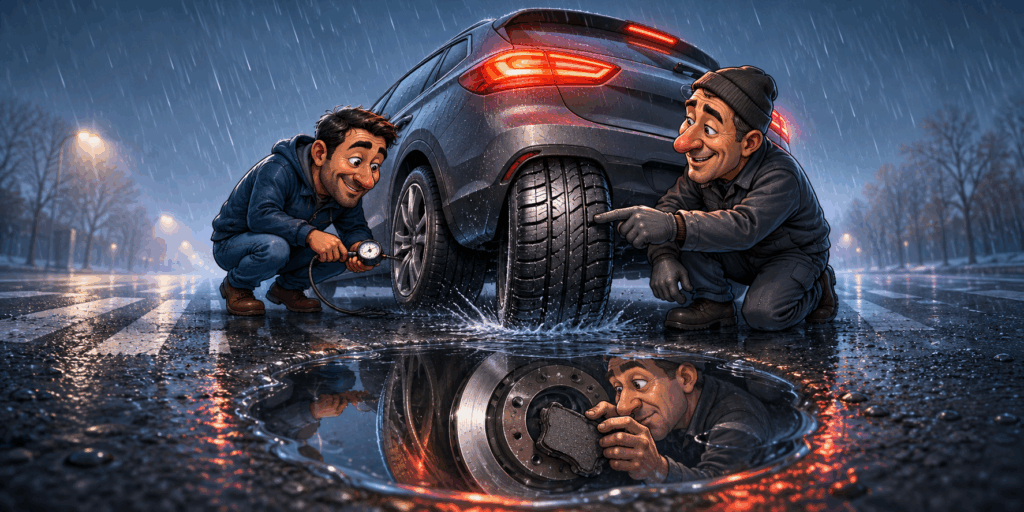
Once the brakes and tyres are checked, the next job is making sure you can see the road and other drivers can see you. This becomes more important in winter when the trip home may happen after sunset and a shower can quickly fill the road with spray. Working car lights are not only about lighting the way ahead. Your tail lights, indicators and brake lights also tell everyone around you what the car is doing.
Checking your lights is one job you can do at home, though it helps to have someone else nearby to spot what’s working. Sit in the driver’s seat and work through the low beam, high beam, indicators, brake lights, tail lights, number-plate lights and reversing lights while they walk around the car. Wipe any dirt from the lenses too. Even a working globe will look dull through a layer of mud or road grime.
One failed globe may be a simple replacement. If several car lights stop working together, or a new globe still does not work, there may be a problem with a fuse, wiring or water inside the lamp. Let a workshop or auto electrician take a look rather than changing more globes and hoping for the best. After a wet drive, give the reversing camera and parking sensors a quick wipe as well.
Then move to the windscreen. Run the washers and watch what the wipers leave behind. A blade that skips, squeaks or spreads water into wide streaks is no longer clearing the glass properly. The damage often starts during the hot Australian summer when sun and dirt dry out the rubber, but winter rain is when it becomes obvious. If the blades need changing, refer to this guide for replacing windscreen wipers.
Top up the washer bottle with proper windscreen fluid, then test the front and rear demisters. Turning on the air conditioning helps remove moisture even when warm air is coming through the vents. Fresh air usually clears a fogged windscreen faster than recirculation, especially when wet clothes or shoes have made the cabin damp. Cleaning the inside of the glass also helps because a greasy film can make fog and headlight glare worse.
Car windscreen replacement is not always the first answer
Clear glass also means keeping an eye on any chips already in the windscreen. A small mark can spread when cold glass warms too quickly or the car hits a rough patch of road. If the windscreen is frosted, let the demister clear it slowly or use a glass-safe scraper. Boiling water can make existing damage worse.
Many small chips can be repaired before they become cracks. Car windscreen replacement is more likely when the crack is long, reaches an edge or sits in the driver’s view. Cars with a camera behind the glass may also need recalibration after new glass is fitted.
Have the damage checked rather than guessing to help decide whether to repair or replace a cracked windscreen. Acting early may save you from a full car windscreen replacement.
Car care under the bonnet
Once the windscreen is clear and the outside checks are done, there are a few things worth looking at under the bonnet. This part of winter car care is not about changing every fluid because the weather has cooled. It is about checking the levels and using the products made for your car.
Take engine oil first. Winter alone is not a reason to change it or move to a thinner grade. If a service is due, book it. If not, check the level using the method in the owner’s manual because some cars need to be warm while others should sit for a while first. The car should be on level ground either way, use the oil grade listed in the manual.
| Refer to: The Cars24 engine oil guide if the numbers and letters on the bottle are confusing. |
Coolant needs a little more care because it helps the engine stay at the right temperature and protects the cooling system from rust and freezing. Check the level only when the engine is cold and use the exact type listed for the car. Two coolants can be the same colour and still be unsuitable to mix, so colour is not enough to go by. Never open a hot radiator cap because the system may be under pressure and the hot liquid can cause serious burns.
While you are there, look at the hoses and belts. Cracks, frayed edges or a fresh wet patch are worth showing to a mechanic. A sweet smell around the engine can also point to leaking coolant. Topping it up again and again is not a fix if the level keeps dropping.
The heater can offer another clue. If the engine has warmed up but the cabin is still getting cold air, the cooling system may need attention. Weak airflow may come from a dirty cabin filter or a problem with the fan. An exhaust that suddenly sounds louder, or exhaust fumes entering the cabin, should be checked straight away. Carbon monoxide is colourless and odourless, and breathing it can be dangerous.
There is usually no need to book a special winter tune-up for a modern car. Spark plugs should be changed when the normal service schedule says so, not simply because June has arrived. Hard starting, rough running or a flashing engine light does need a prompt check. Older cars may also have plug leads or a distributor cap that can be worn.
You do not need to leave a modern petrol or diesel car idling for several minutes either. Start it, clear the glass and drive gently while the engine warms. Avoid hard acceleration and do not rev a cold engine.
Car care products worth keeping in the boot
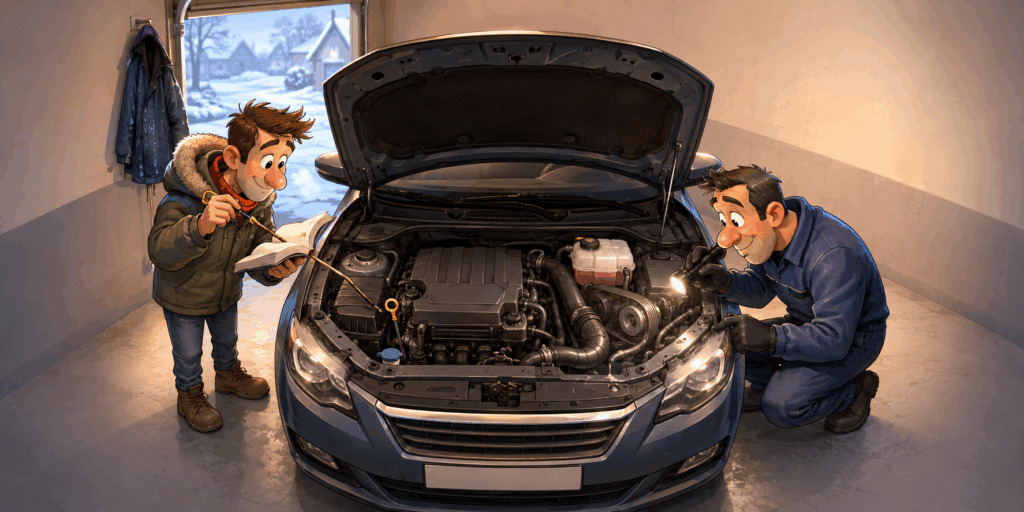
With the fluids sorted, the boot doesn’t need to be stocked with bottles and tools you’ll never use. A small winter car care kit is usually enough, and the car care products inside it should suit the drives you actually make.
- A tyre-pressure gauge, washer fluid, torch and a couple of clean microfibre cloths will cover most everyday jobs. If you are putting a kit together for the first time, this list of useful car care tools will help you decide what is worth carrying.
- A glass-safe de-icer and ice scraper are useful if frost is common where you live or you are driving towards the snow. Most city drivers will not need to keep them in the boot throughout the year.
- Be careful with leak-stop liquids, fuel treatments and oil additives. They may look like an easy fix, but the wrong product can hide a leak or cause another problem. Check the owner’s manual or ask a mechanic before adding anything unfamiliar to the car.
- Wash away road film, mud or salt after coastal and alpine drives, especially around the wheel arches and lower panels. Repair paint chips that have reached bare metal. Wax can protect clean paint, while polish improves its surface. The Cars24 car wax and polish guide explains the difference.
- Keep car care products sealed, upright and away from children. Follow the temperature limits on aerosols and lithium jump starters, and do not leave loose bottles rolling around the boot.
Winter car care changes when you drive to the snow
Unless the weekend plan involves the snow, there is no reason to fill the boot with alpine gear. For most Australian drivers, winter still means wet roads, fogged glass and getting home after dark. The car care products you carry should match those conditions.
Frost is a different story in Canberra, Hobart and many inland or southern towns. Give the demister time to clear the whole windscreen before you leave. If the car stays outside under a cover, make sure it is clean, dry and tied down properly.
Heading to Perisher, Thredbo or the Victorian Alps takes more thought. In Victoria, every vehicle entering an alpine resort during the snow season must carry chains. That includes AWDs and 4WDs. The NSW rule is narrower. From the June long weekend to the October long weekend, 2WD vehicles in Kosciuszko National Park must carry chains on Kosciuszko Road to Perisher, Guthega Road and Alpine Way between Thredbo and Tom Groggin.
Do not leave the chains unopened until you reach the mountain. Hire the right size and practise fitting them at home. Diesel drivers can fill up with winter or alpine diesel closer to the snow, and everyone should leave with enough fuel for a delay or detour.
Once the road turns slippery, take your time. Leave a bigger gap, keep cruise control off and make every move gently. AWD can help you get moving, but it will not help you stop sooner on ice. Use low beam in fog or snow, and turn around if floodwater covers the road.
Pack for a delay, not the end of the world
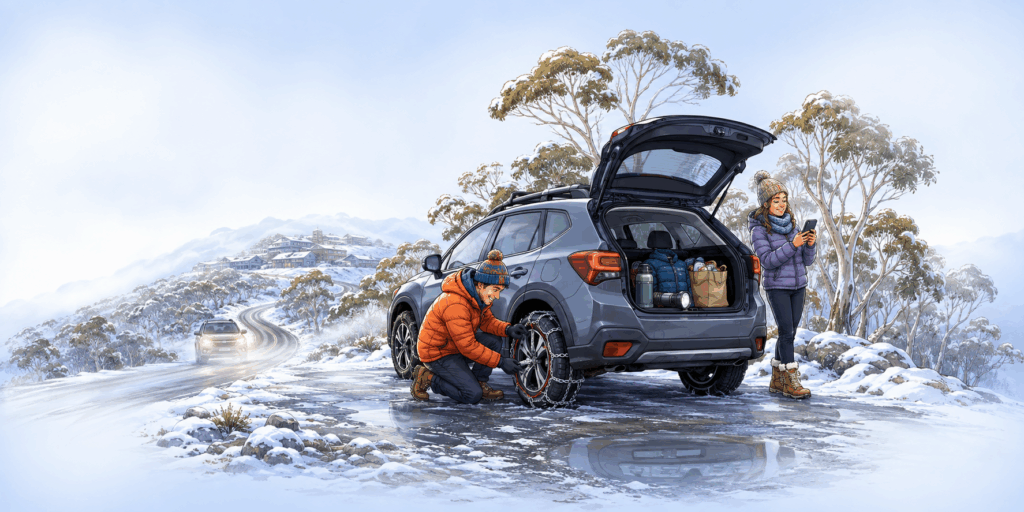
For normal trips, carry a charged phone, cable, first-aid kit, torch and puncture gear. Use the Cars24 list of everyday car essentials to choose the rest. Add a few things when you leave the city or drive to the snow:
- drinking water and food
- warm clothes, gloves and a blanket
- any medicine you need
- an ice scraper
- snow chains where required
- downloaded maps and roadside help details
Tell someone your route and arrival time because mobile reception can disappear between towns. Keep the torch, warm layer and first-aid kit where you can reach them. They are not much help under a boot full of luggage. If the car stops beside a fast road, move well away from traffic when it is safe and call roadside help. Do not stand between vehicles or try a repair in a live lane.
Electric cars need extra planning too. Cold can lower battery efficiency, while cabin heat uses energy. Precondition while plugged in if your EV allows it. Leave a range buffer and plan alpine charging stops. The 12-volt battery still wakes the main systems. These tips on getting more EV range help in any season.
Hybrids also have a 12-volt battery, so they can fail to start even when the large hybrid battery has charge. Follow the handbook for jump-start points. The connection may not be where you expect it.
Ready for the colder months
An Australian winter does not ask every driver to prepare for snow. Most of the time, it asks you to notice the car a little sooner: the slower start, the wiper that has begun leaving a streak, the tyre that keeps losing pressure.
Deal with those things when they show up. If the car is heading into the mountains, add the chains, weather check and extra gear. If it is staying around town, there is no reason to pack for conditions it will never meet.
That is the useful version of winter car care. Keep the car in good shape, prepare for the road in front of you and leave the rest out of the boot.

Comments
New Comment