




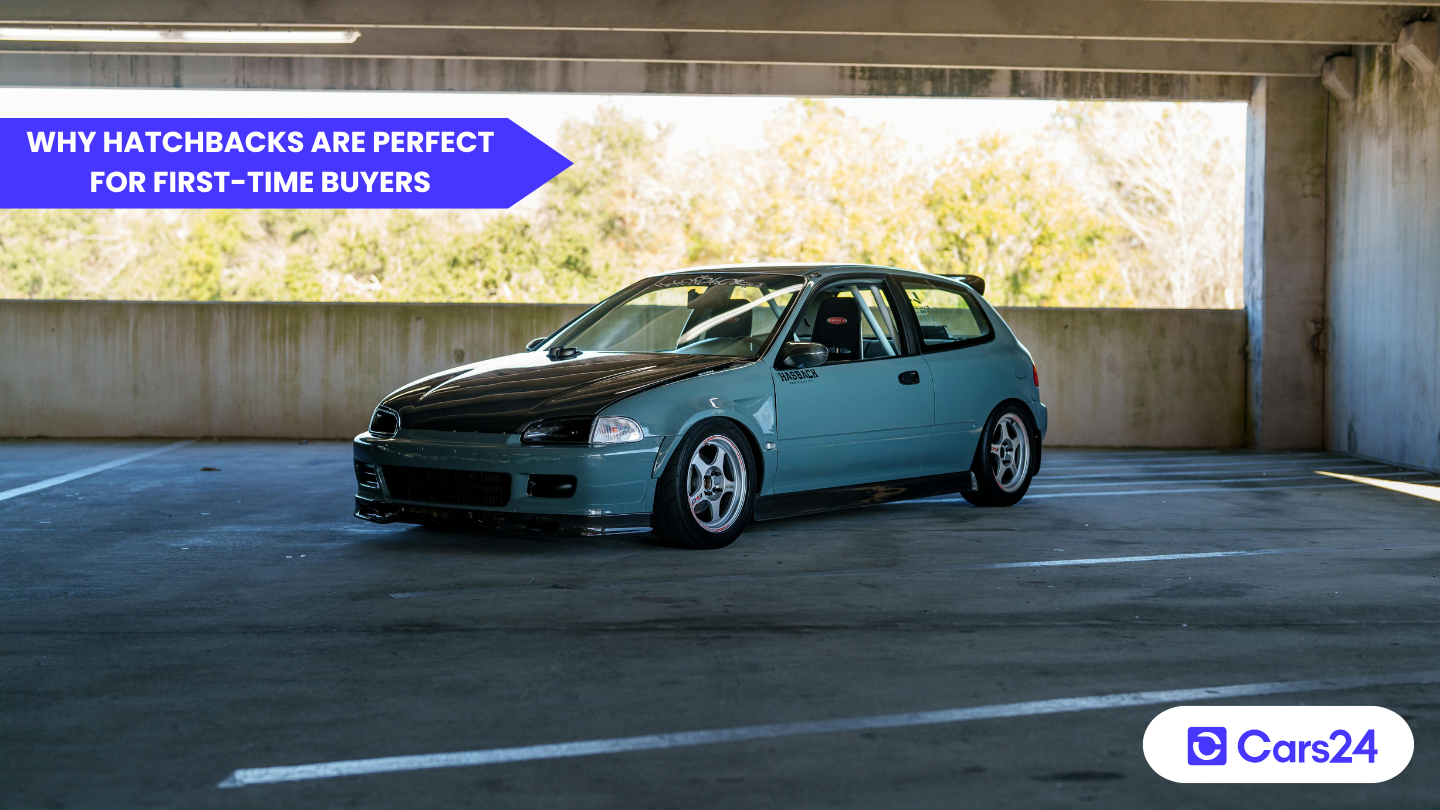
If you’re buying your first car and feeling overwhelmed by the options, here’s a straightforward answer: get a hatchback.
For most first-time drivers in Australia, hatchbacks offer the best combination of affordability, practicality, and ease of driving. The data backs that up. From fuel-efficient cars that won’t drain your wallet to a used car market flooded with well-priced options, hatchbacks consistently top the shortlist for new drivers. Here’s exactly why.
1. They’re built for real-world Australian driving
The best hatchback cars aren’t designed for racetracks; they’re designed for the kind of driving most Australians actually do. Tight city streets, busy school zones, cramped parallel parking spots in Newtown or Fitzroy, hatchbacks can handle all of it without drama.
Their compact footprint (typically under 4.3 metres in length) makes lane changes more intuitive and parking far less stressful for new drivers still building their spatial awareness behind the wheel. The higher roofline also gives better sightlines compared to sedans, which helps with roundabouts, reversing, and general situational awareness, basically all things a first-time driver needs to get right early.
Who this suits: Anyone commuting in a capital city or navigating suburban streets with tight driveways and on-street parking.
2. Fuel-efficient cars save you money from day one
Running costs are the expenses most first-time buyers forget to budget for and this is where hatchbacks shine. Fuel-efficient cars are a core feature of the hatchback segment, not an optional extra.
A Toyota Yaris Cross averages around 4.2 L/100 km. A Mazda2 comes in at roughly 5.0 L/100 km. A Hyundai i30 sits around 6.2L/100km in mixed driving. Compare that to a mid-size SUV averaging 7-9L/100km and the savings add up fast, especially with Australian petrol prices regularly hitting $2.00+ per litre.
Beyond fuel, hatchbacks typically attract lower comprehensive insurance premiums, cheaper tyres (smaller diameter), and more affordable servicing costs. For a first-time driver already stretched by the purchase price, these savings are meaningful every single month.
Bottom line on costs: A hatchback can save a first-time driver $1,500-$2,500 per year in running costs compared to a small SUV before you’ve even touched the purchase price difference.
3. The used car market is stacked with great options
When you’re buying your first car, budget almost always matters. And hatchbacks dominate the affordable used car market in Australia. Models like the Toyota Corolla hatchback, Mazda3, Honda Jazz, and Volkswagen Polo are consistently available under $15,000 with reasonable kilometres and solid service histories.
Because hatchbacks have historically been Australia’s most popular body type for private buyers, there’s a high supply, which keeps prices competitive and gives buyers real negotiating power. You’re not hunting for a rare spec or waiting months for stock.
The other advantage? Depreciation is more predictable. Popular hatchback models hold their value steadily, so if you decide to upgrade in 2-3 years (as most first-time buyers do), you’re not taking a financial hit on a car that’s become hard to move.
Recommended used picks: Toyota Corolla (2015-2019), Mazda3 (2014-2019), Hyundai i30 (2017+), Honda Jazz (any year).
4. They’re easy to drive, especially when you’re still learning
Here’s what most people get wrong when buying a first car: they underestimate how much the car itself affects how quickly you become a confident driver. Big cars, heavy steering, and complex all-wheel-drive systems all create friction early on.
Hatchbacks are inherently easier to park on the road. The short wheelbase makes them more responsive to steering inputs. The compact body means you can feel the car’s edges without needing a reversing camera to tell you where the bumper ends. And because they’re light, typically 1,000-1,300kg, throttle and braking responses are intuitive rather than laggy.
This matters for developing good habits. First-time drivers who start in a well-balanced, predictable hatchback tend to build confidence faster and develop better spatial judgement than those who jump straight into a large SUV or ute.
5. The future of hatchbacks means your investment is smart
There’s a common misconception that hatchbacks are a “starter car” you’ll eventually grow out of but the future of hatchbacks is actually more exciting than most people realise.
Manufacturers are heavily investing in the segment. The Toyota Yaris Cross is now available as a hybrid. The MG4 and BYD Dolphin have brought genuinely compelling electric hatchback options to the Australian market at accessible price points. Mazda, Volkswagen, and Hyundai are all investing in electrified hatchback platforms through 2025 and beyond.
For a first-time buyer, this matters in two ways. First, if you buy a late-model hybrid or EV hatchback now, you’re future-proofing your running costs ahead of rising fuel prices. Second, resale values for electrified hatchbacks are expected to remain strong as demand for efficient vehicles grows in line with Australia’s emissions reduction targets.
The hatchback isn’t a stopgap; it’s evolving into one of the most forward-looking segments on the market.
6. Safety ratings are genuinely impressive in this segment
First-time drivers have a statistically higher crash risk in their first two years of driving, which makes the safety credentials of your first car more important than most buyers appreciate.
The good news is that modern hatchbacks score extremely well on ANCAP safety ratings. The Mazda3 earned a 5-star ANCAP rating. The Toyota Corolla (2019+) is 5-star rated. The Hyundai i30 (2017+) is also 5-star. Many now come standard with autonomous emergency braking (AEB), lane-keep assist, and blind-spot monitoring features that were once luxury extras.
These active safety systems are particularly valuable for new drivers who are still building their hazard perception instincts. Having the car assist in critical moments can genuinely prevent incidents while you’re developing those skills.
What to check: Always verify the ANCAP rating for the specific model year on the official website before buying, as ratings vary by build year even within the same model.
What most first-time car buyers get wrong
The biggest mistake first-time buyers make is over-buying on size. There’s a tendency to think an SUV is “more car for your money” but for a new driver, a larger, heavier vehicle creates more challenges than it solves. Higher fuel costs, harder to park, harder to judge dimensions, and often more expensive to insure. Unless you have a specific lifestyle need (towing, frequent rough terrain, five-seat family requirements), the added size works against you rather than for you in the early years.
The second mistake is ignoring running costs in favour of a lower sticker price. A $10,000 hatchback with efficient fuel consumption and cheap parts will almost always cost less over three years than a $12,000 SUV with average fuel economy and expensive service schedules.
Conclusion
A hatchback offers the most complete package: manageable size, fuel-efficient running costs, strong safety ratings, a deep used-car market, and a future-proof segment backed by electrification investment. The best hatchback cars for first-time drivers in Australia include the Toyota Corolla, Mazda3, Hyundai i30, and Honda Jazz, all proven, widely available, and affordable to run.
Frequently Asked Questions
Are hatchbacks good for first-time drivers?
Yes, hatchbacks are widely considered the best body type for first-time drivers in Australia. Their compact size, light weight, and predictable handling make them easier to drive confidently from day one.
What is the most fuel-efficient hatchback in Australia?
The Toyota Yaris Cross Hybrid is one of the most fuel-efficient cars available in the hatchback/small car segment, averaging around 4.2L/100km. The MG4 EV and BYD Dolphin are zero-emission hatchback alternatives gaining strong traction in Australia.
What’s the best hatchback car to buy used in Australia?
The Toyota Corolla hatchback and Mazda3 are consistently the top recommendations for used buyers; both offer strong reliability records, wide parts availability, and healthy resale values.
Is the hatchback segment growing or shrinking?
The future of hatchbacks is actually strengthening. Electrification is reviving the segment, with new hybrid and EV hatchbacks from Toyota, BYD, MG, and Volkswagen offering compelling options at accessible price points. Demand for fuel-efficient cars is also increasing as running costs become a bigger factor in purchase decisions.
Should a first-time buyer buy new or used?
For most first-time buyers, a used hatchback (2-5 years old, under 80,000km) offers the best value. You avoid the steepest depreciation curve while still getting modern safety features and a manufacturer’s service history. Looking for your first car? Browse Cars24’s range of quality used hatchbacks, inspected, fairly priced, and available across Australia.

Comments
New Comment