




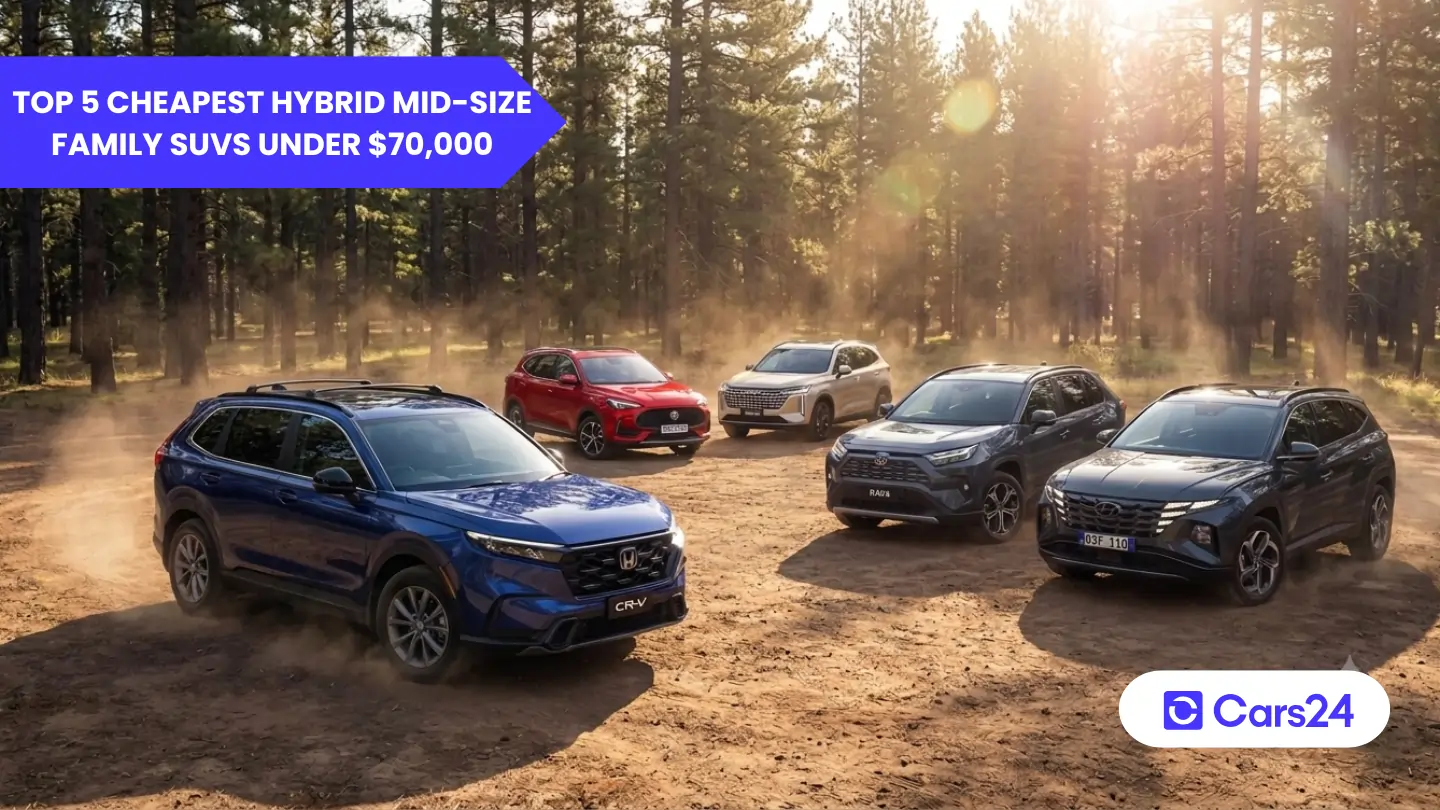
Mid-size SUVs have become one of the most competitive segments in Australia, offering the practicality families need without the size, weight, or fuel consumption associated with larger seven-seat models. As fuel prices remain a key consideration for many households, hybrid powertrains are increasingly attracting buyers who want lower running costs without changing their driving habits.
Unlike plug-in hybrids or fully electric vehicles, conventional hybrids require no charging infrastructure and operate much like traditional petrol vehicles. That simplicity continues to appeal to Australian families looking for improved efficiency while maintaining the convenience of quick refuelling and long-distance touring capability.
What’s particularly interesting in 2026 is how diverse the hybrid mid-size SUV segment has become. Some models focus heavily on value, others prioritise refinement and technology, while a few attempt to combine strong performance with impressive fuel economy.
The SUVs below represent the cheapest hybrid mid-size family SUVs currently available in Australia for under $70,000, offering a mix of affordability, practicality, efficiency, and everyday usability.
| Model | Starting Price(driveaway) |
| GWM Haval H6 Hybrid | $33,990 |
| MG HS Hybrid+ | $40,990 |
| Hyundai Tucson | $44,990 |
| Toyota RAV4 | $46,737 |
| Honda CR-V | $54,900 |
GWM Haval H6
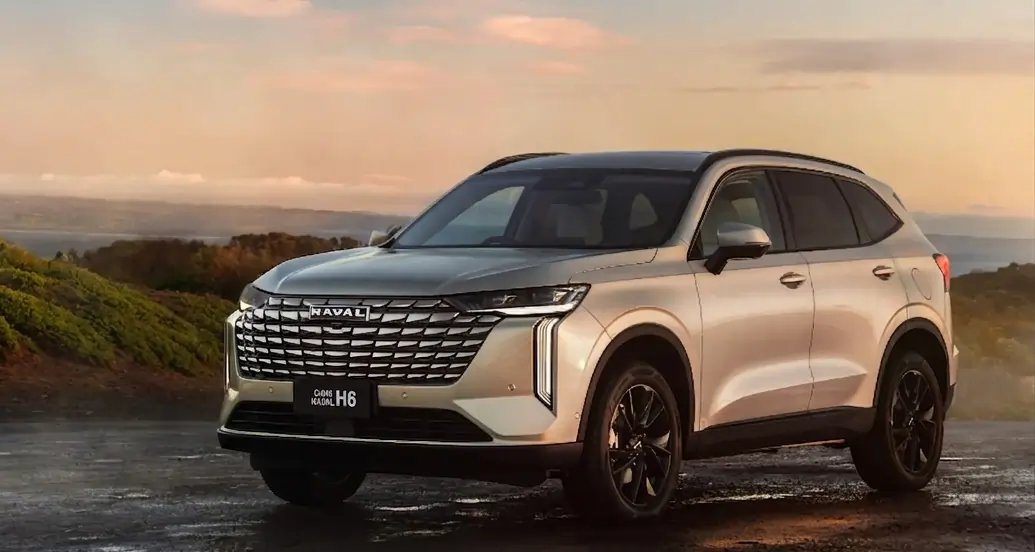


The GWM Haval H6 hybrid has emerged as one of the strongest value-focused contenders in Australia’s hybrid SUV market. While established rivals such as the Toyota RAV4 Hybrid and Honda CR-V e:HEV benefit from years of brand recognition, the H6 Hybrid attracts buyers through its combination of competitive pricing, generous equipment levels, and impressive performance.
Its hybrid powertrain delivers strong outputs for the segment, making it feel noticeably more energetic than some efficiency-focused competitors. In comparison with MG HS Hybrid+, the Haval offers a more mature driving experience and a more sophisticated hybrid system, while still maintaining a highly competitive price point. The cabin is also packed with technology, featuring large digital displays and a modern interior presentation that feels more premium than its price tag suggests.
Although it doesn’t offer the seven-seat practicality of the Kia Sorento, Hyundai Santa Fe, or Toyota Kluger, the H6 provides ample space for most families. For buyers prioritising value, equipment, and hybrid efficiency without stretching their budget, the Haval H6 Hybrid remains one of the most compelling alternatives in the segment.
| Specifications | GWM Haval H6 Hybrid |
| Engine | 1.5L petrol-hybrid |
| Electric motor | 130kW |
| Combined power | 179kW |
| Combined torque | 530Nm |
| Drivetrain | Front-wheel drive |
| Fuel consumption | 5.2L/100 km |
Read more: Top 10 most fuel-efficient cars in Australia
MG HS Hybrid+
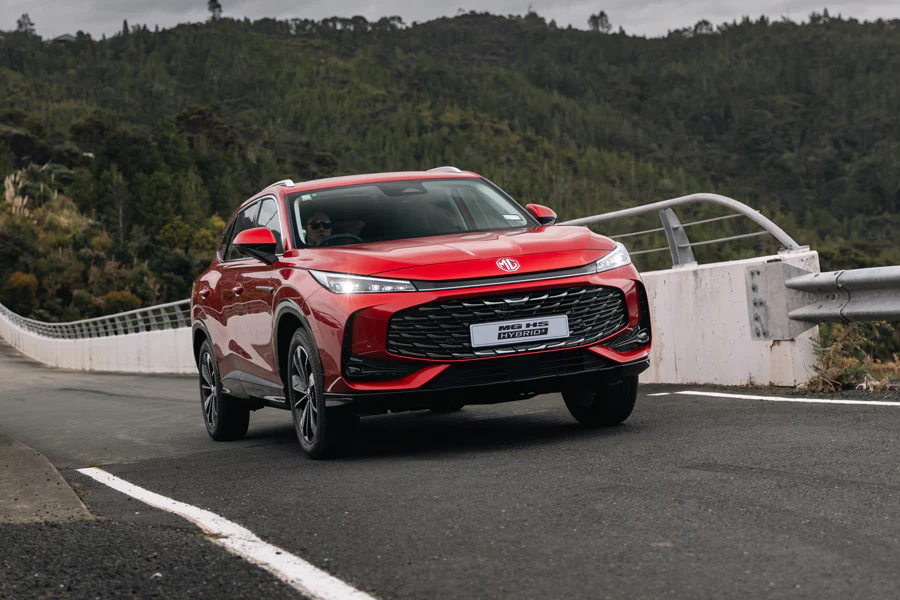
The MG HS Hybrid+ enters this list as one of the most affordable ways to access hybrid SUV ownership in Australia. While some rivals lean heavily on brand heritage or premium positioning, MG focuses squarely on value, packing a generous equipment list into a family-friendly package at a highly competitive price point.
Its hybrid system delivers noticeably better fuel efficiency than a conventional petrol SUV of similar size, making it appealing for buyers looking to reduce running costs without stretching their budget. When compared with the Honda CR-V and Hyundai Tucson, the MG doesn’t feel quite as polished in terms of overall refinement, but it counters with a lower entry price and strong feature-per-dollar value.
Cabin space is one of its strongest assets. Rear-seat accommodation is generous, while the luggage area remains practical for family duties. For buyers entering the hybrid market for the first time, the HS Hybrid+ represents one of the most accessible options available, proving that hybrid technology no longer needs to command a substantial price premium.
| Specifications | MG HS Hybrid+ |
| Engine | 1.5L turbo petrol-hybrid |
| Electric motor | 146kW |
| Battery capacity | 1.83kWh |
| Combined power | 165kW |
| Combined torque | 340Nm |
| Drivetrain | Front-wheel drive |
| Fuel consumption | 5.2L/100 km |
Read more: The ultimate list of the best hybrid SUVs in Australia in 2026
Hyundai Tucson

The Hyundai Tucson hybrid has become one of Australia’s most well-rounded family SUVs because it balances affordability, practicality, and efficiency without leaning too heavily in any one direction. While it doesn’t offer the seven-seat versatility of the Kia Sorento, Hyundai Santa Fe, or Toyota Kluger, its combination of interior space and manageable dimensions makes it easier to live with in everyday suburban environments.
Its 1.6L turbocharged hybrid system delivers smooth performance and strong fuel economy, particularly in stop-start urban traffic where hybrid assistance is most noticeable. When put against the Toyota RAV4 Hybrid, the Tucson feels slightly more modern inside, thanks to its contemporary dashboard design and technology integration.
The cabin also presents well for family buyers, offering generous rear-seat accommodation and practical storage solutions. While some rivals focus heavily on efficiency alone, the Tucson strikes an impressive balance between comfort, technology, and value, making it one of the strongest all-round hybrid SUVs under $70,000.
| Specifications | Hyundai Tucson Hybrid |
| Engine | 1.6L turbo petrol-hybrid |
| Battery capacity | 1.49kWh |
| Combined power | 172kW |
| Combined torque | 367Nm |
| Drivetrain | Front-wheel drive/All-wheel drive |
| Fuel consumption | 5.3L/100 km |
Read more: Top 10 most affordable hybrid cars in Australia for 2026
Toyota RAV4
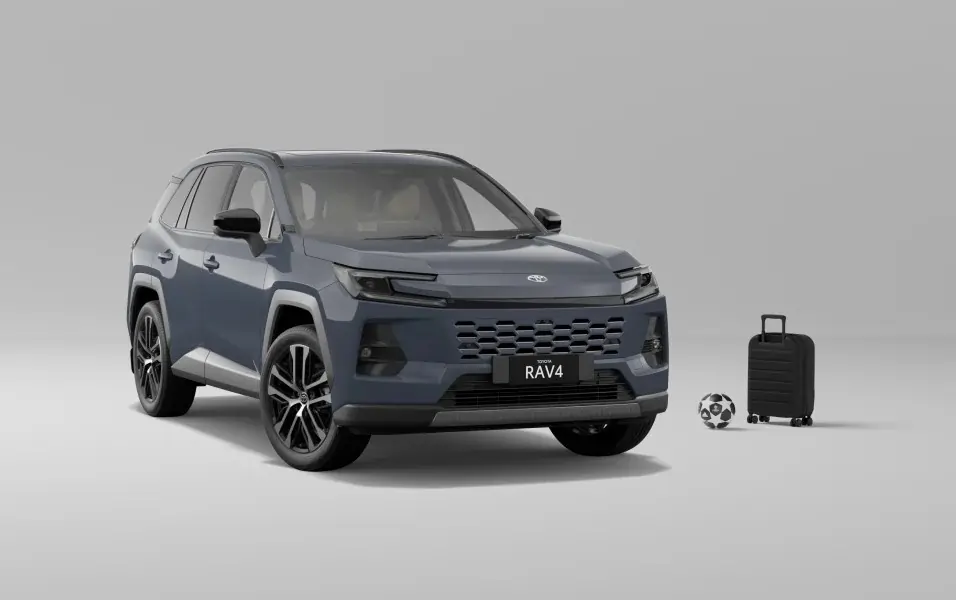
The Toyota RAV4 hybrid remains the benchmark against which many mainstream hybrid SUVs are measured. Despite increasing competition from newer rivals, it continues to dominate Australian buyer consideration thanks to its proven hybrid technology, excellent fuel economy, and strong reputation for long-term reliability.
Its hybrid system remains one of the most efficient in the segment, particularly in urban environments where electric assistance frequently reduces fuel consumption. In comparison to the Hyundai Tucson Hybrid, the RAV4 feels slightly more focused on efficiency than outright refinement, though both remain highly capable family SUVs.
Practicality is another key strength. The spacious cabin comfortably accommodates growing families, while Toyota’s strong dealer network adds further ownership appeal. Resale values also remain among the strongest in the industry, helping offset initial purchase costs over time.
While newer competitors may offer flashier interiors or larger infotainment screens, the RAV4 continues to excel through consistency, efficiency, and proven real-world dependability.
| Specifications | Toyota RAV4 Hybrid |
| Engine | 2.5L petrol-hybrid |
| Battery capacity | 1.6kWh |
| Combined power | 163kW |
| Combined torque | 221Nm |
| Drivetrain | Front-wheel drive/ All-wheel drive |
| Fuel consumption | 4.7L/100 km |
Read more: Top 10 best hybrid cars in Australia
Honda CR-V e:HEV
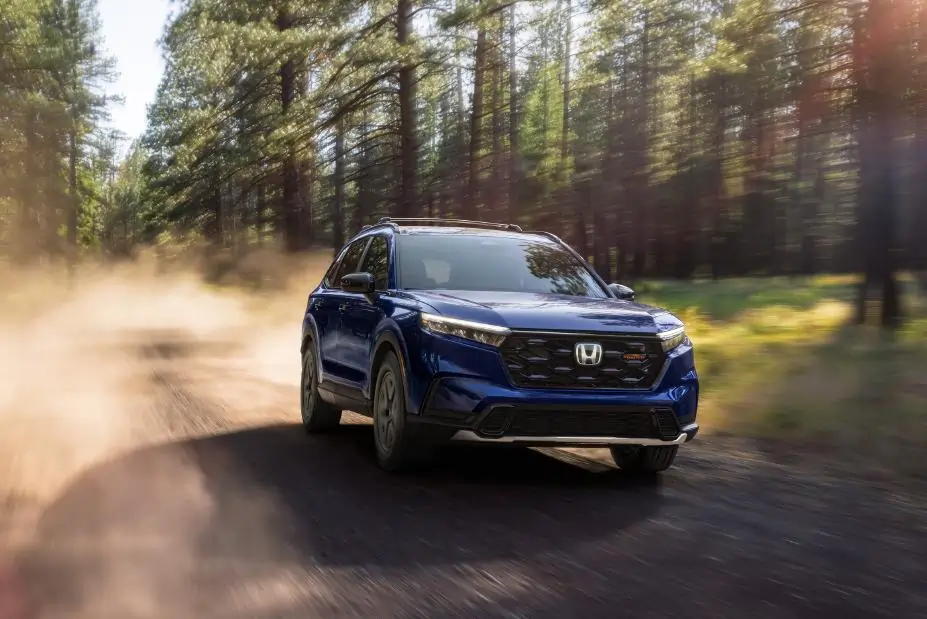
The Honda CR-V e:HEV has quietly become one of the most refined hybrid SUVs available to Australian buyers. While it often sits in the shadow of the Toyota RAV4 Hybrid in terms of popularity, the CR-V delivers a driving experience that feels notably sophisticated and mature.
Honda’s hybrid system prioritises smoothness, particularly in urban driving where the vehicle frequently operates in an EV-like manner. Compared with the Nissan Qashqai e-Power, which uses a more complex electric-drive setup, the CR-V feels simpler and more predictable while still delivering excellent efficiency.
Inside, the cabin focuses heavily on usability. Rear-seat accommodation is generous, cargo space is competitive, and visibility remains excellent. Families upgrading from smaller SUVs may find the CR-V strikes a sweet spot between the compact Qashqai and seven-seat models like the Sorento or Kluger.
Although its pricing places it above some newer Chinese rivals, the CR-V counters with strong refinement, excellent build quality, and Honda’s long-standing reputation for reliability.
| Specifications | Honda CR-V e:HEV |
| Engine | 2.0L petrol-hybrid |
| Combined power | 152kW |
| Combined torque | 335Nm |
| Drivetrain | Front-wheel drive/ All-wheel drive |
| Fuel consumption | 5.5L/100 km |
Read more: Top 5 PHEVs in Australia under $40,000 in 2026
Why are hybrid mid-size family SUVs becoming so popular in Australia?
Hybrid mid-size SUVs are becoming increasingly popular because they offer an excellent balance between efficiency, practicality, and affordability. Australian families still value the versatility of an SUV, but rising fuel costs have encouraged many buyers to consider alternatives to traditional petrol-only models.
Hybrid technology is particularly effective in urban environments, where frequent stop-start driving allows electric assistance to reduce fuel consumption and improve refinement. The result is lower running costs without the range concerns or charging requirements associated with EV ownership.
Another major advantage is flexibility. Mid-size SUVs are large enough to comfortably accommodate growing families, yet compact enough to remain easy to drive and park in urban environments. Combined with improved hybrid technology and increasingly competitive pricing, they have become one of the smartest choices for everyday family transport.
Final thoughts
The cheapest hybrid mid-size family SUVs in Australia now offer a broader range of choices than ever before.
The Toyota RAV4 Hybrid continues to set the benchmark for efficiency and proven reliability, while the Honda CR-V e:HEV impresses with refinement and family-friendly practicality. The Hyundai Tucson Hybrid delivers a strong balance of comfort, technology, and value, while the MG HS Hybrid+ offers one of the most affordable entry points into hybrid SUV ownership.
Meanwhile, the GWM Haval H6 Hybrid demonstrates how newer competitors are challenging established brands by offering generous equipment levels, strong performance, and competitive pricing.
For Australian families, the key takeaway is simple: hybrid mid-size SUVs are no longer niche alternatives. They have become some of the most practical, efficient, and cost-effective vehicles on the market, offering lower fuel bills without compromising the versatility that makes SUVs so popular.

Comments
New Comment